| Key Takeaways |
|---|
| ● The best trees for fall planting: Deciduous species that establish quickly, like elm, crabapple, hackberry, and honeylocust are the best to plant in fall. ● Evergreens vs. deciduous: Evergreens like pine and spruce need an earlier start than deciduous trees. ● In cold climates: Plant at least 6 weeks before the ground normally freezes. |

The best trees to plant in fall are deciduous species that establish quickly in cooling soil, like elm, crabapple, hackberry, and honey locust. Trees with fleshy or fragile root systems, like dogwood and magnolia, are better off waiting for spring.
Not sure which of these is the right fit for your yard, or want someone else to handle the digging? Lawn Love’s gardening service can match you with a local pro who’ll pick the right spot, plant it correctly, and get it mulched and watered.
Trees that establish well in the fall
Even after the leaves drop and the top of the tree goes quiet, roots may keep growing while the soil remains warm enough. Cooler air also puts less stress on a newly planted tree than summer’s heat.
The University of Massachusetts Extension’s fall planting fact sheet lists these trees as relatively easy to establish in the fall:
- Alder
- Catalpa
- Crabapple
- Eastern redbud
- Elm
- Hackberry
- Hawthorn
- Honey locust
- Horse chestnut
- Linden
- Maple
- Sycamore
This list gives you a starting point. It doesn’t mean that every maple, elm, or hawthorn is right for your yard. Species and cultivars differ in mature size, cold tolerance, soil needs, and pest problems. As an example:
- For elm, ask for a cultivar resistant to Dutch elm disease, such as Princeton, New Harmony, or Valley Forge.
- For maple, you should avoid Norway maple, which is considered invasive in parts of the country and is discouraged or restricted by several state Extension programs.
The University of Massachusetts also lists ash, but according to USDA APHIS, the emerald ash borer has killed tens of millions of ash trees in North America. It has been detected in 38 states and the District of Columbia.
Does this mean that I can’t plant an ash tree? Well, no. But check with your state forestry agency or Extension office first. In many places, ash is not the best pick for a long-lived shade tree.
Want a few specific varieties to consider? Maria Zampini, president and founder of UpShoot Hort in Fairport Harbor, Ohio, and a National Garden Bureau member, shared these picks for fall planting. Check their suitability for your site and local planting season before buying.
Midnight Express redbud
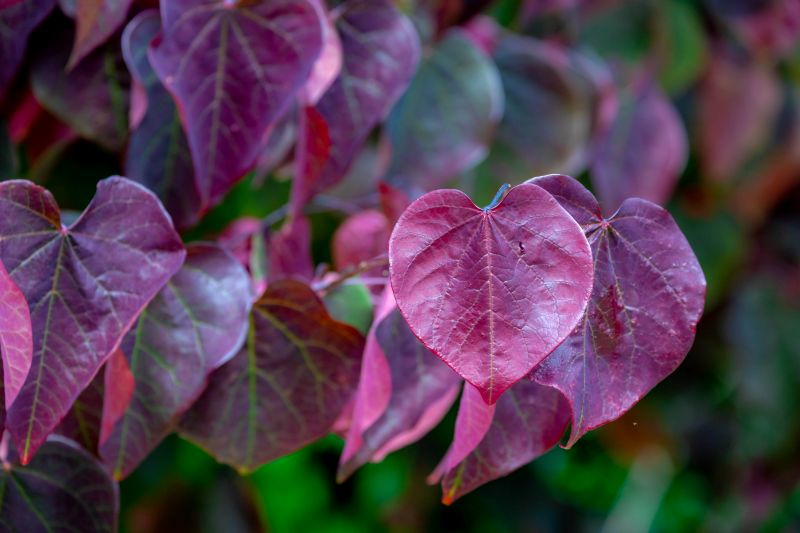
“I would suggest a Cercis, like Midnight Express, it comes from a northern seed source, so its range is somewhat greater than other redbud selections on the market,” Zampini says.
“This selected native is a great ornamental tree with both spring flowers and colorful foliage,” she says. “It holds its maroon colored leaves throughout the growing season, even in the South. So it’s more than a one season trick pony.”
Lollipop® crabapple
Looking for a smaller tree? Crabapples are worth a look.
“I have a fondness for crabapples, in particular, because there are more genetically dwarf selections out there,” Zampini says.
“Lollipop® is one that is exactly what it says it is – it’s like a round head on a stick – and it can go in a larger container, and you can plant around the base.
Contrary to popular belief, for most newer crabapples, the fruit is very small, no bigger than the tip of my pinky. This fruit is red and is taken by the birds (i.e., it doesn’t make a mess).
It has a pleasing yellow fall color. Spring brings pink buds opening to white flowers, and it is fragrant!”
Marley’s Pink Styrax
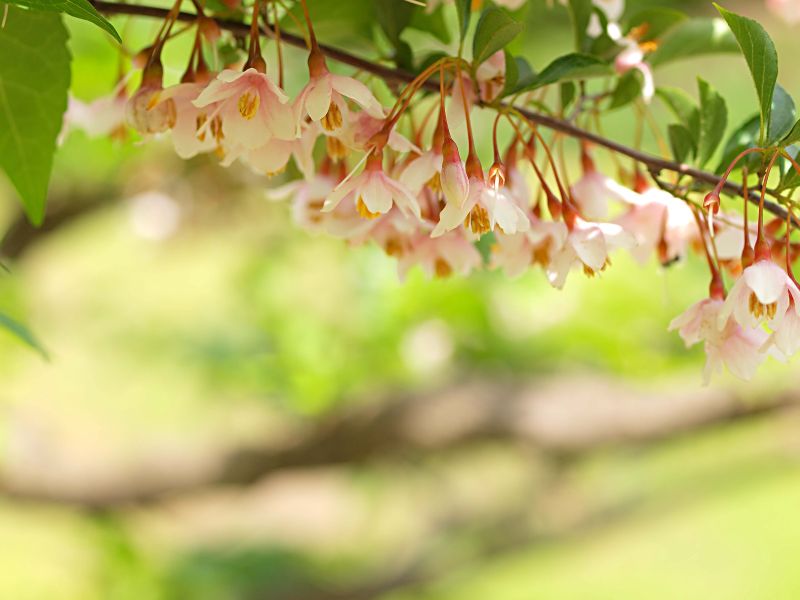
“If crabapples are not your thing, you could go for the lesser known, but highly ornamental Marley’s Pink Styrax,” Zampini says.
“This one is a weeper, so it gives you structural interest even in the winter. It has pink, cotton candy scented spring flowers. It too has a nice yellow fall color, but you don’t have the fruit. So, bird lovers chose crabapple, no fruit people chose this one.”
Metamorphosa Japanese maple
“One for good measure, might be a Japanese maple,” Zampini says. “Again, depending on the area available, these are a nice option, and they provide some fine foliage color and textures. I like Metamorphosa for its unique foliage.”
What about evergreen trees?
Pines and spruces can be planted in the fall, but they generally need an earlier start than deciduous trees. The deadline depends on the species, local weather, soil conditions, and when the ground normally freezes. When in doubt, call your local Extension office and ask about your specific evergreen.
Read more: Worst Trees for Allergy Sufferers
Trees to hold off on until spring
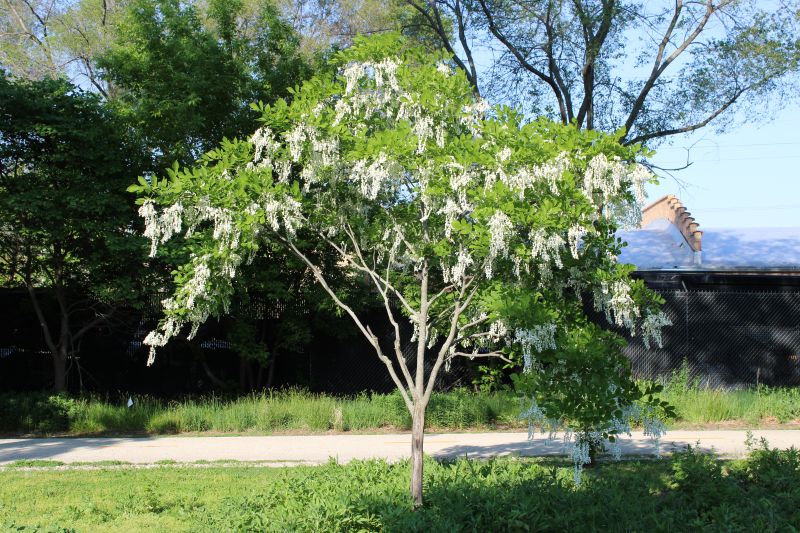
Some trees are better off planted in spring. University of Maryland Extension recommends spring planting or transplanting for these fleshy-rooted trees.
| Planting choice | Trees | What to know |
| Good fall candidates | Crabapple, catalpa, hackberry, honey locust, horse chestnut, linden, sycamore, and elm | These trees tend to establish well in fall when matched to the right site. |
| Check locally before fall planting | Hawthorn, Eastern redbud, and maples | The best planting season varies by species and local climate. |
| Plant earlier in fall | Pine and spruce | Plant early enough to give roots time to grow before the soil gets too cold. |
| Safer in spring | Dogwood, magnolia, willow oak, tulip poplar, and yellowwood | These fleshy-rooted trees generally establish better when planted in spring. |
How to pick the right tree for your yard
A species that tolerates fall planting still isn’t automatically the best tree for your specific yard. Before you go shopping in nurseries, enter your ZIP code into the USDA’s Plant Hardiness Zone Map to confirm the tree can handle winters in your area.
Then walk your planting site and check:
- Purpose: Decide whether you want shade, flowers, screening, or wildlife value, since that narrows the list.
- Space: Measure the planting area, including distance to the house, fence, sidewalk, and any overhead wires.
- Sun: Match the tree’s light requirements to the spot.
- Local pests and invasives: Ask your county Extension office which species have local disease or invasive-species concerns before you commit.
- Don’t forget underground utilities: Before digging, contact 811 and follow your state’s instructions for locating buried lines.
Beyond height and width, consider the tree’s habit, or its overall shape.
“I think additional key factors to consider are the habit of the tree – that, along with the mature size, is important so that you’re not planting something that is too large for the site,” Zampini says.
“Think of it this way: If your site is the size of a woman’s size 7 shoe, but your tree is going to mature at a size 10, that is going to be an uncomfortable fit.
Plants are like people. You’re not going to want to cram your foot into that too small shoe, and the tree is the same way.”
Don’t forget to check the growing conditions.
“What is your soil and water going to be like, and what does the type of tree you are choosing require,” Zampini says.
“If you are moving into a new construction home, it is almost a sure bet that the native top soil has been stripped away. You’ve got to be sure the soil is amended, or native top soil is brought in, so that you create a successful environment for your investment.
Also, you want to be sure that your spot has good drainage. You don’t want water sitting in the bottom of the planting hole. Would you keep your feet in standing water every day, 24/7? Nope, and neither does your tree and its roots!”
Read more:
Timing by region
“Fall is a great time to plant, especially because if done early, the tree will grow and get established prior to winter setting in,” Zampini says. “It then has a ‘jump start’ in the spring.”
How early should you plant? That depends on the tree, nursery-stock type, local weather, soil conditions, and when the ground normally freezes.
Regions where the ground freezes:
- Plant about 6 weeks before the ground is expected to freeze.
- A light frost, a hard freeze, and frozen soil aren’t the same event. You may wake up to frost on the grass while the soil around your tree remains workable for weeks.
- If you’ve missed the window, waiting for spring may be the safer choice for an evergreen or a fleshy-rooted tree.
Regions with long, mild falls:
- If the soil stays warm and workable longer, your fall planting window may stretch into October, November, or beyond.
Regions where the ground rarely freezes:
- In warm areas, winter may be a better planting season than early fall. The cooler weather gives the tree time to settle in without immediately facing summer heat.
What to check before you buy
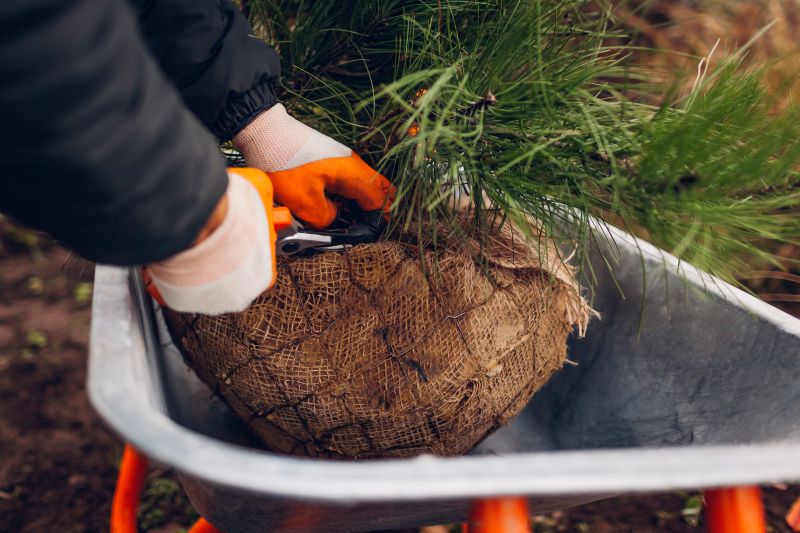
You’ve found a tree that fits your yard. Now take a closer look at the tree itself. Nursery trees generally come in 3 forms: container-grown, balled-and-burlapped, and bare-root.
Container-grown trees
Container trees are widely available and generally can be planted in the fall while the soil is workable. The University of Maryland Extension recommends inspecting container trees for healthy roots and circling or girdling roots.
Before buying:
- Ask whether you can inspect the roots.
- Avoid a severely root-bound tree if a healthier one is available.
- Look for circling or girdling roots.
- Find the tree’s root flare.
- Check the trunk and branches for major injuries.
- Make sure the soil and root ball haven’t completely dried out.
A few small circling roots may be correctable. A tight mass of large woody roots wrapping around the root ball is a red flag.
Balled-and-burlapped trees
Balled-and-burlapped trees also can be fall-planted while the soil remains workable.
Before buying:
- Make sure the root ball is solid and intact.
- If the trunk wobbles independently of the root ball, keep shopping.
- Check for trunk and branch damage.
Bare-root trees
Bare-root is not the type of tree to buy and leave sitting in the garage for a week. They have no soil around their roots, so they’re the most time-sensitive purchase on this list.
Handle bare-root trees differently from container and balled-and-burlapped trees:
- Never let the roots dry out or sit exposed to sun and wind, even briefly.
- Keep roots wrapped in damp material (wet burlap, moist newspaper, or peat moss) inside a sealed bag until you’re ready to dig.
- Plant the same day if possible. If you must wait, store the wrapped roots in a cool, dark spot and check moisture daily.
- Soak the roots in a bucket of water for a short period right before planting, then get them in the ground and water them immediately.
FAQs
For many fall-planted trees, plant at least 6 weeks before the ground normally freezes. Evergreens may need an earlier start, while dogwood, magnolia, willow oak, tulip poplar, and yellowwood are safer left for spring because they have fleshy roots.
It depends entirely on your location. October may be too late in colder areas, but it may still be suitable where fall weather stays mild, and the soil remains warm and workable. Check with your local Extension office for timing in your area.
It depends on where you are planting. A tree in a public right-of-way, utility easement, HOA-controlled yard, or other regulated area may require approval, so check local rules first. Wherever you plant, contact 811 before digging and wait until the affected utilities have responded.
Set your fall trees up for success
Getting your fall planting right takes careful species research, heavy digging, and perfect timing. A mistake now means dealing with a dead tree come spring.
If you’d rather leave it to someone who does this every day, Lawn Love’s local gardeners will handle everything for you.
Main Image: Pink crabapple tree blossoming in spring. Photo Credit: Lion and Light / Adobe Stock
Related Posts: