| Key Takeaways |
|---|
| • Winter is the peak season for wildlife damage: Natural food sources are scarce and snow cover hides rodent activity. • Damage looks different: Deer damage is torn and ragged; rabbit damage is a clean 45-degree cut; vole damage shows up as gnawed bark on trees. • Physical barriers work well: Fencing and tree guards are the most reliable means of protection. |
Deer, rabbits, and voles do the most damage to lawns and landscapes in winter, when snow hides natural food sources. You should fence vulnerable plants, wrap young tree trunks, clear thick mulch away from stems, and choose repellents or plantings that make your yard less appealing.
To protect your yard from deer and wildlife damage in winter, most of this prep work needs to happen in the fall, before deer, rabbits, or other wildlife settle into a winter feeding pattern and before the ground is covered in snow.
If wildlife is already destroying your yard, Lawn Love can connect you with a local lawn care professional to help clean up the mess and protect your remaining landscape.
Why winter is the riskiest season
Cold weather and dwindling food supplies push deer, rabbits, and rodents toward the easiest available meal, which is often the trees, shrubs, and turf in your landscape.
Wildlife damage to woody landscape plants is particularly common in winter, when cold weather and declining food resources make them an appealing target, with rabbits, voles, and deer as the most frequent culprits, according to Nebraska Extension.
Deer damage is often worse under prolonged snow cover, since that’s when natural browse becomes hardest to reach. Deer are creatures of habit that tend to return to the same spot once they’ve started feeding there.
The damage is more likely when populations are high and conditions are stressful, especially in cold temperatures and deep snow, per the University of Minnesota Extension.
Identifying who’s doing the damage
Deer, rabbits, and voles cause the bulk of winter yard damage, but they aren’t the only ones. Knowing which animal is responsible determines which fix actually works.
Roger Neustadt, CEO at Westchester Tree Pros in Rye Brook, New York, advises catching the early warning signs before major damage occurs.
“You have to watch for the small stuff, like browse lines on evergreens or pellets on the trails,” Neustadt says.
Deer

Because deer have no upper incisors, they tear or jerk at plants rather than clip them, leaving twigs and stems with a torn, jagged appearance. This is a helpful way to rule out other animals, since rabbit damage leaves a clean, sharp 45-degree cut, while rodent damage leaves visible tooth marks.
Deer feeding damage usually shows up from ground level up to about 6 feet high.
Bucks cause a different kind of damage: antler rubs. Rubbing starts in late summer or early September, once antlers harden and the velvet sheds. This activity peaks in the fall, during the rut, usually mid to late November.
Rabbits
Check for gnaw marks on trunks and low twigs cut at a clean 45-degree angle. The damage usually stays within 2.5 feet off the ground, but can appear higher in winter once rabbits are standing on packed snow.
Rabbits also gnaw bark off in patches on thin-barked trees and shrubs, separate from the clean stem cuts, and repeated gnawing can girdle a trunk the same way vole damage does. You can also check for small, round droppings near the base, along with 4-toed tracks in snow.
Read more: How to Get Rabbits Out of Your Yard
Voles
Tammy Sons, CEO of TN Nursery in Altamont, Tennessee, says voles cause specific damage.
“The damage is below the snow line, which means either damage to the snow itself (open runways or holes) or bare ground around the tree’s base with irregular wood gnawing marks near ground level,” Sons says.
“Also, compared to deer, which browse on the higher foliage of vines and shrubbery above the snow line, voles clip off at or very close to ground level and strip bark off,” Sons says.
Homeowners usually notice vole damage only in spring, when melting snow reveals a network of crisscrossing runways that the voles used to travel beneath it.
Vole damage severs the phloem layer that carries sugars from the leaves down to the roots, cutting off the tree’s food supply. If the gnawing goes all the way around the trunk (full girdling), the plant is often unable to recover and will decline and die.
Note: Mice and voles are often mistaken for each other. Because mice rarely feed on turf or bark outdoors through winter, the way voles do, most yard damage attributed to mice is actually vole activity. If you’re seeing gnawed bark or lawn runways, voles are almost always the cause.
Squirrels
If you spot missing bark on your trees or thin branches, you might have a squirrel problem. When their usual food sources dry up in late winter, squirrels strip and eat the inner bark just to survive.
Don’t forget to check your car for chewed wires, exposed copper, or under-hood nests, especially during cold weather. Squirrels chew wires year-round to file their teeth.
Read more: 3 Signs That Squirrels Are Digging in Your Yard
Skunks
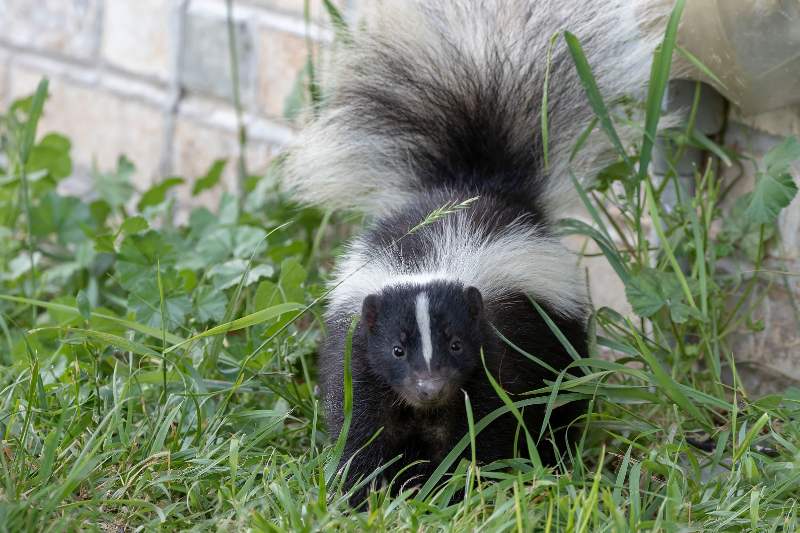
Skunks leave a specific signature in your yard. They dig small, cone-shaped holes by pushing their noses into the turf and clawing with their front paws. These holes often merge into big ragged patches of ruined grass.
As temperatures drop, skunks hunt for dens under stumps, fallen trees, lumber piles, decks, and porches.
While skunks spend most of the winter dormant, they emerge only on mild nights above freezing to forage and drink. A seemingly abandoned den will often show fresh tracks and new digging right after a warm spell.
Raccoons
Raccoons use their paws like hands to flip or roll back entire pieces of sod. By the time they are done feeding, your yard looks like someone tried to transplant the turf.
Beyond the lawn, raccoons tip over trash cans, raid compost bins, and even tear off roof shingles or fascia boards to access your attic.
Raccoons fatten up in the fall and stay in their dens during the coldest stretches of winter, but they still forage periodically. Fresh tracks in the snow after a mild winter night prove raccoons are active on your property.
Read more: How to Keep Raccoons Out of Your Yard
Protecting trees and shrubs
Physical barriers are the most dependable defense against wildlife, and they need to go up before winter sets in.
“Managing trees in Westchester taught me not to wait for snow to put up guards,” Neustadt says. “It is better to install them during fall pruning.”
- Fence vulnerable plants: Fencing should enclose all the branches of a shrub and the lower branches and trunk of a tree, with the bottom buried 3–6 inches into the soil to deter burrowing voles and other rodents.
To keep rabbits out, fencing needs to sit at least 18–24 inches above the expected snow line. Rabbits are light enough to stand on top of snow and reach branches above a fence that looks plenty tall in October.
- Protect young tree trunks: One-quarter-inch hardware cloth cylinders placed around trunks in the fall prevent both rabbit feeding and antler-rub damage. Tree guards should extend about 12 inches beyond the trunk or shrub diameter and help prevent bark from splitting in winter sun.
If antler damage does occur, Neustadt has a specific recovery protocol.
“When bucks rub the bark, we smooth it out, wrap the trunk, and pull mulch back 3 inches from the base,” he says.
- Watch mulch depth: “That routine is exactly what saves the young trees through winter,” Neustadt says. Pulling mulch away from the base stops mice and voles from gnawing on trunks and roots hiding under the material.
- Consider repellents for high-value plants: Contact repellents should be applied on a dry day when temperatures are above freezing, and they should treat trees up to 6 feet tall. However, effectiveness varies with rainfall and how hungry local deer are.
Protecting your lawn from voles

Vole damage to turf is mostly cosmetic and temporary, but it can look alarming after a heavy snow year.
Snow cover insulates overwintering plant roots, but it also shelters vole activity. These mouse-like rodents feed on bark and roots through the winter, often undetected until the snow melts and reveals tunnel-like tracks in the lawn.
In lawns specifically, voles create burrows and runways that leave bare, winding pathways behind once the snow clears.
The good news is turf damage from voles typically recovers on its own once the lawn resumes normal growth in spring. Keeping cool-season grass mowed reasonably shorter and warm-season grass slightly taller heading into winter, and reducing tall grass or brush piles near the lawn’s edge, removes the cover that voles rely on to travel undetected.
Repellents and habitat changes
Physical barriers work best combined with habitat changes that make a yard less inviting in the first place.
Swapping out frequently damaged plants (arborvitae, azaleas, burning bush, fruit trees, hybrid tea roses, and yews are common deer targets) for less palatable species is one option if only a few plants keep getting hit.
Neustadt recommends a few reliable alternatives.
“If you want deer to ignore your shrubs, boxwood, inkberry holly, and bayberry usually do the trick around here,” he says.
But keep expectations realistic. A hungry deer will eat almost any plant, so no species is truly “deer proof,” and a plant that goes untouched in one yard may be stripped in another.
Scare devices and repellents work best when used as soon as deer activity is noticed, and alternating between methods helps, since deer are adaptable and quickly get used to a single sound or smell.
When using sprays, Sons warns against set-it-and-forget-it.
“I do not expect the winter repellent to last the entire season,” she says.
“If I have heavy snows, freezing rains or wet weather for several days, I check and recoat as needed as noted above if the coating is not effectively serving its purpose,” Sons explains.
Choosing the right formula also matters.
“I use commercial repellents that employ both odor and taste repellents (in effect I am trying to discourage browsing before and after the animal tastes the plant),” Sons adds.
That said, frightening devices like gas exploders and strobe lights typically provide only temporary relief once deer get used to them.
FAQs
Remove tree wraps and guards once the last hard frost has passed. Leaving guards on through the growing season traps moisture against the bark, can girdle the trunk as it thickens, and creates a hiding spot for insects.
In most states, intentionally feeding deer is restricted or banned outright because it concentrates animals in ways that spread disease and increase vehicle collisions and property damage.
States including California, Colorado, and Washington prohibit deer feeding entirely, while others like Virginia ban it seasonally in many counties.
When winters are dry with little snow, voles lose their hiding spots and winter snacks, so you’ll usually see fewer tunnels tearing up your grass.
As for deer, they don’t care how cold it is. If your local deer population is high and the woods are bare, they will come looking for food in your yard.
You should maintain barriers and repellent schedules every winter, regardless of how severe the season looks, since animal behavior doesn’t track weather forecasts.
Get ahead of winter wildlife
Once natural food sources vanish under the snow and cold, these animals won’t wait for an invitation, and they’ll test every unguarded trunk, shrub, and patch of turf until they find an easy meal.
If wildlife has already found its way into your yard, or you’d rather have the prep work done right the first time, Lawn Love can connect you with a local lawn care professional to winterize your property before the ground freezes.
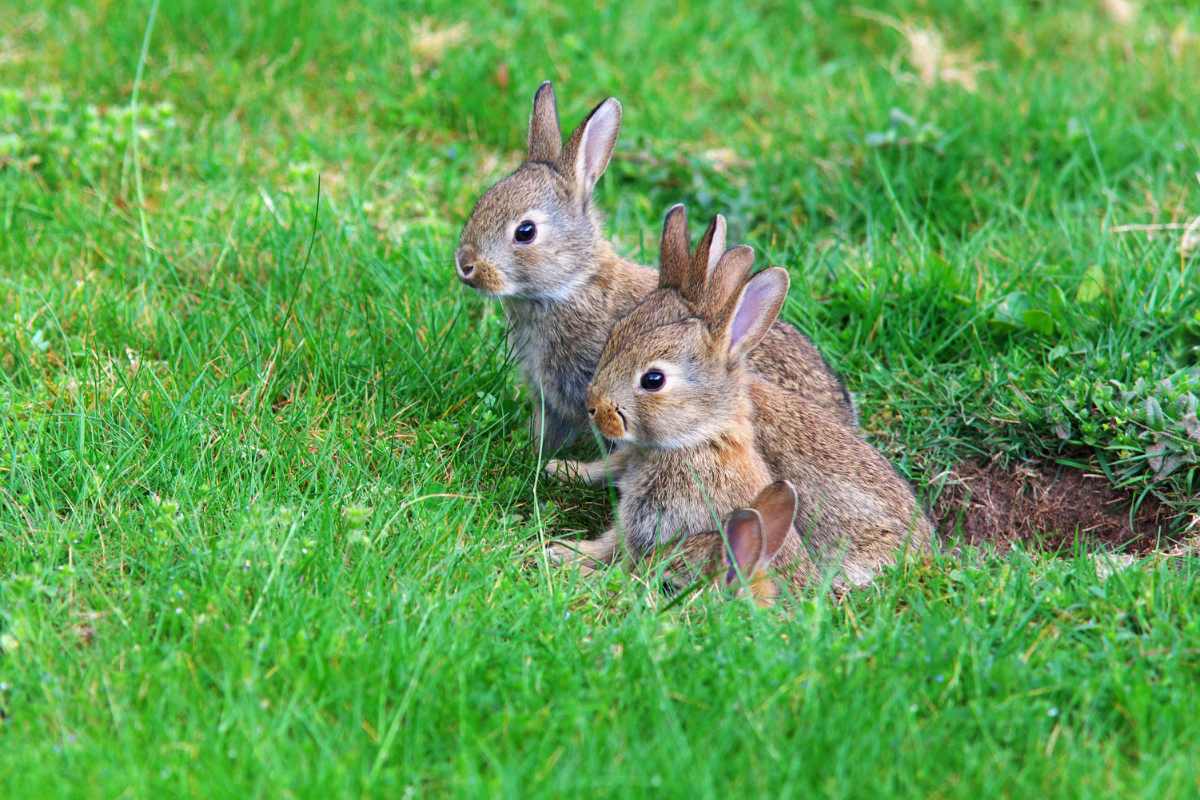
Main Image: Two young wild rabbits huddle beside a small burrow entrance in a lush green lawn. Photo Credit: Nick / Adobe Stock
Related Posts: