
One of the biggest mistakes you can make in your lawn care routine is cutting grass the wrong height. Grass height is more than cosmetic: cutting it too short can weaken the turf, while letting it grow too tall can look messy and invite pests.
The height you cut your grass affects how well it resists drought, fights weeds, and recovers after stress. In this article, I’ll walk you through the best height to cut your grass depending on your grass type and season.
| Grass | Season | Recommended Mowing Height |
| Kentucky bluegrass | Cool-season | 2.5 to 3.5 inches |
| Perennial ryegrass | Cool-season | 2 to 3 inches |
| Fine fescue | Cool-season | 2.5 to 3.5 inches |
| Tall fescue | Cool-season | 3 to 4 inches |
| Bermudagrass | Warm-season | 2 inches |
| Centipedegrass | Warm-season | 2 to 2.5 inches |
| St. Augustinegrass | Warm-season | 2.5 to 3 inches |
| Zoysiagrass | Warm-season | 2 inches |
| Bahiagrass | Warm-season | 3 inches |
| Buffalograss | Warm-season | 2 inches |
Cool-season grasses

Cool-season grasses are the go-to choice for lawns in the North, from Maine down to the Carolinas and across to Oregon. They grow vigorously in spring and fall, when the temperatures range from 65 to 75 degrees Fahrenheit.
Here’s how high you should cut cool-season grasses:
| Type of Grass | Mow When Grass Reaches | Set Mower to |
| Kentucky bluegrass | 3.5 to 4.5 inches | 2.5 to 3.5 inches |
| Perennial ryegrass | 3 to 4 inches | 2 to 3 inches |
| Fine fescue | 3.5 to 4.5 inches | 2.5 to 3.5 inches |
| Tall fescue | 4 to 5 inches | 3 to 4 inches |
See Related:
- Guide to Cool-Season Grasses
- Lawn Care Calendar for Cool-Season Grass
- Kentucky Bluegrass: How to Grow and Care for It
- Perennial Ryegrass: How to Grow and Care for It
- Fine Fescue: How to Grow and Care for It
- Tall Fescue: How to Grow and Care for It
Warm-season grasses

If you live in the southern parts of the country, from South Carolina down, you likely have warm-season grass. These grasses grow most actively from late spring through the summer, when the temperatures are 85 to 95 degrees.
Here’s the best height for warm-season grasses:
| Type of Grass | Mow When Grass Reaches | Set Mower to |
| Bermudagrass | 2.5 to 3 inches | 2 inches |
| Centipedegrass | 3 to 3.5 inches | 2 to 2.5 inches |
| St. Augustinegrass | 3.5 to 4 inches | 2.5 to 3 inches |
| Zoysiagrass | 2.5 to 3 inches | 2 inches |
| Bahiagrass | 3.5 to 4 inches | 3 inches |
| Buffalograss | 2.5 to 3 inches | 2 inches |
The mowing height can vary slightly depending on your region, even for the same type of grass. I recommend checking with your local Cooperative Extension service to determine the correct height.
When we asked Dr. Grady Miller, professor and extension turfgrass specialist at North Carolina State University, whether all cool-season and warm-season grasses can be mowed to the same height, he replied:
“Height of cut depends on the type of grass — for example, Kentucky bluegrass is usually mowed lower than tall fescue. You can train most grasses to handle lower mowing heights, but that puts extra stress on them, especially in tough conditions.
“Since mowing height affects rooting depth, scalping can temporarily stop root growth and add even more stress.”
See Related:
- Guide to Warm-Season Grasses
- Lawn Care Calendar for Warm-Season Grass
- Bermudagrass: How to Grow and Care for It
- Centipedegrass: How to Grow and Care for It
- St. Augustinegrass: How to Grow and Care for It
- Zoysiagrass: How to Grow and Care for It
- Bahiagrass: How to Grow and Care for It
- Buffalograss: How to Grow and Care for It
One-third rule of mowing
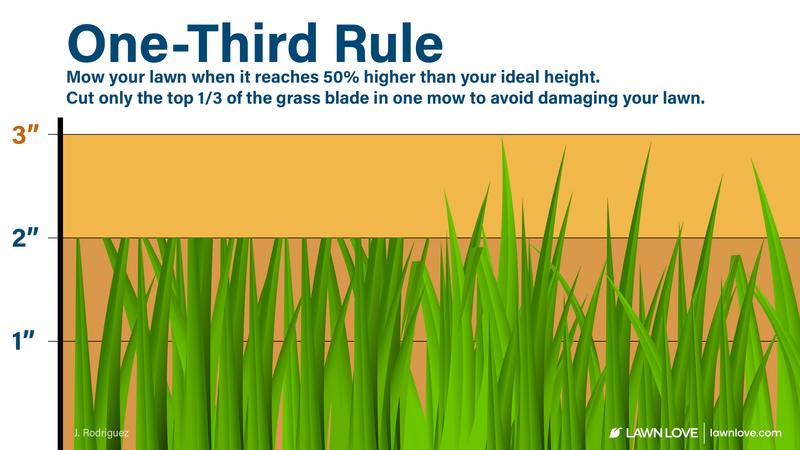
The one-third rule of mowing says you shouldn’t cut more than ⅓ of your grass’s height, so at least two-thirds of the grass blade remains. For example, if your grass is three inches tall, only cut it down to two inches.
Dr. Miller says, “The one-third rule is good advice as it supports healthy growth. If you keep your grass on the taller side and follow the one-third rule, it won’t grow as fast, so you won’t need to mow as often.”
Cutting too much at once can leave brown patches, uneven grass growth, weeds, pests, and diseases. Following this rule means you need to mow more frequently during peak growing season, but your lawn will thank you with thicker, healthier growth.
For more information, check out our article on What’s the One-Third Rule of Mowing.
Seasonal height adjustments
The right mowing height changes with the season. A few small height adjustments can help your lawn stay strong year-round and fight off weeds, pests, and diseases.
- Spring: Cut cool-season grass about 0.5 inch shorter at the beginning of the season to remove winter debris and encourage denser growth. For the rest of the season, I suggest sticking to the recommended mowing height. You can mow warm-season grass at the recommended height once its growth kicks in.
- Summer: Raise your mowing height by 0.5 to 1 inch for both cool- and warm-season grasses. Taller grass blades shade the soil, help prevent weeds, and reduce evaporation.
- Fall: Keep mowing cool-season grasses at their recommended height. Before the final mow of the season, cut them about 0.5 inch shorter to help prevent matting and disease. For warm-season grasses, gradually reduce the mowing height before dormancy to minimize thatch buildup.
- Winter: In mild climates, you can stick to the higher end of the recommended mowing height. In colder regions, grass goes dormant, so you won’t need to mow again until spring.
Dr. Miller adds, “It’s easier to condition grass to lower heights during active growth. During stressful periods, like drought, new sod, or extreme heat, keep blades slightly taller and avoid aggressive mowing. Some homeowners maintain the same height year-round with no issues, but adjusting for stress helps keep the lawn healthier.”
FAQs
Don’t panic. Water your lawn deeply to help it recover, rake up clippings, and wait to mow until it grows back to the proper height.
Rotary mowers have blades that spin at incredibly high speeds using gas or electricity. They can cut grass 1 inch or higher. Reel mowers have a central reel that spins when you push the mower, cutting like scissors. They are more precise and can mow even lower than an inch.
In mild climates with little seasonal change, you can mostly stick to one mowing height. However, I recommend leaving the grass slightly taller in summer to shade the soil.
For more information on mowing grass, check out these articles:
• How to Mow a Lawn the Right Way
• Lawn Mowing Tips and Tracks
• Different Lawn Mowing Patterns
A healthy lawn begins with proper mowing
Mowing your grass is the first step to a healthy lawn. Mow according to the recommended height for your grass, and don’t cut more than one-third of the blade at a time.
If you don’t want to spend your weekend mowing your lawn or just don’t have the energy, get in touch with Lawn Love.
Lawn Love pros can mow your lawn when it’s tall enough, overseed, fertilize, and aerate. Hire a pro through Lawn Love today to get the job done right at a price you love.
Main Image: Closeup of green grass cut strip. Image Credit: CharMoment / Adobe Stock
Related Posts:


