| Key Takeaways |
|---|
| • DIY vole damage repair costs $50-$200 for minor damage, $500-$2,000 or more for professional restoration. • Clean up debris and fill runways, then aerate compacted soil before seeding. • Choose grass seed based on sun exposure: perennial ryegrass for sunny areas, fine fescue for shade. • New grass sprouts in 2-3 weeks, but full recovery takes 6-8 weeks. • Install barriers and remove vole attractions while soil is exposed to prevent future damage. |

Once you get rid of a vole infestation, you might want to take a deep sigh of relief. However, the job isn’t over yet. It’s time to restore your lawn to its original beauty by prepping the soil, seeding, watering, fertilizing and maintaining your grass.
If this is something you don’t want to do yourself, Lawn Love pros can help.
Here’s how to repair vole damage to your lawn, step-by-step.
Tidy up
“Most [vole] damage can be fixed with a little cleanup and reseeding,” says Griffin Dill, extension professional specializing in wildlife issues at the University of Maine. Get started with the cleanup first.
Remove debris: Grab a rake and get rid of dead grass, thatch, and debris.
Fill burrow holes and runways: Voles are notorious for their burrow holes and runways, but they’re not too difficult to fix. “Vole runways should be raked out and patched with soil and grass seed,” Dill says.
Prepare the soil
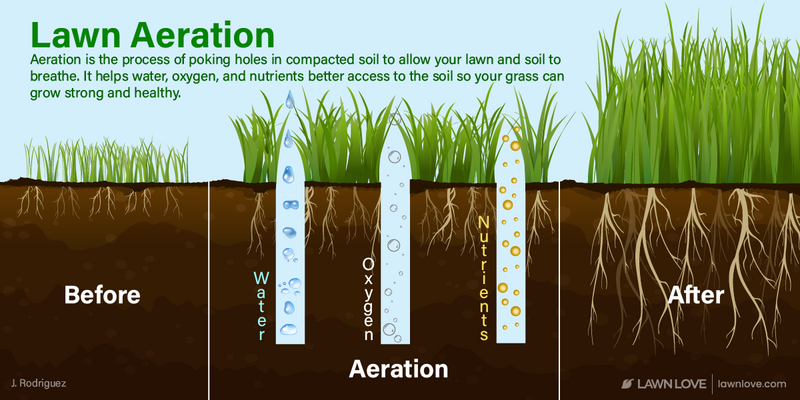
Aerate: Voles’ tunnels can compact the soil, which makes it hard for grass to grow. Aerate your soil to relieve it from compaction. You should routinely aerate your lawn anyway, because soil becomes compacted with time and foot traffic.
Extensive damage? Level and grade the soil: If you’re sowing a new lawn, level your soil to make it easier to mow your grass. Using topsoil to level your lawn also will enrich it with nutrients. Then, grade your soil to direct water away from your lawn.
Loosen up the top soil: Finally, loosen the top soil with a rake.
Seed or patch
Overseed or patch for partial damage: This once again depends on the extent of the damage. If your grass is just patchy, you may want to overseed or use grass plugs to fill in bare spots.
Seed for extensive damage: For full seeding, pick the right grass type and use a spreader to sow it. Sow the amount of seed advised on the packaging. Then, lightly rake over it to cover it with soil.
Don’t walk on your grass while it’s establishing, or you may damage it and stunt the growth.
Read also: Different Types of Lawn Spreaders
Best grass seed for vole-damaged areas

Choose grass seed based on your climate and the damage location:
For sunny, high-traffic areas: Perennial ryegrass or turf-type tall fescue germinates quickly (7-14 days) and establishes strong roots that resist future tunneling.
For shaded vole damage: Fine fescue blends tolerate shade well but need 6-8 weeks before any foot traffic.
For fast results: Look for seed mixes labeled “quick repair” or “fast germination” – these typically contain ryegrass that sprouts within a week.
Regional considerations: Northern lawns do best with Kentucky bluegrass mixed with perennial ryegrass (3-4 weeks to establish). Southern lawns need warm-season grasses – use Bermudagrass or Zoysia plugs planted 6-12 inches apart in spring.
Water and fertilize
Ensure your lawn gets a daily fine spray of water for the first two weeks. The soil needs to be consistently moist, but not soggy to prevent fungal diseases. Fertilize using a starter fertilizer or a fertilizer made for repairs. Follow the instructions carefully.
Read more:
Maintain your lawn
Maintaining your lawn is as important as repairing it. Ensure that you keep watering, mowing, and fertilizing as needed during the growing season. Remember that voles love tall grass, so if you neglect your lawn, they may return.
“Overseeding in the spring and keeping the lawn watered will help grass recover, and adding compost or topsoil can speed up regrowth,” Dill says.
More tips on preventing vole infestations: How to Get Rid of Voles in Your Yard
How to prevent voles during lawn repair

Since your soil is already exposed during repair, take these prevention steps:
Install barriers and remove attractions: Lay ¼-inch hardware cloth 12 inches deep around garden beds and tree roots. Clear debris piles, thick mulch (keep it under 2 inches), and overgrown vegetation within 3 feet of repaired areas.
Time your repair strategically: The best time to fix any damage is in early spring before your grass starts to grow. You can also repair in early fall when vole populations are lower, giving grass time to establish before winter when voles are most active.
Monitor weekly: Check repaired areas for fresh tunnels during the first 8 weeks. Early detection prevents re-damage.
How much does it cost to repair vole damage?
DIY vole damage repair typically costs $50-$200 for minor damage, covering grass seed ($20-$50 for a 5-10 lb bag), starter fertilizer ($15-$30), topsoil ($20-$40 for 1-2 cubic feet), and basic tools if you don’t already own them.
For extensive damage requiring professional lawn restoration, expect to pay $500-$2,000 or more depending on the affected area size. Professional services include proper grading, premium seed blends, and guaranteed establishment.
Cost-saving tip: Tackle cleanup and soil prep yourself, then hire a pro just for seeding if you’re unsure about technique.
FAQs
You’ll see new grass sprouting in 2-3 weeks, but full recovery takes 6-8 weeks for the lawn to be established enough for regular use. Fast-germinating grasses like perennial ryegrass show results quicker (7-10 days), while Kentucky bluegrass takes longer (21-28 days to germinate).
If you’ve followed all the steps and grass still isn’t filling in after 3-4 weeks, troubleshoot these common issues:
• Seed washed away: Heavy rain can displace seed before it germinates. Re-seed and cover lightly with straw or seed blankets to hold it in place.
• Soil too compacted: Vole tunnels may have collapsed, re-compacting the soil. Aerate again and loosen the top 2-3 inches before reseeding.
• Wrong seed for conditions: Shade-loving grass won’t thrive in sun, and vice versa. Reassess your site conditions and choose appropriate seed.
• Soil pH imbalance: Vole urine can alter soil pH. Test your soil (kits cost $10-$15) and amend if pH is below 6.0 or above 7.5.
• Voles still present: Check for fresh tunnels or droppings. If voles are still active, address the infestation before repairing again.
• Lawn rake for debris removal
• Garden rake for soil leveling
• Grass seed (see recommendations above)
• Starter fertilizer (10-10-10 or similar NPK ratio)
• Topsoil or compost (1-2 cubic feet per 100 square feet of damage)
• Broadcast spreader for even seeding
• Garden hose with spray nozzle for gentle watering
For extensive compaction, rent a soil aerator ($50-$75/day).
Don’t walk on your grass for at least 6 to 8 weeks after seeding. If you seed a grass type that doesn’t tolerate foot traffic well, such as a fine fescue grass, avoid walking on it altogether.
When DIY isn’t enough
Establishing a lush lawn isn’t as straightforward as it may seem, and there’s no shame in leaving the job to a pro. Once you’re ready to repair your vole-damaged lawn, Lawn Love’s pros provide expert services from aeration and overseeding to mowing, and more.
Main Image: Vole peeking from burrow in grassy clover. Image Credit: Marytog / Adobe Stock
Related Posts: