| Key takeaways |
|---|
| ● Color and texture changes after drought are part of the grass's survival response, not lasting damage. ● Not every plant survives at the same rate, which is why regrowth often looks patchy or uneven. ● Tug a thin or brown patch. If it doesn’t pull out, the crown is alive and needs time and water. |
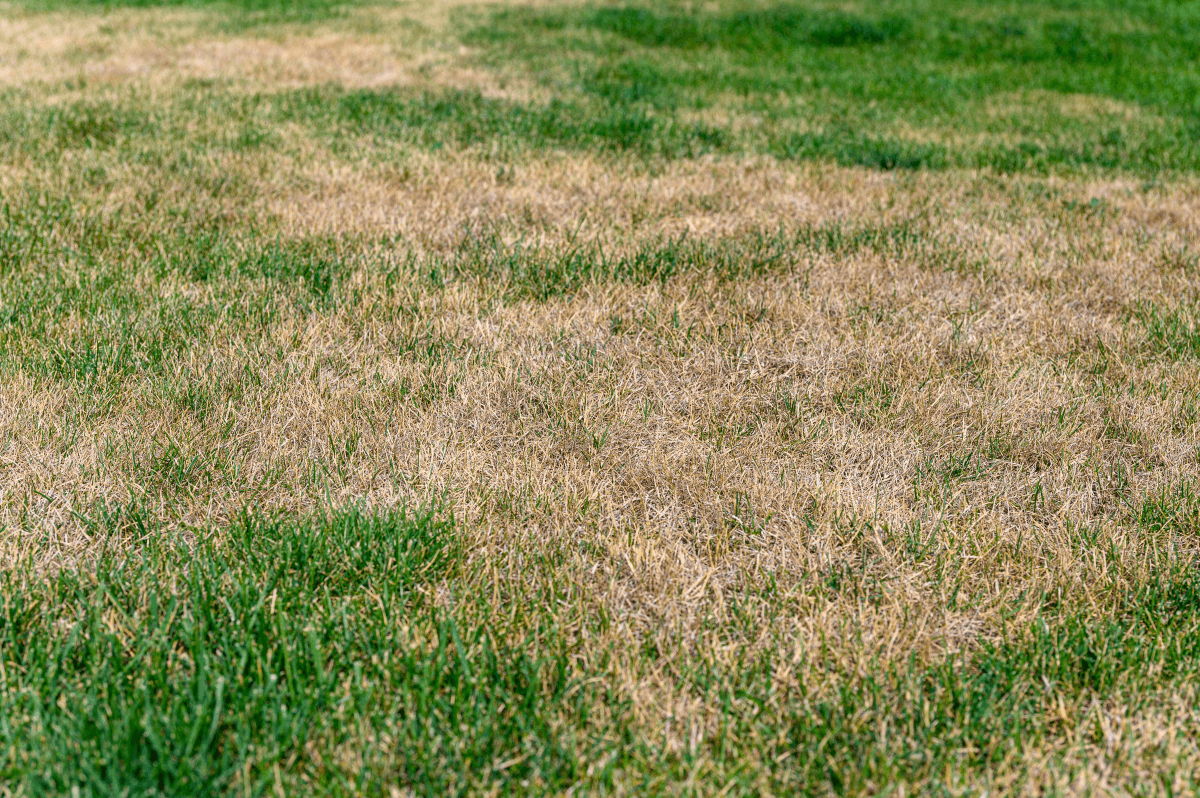
Your grass looks different after drought because it’s starting to regrow from the crown and rebuild chlorophyll. The change in color, texture, or thickness isn’t permanent damage. It’s a normal recovery response but may look off for a while.
Cool-season grasses can look yellow-green, patchy, or thin as they shift out of dormancy. Warm-season grasses may green up unevenly, since some patches may have held on to more crown moisture than others.
Full recovery can take a few weeks to a full growing season. Recovery length depends on how long the drought lasted, your grass type, and how you cared for your lawn during recovery.
Not sure whether your lawn needs more time or some repair work? Lawn Love’s local lawn care pros can take a look and tell you which.
What’s actually happening to your grass
Drought-stressed grass may look like it’s dying, but it’s really downsizing in order to survive.
“During drought, the plant slows its growth and conserves water, which can cause it to lose color and density,” says Kody Robinson of ProCutz Lawncare Landscaping in Mount Dora, Florida.
When water gets scarce, grass plants sacrifice their leaf blades first. They close the stomata (the tiny pores that let water in and out) to minimize water loss and start sending all water and resources down to the core growing parts, the crown and roots.
The blades fold up, tissue turns brown as chlorophyll breaks down and isn’t replaced, and your grass stops growing upward. The crown – the small, low-growing point where the roots and shoots meet – stays alive as long as it has any stored moisture.
Once your brown, crispy grass comes out of drought stress and starts actively growing again, it isn’t recovering to its old self. It’s regrowing from scratch at the crown level, which is why the grass that comes back doesn’t always match what was there before.
Virginia Cooperative Extension points to two visible signs of recovery: green tissue emerging at the base of the browned leaves, and new leaves growing from the plant’s growing points.
Pro tip: If your grass is struggling to green back up, it’s wise to check if your lawn is dead or still dormant.
Why the color looks different
As your lawn comes out of drought, you may be surprised at its appearance.
“Lawns can definitely look different as they begin recovering from drought,” Robinson says. “One of the first things you may notice is the color gradually returning, although it can be uneven at first.”
There are a few reasons it rarely greens up all at once or all the same shade.
- Grass species respond differently. Some species hold color longer under stress than others, depending on their root length and physiology. SDSU Extension notes that since many lawns are grown with a mix of grass types, a drought-stressed lawn often develops a patchy, multi-toned appearance.
- New growth looks different from mature growth. Fresh blades emerging from the crown are often a lighter, yellow-green color at first because they haven’t fully developed chlorophyll yet. That’s not a nutrient deficiency, it’s just new tissue. They’ll darken as they photosynthesize and produce more chlorophyll.
- Uneven watering during recovery creates uneven color. Spots that dry out faster (near pavement, on slopes, in full sun) will lag behind shadier or lower areas that hold moisture longer.
Pro tip: Give new growth a few mowing cycles before assuming a color difference means a problem. If the yellow-green tone doesn’t deepen after 3 to 4 weeks of consistent watering and normal mowing, then test your soil for a nutrient issue.
Why the texture and density look different
Thinner grass after drought is usually a response to arid conditions, not necessarily because you’re losing coverage everywhere at once.
When drought-stressed, grass folds its blades and quits pushing up new growth. Older leaves dry out and flatten, leaving less green surface for your eye to catch from above. That drop in visible leaf area is what makes a lawn look sparse or patchy.
You’ll also see that different species recover from drought at different speeds. According to Purdue University’s turfgrass program, tall fescue stays greener longer into a drought thanks to its deeper roots. Once watering resumes, it has less ground to make up compared to its cool-season counterparts.
Even within the same lawn and same grass type, some plants recover quicker than others, if at all.
The gaps left behind between plants can lead to a patchy lawn after drought. Regrowth in those spots often looks clumpier or more uneven, until something reseeds or fills back in on its own. Weeds can also sprout in thin areas.
“With consistent moisture and proper mowing,” Robinson reassures, “you’ll typically see the lawn become thicker and more uniform as it recovers.”
What’s salvageable vs. what’s not
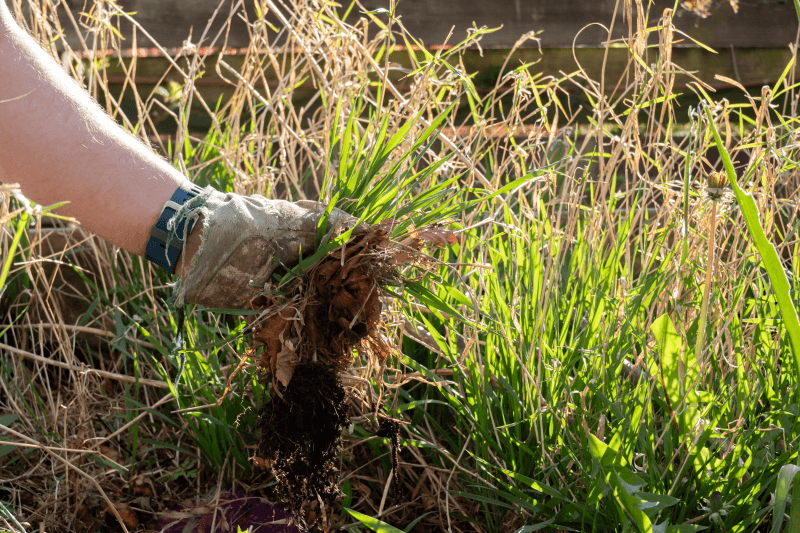
Regardless of how well you care for your lawn after drought, not every plant will survive. A simple way to check whether a brown or thin patch is coming back: grab a handful of grass and tug gently.
- If it resists and stays rooted, the crown is likely alive and just needs consistent moisture and time.
- If it pulls up easily, roots and all, that plant didn’t survive, and the spot will need to be reseeded or resodded rather than just watered.
Most drought-stressed lawns are salvageable with patience and consistent watering. The exceptions are spots that were already thin, compacted, or under stress before the drought hit. Those spots are most likely to need overseeding rather than recovery care alone.
If a patch truly doesn’t come back, our guide on bringing dead grass back to life walks through the repair options.
How long recovery actually takes
Recovery timing depends heavily on how long the drought lasted and what type of grass you have.
| Recovery timeframe | Typical window |
| Mild drought stress (not fully dormant) | Greens back up within about a week of steady watering |
| Grass that went fully dormant | Typically greens up within 1 to 2 weeks once consistent moisture returns* |
| Full density recovery (pre-drought thickness) | Rest of the growing season, longer if reseeding is needed |
*A longer dormancy stretch doesn’t necessarily mean a longer recovery. Even a lawn dormant for 5 to 8 weeks typically greens back up within 1 to 2 weeks once steady watering resumes, according to Purdue’s turfgrass program.
FAQs
Most lawns get close to their old density and color, especially with a drought-tolerant grass suited to the region. Lawns that were thin or unhealthy before the drought will likely need help with reseeding or repair.
Sometimes. Drought stress usually looks like large, uniform brown areas that green back up once watering resumes. Disease tends to spread in rings or circular patterns, and pest damage shows up in irregular patches that worsen quickly.
If a patch doesn’t respond after a few weeks of consistent watering, take a closer look to determine if it’s drought stress, pests, or disease.
Not necessarily. Grass regrowing from a stressed crown can be just as strong once it re-establishes a full root system. The bigger risk to long-term strength is skipping drought recovery care, not the drought itself.
Let the pros take a look
Figuring out what’s normal regrowth versus what needs repair after drought isn’t always obvious. If you’d rather have someone take a look, Lawn Love makes it simple. Get an instant quote, pick a time, and a vetted local pro will handle the rest.
Get a free estimate near you →
Main Image: A lawn with patchy brown and green grass showing signs of drought stress. Photo Credit: o_lypa / Adobe Stock
Related Posts:


