| Key Takeaways |
|---|
| • Vole runways are the #1 identifier: Look for 1½ to 2-inch wide surface paths that appear as shallow ditches through your grass. • Don't confuse them with moles: Voles create surface runways and small holes, while moles make volcano-shaped dirt mounds. • Damage happens fast: Vole populations can explode in a single season, spreading across your yard in weeks. • Check after snowmelt: Early spring reveals the runway networks voles created under winter snow cover. |

Noticing mysterious runways crisscrossing your lawn or small holes near plant roots? You likely have voles—small rodents often mistaken for moles or mice that can devastate lawns in weeks. Below are 7 signs of vole damage in your yard, from their distinctive 1-2 inch surface tunnels to gnawed tree bark and collapsed plants.
Vole vs. mole vs. mouse: Quick comparison
| Pest | Tunnels/Runways | Holes | Key Identifier |
| Voles | Surface runways, 1½-2″ wide | Golf ball-sized, flush with ground | Gnaw marks on bark near ground |
| Moles | Raised ridges underground | Volcano-shaped dirt mounds | No plant/bark damage |
| Mice | No lawn runways | Nests in structures, not lawns | Rarely damage lawns or plants |
Sign #1: Surface runway systems
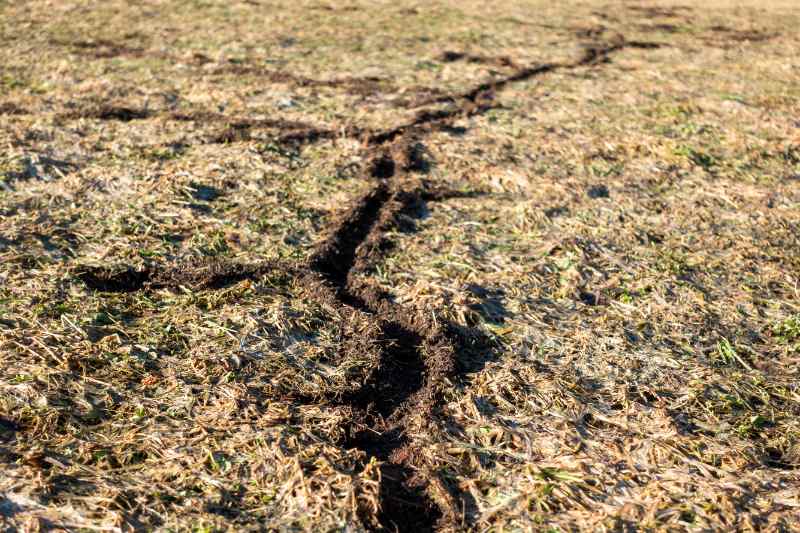
“Voles often leave behind narrow, winding runways through the grass,” says Griffin Dill, extension professional of the University of Maine. This is your No. 1 clue that they’re behind the damage in your lawn.
These runways are typically 1 ½ to 2 inches wide and about 1 inch below the soil level. They look like ditches or crevices crisscrossing your lawn in irregular, interconnected patterns. You’ll most likely notice them in early spring, just after snowmelt reveals the network of trails voles created under winter snow cover.
Unlike mole tunnels (which create raised ridges) or rabbit paths (which are wider and less defined), vole runways form distinctive surface grooves through the grass. Parts of your lawn may feel soft, spongy, or uneven when you walk across these areas.
They may also use large patches of dried grass for storing food and materials. You may notice ½ an inch (back) or just over ⅓ of an inch (front) long paw marks on the soil or snow near these runways.
Sign #2: Holes and bumps
“Look for holes in the lawn,” says Dr. Susan Barton, Extension Specialist at the University of Delaware. Vole holes are roughly golf ball-sized (1-2 inches in diameter) and often appear at the ends of their surface runways. Don’t mistake them for rats’ burrow holes, which are typically baseball-sized, or squirrels’ holes, which are small and easy to smooth over.
Sign #3: Gnaw marks on trees and shrubs
Dill says another sure sign of voles in your yard are gnaw marks at the base of young trees and shrubs. Voles may chew through tree and shrub bark near the ground, leaving behind ¼ inch etchings. These marks typically appear within a few inches of the soil line, unlike rabbit damage which occurs higher up on plants.
Sign #4: Distinctive droppings
Voles’ droppings can be likened to green or brown rice grains. You’re likely to find a number of them in voles’ runways or near their burrow entrances, as these rodents tend to both eat and defecate frequently.
Sign #5: Damaged bulbs, plants, and root systems
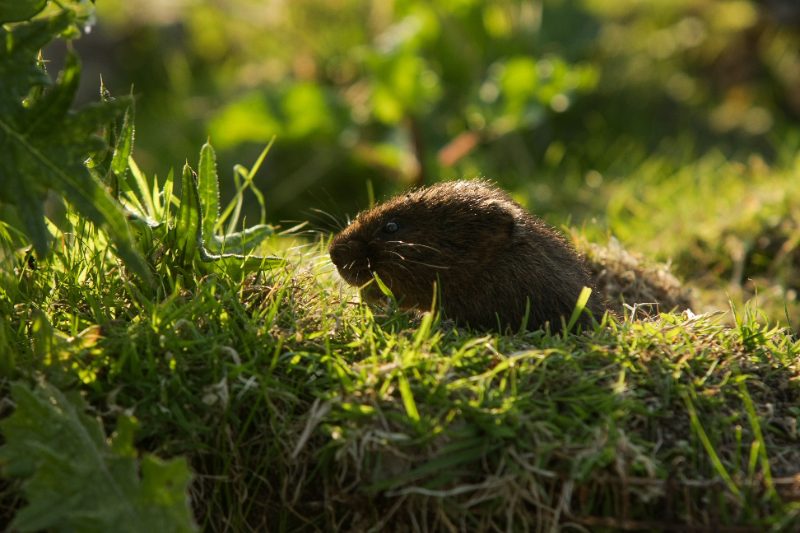
Voles chew on grasses, seedlings, roots, and plants. You can notice the damage in anything from your vegetable garden to your flowers to your lawn. Though their bite marks may resemble the work of cutworms, they’re distinct for their clean, sharp cut.
You may notice healthy-looking plants suddenly collapse or wilt without warning—this often indicates voles have chewed through the root system underground.
Sign #6: Nesting materials
The nests of these creatures are 6 to 8 inches long, made of grass and leaves, and usually well-hidden in shallow tunnels. They may also be behind other cover, like tall grass, thick mulch, or leaf piles.
Sign #7: Creatures in your yard
Voles look like chubby field mice with shorter tails, small ears, and short legs. They are about 5-7 inches long with chestnut brown mixed with black fur. Although they’re hard to spot, you’re most likely to see them at dusk and night, in vegetation or under snow.
FAQs
Dense ground cover like tall grass, thick mulch layers, and leaf piles provide ideal shelter for voles. Bird feeders that drop seed on the ground, pet food left outside, and vegetable gardens offer ready food sources. Winter snow cover also conceals their activity, making yards particularly attractive during colder months. Maintaining short grass and clearing excess mulch or debris makes your property less appealing to these rodents.
Voles have chunky bodies, short tails (1-2 inches), tiny ears, and create distinctive surface runways across lawns. House mice are smaller overall, have longer tails (3-4 inches), larger ears, and nest inside structures rather than creating lawn tunnel systems. If you see runway damage in your grass, you’re dealing with voles, not mice.
Yes, natural predators like owls, hawks, foxes, and weasels hunt voles and can help manage populations. However, attracting predators alone may not be enough if voles are actively breeding and causing significant damage. A diverse habitat that supports these predators works best as a long-term prevention strategy rather than a solution for existing infestations.
When to call a pro for help
Identifying a mole infestation is just the first step, but now you have to deal with it. Read my other guides:
Follow the steps closely, because if you get it wrong, it could invite the critters right back to your lawn and cause the same or worse damage all over again.
Need professional help identifying or removing voles? Lawn Love’s lawn care experts can diagnose pest problems and implement targeted treatments. Our pros handle everything from mowing to weed removal, and post-damage lawn repair.
Main Image: Vole peeking from hole with leaves. Image Credit: georgigerdzhikov / Adobe Stock
Related Posts: