| Key Takeaways |
|---|
| • Match the tree to your zone: The best flowering tree for you suits your U.S. Department of Agriculture (USDA) hardiness zone (the climate-based planting zones you can look up by ZIP code), plus your sun exposure and space. • Think beyond spring: Trees like crape myrtle, chaste tree, and oleander deliver color through summer, while dogwood and serviceberry add striking fall foliage. • Mind the hazards: Several popular picks, including oleander, golden chain tree, and cherry, are toxic to pets or people, so choose carefully if kids or animals use your yard. |

A beautiful flowering tree can make your landscape stand out, especially when its branches light up with bright yellow, red, blue, purple, pink, or white blooms. Searching for the best flowering trees for your landscape? Explore 20 of the most show-stopping options, in a rainbow of colors, below.
Each entry lists hardiness zones, sun and water needs, bloom time, mature size, and any potential hazards so you can match the right tree to your yard.
You will also find tips for maximizing blooms, along with answers to common questions and notes on keeping your trees tidy with bush trimming.
20 of the best flowering trees
The full list below spans spring, summer, and fall bloomers in a rainbow of colors, with care details for each.
1. Chaste tree (Vitex agnus-castus)
The profusely purple-blooming chaste tree is a southern stunner, grown as a small ornamental tree or tall shrub in warm, coastal climates.
In colder climates (zones 5 and 6), it dies back to the roots each winter and returns as a small shrub in spring, so it never reaches substantial height.
Chaste tree is especially desirable because it grows quickly, sometimes more than 2 feet per year, and its long spikes of tiny flowers last for several months. Flowers are usually lavender or purple, but they can sometimes be pink or white instead.
- Hardiness zones: 7-9
- Sun exposure: Full sun
- Soil preferences: Needs soil that drains well and quickly
- Water needs: Does well in drought
- Bloom time: Late spring, early fall
- Foliage: Deciduous
- Mature size: 8-10 feet tall, 5-8 feet wide
- Potential hazards: Can become weedy and invasive
2. Crape myrtle (Lagerstroemia indica)

Crape myrtle, aka crepe myrtle, is one of the most popular flowering trees for landscapes, especially in the South. With a high heat tolerance, it produces beautiful bright blossoms in the summer sun when few other plants are blooming.
Because crape myrtles are so beloved, breeders have developed many different cultivars, some small shrubs and some towering up to 30 feet tall. Flowers are available in innumerable shades of pink, purple, red, or white.
- Hardiness zones: 7-10
- Sun exposure: Full sun
- Soil preferences: Tolerates most soils as long as they drain well
- Water needs: Needs water once per week and sometimes twice per week in fast-draining soils
- Bloom time: Usually sometime in summer; exact bloom dates vary by cultivar
- Foliage: Deciduous
- Mature size: Cultivars vary by size; anywhere from 2-30 feet tall, 2-15 feet wide
- Potential hazards: No hazards
3. Dogwood (Cornus florida)

The flowering dogwood is a lovely ornamental tree with single or multiple trunks and a crown (top part of the tree) of spreading branches. It’s native to much of the Eastern U.S., south to Florida, north to Maine, and west to Kansas and Oklahoma.
Dogwood flowers are bright white, pink, or both, standing out against bare bark because they bloom before spring leaves appear. Those leaves turn scarlet in fall for an impressive second show of color.
- Hardiness zones: 5-9
- Sun exposure: Full sun or partial shade
- Soil preferences: Moist and acidic sandy or loamy soils
- Water needs: Not drought-tolerant; needs weekly watering during dry spells
- Bloom time: Late winter to early spring in the South; late spring in the North
- Foliage: Deciduous
- Mature size: 20-40 feet tall, up to 20 feet wide
- Potential hazards: Direct skin contact with the tree can cause a rash
4. Downy serviceberry (Amelanchier arborea)
With showy white blossoms and delicious purple berries, downy serviceberry is an Eastern native you can grow as an ornamental tree or tall shrub. In the rose family, it also goes by Juneberry and shadbush.
Downy serviceberry blooms profusely in spring before its leaves appear, though the flowers last only about a week. Its berries ripen by late summer and are perfect for cobblers, pies, and jams, followed by vibrant red, yellow, and orange fall foliage.
- Hardiness zones: 4-9
- Sun exposure: Full sun or partial shade
- Soil preferences: Adapts to a variety of soils as long as it gets good drainage
- Water needs: Somewhat drought-tolerant but won’t thrive under constant drought stress
- Bloom time: March to early April
- Foliage: Deciduous
- Mature size: 10-25 feet tall, 10-15 feet wide
- Potential hazards: All parts of the plant except the ripe berries are toxic to goats, sheep, and cattle
5. Eastern redbud (Cercis canadensis)
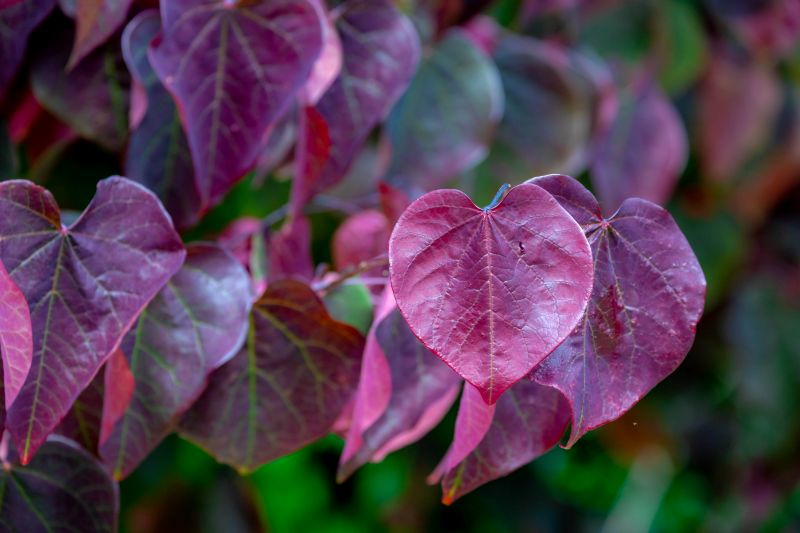
Eastern redbud dazzles in spring, when leafless branches fill with tiny pink blossoms. Heart-shaped leaves follow (purplish-red at first, green in summer, then golden yellow in fall), and the rounded crown stays elegant even in winter.
- Hardiness zones: 4-9
- Sun exposure: Full sun or partial shade
- Soil preferences: Any moist, well-draining, nutrient-rich soil
- Water needs: Keep the soil moist to a depth of 2 to 3 inches; watering schedule depends on your soil type, but you should water about once per week
- Bloom time: March-May
- Foliage: Deciduous
- Mature size: 20-30 feet tall, 25-35 feet wide
- Potential hazards: Contains saponin which can be toxic to fish but is not a danger to pets and humans unless ingested in very large amounts
6. Fringe tree (Chionanthus virginicus)
The aptly-named fringe tree explodes with tufts of delicate, lilac-scented white flowers in spring. From afar, these trees look like puffy clouds, but up close, bright green leaves provide a striking visual contrast to the fine fringe-like flowers.
Fringe trees are cold-hardy, surviving down to zone 4. They’re great for planting along a street or driveway in snowy areas because they’ve shown tolerance to road salt.
- Hardiness zones: 4-9
- Sun exposure: Full sun or partial shade
- Soil preferences: Moist, well-draining, acidic soils
- Water needs: Mildly drought-tolerant
- Bloom time: April-May
- Foliage: Deciduous
- Mature size: 12-20 feet tall and wide
- Potential hazards: None
7. Golden chain tree (Laburnum anagyroides)
The golden chain tree dazzles in late spring to early summer, when trailing “chains” of rich yellow flowers droop from every branch for a weeping willow-like look.
As the golden chain tree matures, it forms a wide, spreading crown. Let it grow in an irregular form or prune it into a rounded shape for a more cultivated look.
Golden chain tree’s flowers are beautiful and have a sweet fragrance, but don’t let them fool you. All parts of this plant are highly poisonous to pets and humans. Other potential problems: It’s short-lived compared to other trees and doesn’t do well in intense heat.
- Hardiness zones: 5-7
- Sun exposure: Full sun or partial shade
- Soil preferences: Any well-draining, nutrient-rich soil; tolerates alkaline soils
- Water needs: Water once per week when there’s no rainfall
- Bloom time: May-June
- Foliage: Deciduous
- Mature size: 12-30 feet tall, 9-15 feet wide
- Potential hazards: All parts of the tree are poisonous and can be fatal if ingested
8. Hawthorn (Crataegus spp.)
There are hundreds of species of hawthorn trees, many of which are valued in landscaping for their year-round interest. First, fragrant clusters of tiny white, soft pink, or hot pink flowers cover every inch of the tree in spring.
Then, from fall through winter, hawthorns bear red berries (sometimes black, orange, or yellow) that brighten your landscape and attract songbirds.
Some popular species for home landscapes are:
- Chinese hawthorn: Hardy in zones 6-9; grows up to 20 feet tall and 12 feet wide; white flowers
- “Paul’s Scarlet” English hawthorn: Hardy in zones 5-8; grows up to 25 feet tall and 20 feet wide; hot pink or almost red flowers
- Winter king green hawthorn: Hardy in zones 4-7; grows up to 35 feet tall and 25 feet wide; white flowers
- Hardiness zones: 3-9 (varies by species)
- Sun exposure: Full sun
- Soil preferences: Needs fast-draining soil to prevent root rot
- Water needs: Water regularly during the first year after planting; drought-tolerant once established
- Bloom time: Mid through late spring
- Foliage: Deciduous
- Mature size: Varies between different species; anywhere from 15-50 feet tall, 8-35 feet wide
- Potential hazards: Many species have sharp thorns; common hawthorn (C. monogyna) is invasive in some regions
9. Japanese tree lilac (Syringa reticulata)
If you’re familiar with typical lilacs, Japanese tree lilac is larger and grown as an ornamental tree instead of a shrub. With frothy clusters of creamy white flowers, it attracts a host of hummingbirds and butterflies in late spring and early summer.
It grows into a round crown that can be more upright or spreading depending on your pruning techniques.
Aside from the flowers, the Japanese tree lilac’s peeling, shiny reddish-brown bark is another visually striking feature. As the tree matures, the bark will fade to a grayish color.
- Hardiness zones: 3-7
- Sun exposure: Full sun
- Soil preferences: Any moist, well-draining soil; tolerates slightly acidic soils
- Water needs: Keep the soil moist; needs regular watering during drought
- Bloom time: June
- Foliage: Deciduous
- Mature size: 20-30 feet tall, 15-25 feet wide
- Potential hazards: Can become invasive once its seeds mature at about 15-20 years old
10. Mountain ash (Sorbus americana)
Fluffy white flowers in spring and cheerful red berries in fall make mountain ash an East Coast favorite, among homeowners and birds alike. Native to the Northeast and as far south as Georgia, mountain ash is a smaller tree with a bushy, dense growth habit.
In colder climates, it might not reach its maximum height and should be grown as a shrub instead.
Beware that mountain ash trees often suffer from pests and plant diseases, such as boring insects and mildew. These issues, left unchecked, can kill the tree, so mountain ashes can be short-lived.
- Hardiness zones: 2-5
- Sun exposure: Full sun or partial shade
- Soil preferences: Acidic, moist, and well-draining soils
- Water needs: Needs about 1 inch of water per week in the absence of rain
- Bloom time: May-June
- Foliage: Deciduous
- Mature size: 10-30 feet tall, up to 15 feet wide
- Potential hazards: Ingesting a large amount of berries can cause stomach pain, vomiting, diarrhea, or kidney damage
11. Oleander (Nerium oleander)
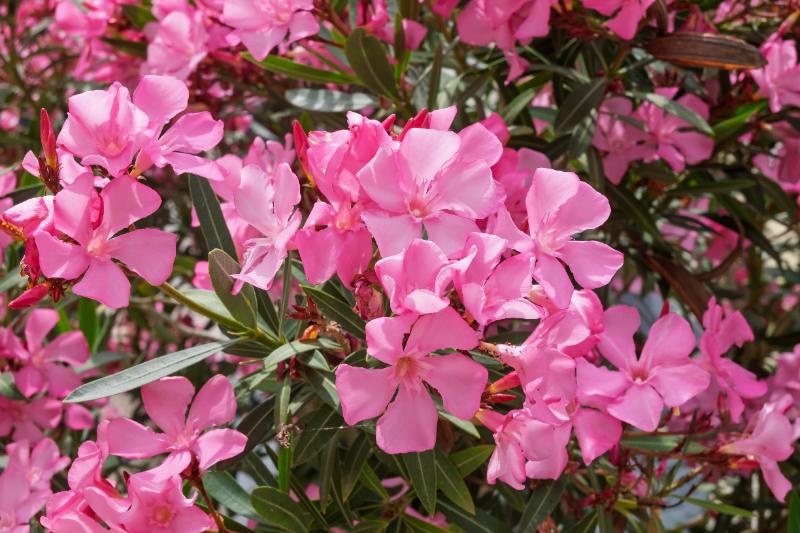
You’ll often see oleander as a shrub in landscapes, but you also can grow it as a small ornamental tree. Oleander has many benefits, from evergreen leaves to lovely pink or white flowers that bloom year-round in warm climates.
If you live in a smog-heavy city or the dry Southwest, oleander could be the perfect backyard addition: It tolerates poor soils, pollution, drought, heat, and salt.
The biggest issue with oleander in the landscape is that it’s extremely poisonous. It’s definitely not a good choice if pets or small children often play in your yard.
- Hardiness zones: 8-11
- Sun exposure: Full sun
- Soil preferences: Needs good drainage but tolerates nutrient-poor soils
- Water needs: Let the soil dry out between waterings to prevent root rot
- Bloom time: Blooms year-round, with the most flowers in warm weather
- Foliage: Evergreen
- Mature size: 4-20 feet tall, 3-15 feet wide
- Potential hazards: Highly toxic if ingested; invasive in some regions
12. Pink weeping cherry tree (Prunus subhirtella var. ‘Pendula’)
Cherry trees are famous for their lovely light pink blooms that stand out on leafless branches, and the pink weeping cherry is a spectacular example.
Its spreading branches grow in an umbrella shape, and trails of the little pink flowers droop down to the ground in an elegant waterfall in early spring.
The pink weeping cherry tree does produce fruits, but they’re very small, and wildlife love to eat them, so they shouldn’t require any cleanup on your part.
- Hardiness zones: 4-9
- Sun exposure: Full sun or partial shade
- Soil preferences: Moist and well-draining soils
- Water needs: Needs watering twice per week in summer but less frequently during cooler months
- Bloom time: Early spring
- Foliage: Deciduous
- Mature size: 20-30 feet tall, 20-30 feet wide
- Potential hazards: Stems, leaves, and seeds are poisonous for pets and humans if ingested
13. Prairifire crabapple tree (Malus ‘Prairifire’)
The Prairifire crabapple tree is beloved for its long-lasting pink flowers that bloom in spring and glossy maroon berries that ornament the tree in fall and winter. Its colorful leaves provide year-round interest. When the leaves first emerge in spring, after the flowers, they’re a deep purplish-red.
They turn green in summer but maintain the deep red in their veins. In fall, they change to brilliant orange or yellow.
- Hardiness zones: 3-8
- Sun exposure: Full sun
- Soil preferences: Tolerates most soils as long as they’re moist and well-drained
- Water needs: Water once per week or more often during the hottest part of summer
- Bloom time: April-May
- Foliage: Deciduous
- Mature size: 15-20 feet tall, 15-20 feet wide
- Potential hazards: Seeds, stems, and leaves are toxic for pets if ingested
14. Red horsechestnut (Aesculus x carnea)
If you’re looking for a flowering tree that also can provide shade during the hot summer months, the red horsechestnut might be a good choice for you. It grows quite large compared to most other trees with showy flowers.
The red horsechestnut’s flowers grow in upright spikes in dazzling shades of pink or red. They spring up from a backdrop of bushy, spreading branches covered in drooping green leaves.
Because it grows so large, red horsechestnut needs plenty of space and isn’t suited to small yards. Its seed pods also drop in summer and can be messy to clean up.
As Kyle Daniel of Purdue University in West Lafayette, Indiana, notes, “the mature size of the plant is a very important consideration when selecting plants for the landscape to reduce maintenance and future problems.”
- Hardiness zones: 4-9
- Sun exposure: Full sun or partial shade
- Soil preferences: Moist soils high in organic matter with good drainage
- Water needs: Keep the soil moist; water regularly once per week in the absence of rainfall
- Bloom time: Mid-spring
- Foliage: Deciduous
- Mature size: 30-40 feet tall, 25-35 feet wide
- Potential hazards: Contains saponins, which are generally considered non-toxic but may cause gastrointestinal upset if consumed in large quantities
15. Saucer magnolia (Magnolia soulangeana)
One of the most popular magnolias in home landscapes, the saucer magnolia blooms with cup-shaped pink and white flowers on bare branches in spring, filling your yard with that irresistible magnolia aroma.
The rest of the tree is quite attractive, too, with smooth gray bark and large leaves that turn brilliant yellow in fall before dropping in winter.
- Hardiness zones: 4-9
- Sun exposure: Full sun or partial shade
- Soil preferences: Prefers moist and well-draining acidic soil but tolerates dry or slightly alkaline soils
- Water needs: Needs frequent watering during the first year, then only needs watering during drought
- Bloom time: Usually blooms late February-April, but may continue blooming throughout summer and into the next winter
- Foliage: Deciduous
- Mature size: 20-30 feet tall, 20-30 feet wide
- Potential hazards: No hazards
16. Smoke tree (Cotinus coggygria)
The flowers of the smoke tree have a distinctive look that sets it apart from other ornamental plants. Instead of individual flowers, this tree produces clusters of wispy little blossoms that resemble a cloud of smoke when viewed from afar.
The flowers come in varying muted shades of tan, pale pink, and more.
- Hardiness zones: 5-8
- Sun exposure: Full sun
- Soil preferences: Tolerates poor, rocky soils as long as they drain well
- Water needs: Drought-tolerant once established
- Bloom time: Summer
- Foliage: Deciduous
- Mature size: 10-15 feet tall and wide
- Potential hazards: No hazards
17. Southern magnolia (Magnolia grandiflora)
A native to the Southeast, the southern magnolia has become an unmistakable symbol of the American South. It’s easy to understand why this tree is such a classic, with its grand appearance that includes huge, creamy white flowers and glossy dark green leaves that last through winter.
The southern magnolia grows in an upright habit, and branches thick with leaves cover the tree from its thinner crown to its wider base.
- Hardiness zones: 7-10
- Sun exposure: Full sun or partial shade
- Soil preferences: Moist, well-draining, nutrient-rich soils
- Water needs: Needs supplemental watering during periods of drought, but rainfall is usually sufficient
- Bloom time: Late spring-early fall
- Foliage: Evergreen
- Mature size: 60-80 feet tall, 30-50 feet wide
- Potential hazards: No hazards
18. Star magnolia (Magnolia stellata)
The star magnolia is another favorite from this family of flowering trees. Like the saucer magnolia, this beauty drops its leaves in winter and bears its flowers on leafless, smooth gray branches.
The large, daisy-like flowers are stark white and give the elegant impression of a fresh sprinkling of snow adorning the branches.
- Hardiness zones: 4-9
- Sun exposure: Full sun or partial shade
- Soil preferences: Prefers acidic, moist, and well-draining soils
- Water needs: Moderately drought-tolerant but may need watering during extended dry periods
- Bloom time: Sometime between late February and April, depending on the weather
- Foliage: Deciduous
- Mature size: 15-20 feet tall, 10-15 feet wide
- Potential hazards: No hazards
19. Tulip tree (Liriodendron tulipifera)
The tulip tree, aka tulip poplar or yellow poplar, looks like it belongs on an exotic tropical island, but it’s actually native to much of the Eastern U.S. That means it’ll give you all the eco-friendly, low-maintenance benefits of a native plant.
It can grow very tall, up to around 90 feet, and it has an upright, spear-shaped growth habit with a thin crown and wide base.
Tulip tree’s main appeal is its unique flowers. They’re large and cup-shaped, with light green petals with a bright orange ring around the bottom. A crown of yellow stamens reach out from the center of each bloom.
- Hardiness zones: 4-9
- Sun exposure: Full sun or partial shade
- Soil preferences: Acidic, moist, and well-draining soils
- Water needs: Mildly drought-tolerant in humid climates but prefers for the soil to stay moist
- Bloom time: April-June
- Foliage: Deciduous
- Mature size: 70-90 feet tall, up to 40 feet wide
- Potential hazards: No hazards
20. Witch hazel (Hamamelis spp.)
Witch hazels are shrubs or small, spreading trees that produce fringe-like bursts of bright yellow or red flowers, depending on the species. Size and bloom time also vary by species, so, if you like the look of witch hazel, it’s easy to find one that suits your landscape’s needs.
The most popular witch hazel species for home landscaping are:
- American witch hazel: Hardy in zones 4-8; grows up to 20 feet tall and wide; blooms October-December; yellow flowers
- Chinese witch hazel: Hardy in zones 5-8; grows up to 15 feet tall and wide; blooms January-March; yellow flowers
- Japanese witch hazel: Hardy in zones 5-8; grows up to 15 feet tall and wide; blooms January-March; yellow or red flowers
- Ozark witch hazel: Hardy in zones 4-8; grows up to 10 feet tall and 15 feet wide; blooms January-April; yellow or red flowers
- Hardiness zones: 5-8 (some species are hardy to zone 4 or heat-tolerant to zone 9)
- Sun exposure: Full sun to partial shade
- Soil preferences: Prefers acidic, moist, and well-draining soil but tolerates a wide variety of soils
- Water needs: Needs regular watering, especially in summer
- Bloom time: Varies by species; most bloom in late winter/early spring, but American witch hazel (H. virginiana) is a fall bloomer
- Foliage: Deciduous
- Mature size: Varies by species; some grow up to 20 feet tall and wide, while others stay closer to 10 feet tall and wide
- Potential hazards: Bark, leaves, and twigs are toxic to pets if ingested
Read more: 10 Best Drought-Tolerant Trees For Your Landscape
Flowering trees at a glance
Use this quick recap to match a tree to your zone and the bloom season you want before you dig.
| Tree | Hardiness zones | Bloom time |
|---|---|---|
| Chaste tree | 7–9 | Late spring–early fall |
| Crape myrtle | 7–10 | Summer |
| Dogwood | 5–9 | Late winter–late spring |
| Downy serviceberry | 4–9 | March–April |
| Eastern redbud | 4–9 | March–May |
| Fringe tree | 4–9 | April–May |
| Golden chain tree | 5–7 | May–June |
| Hawthorn | 3–9 | Mid–late spring |
| Japanese tree lilac | 3–7 | June |
| Mountain ash | 2–5 | May–June |
| Oleander | 8–11 | Year-round in warm climates |
| Pink weeping cherry | 4–9 | Early spring |
| Prairifire crabapple | 3–8 | April–May |
| Red horsechestnut | 4–9 | Mid-spring |
| Saucer magnolia | 4–9 | Late Feb–April |
| Smoke tree | 5–8 | Summer |
| Southern magnolia | 7–10 | Late spring–early fall |
| Star magnolia | 4–9 | Late Feb–April |
| Tulip tree | 4–9 | April–June |
| Witch hazel | 5–8 | Varies (late winter or fall) |
How to get the most flowers out of your trees
To maximize blooms, plant your flowering tree in the right spot and give it the care that encourages flower buds. A few basics make the biggest difference:
- Give it enough sun: Most flowering trees bloom best in full sun, so avoid shady corners that cut down on flower production.
- Prune at the right time: Prune spring bloomers right after they finish flowering and summer bloomers in late winter so you don’t cut off developing buds.
- Feed with phosphorus: Phosphorus supports flowering, so choose a fertilizer with a higher middle number rather than a high-nitrogen blend that pushes leafy growth.
- Water consistently: Steady moisture during bud formation helps the tree set and hold more flowers, especially in dry spells.
Find the right flowering tree for your yard
Once you’ve chosen the perfect flowering tree to star in your landscape, you’ll want supporting plants too, and someone to keep it all looking sharp.
Read more:
After you’ve designed and planted your new landscape, you might find upkeep a little overwhelming. Let LawnLove’s local lawn care providers sweat the small stuff, from lawn mowing to bush trimming to flower bed weeding, so your flowering trees stay the stars of the yard.
FAQs
Crape myrtle, smoke tree, chaste tree, and eastern redbud are among the easiest flowering trees to grow. All are drought-tolerant and pest-resistant once established, needing little more than occasional trimming. They also adapt to a range of soils, which means you won’t have to amend your yard extensively before planting. Once their roots settle in, these trees largely take care of themselves with minimal watering, feeding, or fuss.
Yes, if you choose a small ornamental tree with non-aggressive roots, such as dogwood, eastern redbud, saucer magnolia, crabapple, or weeping cherry. Plant it 10 to 20 feet from your foundation so branches and roots have room. Keeping that distance also protects your home from falling limbs during storms and makes it easier to reach the tree for pruning, raking, and other seasonal upkeep over the years.
Bloom duration varies widely by species. Some trees, like downy serviceberry, flower for only about a week, while crape myrtle and oleander can stay in bloom for much of the summer or even year-round in warm climates. Weather plays a role too, since heat waves, late frosts, and heavy rain can cut a bloom window short. Planting a mix of species extends color across the seasons.
Find more plants for your landscape
After you’ve designed and planted your new landscape, you might find maintenance a little overwhelming. Let LawnLove’s local lawn care pros sweat the small stuff for you, from lawn mowing to weed pulling to cleaning up leaves in fall.
Main Photo Credit: kahraman-colak | Pixabay
Related Posts: