| Key takeaways |
|---|
| • Confirm before you treat: 10 or more grubs per square foot signals a damaging infestation worth acting on. • Timing matters: Curative products work best on active grubs in late summer, while preventive products belong in the soil before eggs hatch in early summer. • Natural options are safer but slower: Beneficial nematodes, milky spore, and neem oil protect pollinators and pets, and good watering and dethatching habits keep grubs from returning. |

Is your lawn turning brown in patches? Grubs may be to blame, since they chew grass roots so the turf can no longer take up water. To get rid of grubs in your lawn, use beneficial nematodes, milky spore, neem oil, lawn-aerating shoes, birds, or chemical insecticides.
Below, we cover what grubs are, 6 proven ways to get rid of them, when to treat, how to spot an infestation, and how to keep them from coming back.
If tackling grubs yourself sounds like a lot, Lawn Love’s lawn care service connects you with local pros.
What are grubs?
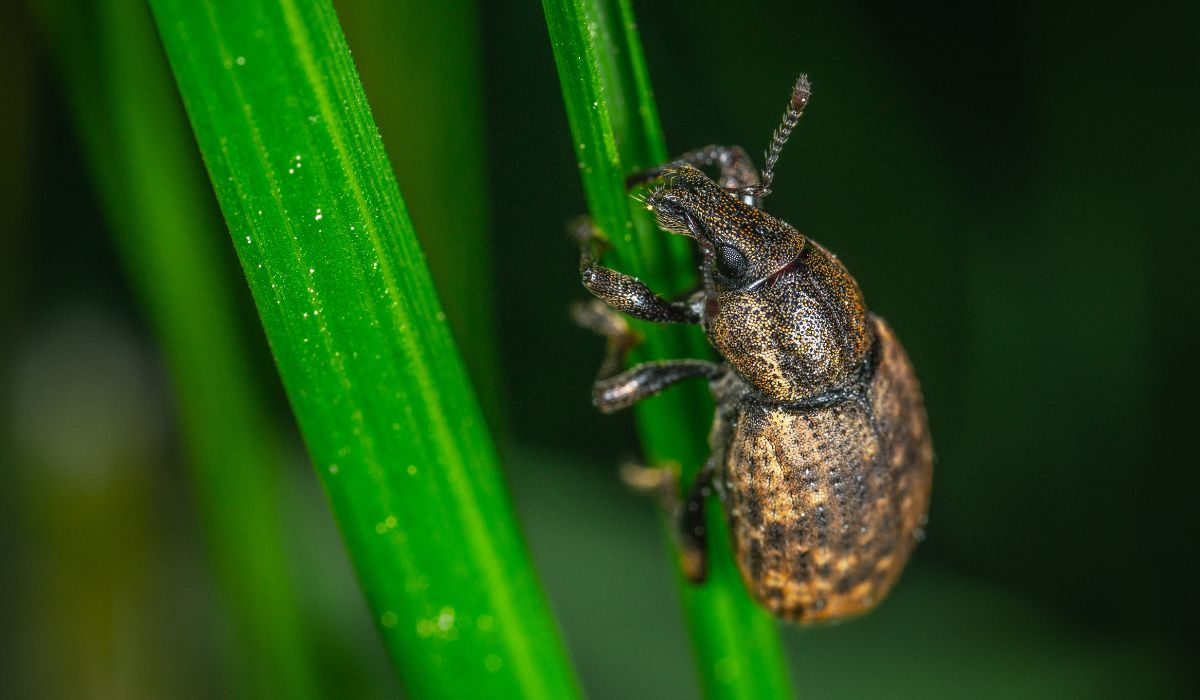
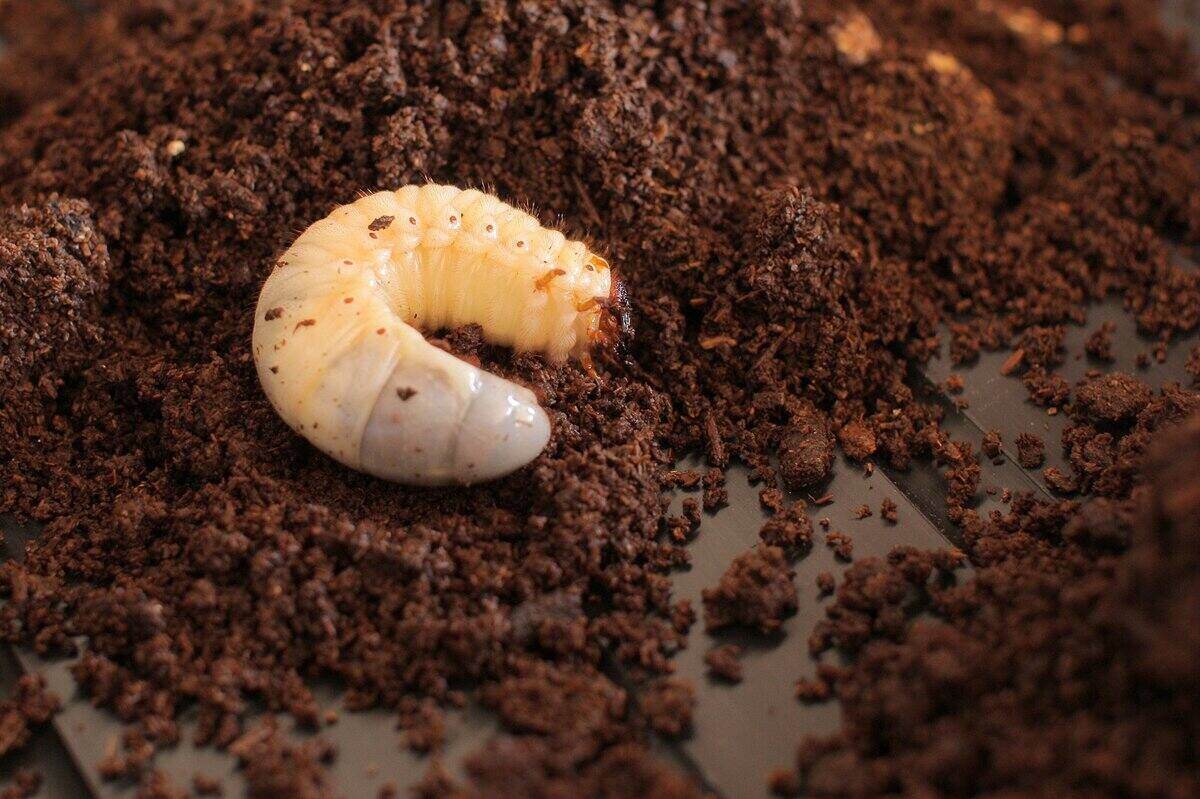
Grubs are the C-shaped, whitish larvae of beetles like Japanese beetles, chafers, and June bugs. They feed on grass roots, so an infested lawn shows brown, wilting patches and spongy turf that peels back easily.
6 ways to get rid of grubs in your lawn
Left unchecked, grubs can destroy your lawn. Act early to remove them and prevent future infestations. Here is a quick comparison of the 6 methods:
| Method | Type | Speed of results |
| Chemical insecticides | Curative (last resort) | Fast |
| Beneficial nematodes | Natural | Seasonal, reapply as needed |
| Milky spore | Natural | Slow, builds up over time |
| Neem oil | Natural | Gradual |
| Lawn-aerating shoes | Mechanical aid | Immediate disturbance |
| Birds | Natural | Ongoing |
1. Chemical insecticides
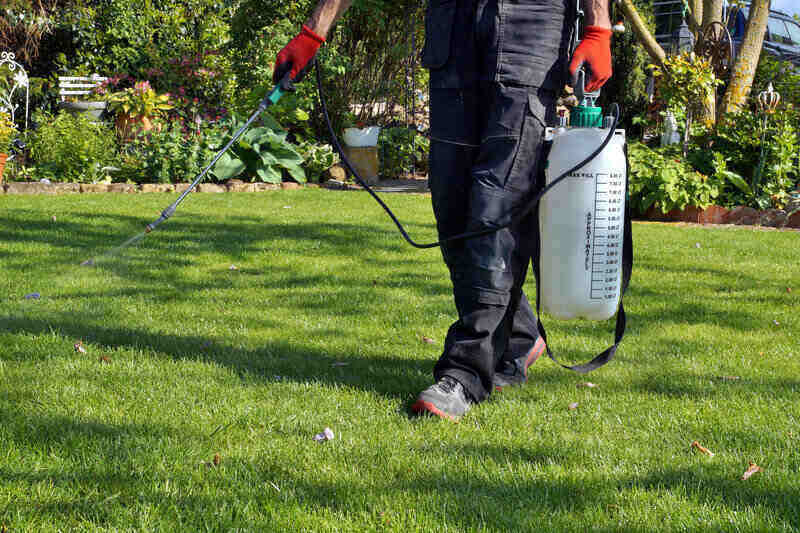
You can buy insecticides from your local garden center to eliminate and prevent grubs in your lawn. But remember that their chemical composition brings significant downsides:
Can hurt pollinators
Can pollute groundwater, lakes, rivers, and other water sources
Can poison children or pets that come in contact with the chemical or treated area
Can reduce beneficial insect populations, making your grub problem worse
Chemical grub control should be your last resort. Choose an insecticide with the active ingredients carbaryl or trichlorfon and apply it only when you know you have many active grubs in your lawn. Typically, grubs are young and actively feeding close to the soil surface in late July to early September.
Treating pays off beyond the grubs themselves. A grub treatment “helps a huge amount, because it’ll keep what eats them away,” says Scott Culala of The Lawn Cypress in Gardner, Kansas, since it stops animals from digging up the lawn in search of a meal.
How to use granular insecticides:
Choose a clear, wind- and rain-free day.
Wear protective gear (safety goggles, gloves, and a face mask).
Select a drop or broadcast spreader (a common lawn care tool you can find online or in garden supply stores).
Fill the spreader with the granules and adjust the flow rate according to the label instructions.
With a steady pace, cover the entire lawn as evenly as possible. If you encounter obstacles like trees or shrubs, turn the spreader off until you have passed them. Overlap your passes slightly to prevent gaps.
Water the area to activate the insecticide and follow the label instructions. Some products require more water than others.
How to use liquid insecticides:
Choose a clear, wind- and rain-free day.
Wear protective gear (safety goggles, gloves, and a face mask).
Apply liquid insecticides using a hose sprayer. Some insecticides already come in a hose spray bottle, but if yours does not, check the label for the correct concentration of insecticide to put in the hose sprayer.
Attach the sprayer to the end of any standard garden hose.
Spray the mixture across your whole lawn, row by row. Try not to miss any spots or use too much, as the liquid may run into other areas.
Check the label for watering instructions. Some liquid insecticides require water for absorption, while others do not.
2. Beneficial nematodes
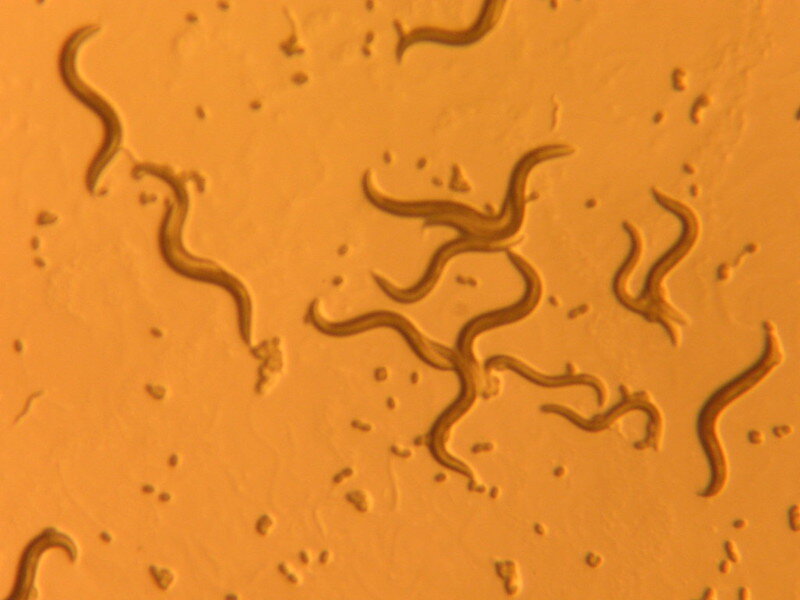
These eco-friendly roundworms are natural parasites that seek out grubs in the soil and attack them, reducing grub numbers without harming nearby plants or animals.
Heterorhabditis bacteriophora is a widely available nematode used for white grub control. Because live nematodes are perishable, apply them promptly and reapply as directed rather than relying on a single treatment.
How to use beneficial nematodes:
Choose an overcast, but wind- and rain-free day, or apply them in the morning or evening. Sunlight and high temperatures can kill them before they can reach the grubs.
Wear gloves.
Since these are live organisms, introduce them to the lawn soon after purchasing them.
They love moisture, so water the lawn before and after application (unless the ground is already wet from rain). Keep the soil consistently moist for optimal effect.
Reapply them every 2 to 3 weeks until you notice results.
3. Milky spore
Milky spore is a bacterium that comes in powder or granular form and targets Japanese beetle grubs. It is an old and popular method, but it builds up slowly in the soil, so it works gradually rather than overnight.
When grubs eat the spores from the grass roots, they get infected and die. The dead grubs release more spores into the soil, spreading the bacteria and controlling grubs long-term.
Milky spore may not be as effective in very dry or wet soils, or in colder climates. Its initial cost is also higher, but it provides long-term results.
How to use milky spore:
Choose a clear, wind- and rain-free day.
Wear protective gear (safety goggles, gloves, and a face mask).
For powder, use a funnel to fill a garden dispenser. You will need a teaspoon of the powder for every 4 feet of lawn. If you are using a drop spreader for granules, park it on a flat surface, ensure it is dry, and fill the hopper with the granules.
Apply milky spore in warm soil during late summer, following the product label for the recommended soil temperature and timing.
Walk in a consistent pattern for even coverage. Do not use a broadcast spreader, since this lightweight product blows away in wind.
Lightly water the treated areas to help the spores penetrate the soil.
4. Neem oil

Neem oil is a natural pesticide that directly affects how grubs grow and develop. It does not kill them outright but makes it difficult for them to survive. Plus, it does not harm plants, animals, or beneficial insects, so it is an eco-friendly way to control grubs.
Neem oil is available as raw neem oil, which has the insecticide azadirachtin, and clarified hydrophobic neem oil, which does not.
The clarified version, commonly sold in stores, is less potent than raw neem oil but is easier to find and simpler to handle. Raw neem oil contains more of the compounds naturally present in neem seeds, is thicker, and has a stronger odor, so many organic growers consider it the more potent choice.
How to use neem oil:
Choose a clear, wind- and rain-free day.
Wear protective gear (safety goggles, gloves, and a face mask).
You can either purchase a neem oil spray or make one yourself with this recipe:
Mix ⅓ teaspoon of mild or natural soap (like Castile soap) into 1 quart of warm water. Shake well.
Add 1 teaspoon neem oil to the mixture and shake well again.
Pour it into a sprayer and apply it to your lawn to suffocate the grubs.
5. Lawn-aerating shoes
Use lawn-aerating shoes to poke the soil, disturb the grubs, and eliminate them. This helps other grub treatments penetrate the soil and spread more effectively.
Some considerations: Lawn-aerating shoes may not reach deep enough to kill the grubs, and it is also hard to cover the entire lawn evenly.
How to use lawn-aerating shoes:
Choose a clear, wind- and rain-free day.
Put on the shoes and walk across your lawn a few times, concentrating on areas with severe brown patches.
As the spikes create small holes in the soil, they help to expose and disturb the grubs.
Next, apply an appropriate grub control treatment that can penetrate the soil thanks to the holes created by the shoes.
Water the treated areas to accelerate the treatment effect.
6. Birds
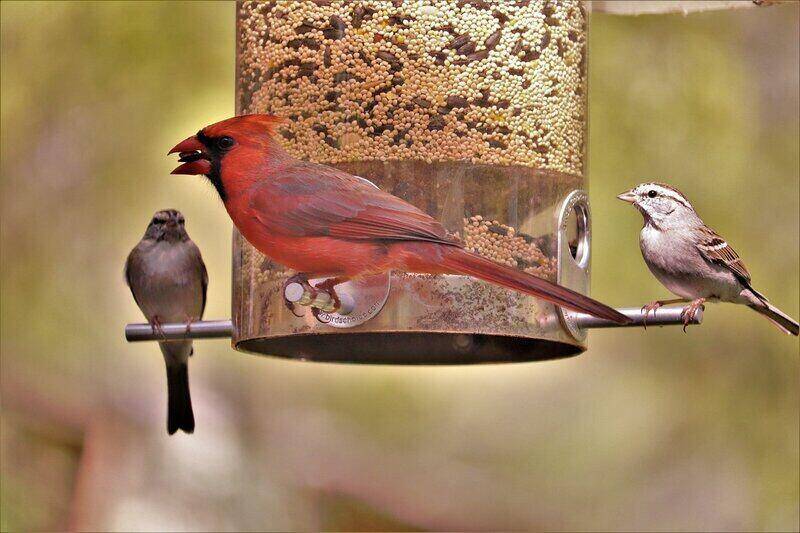
Grub infestations naturally attract birds, which can eat grubs and prevent beetles from laying eggs on your lawn.
How to attract birds to your yard:
Set up bird feeders and install nesting boxes.
Place birdbaths around the yard as a fresh water supply.
Plant shrubs and trees to provide shelter.
Remove thatch and other debris to expose the grubs and other insects, making it easier for the birds to spot and eat them.
Limit outdoor pet presence that could scare the birds.
Avoid using chemicals as much as possible (for the health of your landscape as well as the birds).
When to treat for grubs
Timing decides whether grub control works. Match your approach to the season, and to whether you are killing grubs now or stopping them next year.
Curative timing: Treat active grubs in late summer, roughly late July through September, when young grubs feed close to the soil surface and are easiest to reach.
Preventive timing: Apply preventive products in early summer, before eggs hatch, so protection is already in the soil when the next generation arrives.
Always water the treatment into the soil after applying, and read the product label, since coverage and watering needs vary by product.
How to tell if you have grubs
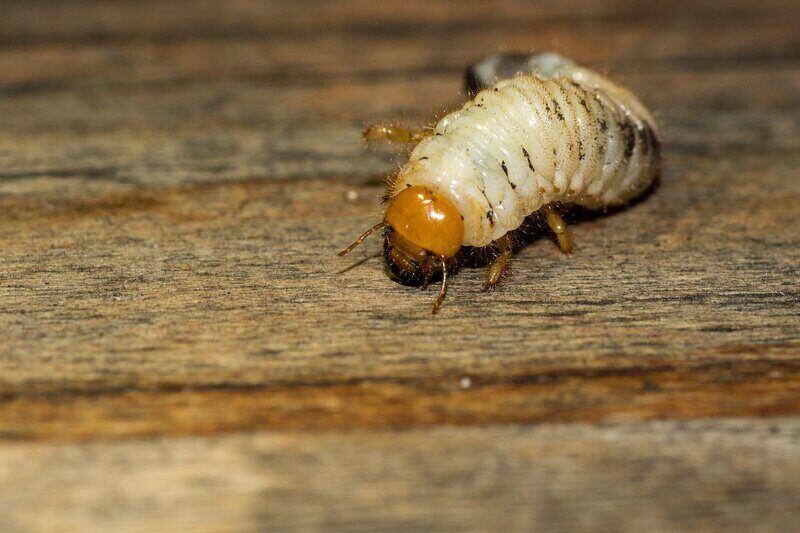
Grubs are “C”-shaped insects with soft, white to grayish bodies and a distinct brown or tan head. They are legless and have a series of fine spines near their back end, known as the rastral pattern. Grubs grow to about 1 to 2 inches long and are the larvae of various beetles, including:
Masked chafers
European chafers
June bugs
They begin as eggs in the soil, which hatch into larvae. The larvae, or grubs, feed on roots and organic matter until they pupate. After several weeks as pupae, they emerge as adult beetles.
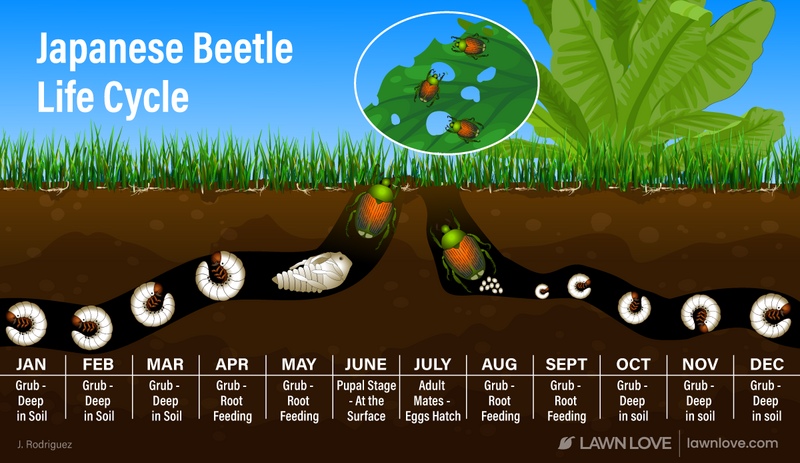
Grubs prefer various habitats, including soil, decaying organic matter, and plant roots. If you have a grub problem in your lawn, you might notice:
Wilted grass
Spongy turf
Small, irregular brown spots
Dry, dying patches of grass
Wildlife such as raccoons, skunks, and armadillos digging holes into the ground (looking for grubs)
Large patches of grass easily lifting out of the ground
Increased thatch due to grub-feeding habits
“Grub damage will initially appear to be drought injury, or may look like some disease such as summer patch,” says Kyle Koch, Ph.D., associate extension educator and insect diagnostician at the University of Nebraska–Lincoln. “Usually, grub damage is localized to preferred areas though, and not widespread. So, if the turf has been receiving sufficient moisture, but ‘drought’ spots are showing up, I would investigate those further for grubs.”
To test for grubs, dig up a section of grass from the browning area about 1 square foot large and 2 to 3 inches deep. If you have grubs, you will easily spot them. Count the grubs; the exact threshold varies by grub species and grass health, but 10 or more per square foot generally signals a serious grub infestation.
How to prevent grubs
Grubs tend to return to the same lawns season after season, so you may battle them for several years if you have them. To prevent future grub attacks:
Around June, apply preventive systemic insecticides containing thiamethoxam, clothianidin, or imidacloprid for long-lasting grub control. Local regulations may restrict earlier use to protect pollinators and other non-target organisms. This is also the best window before grubs hatch and begin eating grass roots.
Do not soak your lawn from June through September, since consistently moist soil attracts egg-laying beetles. Instead, water deeply but more infrequently to support healthy roots and avoid consistently wet conditions. Also, maintain good lawn drainage to prevent standing water: Try core aeration, level low spots, or install French drains.
Dethatch your lawn every year (or as needed). Thatch is a hotspot for pests, and while some may be healthy for your lawn, thick thatch will attract grubs and other common lawn pests.
Apply a fertilizer that suits your soil and grass type, and follow these mowing tips and tricks.
FAQs
Sadly, no. Grubs burrow deep underground every winter, so they will not actively damage your lawn for a few months. But the following spring, they will emerge in the soil again, just as hungry as ever.
Choose warm-season grasses like Zoysiagrass or Bermudagrass for durability and resilience against grubs. Among cool-season lawns, tall fescue is the most resistant due to its tough, deep roots. Perennial ryegrass, Kentucky bluegrass, and creeping red fescue are the most susceptible to grub damage.
Not treating grubs can cause more damage, weakening your lawn against other issues. Severe infestations might require reseeding or resodding, which costs more money and effort.
For the best outcome, avoid disturbing the treated area for a few days so the product can take effect and children and pets stay protected. Repeat the treatment as needed, since some methods require multiple applications, and always follow the product label. After each application, water according to the label and monitor your lawn for healthier grass.
Stop grubs in their tracks
Once grubs discover your lawn, they will not let go unless you make them. They will come back every spring, destroying your lawn’s roots all over again. Make this year the last one for the grubs in your yard.
If nothing works, let Lawn Love’s grub treatment service connect you with local lawn care pros who handle your pesky grub problem for you.
Lawn Love participates in the Amazon Services LLC Associates Program and other retailer affiliate programs. Lawn Love earns revenue from products promoted in this article.
Main Photo Credit: Bags of lawn fertilizer with a broadcast spreader | JJ Gouin | Adobe Stock | License
Related Posts: