| Key Takeaways |
|---|
| • The two-step method wins: Broadcasting bait across your whole yard, then treating stubborn mounds directly, is the most effective way to wipe out fire ant colonies. • Natural methods help but need backup: Boiling water, diatomaceous earth, and soapy water work best when repeated and paired with bait. • Timing and prevention matter: Treat in spring and fall when ants forage, keep your yard less inviting, and call a pro for infestations you cannot beat. |
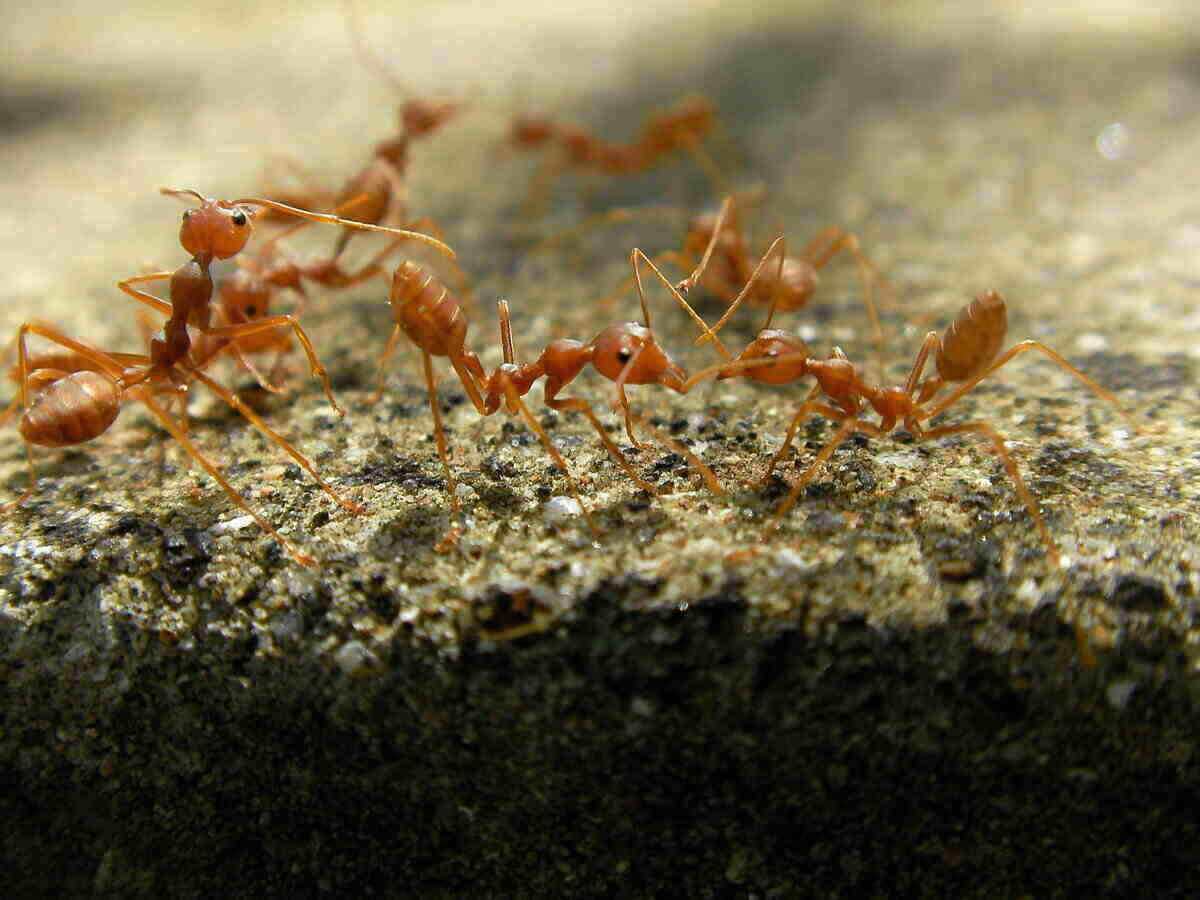
Fire ants deliver painful stings and build mounds that damage your lawn, so you want them gone fast. To get rid of fire ants, you can use chemical baits or natural remedies like boiling water and diatomaceous earth.
This guide covers how to kill fire ants with pesticides or natural methods, how to spot them, and how to keep them from coming back, plus when it makes sense to call in a pro.
If the mounds keep winning, LawnLove can connect you with a local pro for professional fire ant treatment.
How to get rid of fire ants with pesticides
The most effective way to eradicate fire ants is a two-step process that treats the entire yard and also attacks individual ant mounds as they appear.
Once or twice a year, apply a broadcast bait product across your entire yard. In between broadcast treatments, tackle individual active mounds with specialized mound treatments, experts at Texas AgriLife Extension say. A season of this recommended treatment cost runs only about $25 to $35 per acre, so think of it as an affordable one-two punch for fire ants.
Broadcast bait treatments
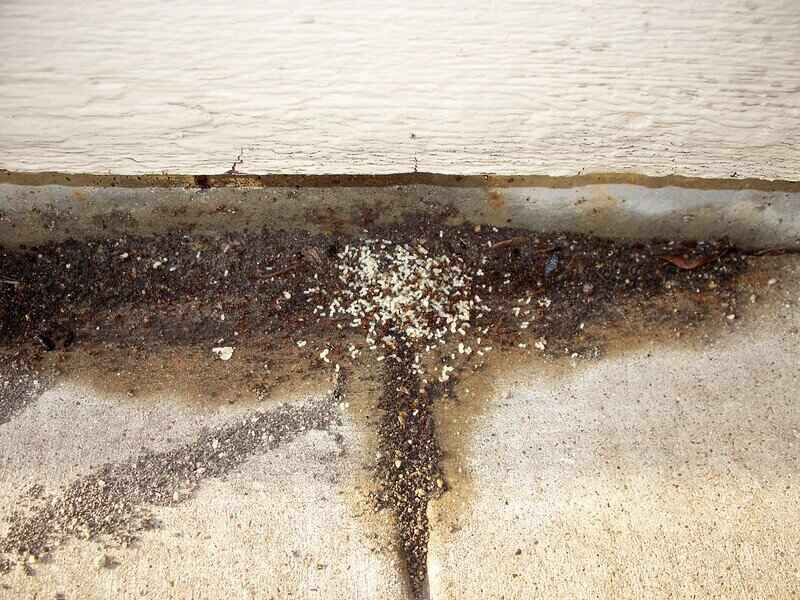
Broadcast baits contain a slow-acting pesticide that worker ants carry back to their mound and share with the colony. Over time, this kills the queen and the rest of the ants, effectively wiping out the colony.
Choose a broadcast bait specifically designed for fire ants, as not all baits work the same. Apply it on a dry day when the ground is not wet and you do not expect rain for at least 24 hours.
Molly Keck, entomologist and senior program specialist in Integrated Pest Management at Texas A&M AgriLife, says moisture can ruin the bait, so timing matters.
“The biggest mistake I see homeowners doing when applying fire ant bait is watering it in. Bait should be taken in as food for the fire ants, and it isn’t palatable if it is soggy and wet,” Keck says.
Always follow the instructions on the product label carefully for the best results. Use a fertilizer spreader to distribute the bait evenly across your entire yard, not just around visible mounds. This targets ants nesting in hidden areas.
Keep children and pets out of the treated area for at least 24 hours to ensure their safety and allow the bait to work undisturbed.
Where to find fire ant baits: Garden centers, farm supply stores, and online retailers.
Length of project: About 15 to 30 minutes, depending on your yard size.
Estimated cost: $15 to $40 per application, depending on the brand and your yard size.
How long they take to work: Depending on the bait, 1 to 8 weeks.
When to use them: In late May or early June and then again in late September or early October, in the early morning or late afternoon when the insects are actively looking for food.
Individual mound treatments
For stubborn or very active mounds, double down by drenching them with liquid or granular ant killer. Just remember, they only target visible mounds, not new ones forming. That is why combining bait with mound treatments is your best bet to get rid of fire ants for good.
Keck also says what you see above ground can run much deeper below ground.
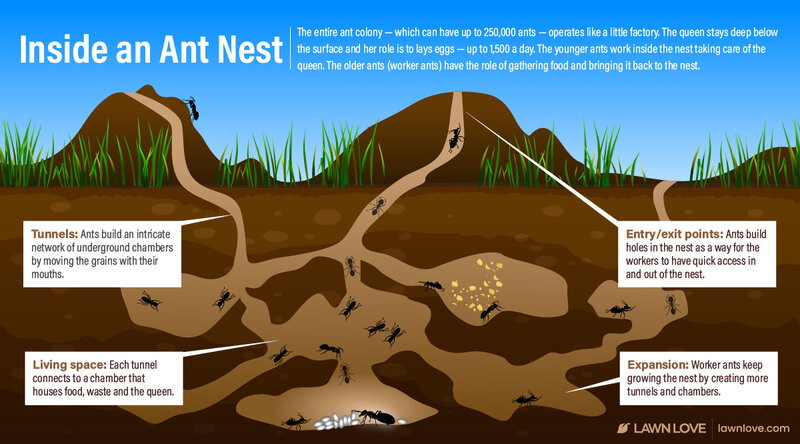
“The mound above the ground can be thought of as the tip of an iceberg. What is below the ground is very expansive and can be deep or grow laterally,” she says.
Liquids: Make a deep hole in the mound with a dowel, broomstick, or any sturdy rod. Next, mix the insecticide exactly as the label directs, because precision matters.
Pour it down the hole to target the colony, then grab a hand sprayer and apply the insecticide in a wide circle, about 6 to 10 feet out. This extra step helps contain the problem and keeps the ants from spreading.
Granules: Spread the insecticide granules around the mound, about 3 feet out in all directions, following the label’s instructions for the right amount. Then, sprinkle some directly on top of the mound itself.
Once everything is in place, lightly water the area with a sprinkler or watering can. The goal is not to soak the mound but to provide just enough water to activate the granules.
Where to find contact insecticides: Garden centers, home improvement stores, agriculture supply stores, and online retailers.
Length of project: Up to 30 minutes, depending on the mound size. If they are large, you will have to monitor them and reapply the treatment.
Estimated cost: Varies by brand, size, and type of contact killer, but you can pay between $10 and $30 per liquid bottle or granular treatment.
How long they take to work: 30 minutes to a few hours after application.
When to use them: Whenever you see active fire ant mounds, ideally in the early morning or late afternoon.
Read more:
How to get rid of fire ants naturally
Boiling water and natural repellents are effective ways to tackle a fire ant problem without resorting to harsh chemicals. Here is how to send them packing the eco-friendly way:
Boiling water
Boiling water is one of the simplest natural fire ant killers, and the heat destroys ants and their nest on contact. It is not foolproof, though: This hot water treatment clears only about 60% of treated mounds, so plan on repeating it.
Use a stick or similar tool to make a hole in the center, then slowly pour the boiling water in.
Be careful not to let it splash onto nearby grass or plants. Since this method might not get every last ant on the first try, you will likely need to repeat it for full effectiveness.
Keck recommends combining boiling water with baits.
“You can use boiling water and baits paired together as a 2-step method,” she says. “Broadcast bait around the landscape and use boiling water to manage colonies that were not managed by the baits or have popped up in the meantime.
“Since baits should not get wet, you do not want to apply the bait and boiling water at the same time. Instead, at least allow a couple days between the two.”
Diatomaceous earth (DE)
Diatomaceous earth (DE) is a natural, fine powder made from fossilized aquatic diatoms. When you sprinkle it on the mounds, it dries the ants out by absorbing the protective oils from their exoskeletons, killing them.
As long as it is food-grade, DE is a non-toxic and environmentally friendly red ant killer option. But it will not wipe out every fire ant, so you will need to pair it with other treatments to take down the whole colony. For example, you can combine it with fire ant baits, boiling water, or essential oils.
DE is quite simple to use. First, poke a large hole in the center of the fire ant mound to help the treatment reach deeper into the colony.
Next, sprinkle DE directly into the hole, allowing it to coat the tunnels inside. Then, apply another layer of DE over the entire mound and the surrounding area for added coverage.
Since DE stops working when it gets wet, you will have to reapply it after it rains or after you water your lawn. Keeping up with reapplications makes sure the ants keep running into the powder, helping to wipe out the colony over time.
Where to find DE: Most garden centers, online stores, pet stores, and health retailers.
Length of project: Around 5 to 10 minutes per mound, 30 minutes to an hour for a broadcast application.
Estimated cost: Around $20 to $50 per bag, depending on the size.
How long it takes to work: As ants come into contact with it, the full effect may take a few days to a week.
When to use it: During dry conditions when ants are active, usually in the early morning or evening when the sun is not as intense. Wet or damp DE does not work.
What to use to apply it: A duster or spreader for even application. Specialty sprayers also exist.
Natural fire ant baits
For a more natural approach, you can whip up your own fire ant bait to target the colony. One example is using borax (a type of sodium), sugar, and warm water.
In a small bowl, combine 1 or 1.5 tablespoons of borax with 1 cup of sugar, stirring the mixture well. Gradually pour in 1 cup of warm water, stirring constantly until the sugar dissolves completely.
This makes a syrupy consistency that is attractive to ants. Optional but useful: Add a tablespoon of honey or peanut butter.
Place small spoonfuls of your mixture around fire ant mounds and in areas where you have seen the ants. You can also place it in bottle caps or jar lids to help contain the bait and prevent it from spilling over.
The borax is slow-acting, so it will not kill the ants immediately but will poison the colony over time as they share the bait. This can take up to a week.
My tip: Sugar and baking soda, honey and borax, or essential oils and sugar work just as well. Use a tablespoon of each, stir well, and apply. You can use more, but just remember to keep equal amounts of each ingredient.
Soapy water
Dish soap and water can help suffocate and kill fire ants. The soap immediately starts clogging their breathing pores, leading to their death within minutes of contact. If the colony is young, a generous pour of soapy water may drown most of the ants inside.
To use it to your advantage, mix 1 tablespoon of liquid dish soap or ¼ cup of Castile soap with a quart of water. Add 1 teaspoon of any cooking oil to increase the solution’s effectiveness. Then, make a big hole in the fire ant mound and slowly pour in the soapy water solution.
For ants outside the nest, just fill a spray bottle with the same mix and spray them down. If you are still seeing ants after a while, just repeat the process as needed.
Read more:
How to spot fire ants
Not sure the mounds are fire ants? Confirming the pest helps you treat it correctly and know what damage to expect.
What they look like
Fire ants are small, reddish-brown insects about ⅛ to ¼ inch long, with a stinger at the end of the abdomen that delivers their painful sting. Their dome-shaped dirt mounds have no opening on top and can reach 2 feet high if left alone.
Behavior
The South American red imported fire ant is the most common and problematic species in the U.S. These imported fire ants now infest more than 367 million acres across 13 states and Puerto Rico.
They forage when the surface soil sits between 70 degrees and 95 degrees, so they are active from spring through fall. Cold slows their foraging activity, but they do not go dormant, and a disturbed nest will swarm and sting in large numbers.
“Fire ants are pretty remarkable in that they can establish colonies and be very happy in nearly all types of landscapes,” Keck says.
The damage they cause to your lawn
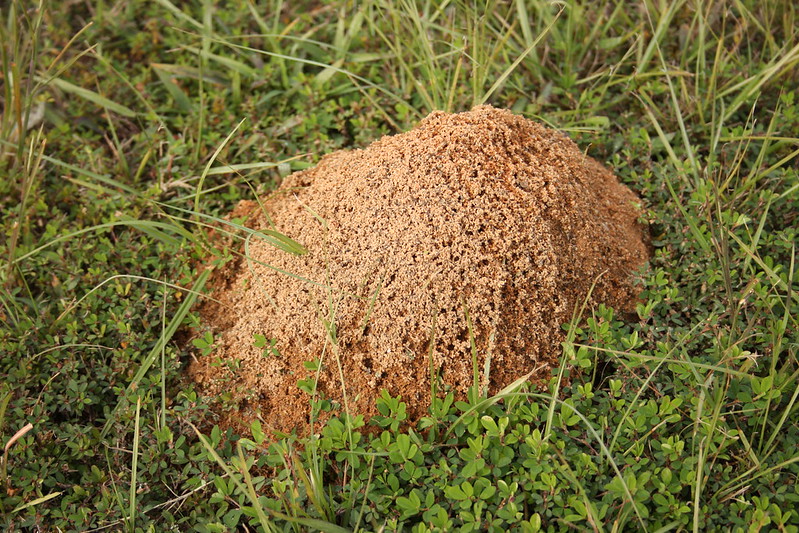
Some telltale signs of fire ant damage to your lawn include:
Mounds: Fire ants tend to split off from their colonies and start new ones, so your lawn can end up dotted with mounds. This creates a patchy, uneven look. Mounds also create bumps in the grass, making it tough to mow your lawn or walk across it.
Root damage: Fire ants often tunnel near or under plant roots for food. Their digging can dislodge plant roots, affecting the health and stability of your grass and other plants. This stress can make your lawn susceptible to diseases, other pests, and drought.
Uneven water drainage: Fire ants create tunnels that can change how water flows through your lawn. If the soil becomes too loose, water can drain unevenly, not even reaching certain parts of your turf.
Soil erosion: When fire ants dig, they create weak spots in your lawn that are more open to erosion, especially during heavy rainfall.
Read more:
How to prevent fire ants
Keeping fire ants out is easier than clearing an established infestation. Make your yard less inviting and stay on a simple treatment routine.
Cut off food and water: Store pet food and sweets securely, clean up spills, and fix leaky spigots or hoses that create the moist soil fire ants love.
Keep the lawn healthy and tidy: Mow, water, and feed on a regular schedule so thick, vigorous grass leaves ants less open ground to colonize.
Bait on a schedule: A light broadcast bait in spring and again in fall keeps new, mated queens from settling in before they build large mounds.
Seal entry points: If ants wander toward the house, seal cracks around windows, doors, and the foundation so foragers cannot get inside.
FAQs
Fire ants are not just wandering into your yard by chance; they are after food, water, warmth, and shelter. They usually cannot resist sugary spills, pet food, or compost. They love warm, sunny areas and often settle into loose or moist soil, mulch, or neglected lawns.
Fire ants have few natural predators in North America, but it is a different story in their native South America. There, phorid flies, also called ant-decapitating flies, attack fire ants, with their larvae developing inside worker ants and decapitating them. Those controls did not follow the ants to the United States, which is part of why they spread so aggressively here.
Ant chalk is an illegal, unregistered insecticide that often contains deltamethrin. While that active ingredient is legal in registered products, ant chalk itself never received the required U.S. approval, so you should avoid it.
Wash the area with soap and water and apply a cold compress to ease swelling. Try not to break the blister-like pustules that form, since that invites infection. Over-the-counter antihistamines or hydrocortisone can calm the itching. Seek emergency care right away if you notice trouble breathing or widespread swelling, which can signal a serious allergic reaction.
When to call a professional
If dealing with fire ants repeatedly sounds exhausting, LawnLove can match you with a local pro who has the stronger treatments and expert skills to get rid of them for good. Remember that one of the best defenses against fire ants is healthy grass, so LawnLove’s local lawn care pros can keep your turf thick and less inviting to pests, taking that worry off your plate.
Note: LawnLove may get a referral fee for matching you with pros in your area.
LawnLove participates in the Amazon Services LLC Associates Program and other retailer affiliate programs. LawnLove may earn revenue from products promoted in this article.
Main Photo Credit: Marufish | Flickr | CC BY-SA 2.0
Related Posts: