| Key Takeaways |
|---|
| ● Give metal tools a proper send-off before storage: Clean, dry, sharpen, and oil metal tools before storage. Treat wooden handles with linseed oil to prevent cracking. ● Don't skip engine prep on gas-powered equipment: Drain or stabilize fuel and check the oil and filters. Store batteries separately in a cool, dry spot at the recommended charge level. ● Protect spreaders, sprayers, and hoses from winter damage: Rinse chemical residue from spreaders and sprayers, and drain, coil, and store hoses to prevent freeze damage. |
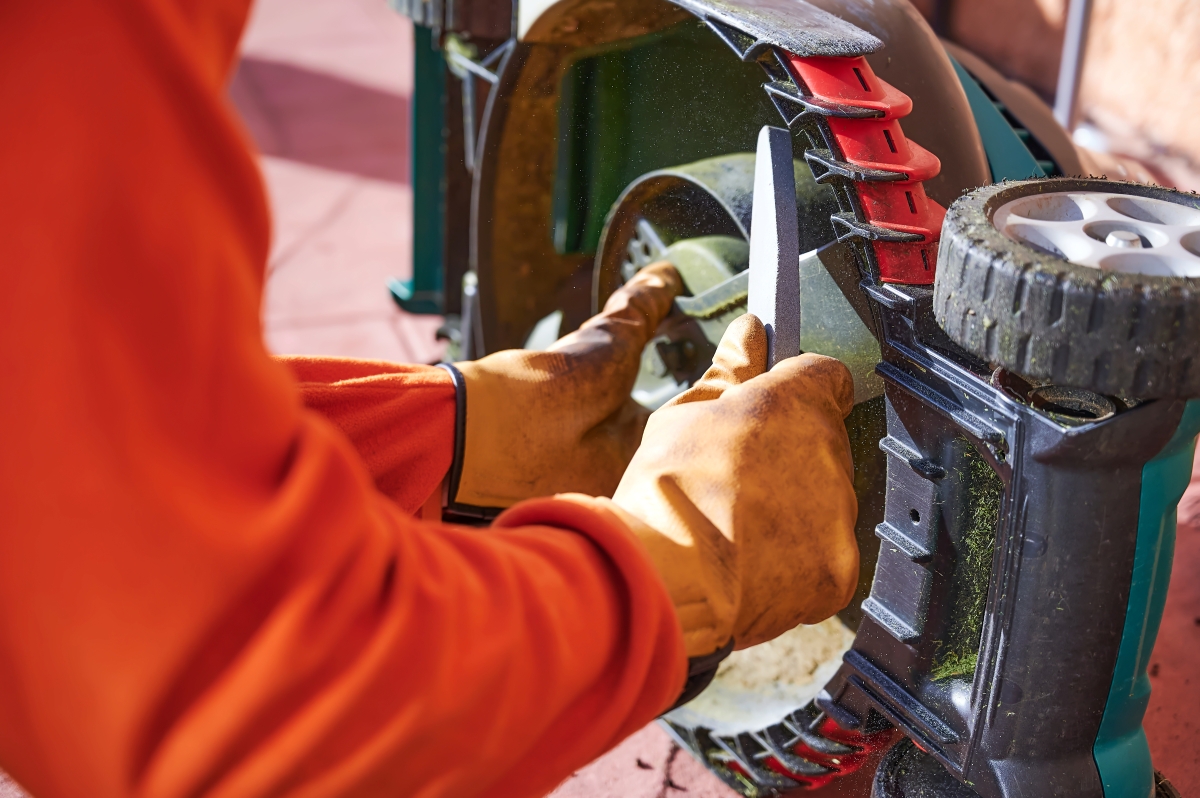
You don’t need to be a gearhead to prevent rusted tools or dead batteries next spring. Here’s how to winterize your lawn and garden tools in one afternoon.
Clean off dirt and sap, sharpen and oil any blades, drain or stabilize fuel in gas-powered equipment, charge batteries, and store everything dry and off the ground.
Come spring, your well-maintained tools will make yard work much easier. And if you’d rather skip the chores altogether, a lawn care pro can handle the mowing, trimming, and edging for you.
Hand tools: shovels, rakes, hoes, trowels
Rinse or brush off caked-on soil, then dry the tool completely — don’t let it sit wet.
“Storing tools while they’re still dirty or wet degrades the metal and makes them harder to clean and sharpen in spring. Ten minutes now spent cleaning and oiling your tools saves time and money later,” says Julia Bender, Master Gardener Volunteer with Cornell Cooperative Extension of Orleans County.
Here’s how to prep your hand tools for next spring, step by step:
- Rinse off debris in a bucket of water, scrubbing with a stiff brush, and then wipe dry. For dried sap, rust, or stubborn grime, work in turpentine, alcohol, or mineral spirits with a steel brush, sandpaper, or steel wool — then wipe dry again.
- Inspect for damage, such as bent tines, loose tool heads, cracked handles, or other parts that need repair or replacement.
- Sharpen dull blades, then wipe on a rust-preventing lubricant like WD-40.
- Sand rough spots on wooden handles, then coat with boiled linseed oil or mineral oil using a soft cloth. Wipe off excess and let dry 24 – 48 hours.
Pro Tip: The North Carolina Cooperative Extension recommends filling a 5-gallon bucket with sand and mixing in a light oil, then dipping clean tools into the mixture. The sand helps remove remaining debris while the oil coats the metal to help prevent rust.
Pruners, loppers, and shears
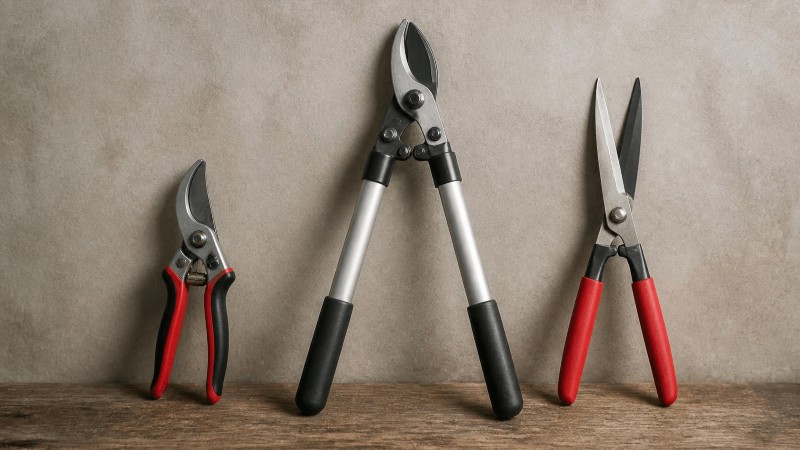
Like hand tools, two-bladed cutters need cleaning and drying before storage — but with less soil, more sap, a hinge to maintain, and blades that touch living plant tissue directly.
Pro Tip: Some pruners can be disassembled for cleaning and sharpening.
- Dunk in water and scrub with a stiff brush, then wipe dry. Tackle dried sap or rust with turpentine, alcohol, or mineral spirits and a steel brush, sandpaper, or steel wool — working carefully to avoid scraping the blades.
- Sanitize blades with rubbing alcohol (70% isopropyl) or a 10% bleach solution, since pruners can spread plant disease if left uncleaned.
- Sharpen blades at their existing bevel angle, then lubricate the blades and hinge with WD-40 to prevent rust and keep the pivot smooth.
- Check the pivot bolt — tighten it if loose, or loosen it slightly if the pivot feels stiff.
- Sand rough spots on wooden handles, then finish with boiled linseed oil or mineral oil. Wipe off excess and let dry 24 – 48 hours.
Gas-powered tools
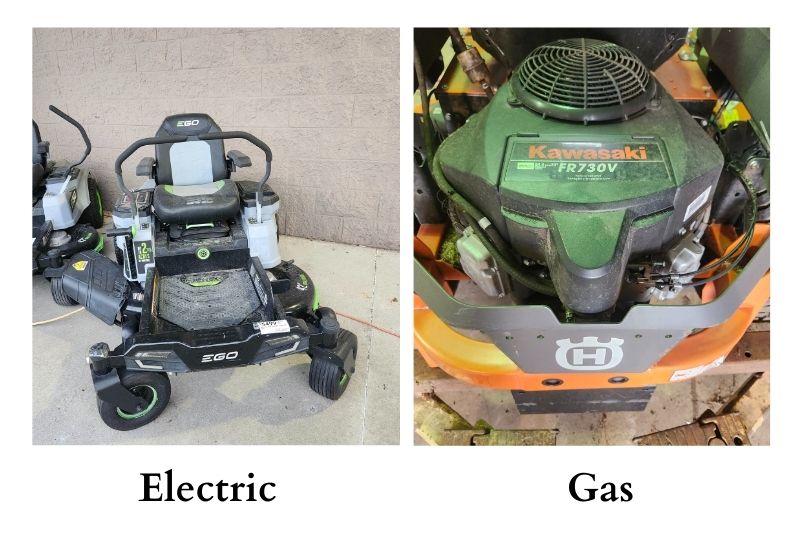
Gas-powered mowers, trimmers, and blowers all face the same threat over winter: leftover fuel. Ethanol in gas attracts moisture over time, which can corrode metal or gum up the carburetor if left untreated.
- Remove the spark plug so the engine can’t accidentally start, and inspect it for wear — you’ll reinstall the old or a replacement plug once you’re done.
- Drain or stabilize the fuel — run the engine dry if only a little is left, or add a stabilizer and run it briefly if the tank’s fuller. On smaller tools like trimmers, you can also just drain the untreated fuel into a gas can.
- Clean off grass and debris — especially caked-on clippings under a mower’s deck, where trapped moisture causes rust.
- Replace the air and fuel filters (most need it once a year).
- Change the oil if your engine requires it (most four-stroke engines do; most two-stroke engines don’t). Depending on the mower, drain the old oil into a pan through the drain plug or oil-fill tube, then refill with the type and amount of oil specified in the owner’s manual
- Remove, inspect, and sharpen the mower blade — or check and replace string trimmer line. Add a few drops of oil to the spark plug port before reinstalling it, per the University of Georgia Extension.
- Store the equipment somewhere dry, ideally off bare concrete or ground.
Check your owner’s manual for model-specific storage instructions, engine type, oil-change procedure, and recommended spark plug replacement schedule.
Read more:
- How to Clean a Lawn Mower Deck
- How to Sharpen Lawn Mower Blades
- How to Put String in a String Trimmer
- How to Change the Oil in a Lawn Mower
Battery-powered tools
Battery-powered equipment is the easiest of the bunch to winterize. There’s no fuel system to worry about, so the main task is storing the battery correctly.
- Remove the battery from the tool rather than leaving it in over winter, and wipe down the tool itself.
- Store the battery in a cool, dry space — check your owner’s manual for the ideal charge level, since some lithium-ion batteries store best around 50% while lead-acid batteries should be kept fully charged.
- Check the blade or trimmer line, sharpening or replacing as needed, then store the tool and battery separately, out of direct sunlight.
Spreaders and sprayers
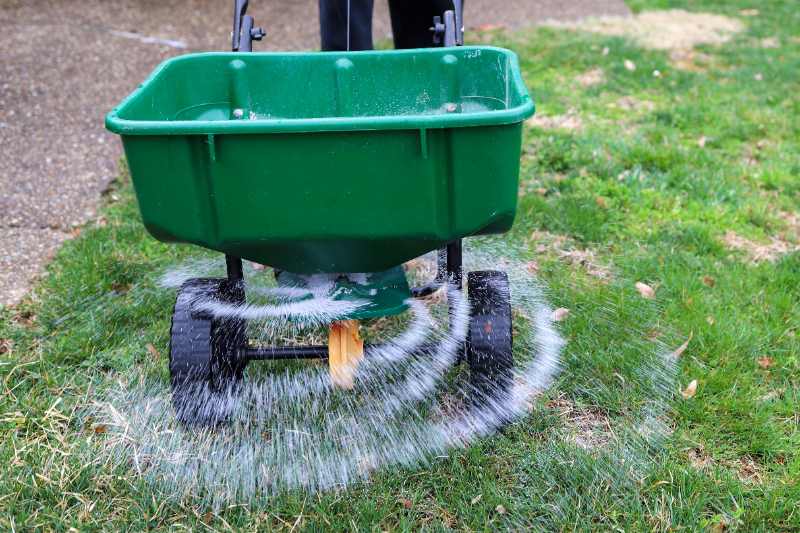
Sprayers and spreaders both come into contact with fertilizers and pesticides. The key to winterizing these garden tools is to remove any chemical residue that might damage the equipment and cause uneven applications.
Spreaders: Fertilizer granules left in the spreader may absorb moisture and lead to rust. Rinse out any remaining product and allow the spreader to dry completely before storing. Oil the spreader’s metal parts to help prevent corrosion over winter.
Sprayers: Empty any remaining product per the label, then fill the tank about a quarter full with clean water and shake to rinse. Spray out the rinse water to clean the hose, wand, and nozzle, repeating as needed.
Hoses
There’s nothing more annoying than pulling a kinked, twisted mess from the corner of the shed. A little care before winter storage keeps your hose easy to work with come spring.
- Disconnect the hose from the faucet and remove any nozzles or sprinklers.
- Drain it completely by holding one end up and working along its length — trapped water can freeze and damage the hose. Inspect for cracks, leaks, or worn fittings, and replace any damaged parts.
- Coil loosely without sharp bends, then store flat or on a hose reel in a dry spot — avoid hanging it from a single hook, which can kink the material.
FAQs
Keep tools off the ground and out of direct contact with concrete, which holds moisture. A pegboard, wall rack, or set of hooks keeps hand tools organized and dry. Store the tools in a dry garage, shed, or basement away from extreme temperatures.
Sharpen the lawn mower blade after every 20 to 25 hours of mowing use. For most residential homeowners, that can add up to 2 to 3 sharpenings per year.
Yes, as long as the tank is drained or treated with fuel stabilizer first and the mower has fully cooled after its last use. An untreated, full tank can slowly release fuel vapors into an enclosed space over winter, and a hot engine near flammable materials is a fire risk.
Keep the mower away from ignition sources common in attached garages, like a furnace pilot light or water heater.
Roughly 12 months under good storage conditions, though some manufacturers claim up to 24 months.
Yes, especially after cutting anything diseased. Wipe or dip the blades in rubbing alcohol (70% isopropyl) and then allow the tool to air dry. Rubbing alcohol won’t disinfect against every pathogen — for tools used on plants with fire blight, the Iowa State University Extension recommends a 10% bleach solution (9 parts water, 1 part bleach) for 10 minutes, then a water rinse instead.
Let a pro handle all the maintenance
Winterizing tools is a solid weekend project, but if you’d rather not own or maintain any yard care equipment, that’s an option too. LawnLove connects you with local lawn care pros who bring their own well-maintained equipment, so it saves you maintenance time.
Main Image: Cleaning and sharpening mower blades before storage, winterizing gardening tools. Photo Credit: Itxu / Adobe Stock
Related Posts: