| Key takeaways |
|---|
| • What it involves: Winterizing a lawn mower means handling the fuel, changing the oil, cleaning the machine, and storing it somewhere dry so it starts easily in spring. • Why it matters: Untreated gas can start breaking down in about 30 days, and moisture is the most common cause of off-season mower damage. • Electric mowers, too: Battery and electric mowers still need winterizing, but you skip the fuel, oil, spark plug, and air filter steps. |

Knowing how to winterize your lawn mower keeps it from rusting, stalling, or refusing to start next spring. The job comes down to handling the fuel, changing the oil, cleaning the machine, and storing it somewhere dry.
Take care of it now and your mower will roar back to life when the grass starts growing again. Below, I will walk you through every step to get your mower ready for the cold months ahead.
And when mowing season returns, Lawn Love’s lawn mowing service connects you with local pros who can handle the cutting for you.
Do you need to winterize your lawn mower?
Yes, if you own a gas-powered mower. Sitting fuel, moisture, and stuck-on grass are what cause hard spring starts, so a little care now saves you headaches later.
Battery and electric mowers still need attention, but the job is shorter. You skip the fuel, oil, spark plug, and air filter steps and focus on cleaning, blade care, and proper battery storage.
Read more:
| Winterizing task | Gas mower | Battery or electric mower |
| Fuel, oil, spark plug, air filter | Yes | Skip |
| Clean deck and undercarriage | Yes | Yes |
| Sharpen or inspect blades | Yes | Yes |
| Battery storage and charging | If electric start | Yes |
How to winterize your lawn mower step by step
Work through these 9 steps in order after your last mow of the season. Each one takes just a few minutes and helps your mower start cleanly come spring.
Empty the gas tank or add fuel stabilizer

Gas left in the tank through the winter can degrade, gum up the carburetor, and cause engine problems. Empty the tank by running the engine until it is out of gas. Leaving untreated gas in the system is one of the most common causes of hard spring starts.
Older engines are especially vulnerable, since ethanol blends can degrade rubber and cork parts in the fuel system.
If you do not want to burn off the fuel, add a fuel stabilizer to keep it fresh for up to a year. Untreated fuel can start breaking down in as little as 30 days, so stabilizer is worth it if the mower will sit.
In general, add an ounce of stabilizer for every 2 gallons of fuel, then run the engine for about 10 minutes to pull the mixture through the lines before storing.
Change the engine oil
You should change your mower’s engine oil after every 50 hours of use. Even if you did not run it that much, drain the old oil before storing, as it can hold moisture and contaminants that damage the engine.
Starting the season with clean oil also means your engine has optimal lubrication right from the first spring start.
Read more:
Replace the spark plug

You should change the spark plug after 50 hours of use, but if you replaced it recently, you can leave it there. Just check the condition of the plug with a spark plug test tool.
Follow these steps to replace the spark plug. You can usually find it on the side of the engine:
Disconnect the spark plug wire by pulling off the rubber boot at the end of the wire. If it is stuck, you can use a set of pliers.
Use a spark plug socket attached to a wrench to loosen the plug. Turn it counterclockwise to loosen, then remove by hand.
Spray a small amount of lubricating oil into the cylinder through the spark plug opening.
Before installing the new spark plug, make sure the gap between the center electrode and curved metal piece is 0.02 to 0.03 inches.
Thread the new spark plug by hand, then use a wrench to finish tightening.
Grab the spark plug wire boot and push it back onto the spark plug.
Turn on the lawn mower and make sure everything is working properly.
Read more:
Clean or replace the air filter

I recommend cleaning and replacing the air filter while the spark plug is out, as it is easier. Otherwise, you will have to remove the plug again to prevent the motor from starting accidentally.
On push mowers, the air filter is located on the side under a cover. On riding mowers, it is on the top under a large cover.
Paper filter: Check for holes, oil stains, or dirt blocking light when you hold it up. If you notice any, replace the filter. If not, remove loose dirt by gently tapping the filter on a hard surface with the open end facing down.
Foam filter: Inspect for any tears or excessive dirt buildup. If the foam is still intact, wash it with warm water and dish soap to remove dirt. Rinse and squeeze the foam until it is clear of water before reinstalling.
Clean the filter housing, then insert the filter directly into the housing. I recommend replacing the air filter every season.
Read more:
Take out the battery
If you have a battery-powered mower or your mower has an electric start, disconnect the battery before storing. Remove the negative cable (black) first, then the positive (red). Wipe off any dirt and store it indoors in a cool, dry place, away from heat sources like furnaces or water heaters.
Charge the battery every 5 to 6 weeks and keep it at a level of around 40% to 70%.
Sharpening your lawn mower blades gives a clean cut and reduces strain on the engine. Dull blades also tear grass and make it more susceptible to diseases. You can tackle this job in the spring, but you might as well get it out of the way before winter.
Read more:
Clean the undercarriage

While the blade is off, use a putty knife to remove stuck-on grass and dirt. Wash under the deck and the outside body with a garden hose, but make sure not to let water reach the motor.
Let the mower dry fully. Use a leaf blower on the lowest setting to speed up the drying process.
If your riding mower does not have a removable deck, use a mower lift to raise the front of the mower.
Read more:
Lubricate moving parts
Spray WD-40 on moving parts like wheels, cables, throttle linkages, and height adjusters. Wipe off excess with a rag. Use a light-duty lubricant for the wheel bearings, and spray silicone under the deck to keep grass clippings from sticking.
Inspect the belts as you lubricate. If a belt is frayed, replace it before storage.
Store it with care
Choose a dry location like a shed or garage to store your mower, and cover it with a breathable polyester cover. Moisture is the most common cause of mower damage over the winter, so a dry spot matters more than anything else. Before putting on the cover, make sure the tires are properly inflated.
I recommend placing mothballs near your mower to keep mice and other pests away. Even then, check on your mower once a month to make sure no pests have chewed through wires or nested inside.
When should you winterize your lawn mower?
Winterize your mower after the final cut of the season, usually late October to early November, once the grass stops growing and before the first hard frost. Timing shifts with your climate, so warmer regions can wait a little longer.
The goal is to store the mower before freezing weather sets in, so any fuel is treated and moisture has no chance to cause rust.
Read more:
FAQs
I highly recommend using an oil that is specifically designed for lawn mowers. The additives in automotive oils can be harmful to small air-cooled mower engines, so check your owner’s manual for the recommended grade before you top off or change the oil.
If you have a gas mower, you do not need to run it after emptying the tank or stabilizing the fuel. For battery-powered mowers, recharge every 5 to 6 weeks to keep the charge at around 40% to 70% so the battery is ready for spring.
Reconnect and reinstall the battery, then check the oil and fuel levels before starting. If you drained the tank, add fresh gas, prime the engine, and let it run for a few minutes. A quick blade and tire check gets you cutting again with no surprises.
Set yourself up for a successful spring
After the last mow of the season, winterize your lawn mower with these steps so it is ready to roar back to life when spring arrives.
As your grass starts growing again, you need to mow it to keep it in good shape. If you do not have the time or just do not want to deal with it, get in touch with Lawn Love.
Lawn Love pros can help you with everything related to lawn care, whether it is mowing, aeration, or fertilization. Hire one of Lawn Love’s local lawn care pros today to get the job done right at a price you will love.
Read more:
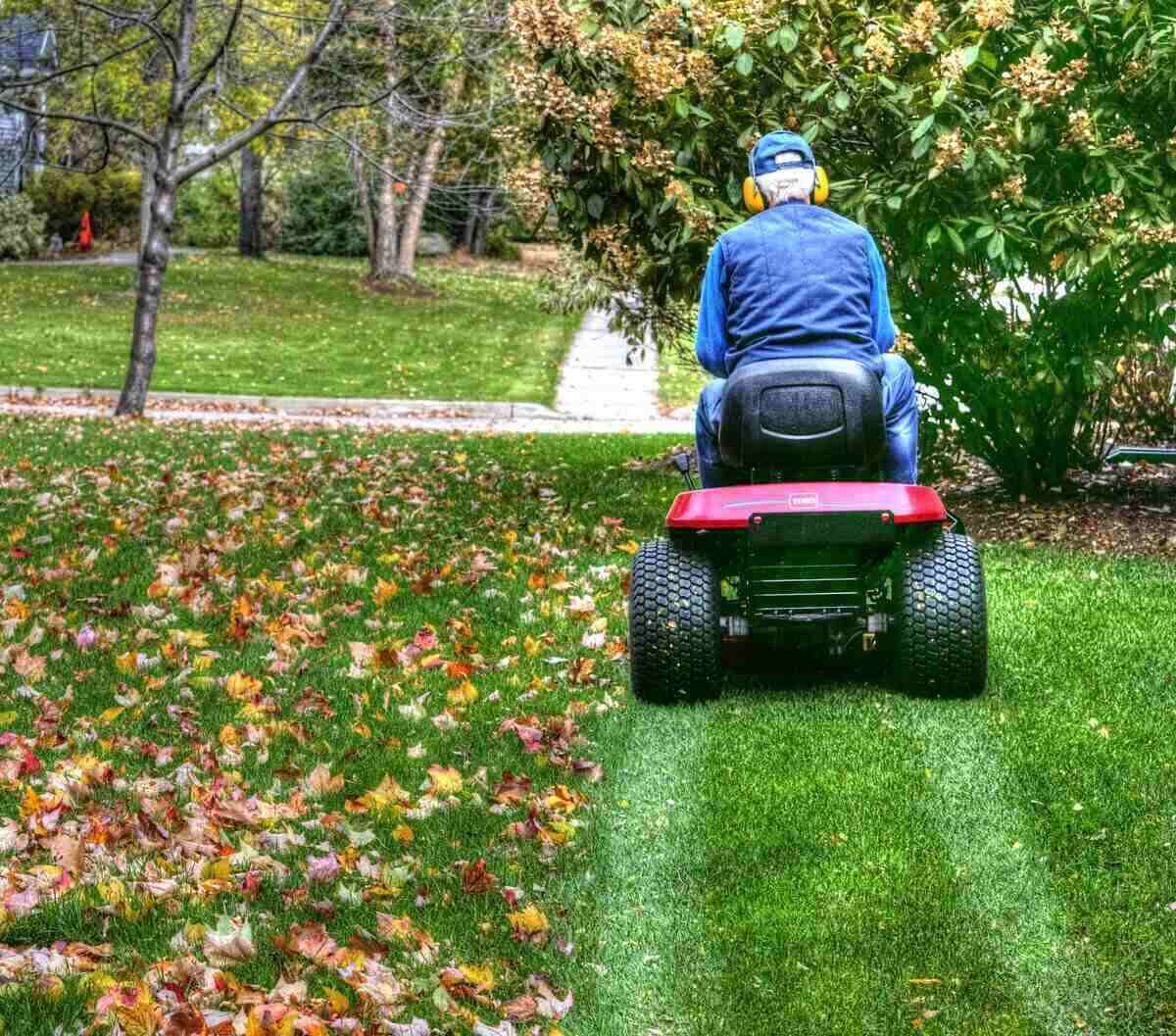
Main Image: Winterize your mower in order to set yourself up for success in the spring. | Photo Credit: auremar / Adobe Stock
Related Posts: