| Key takeaways |
|---|
| • Bees skip red flowers, closed or tubular shapes, and blooms with little pollen or nectar. • Zonal geraniums are among the least bee-attractive flowers in peer-reviewed research. • Modern hybrid petunias and begonias are bred with so little nectar that bees rarely bother. |
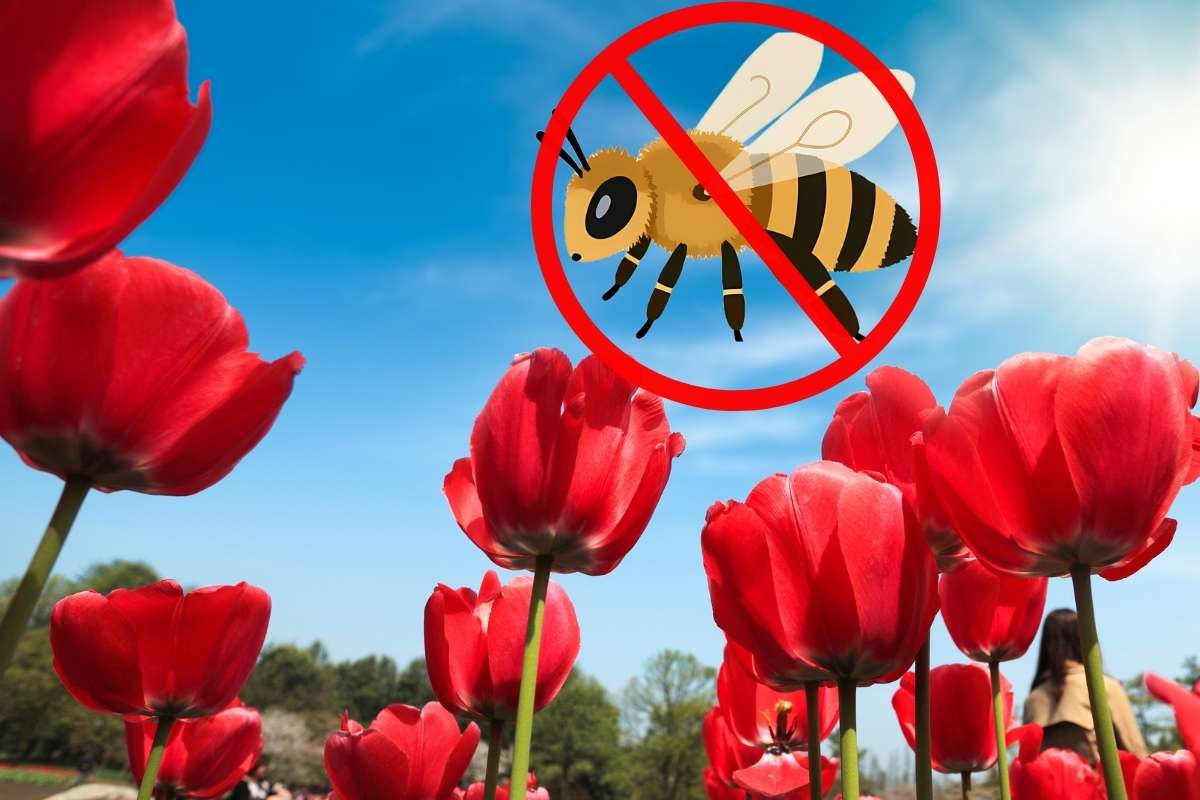
Want flowers that don’t attract bees? The easiest fix for a low-buzz yard is choosing blooms they ignore — ones low in pollen and nectar, with closed or tubular shapes, or in shades of red.
Zonal geraniums, begonias, marigolds, and petunias are good places to start.
According to the World Allergy Organization, 1% to 7% of people are hypersensitive to insect venom and at risk for anaphylactic shock. Plenty of others have apiphobia, a fear of bees that can keep them out of their own backyard.
The flowers below stay reliably low-draw for bees while still bringing color and curb appeal.
If you’d rather spend your garden budget on plants instead of design fees, Lawn Love connects you with local landscaping professionals who can plan and maintain a yard that works for you.
Why bees skip certain flowers
Bees forage on 4 signals: color, scent, shape, and food reward.
- Color. Bees see blue, violet, and purple best. Their vision is tuned to UV, blue, and green, so red basically reads as dark grey. Orange and deep pink show up too, but barely.
- Scent. Fragrance is a signal of pollen richness. Lavender swarms with bees partly because of the scent. Bees will pass up odorless or unpleasant-smelling flowers.
- Shape. Bees need a place to land and a way to reach the food. Flowers with double layers of petals or flowers with long floral tubes often hide the stamens and anthers deep inside, so even if a bee is interested, it can’t reach the food source.
- Food reward. Most modern hybrids are bred for looks, not to support bees. A 2020 Penn State study found that only 6% of ornamental nursery cultivars were highly attractive to honey bees. If a flower offers little pollen or nectar, bees catch on fast and move on.
“Plants with blue, white, or yellow flowers that are mildly fragrant are particularly attractive,” says Andrea DeLong-Amaya, horticulture educator at the Lady Bird Johnson Wildflower Center and author of The Texas Native Plant Primer.
11 flowers that don’t attract bees
The 11 plants below are reliably low-draw for bees. Some lack pollen or nectar, others have shapes or scents that don’t appeal, and a few combine all 4 deterrents.
1. Begonias

One of the most reliable low-bee choices for shaded patios and container gardens.
- Zones: 9 to 11 (annual in most regions)
- Bloom: May to October
- Sun: Partial shade
Why bees skip them:
- Tuberous varieties have fully double flowers that block bee access
- Open-faced types like Semperflorens and Elatior contain almost no nectar or pollen
2. Chrysanthemums (double-flowered)
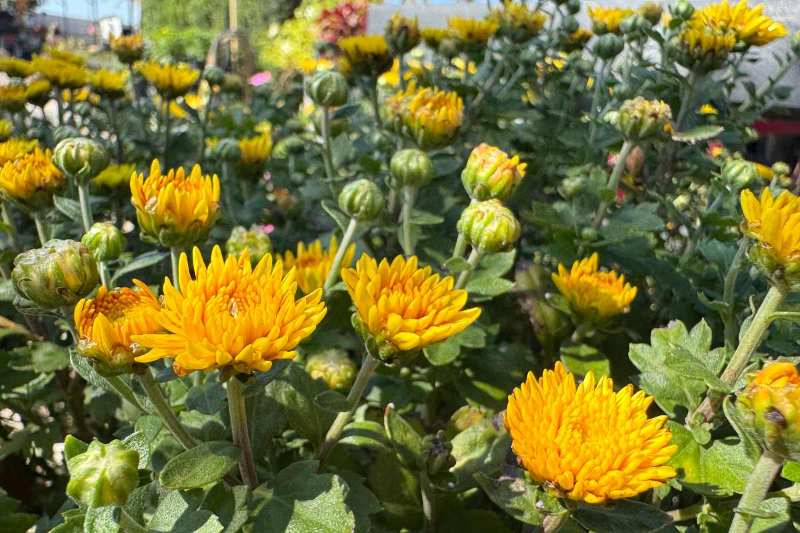
One of the few low-bee perennials that hold up in cold-winter regions. Stick with double-flowered cultivars. Single-flowered types still attract bees.
- Zones: 3 to 9
- Bloom: September to November
- Sun: Full sun
Why bees skip them:
- Packed petals block bees from any nectar that remains
- Bred for petal density rather than pollen production
3. Forsythia (sterile hybrid)

One of the most reliably bee-free flowering shrubs, with a strong yellow show in early spring.
- Zones: 5 to 8
- Bloom: March to April
- Sun: Full sun
Why bees skip them:
- Sterile hybrids produce no nectar or pollen
- Bloom in early spring before most bees are foraging
4. Fuchsia (red varieties)
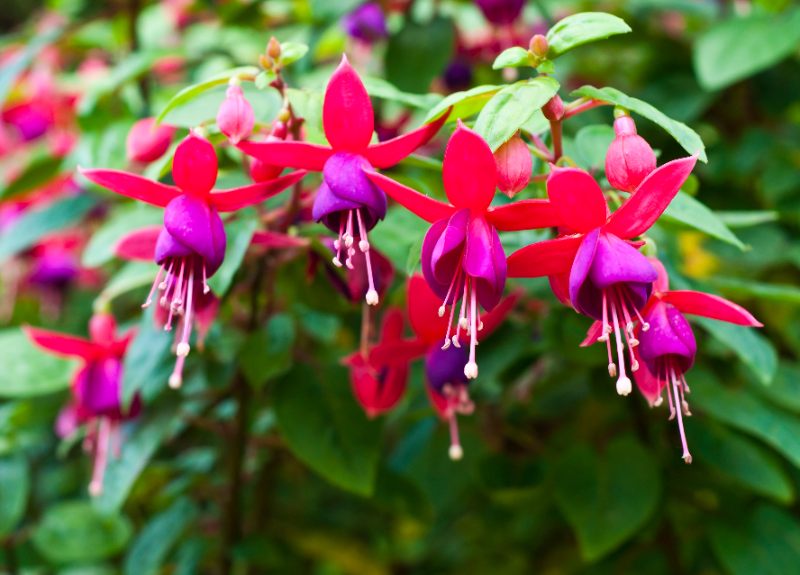
Carries the tubular-flower role into fall when many other plants have shut down. Good for hanging baskets, shaded patios, and hummingbird gardens that need a late-season anchor.
- Zones: 7 to 9 (hardy types) or grown as annuals further north
- Bloom: June to October
- Sun: Part shade
Why bees skip them:
- Pendant red and red-purple flowers are designed for hummingbird beaks
- Tubular shape and red color discourage bees
5. Hibiscus (red varieties)
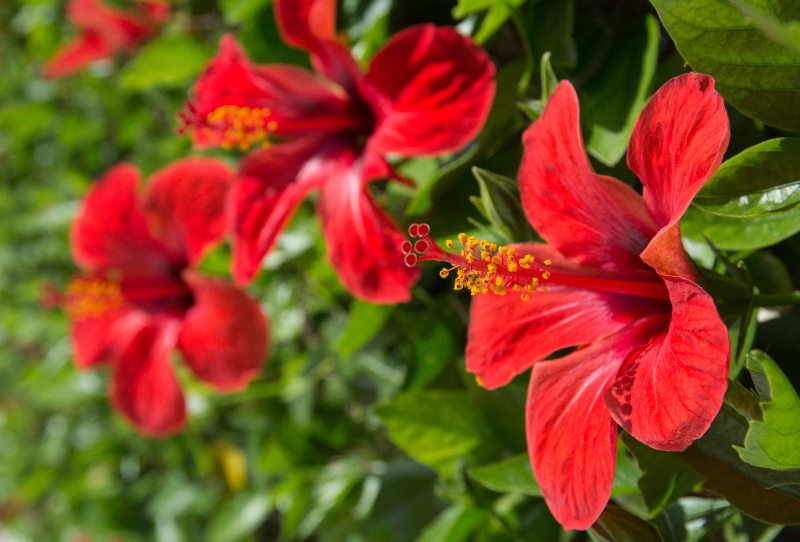
Summer pick for tubular wildlife flowers. The large red trumpets work hard for ruby-throated hummingbirds from June through frost.
- Zones: 5 to 9 (hardy hibiscus) or 9 to 11 (tropical hibiscus)
- Bloom: June to October
- Sun: Full sun
Why bees skip them:
- Large red trumpets are built for hummingbird beaks, not bees
- Red varieties draw far less bee traffic than white, pink, or yellow varieties
6. Impatiens
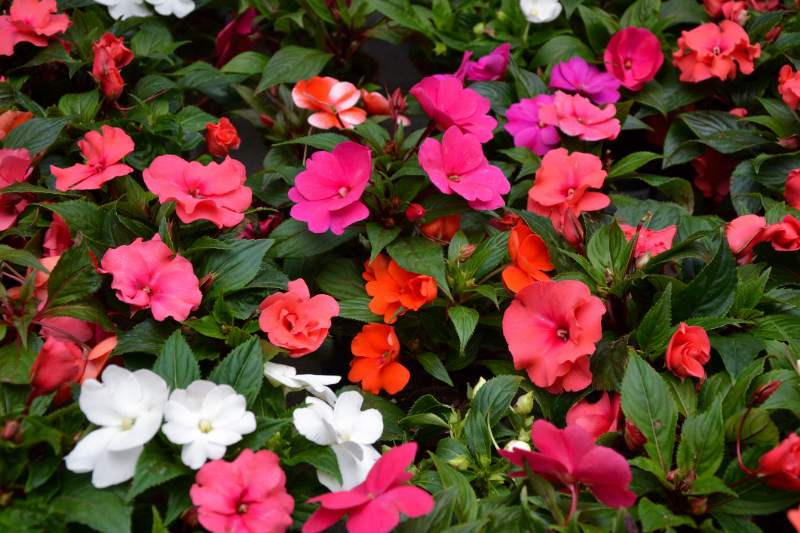
One of the best low-bee options for shady spots where other low-bee plants struggle. Blooms nonstop from June through frost in white, pink, coral, and red.
- Zones: 10 to 11 (annual in most regions)
- Bloom: June to October
- Sun: Partial to full shade
Why bees skip them:
- Bred for color and bloom volume, not pollen
- Little nectar reward to bring bees back
7. Marigolds (red varieties)
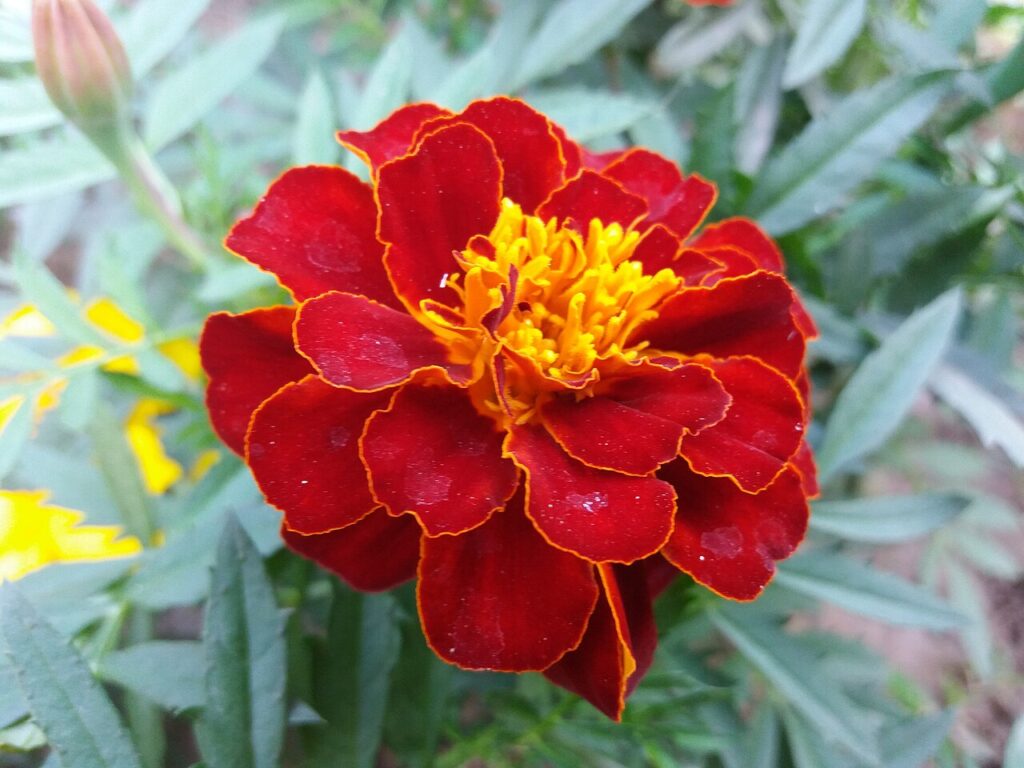
Easy edging or container annual with very low bee draw.
- Zones: 2 to 11 (annual)
- Bloom: May to October
- Sun: Full sun
Why bees skip them:
- Produce very little pollen
- Red coloring further reduces bee interest (avoid yellow marigolds, which are bee-visible)
8. Pansies
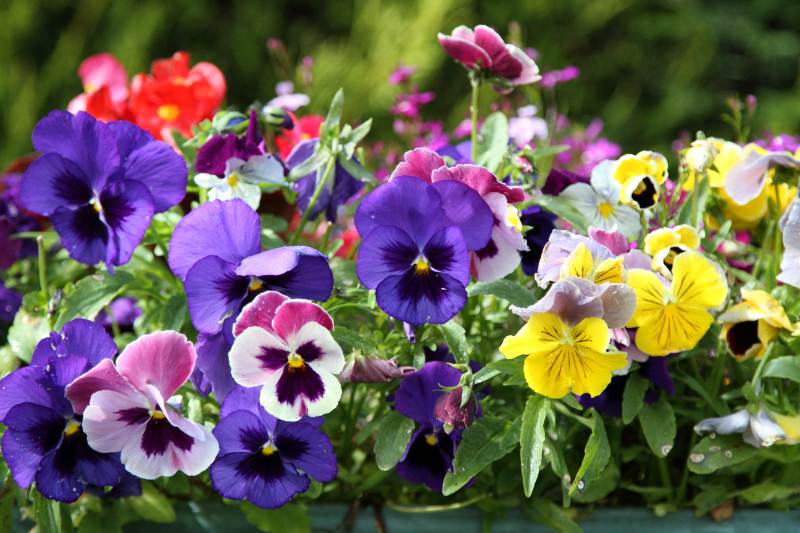
A moderate pick rather than a guaranteed low-bee option, but timing makes them work. Best planted in shoulder seasons.
- Zones: 4 to 8
- Bloom: March to May, September to November
- Sun: Part sun
Why bees mostly skip them:
- Self-fertilize without bee help
- Bloom in early spring and fall when bee activity is naturally lower
- Bumble bees can still reach the nectar, so they’re not bee-proof
9. Petunias (hybrid)
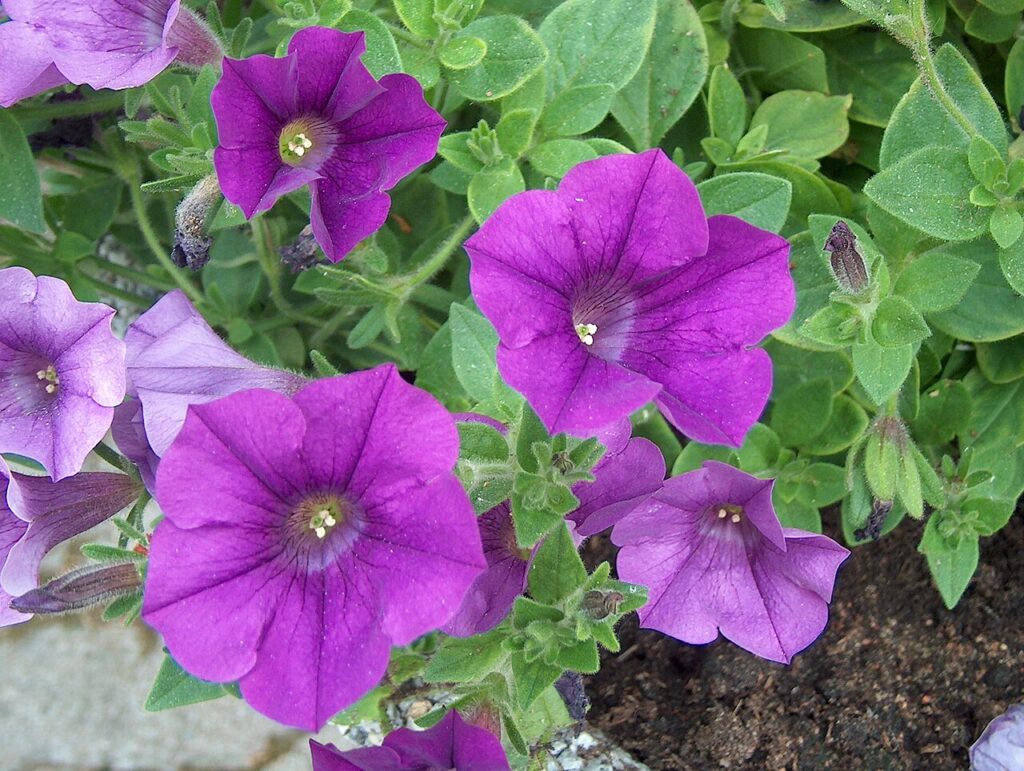
Heavy bloomers from spring through frost in nearly every color.
- Zones: 10 to 11 (annual in most regions)
- Bloom: April to October
- Sun: Full sun
Why bees skip them:
- Hybrid petunias produce very little nectar
- Long, narrow flower tubes that bees with short tongues can’t reach, according to UF/IFAS Extension
10. Tulips (red, unscented)
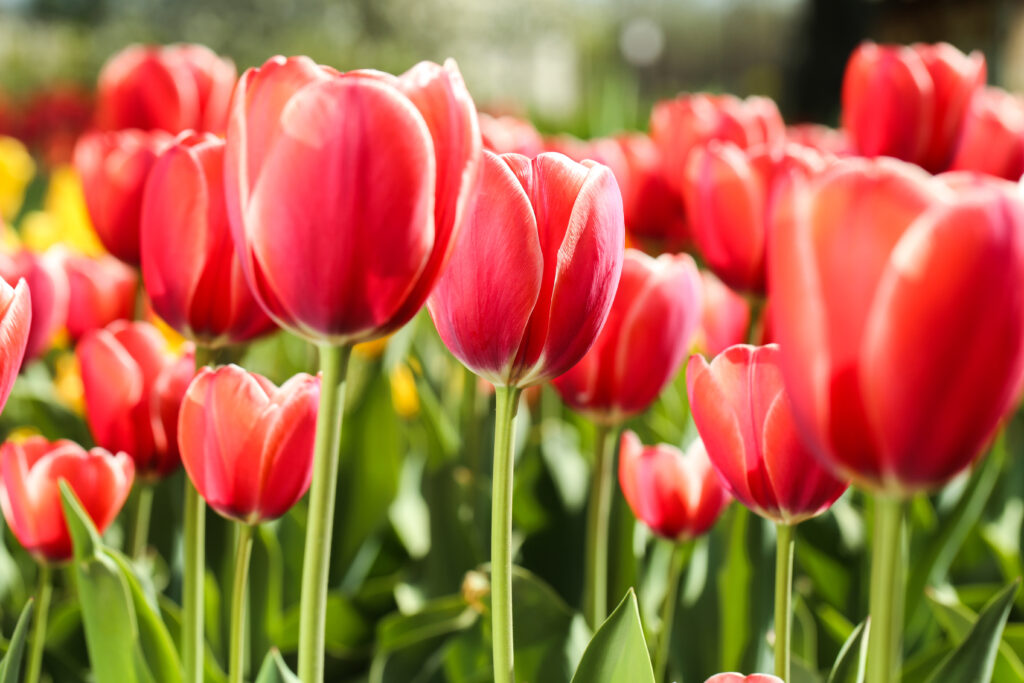
Spring bulb pick. Stick with unscented red varieties.
- Zones: 3 to 8
- Bloom: March to April
- Sun: Full sun
Why bees skip them:
- Most tulips aren’t fragrant, so they don’t signal pollen to bees
- Red coloring further reduces bee interest
“Tulips are always a popular bulb, but be prepared to treat them as an annual,” says Makahla Holloway, Home Horticulture Extension Agent at Alabama Cooperative Extension. In warm-winter regions, bulbs don’t get cold enough to rebloom and need replanting each year. For planting guidance, see our complete guide to spring bulbs.
11. Zonal geraniums
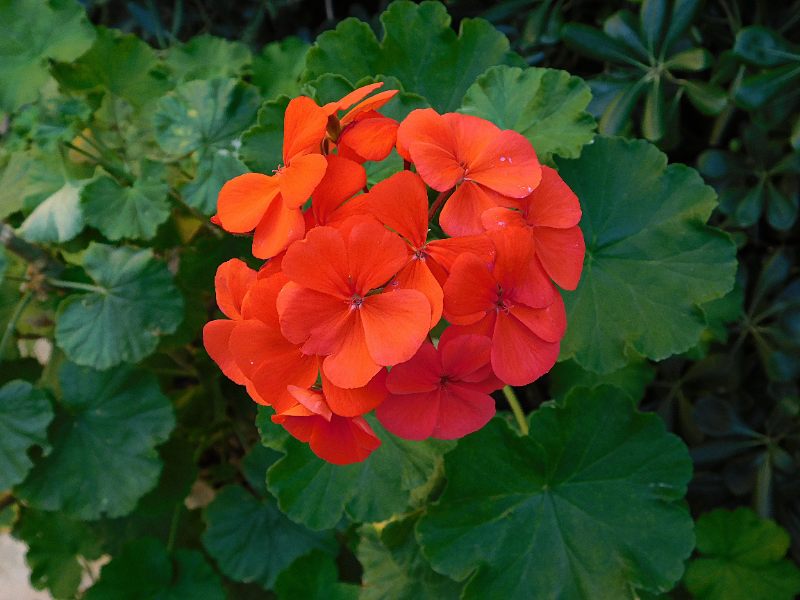
About as bee-unfriendly as bedding plants get.
- Zones: 10 to 11 (annual in most regions)
- Bloom: May to October
- Sun: Full sun
Why bees skip them:
- Produce barely any pollen
- Leaves give off a scent that actively turns insects away
- Colors (red, orange, pink, white) are not appealing to bees
Read more:
Best Plants to Attract Bees to Your Garden
When to Plant Bulbs in Fall
Winter Flowers that Bloom in the Cold
Smart placement tips
Placement matters as much as plant choice. Concentrate your low-bee flowers closest to seating areas, entryways, and anywhere kids play. Even the most bee-resistant plants get the occasional visit, so distance is your backup.
“Most bees are content to leave people alone,” DeLong-Amaya says. Staying calm is what matters most — don’t swat or flail, and they’ll typically move on. Most stings happen when someone steps on a bee or swallows one in a soda.
If you still want pollinator-friendly plants in your yard, tuck them at the back or in a dedicated pollinator corner away from where you spend time. A bee-free patio or play area is realistic. Bee-free everywhere isn’t.
Safety check before you plant: Most low-bee flowers on this list are non-toxic, but a few have caveats for households with curious pets or young kids. Tulip bulbs are toxic to dogs and cats if dug up and chewed. Geraniums are mildly toxic to pets. Begonias contain insoluble calcium oxalates that can irritate pets’ mouths. Check the ASPCA toxic plants database for anything you add to a high-traffic yard.
FAQs
No. Bees travel several miles from their nests to forage, so a single low-bee yard doesn’t measurably shrink their food supply. NC State research found even urban honey bees rely on flower nectar rather than processed sugars, so the broader landscape matters more than any one yard. If you want to support bees while keeping patios quiet, plant a small pollinator corner at the back of the yard.
Yes, especially if you include red tubular flowers like hibiscus and fuchsia. Hummingbirds prefer the same red tones bees skip, and butterflies favor flat-faced flowers with concentrated nectar that bees often pass over. A low-bee yard can still be a strong pollinator garden for other species. The trade-off is more about which pollinators you’re inviting, not whether you’re inviting any.
Seal cracks in siding and window frames where bees nest, empty standing water that draws them in summer, and clean up fallen fruit or sugary spills near patios. Skip strong floral perfumes outdoors. If you find an active nest, call a local beekeeper to relocate the colony rather than spraying.
Get a beautiful yard without the buzz
Planning a low-bee yard comes down to plant choice and layout. If you’d like help putting it together, Lawn Love makes it simple. Get a free instant quote, pick a time, and a local landscaping pro handles the rest.
Read more:
- What is a Pollinator Lawn?
- Best Plants to Attract Bees to Your Garden
- Best Organic Pest Control Options for Your Lawn
Main Image: Red tulips in full bloom under a blue sky. Photo Credit: chungking / Adobe Stock, created using Canva Pro
Related Posts:


