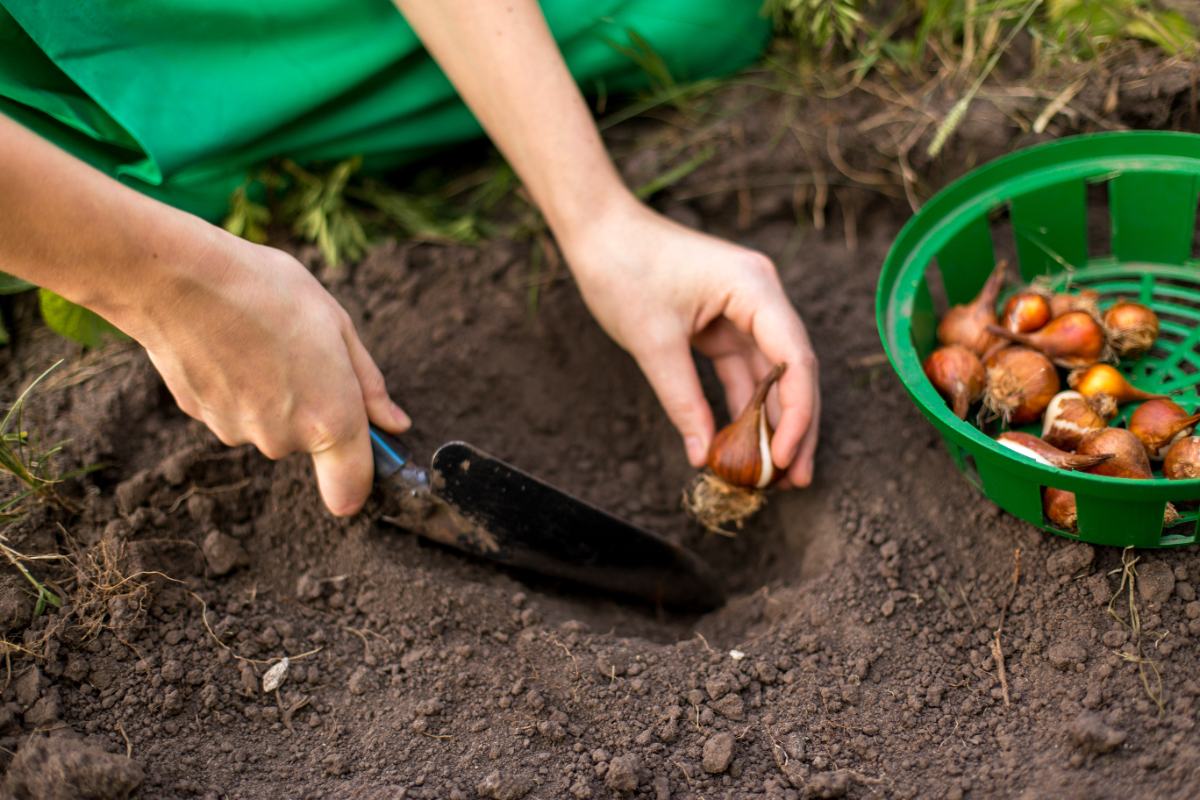
Plant spring bulbs when nighttime temperatures consistently hit 40-50 degrees, typically 6-8 weeks before your first hard freeze. In Northern zones, plant in September; in Southern zones, wait until December. Experts say this fall window lets bulbs develop roots and experience the cold needed for spring blooms.
You can also check out our guide on “Planting Spring Bulbs this Fall” to learn what needs to be done for a stunning display.
Timing is everything, as they say, and that’s especially true in gardening. But if you’re just not confident in your abilities or would rather leave the dirty work to someone else, consider a professional gardener.
Optimal planting times by region

Your location determines everything when it comes to bulb planting. What works in Maine will fail in Texas and vice versa.
No matter where you live, the key is to plant when evening temperatures consistently stay between 40 and 50 degrees, but before the first hard freeze. Use these zone-specific guidelines to find your perfect planting window.
Northern zones (USDA 3-5): Mid-September through mid-October. In the coldest areas, plant bulbs in early to mid-September before the ground freezes. Cover them with 3-4 inches of mulch to protect them through the winter.
Transition zones (USDA 6-7): Late-September through early November. In the Mid-Atlantic and Northeast, timing varies by location. Northern areas (zone 6) can start in late September, while southern areas (zone 7) should wait until October.
Southern zones (USDA 8-10): Late November through December. In the warmer South, our winters aren’t cold enough to trigger the bulbs. Refrigerate bulbs for 6-10 weeks before planting in early to mid-December. Keep them away from apples and other ripening fruits.
“Tulips are always a popular bulb, but be prepared to treat them as an annual,” said Makahla Holloway, Home Horticulture Extension agent with Alabama Cooperative Extension System. “Alabama winters are not cold enough for tulips to rebloom. For best results, buy pre-chilled tulip bulbs and plant in mid-late December.”
Related reading:
Why timing matters for bulb success
Spring bulbs aren’t just seeds, they’re tiny time capsules programmed by temperature. Bulbs need two critical things: time to establish roots and exposure to cold temperatures.
The 6-week rule: Most bulbs require a minimum of six weeks with soil temperatures consistently below 60 degrees to develop proper root systems.
Lindsey Kerr, Consumer Horticulture educator at Michigan State University Extension, emphasizes flexibility in timing.
“Most fall-planted flower bulbs can go in the ground anytime from late August until just before the soil freezes,” she said. “The ideal planting time depends on your location, the weather, and the type of bulb.”
Related reading: Winter Flowers that Bloom in the Cold
Soil temperature guidelines
Calendar dates don’t tell the full story. Your soil thermometer does. The University of Missouri Extension recommends planting when the soil reaches about 55 degrees, which typically happens after nighttime air temperatures stay around 50 degrees F for two weeks.
For the most accurate timing, invest in a simple soil thermometer and measure 6 inches deep where you’ll plant bulbs. When readings consistently show 55 degrees or below, you’re ready to plant. This method works across all climate zones and adjusts for yearly weather variations.
Related reading: How to Use Compost in Your Lawn and Garden
Early vs. late fall planting

Not all bulbs demand the same planting schedule. Understanding which bulbs prefer early versus late planting helps you prioritize your fall gardening tasks and protect your investment. If you’re planting a mixed bulb garden, simply plant everything at mid-season timing (mid-October for most zones). It works well when creating diverse spring displays.
Early fall bulbs like daffodils benefit most from early planting. Once rooting begins, bulbs become vulnerable to drying out, so plant them promptly. These tough performers naturalize readily and forgive timing mistakes better than other bulbs.
Mid-fall bulbs like crocuses, hyacinths, and alliums can be planted from early to late fall. Crocuses go in when the soil reaches 60 degrees. Hyacinth plants with other bulbs (pre-chill 8-10 weeks in warm climates). Alliums are easiest and can be planted a few weeks before the first hard frost.
Late fall bulbs like tulips actually benefit from delayed planting. Cold soil temperatures protect against fungal diseases like Fusarium and discourage squirrels. Kerr from Michigan State notes that “tulips can be planted later – often well into November,” making them ideal for procrastinators.
| When to Plant | Which Bulbs | Why |
| Early Fall | Daffodils | Already rooting, needs soil |
| Mid-Fall | Crocuses, Hyacinths, Alliums | Flexible timing window |
| Late Fall | Tulips | Protects from disease and pests |
Related reading: How Much Does a Gardener Cost?
Container vs. in-ground timing
Container and in-ground bulbs follow the same fall planting schedule based on your zone and soil temperature. The difference is that containers give you more flexibility.
Garden beds lock you into planting when soil conditions are right, while containers let you plant on your schedule, then store them where temperatures stay between 35°F and 48°F (unheated garage, shed, or outside in a cool spot).
Both methods work with “lasagna planting,” where you layer bulbs at different depths for blooms that appear one after another in spring. After the required 12-15 weeks of cold storage, containers offer a bonus option: bring them indoors to a cool, bright room to force early blooms 3-4 weeks before your garden wakes up.
FAQ: Spring bulb timing
No. Kerr is clear: “If you miss the fall window, bulbs can’t be stored until spring. Unlike seeds, they’re perishable and will either rot or dry out over the winter. More importantly, bulbs need a natural ‘chill period’—exposure to cold temperatures—to develop roots and trigger blooming.”
Your options: Plant bulbs in pots and refrigerate for 10-12 weeks to provide artificial chilling, then transplant. Or try forcing bulbs indoors in water or soil. Alternatively, plant them anyway. While first-year blooms may disappoint, bulbs often recover for year two.
In zones 8–10, refrigerate bulbs before planting. Place them in ventilated bags in your crisper drawer at 40 to 45 degrees F. Most bulbs need 10-14 weeks minimum. Keep them away from apples and other ripening fruit, which release ethylene gas that damages bulbs.
Plant immediately after chilling, during your coldest months (typically late November through December). Daffodils require less chilling (6 weeks) and perform better in warm climates than tulips.
Shipped bulbs often arrive at optimal planting time. Suppliers time deliveries based on your zip code. If bulbs arrive early, store them in a cool (60 degrees F to 65 degrees F), dark, well-ventilated location until soil temperatures drop.
Locally purchased bulbs from garden centers give you more control over timing. Buy bulbs when they first arrive in stores (late summer for northern zones, fall for southern zones) for the best selection. Check bulbs weekly. If they start sprouting, plant immediately even if timing isn’t perfect.
Your Spring Garden Starts This Fall
The window for planting spring bulbs is generous but not infinite. Focus on getting bulbs in the ground during that crucial six-to-eight-week period before hard freeze, use soil temperature as your guide rather than calendar dates, and you’ll be rewarded with spectacular spring color. Don’t let perfect timing stop you, the key is getting them in the ground before winter arrives.
Lawn Love connects you with local lawn care professionals who can prepare your beds, manage weeds, and even mow your lawn, setting you up for a successful, colorful spring yard.
Related reading:
Main Image: A gardener plants bulbs. Image Credit: olyapon / Adobe Stock
Related Posts: