| Key Takeaways: |
|---|
| ● Fall planting works because warm soil and cool air allow roots to grow for weeks without summer heat stress. ● There’s no single fall planting deadline for the whole country. Plant within the window recommended by your local Cooperative Extension office. ● Most deciduous trees and shrubs establish well in the fall. Spring may be safer for bare-root plants, broadleaf evergreens, and slow-establishing species. |
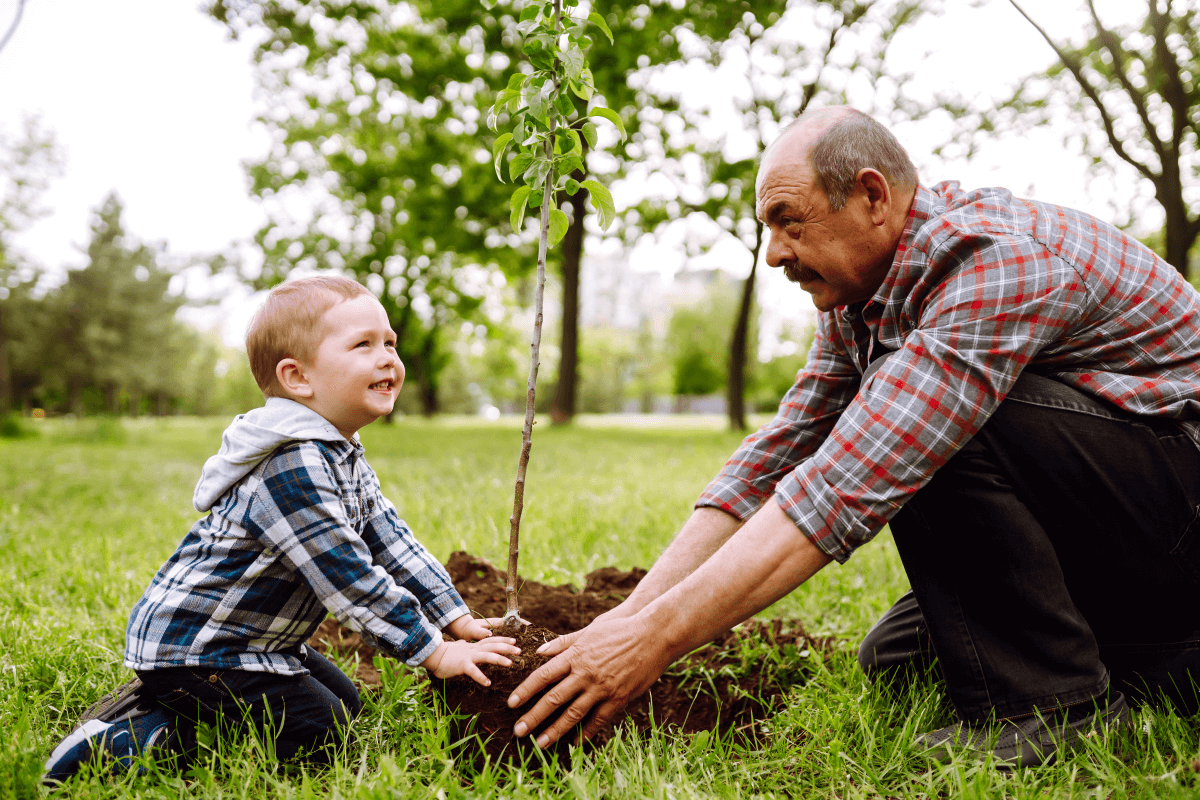
Fall is the best time to plant trees and shrubs because warm soil encourages rapid root growth, while cooler air reduces heat stress on the leaves.
Not sure which trees or shrubs on your property are safe to plant this fall, or when your local cutoff date actually is? LawnLove’s gardening service can match you with a local pro who knows your first-frost date and will plant, mulch, and water everything right the first time.
The science in plain terms
Roots and branches don’t respond to fall weather in the same way. As the days shorten and the air cools, shoot growth slows and deciduous plants start dropping leaves. As long as the soil stays warm enough, they keep growing.
When should you get planting? September and October are common fall planting months, but colder regions get an earlier start. In milder climates, planting can continue into winter.
Peter Lowe, Garden Program Manager for The Dawes Arboretum in Newark, Ohio, shared an example from his first years of professional fall planting.
“I’ve planted many fall tree or shrub plantings during my 14 years with The Dawes Arboretum, so I’d call upon an example of one of the first professional fall plantings that I did that’s still standing!
It was a Buckeye memorial grove at The Ohio State University, planted in the fall in honor of retiring Athletic Director Andy Geiger.”
Lowe’s example comes back to soil temperature:
“Just like any autumn planting, its success was dependent on plant conditions. Soil temperature is of utmost importance when planting in the autumn. The colder you go, the slower you grow. The ideal minimum soil temperature for autumn planting is in the 40s.”
Cooler air helps with the establishment stress. A new tree or shrub loses less water when the weather isn’t hot, dry, or windy. Less stress on top means more energy for roots below, and that head start pays off next summer.
Fall rain can help, but it doesn’t always meet your watering needs. Rain can soak the soil around the planting hole without ever wetting the root ball, so don’t assume the autumn showers handled it.
Lowe recommends a simple hands-on check: “The easiest way to test this is by using your finger to test if the first few inches feel cool and damp. If not, water away!”
Read more:
How late is too late to plant in fall
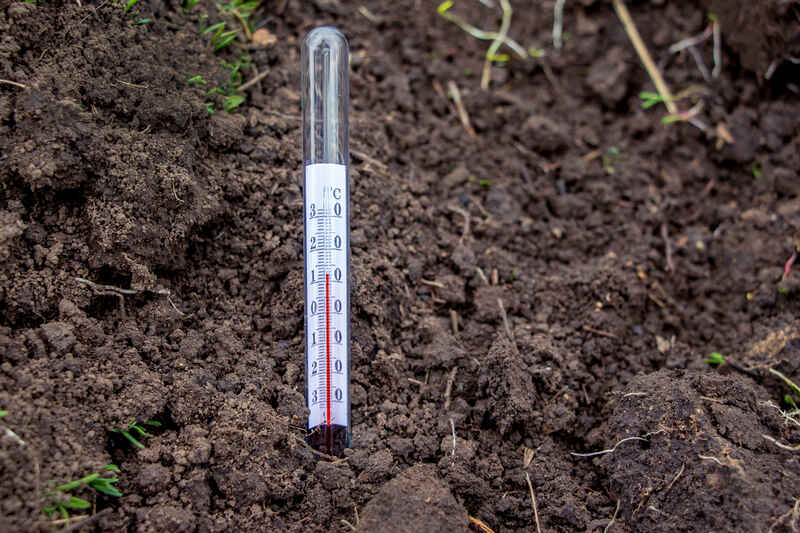
There’s no single planting deadline for the whole country. A November planting may be too late in northern Minnesota, but perfectly reasonable in parts of the South.
Your planting window depends on:
- Local climate and elevation
- Current and forecast weather
- Soil temperature and whether the soil is workable
- Plant species and cold hardiness
- Nursery-stock type
- How quickly winter arrives
Lowe says to use local history, not one national deadline.
“As for deciding whether there’s enough time to plant or not, you can view historical data from your area and gauge when the first frost is going to be, as well as when the temperatures are going to start plummeting.
“You can do this through the National Weather Service or a local university extension.”
West Virginia University recommends planting about 2 months before the area’s average first-frost date and at least 6 weeks before. The University of Massachusetts recommends planting at least 6 weeks before the ground is expected to freeze.
“Although planting six weeks before the ground freezes is a common shared practice, it is dependent on the type of plant and the soil conditions,” Lowe says.
These recommendations use different weather events. The National Weather Service glossary explains the differences between frost, freeze, and hard freeze:
- Frost forms when a surface is cool enough for ice crystals to develop. Frost can sometimes form even when the official air temperature stays above 32°F.
- Freeze generally means the air temperature falls to or below 32°F over a widespread area for a meaningful period of time.
- A hard freeze generally means the air temperature reaches 28°F or lower for an extended period.
- Frozen ground means water in the soil has frozen. The soil doesn’t always freeze during the first frost or when the air freezes.
Lean on local guidance instead of counting back from the same event everywhere:
- Cold or short fall climates: Late August through September. Get trees and shrubs in early so roots have time to grow before winter.
- Moderate climates: September through October. Many healthy container-grown and balled-and-burlapped deciduous plants can be planted while the soil remains warm and workable.
- Milder winter climates: Planting may continue into November or winter. Heat, rainfall, irrigation, plant choice, and local soil conditions can matter more than a specific date.
Want a quick estimate for your area? Enter your ZIP code in the Almanac frost-date lookup. Just don’t treat the date as a forecast, or the day your soil will freeze.
For your planting deadline, follow local Extension advice. If it says to leave 6 weeks before the ground freezes, don’t count back from the first frost instead.
Read more: How the Hardiness Zone Helps with Your Yard
What fall planting does well and where it doesn’t work
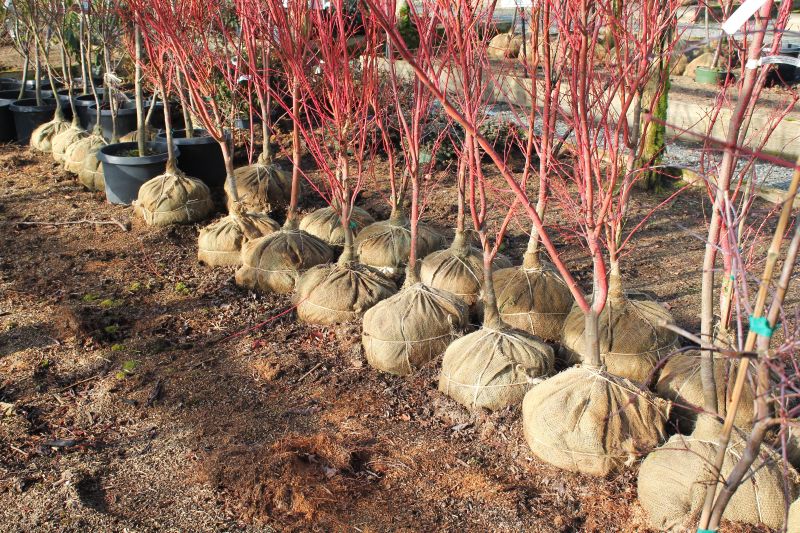
Crabapples, honeylocusts, and many maples are among the options where fall planting works. Choose one that’s hardy in your area and sold in a container or with a balled-and-burlapped root ball. Give it some time to put down roots before winter arrives.
The University of Maryland Extension lists fall, winter (as long as the soil isn’t frozen), and early spring as good times to plant. It recommends avoiding summer planting when possible because plants in full leaf are more susceptible to heat and water stress.
Fall planting can be less reliable when:
- The plant goes in so late that roots have little opportunity to grow before the soil becomes too cold.
- The site has severe, dry winters or frequent freeze-thaw cycles.
- The plant is evergreen and continues losing moisture through its foliage during winter.
- The species has fleshy, coarse, or slow-regenerating roots.
- The plant is bare-root, and local guidance recommends spring installation.
- The soil is frozen, saturated, heavily compacted, or otherwise unsuitable for planting.
“Another important thing to remember when planting in the fall is to be aware and prepare for winter desiccation,” Lowe says.
“Winter desiccation is a process in which plants lose more moisture through their leaves faster than their roots can absorb. Damage shows up on the windblown side of the tree as foliage that loses its color and turns brown.”
Purdue Extension warns that large trees can take longer to regenerate an adequate root system and may face greater fall-establishment risk than smaller nursery plants.
The best trees and shrubs to plant in fall (and what to save for spring)
Fall is usually a good fit for healthy, moderately sized, locally hardy deciduous trees and shrubs sold in containers or with balled-and-burlapped root balls.
| Plant in Fall | Wait for Spring |
| Crabapple | Magnolia |
| Hackberry | Ginkgo |
| Honeylocust | Sweetgum |
| Linden | Tuliptree |
| Catalpa | Willow |
| Maples (check the species) | Bald cypress |
From his experience in Ohio, Lowe offers these additional cautions:
“A few things to avoid planting in the fall are dogwoods, magnolias, birch, oaks, and broad-leaf evergreens.”
Before buying, check the specific species and cultivar, and not just maple or magnolia, with your local Cooperative Extension office. Keep in mind that a recommendation for a container-grown plant may not apply to a bare-root one.
Read more:
- 20 of the Best Flowering Trees for Your Landscape
- 18 of the Best Wind-Resistant Trees
- 8 Flowering Shrubs That Will Make Your Landscape Pop
How to plant a tree or shrub once the soil is ready
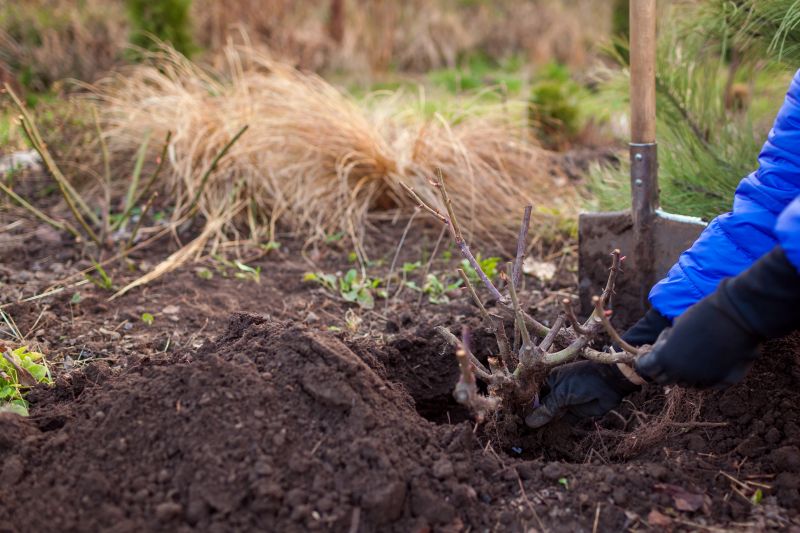
Good timing can’t rescue a badly planted tree. Follow these steps:
1. Check the site: Make sure the tree or shrub will fit without crowding your house, sidewalk, fence, overhead wires, or the neighboring trees.
2. Contact 811 before digging: Wait for a green light from the utilities, follow your state’s notice requirements, and use care around marked lines.
3. Find the correct planting depth: For a tree, find the root flare. This is where the trunk widens, and the main roots begin. Nursery trees sometimes arrive with extra soil covering this point. Gently remove that extra soil before measuring the root ball. The top of the nursery soil is not always the correct planting depth. For a shrub, use the top of the root ball as your guide.
4. Dig wide, not deep: Dig the hole two to three times as wide as the root ball, but not deeper. The hole needs to be deep enough for the root flare to finish at soil level or slightly above it.
5. Prepare the roots: Remove the pot from a container-grown plant. Straighten or cut circling roots and remove dead, broken, or girdling roots. Leave the burlap and the wire basket on a balled-and-burlapped plant until it is stable in the hole.
Lowe describes his approach to container-grown plants: “When you’re preparing a container-grown plant for winter, prune an inch off the root ball all the way around to stimulate root growth. Be sure to look for girdling roots that may cause future problems for the tree or shrub.”
6. Set the plant straight: Place the tree or shrub in the center of the hole, then step back a few feet and check it from a couple of directions. Straighten it before you begin backfilling.
7. Remove the wrapping: “For balled and burlapped (B&B), make sure you can see its root flare, remove all its cage and burlap,” Lowe says. If full removal isn’t possible, the University of Maryland Extension recommends removing at least the top 12 inches.
8. Backfill with the original soil: Put the soil you dug out back into the hole. Work it gently around the roots, then lightly firm it by hand or water it to help it settle. Don’t stomp it down or pack it tightly.
9. Water thoroughly: Soak the root ball and the surrounding soil right after planting. This settles the soil and closes up the air pockets around the roots.
10. Add mulch: “Mulch at a 2-inch depth at minimum the width of the canopy, keeping a 6-inch ring clear of mulch around the trunk,” Lowe says. “Although Dawes uses an in-house-made mulch mixture, I always prefer a leaf mold compost blend the first year after planting.”
11. Check the moisture: Keep the root zone watered through fall and whenever the soil is unfrozen. Check it again if an early hard freeze is forecast.
12. After planting care: Lowe advises against routine branch pruning: “Unless there’s a problematic branch, no pruning is necessary.”
Read more:
- How to Protect Trees from a Freeze
- How to Transplant a Tree
- What to Plant Above Buried Utility Lines in Your Yard
- How to Landscape Around Buried Cable Lines
- What to Do With Tree Roots Growing Above Ground
FAQs
You should hold off on any fertilizer. Newly planted trees and shrubs rarely need fertilizer at planting time, and high-nitrogen fertilizer can encourage top growth when the plant is still establishing roots.
Usually, you can skip the stakes. Use them if the tree can’t stay upright on its own. If you do stake it, use soft ties and remove them after the first growing season so the trunk can develop normal strength.
Water deeply right after planting, then keep the root zone consistently moist, not soggy, through fall and whenever the soil is unfrozen.
“Trees need about an inch of water per week,” Lowe says. “Boiled down to it, if the ground is frozen, don’t water, and if the ground thaws – water! Roots are still growing underground, even if it’s at a much slower rate.”
Grab a shovel (or your phone)
Getting fall tree and shrub planting done right takes practice, the right tools, time you may not have, and a lot of digging.
If you’d rather leave it to someone who does this every day, LawnLove connects you with local gardeners who know exactly when and how to plant your new trees and shrubs. They handle the hard work so your landscape is set up for success next spring.
Main Image: Planting tulip bulbs near a shrub bed during fall gardening. Photo Credit: andreaobzerova / Adobe Stock
Related Posts:


