
A mix of different factors can lead to compacted soil, including heavy foot or vehicle traffic, low organic matter, intense rainfall, overwatering, mixing clay soil with sand, and even the weight of heavy equipment or structures.
As Judd Barslund, consumer horticulture educator at Michigan State University Extension, explains, “Soil compaction occurs when soil particles are compressed. This compaction reduces the pore space between soil particles.” When the space disappears, the soil becomes harder to dig, roots struggle to grow, and water is more likely to sit on the surface instead of draining properly.
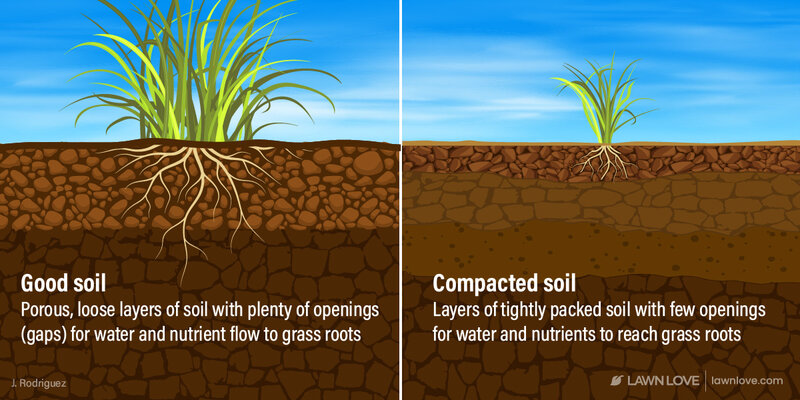
In this guide, I’ll tell you the common causes of soil compaction and how to prevent them. If you suspect your soil is already compacted, consider consulting a lawn care pro who can help assess and fix the issue right away.
Heavy foot and vehicle traffic
Repeated foot traffic from walking, playing, pet paths, or mowing over the same areas gradually squeezes air out of the soil and presses the particles closer together. Even lighter machines like lawn mowers exert pressure, and heavier equipment or vehicles can compact soil much more quickly and deeply.
Barslund adds that products marketed to “loosen” compacted soil vary widely in effectiveness and may worsen the problem if misapplied. He recommends relying on research-based guidance and performing a soil test before applying anything intended to reduce compaction.
How to prevent it:
- Vary your mowing patterns each week so mower wheels aren’t compacting the same strip of soil.
- Use lighter equipment, such as push mowers or robotic mowers instead of riding mowers when possible.
- Create pathways with stepping stones to redirect foot traffic away from the lawn.
- Keep vehicles off the lawn unless absolutely necessary.
Read more: How to Protect Your Lawn While Entertaining Outdoors
Construction activity
According to Barslund, a major cause of soil compaction occurs before a lawn is even established. “Urbanized soils are often compacted during construction,” he explains. Sometimes this compaction is intentional, but often it’s simply the result of “heavy equipment being moved on and off the site.” This early compaction can persist “for many decades after a home is built.”
How to prevent it:
- Lay down plywood to distribute weight when using heavy equipment for projects.
- Mark or fence off sensitive areas to keep machinery away.
- Barslung recommends amending the soil with compost before establishing a lawn to improve its structure. However, he cautions against overamending as this can break down natural aggregates and lead to further compaction.
Read more: What Are the Different Types of Soil Amendments for Your Lawn?
Low organic matter

Soils with low organic matter are naturally more prone to compaction. Organic matter acts like both a sponge and a glue; it creates soft pockets and stable aggregates that help keep pore space open for air and water.
Without organic material like compost, mulch, and decomposed leaves, soil becomes denser and less flexible, leading to compaction, poor drainage, and limited plant growth.
How to prevent it:
- Leave grass clippings on the lawn after mowing to add organic material back into the soil naturally.
- Topdress with compost annually, especially after aeration.
Read more: Topdressing a Lawn: How to Do It and Its Benefits
Clay soil with sand: a bad mix
Clay soil already compacts easily because of its tiny sticky particles. A common misconception is that adding sand will loosen clay. In reality, mixing sand into clay often creates a concrete-like texture that’s even harder to work with. Sand particles are much larger than clay particles. When combined, the clay fills the gaps around the sand, creating a dense, brick-like material.
How to prevent it:
- Add organic matter instead of sand. “Top dressing your soil with a light layer (1/4” or less) of compost can help improve the health of your turf and soil over time,” recommends Barslund.
- “Core aeration can be beneficial in some situations and may help alleviate shallow compaction,” says Barslund, “but aeration shoe spikes and spiked hand tools aren’t adequate for this task.” He notes that effective aeration for this type of soil requires large commercial equipment.
- Barslund cautions that gypsum, which is often recommended, is not a cure-all and should be used only when calcium levels are low, and soil pH is more acidic than ideal for lawns.
Read more: How to Use Compost in Your Lawn and Garden
Intense rainfall

Heavy or prolonged rainfall can compact the soil surface, especially when the soil is bare or sparsely vegetated. Although raindrops seem small, intense rainfall can break down soil aggregates and press soil particles together, forming a hard crust on the surface.
This crust limits airflow, reduces water infiltration, and can even prevent seeds from emerging, which increases the risk of erosion.
How to prevent it:
- Keep your lawn dense and healthy so the grass cushions raindrop impact before it reaches the soil.
- Ensure your yard has good drainage to prevent standing water after storms. Fast drainage keeps water from lingering and adding weight that contributes to compaction.
Read more: Lawn Drainage Solutions
Overwatering
When soil becomes saturated, all the air pockets fill with water. In this state, soil particles slide together more easily, especially when weight is applied. Waterlogged compacted soil drains slowly, holding moisture longer than it should and creating conditions that encourage pests, disease, and further compaction.
How to prevent it:
- Water deeply but infrequently to encourage deeper roots and without keeping the soil constantly saturated.
- Never mow or walk on wet soil.
Read more: When Is the Best Time to Water Your Grass?
Excessive tilling
Tilling can be helpful for improving soil structure and incorporating organic matter. However, over-tilling or doing it on wet soil can destroy soil structure and break down the natural clumps that help resist compaction.
How to prevent it:
- Test soil moisture before tilling, and only till when the soil is moist but not wet.
- Limit how often you till to avoid disrupting soil structure unnecessarily.
Say goodbye to compaction
Taking steps to prevent compaction can save you from a host of lawn problems later. If you don’t have the time or feel confused about how to fix or prevent compaction, Lawn Love can connect you with a local lawn care expert to provide services like aeration. With the right prevention or remediation, you can keep your soil healthy and ready to support a thriving lawn.
Sources:
- Barslund Judd. Consumer Horticulture Educator. Michigan State University Extension. Personal Interview.
- “Soil compaction.” By Jodi DeJong-Hughes, Extension Educator. University of Minnesota Extension.
- “Recognizing the signs of compacted soil.” Colorado State University Extension.
- “Clay soil challenges and solutions for Oregon gardeners.” Oregon State University Extension.
- “Soil Compaction, Is it good or bad?” By Henry Mayer. University of Florida Extension.
- “Soil Crusting.” North Dakota State University Extension.
- “Wet soils and potential compaction.” By Mahdi Al-Kaisi, Retired Professor of Soil Management. Iowa State University Extension and Outreach.
Main Image: Construction equipment compacting soil layers. Image Credit: Biewer_Jürgen / Adobe Stock Free / License
Related Posts:


