| Key takeaways |
|---|
| • Compacted soil, poor grading, and overwhelmed gutters are the most common causes of lawn drainage problems • French drains, yard drains, and channel drains solve chronic water issues; aeration is the fix for compacted soil • Standing water that persists for 7 days or more is an active mosquito breeding site • Costs range from under $20 for downspout extensions to $44,000+ for full yard regrading |

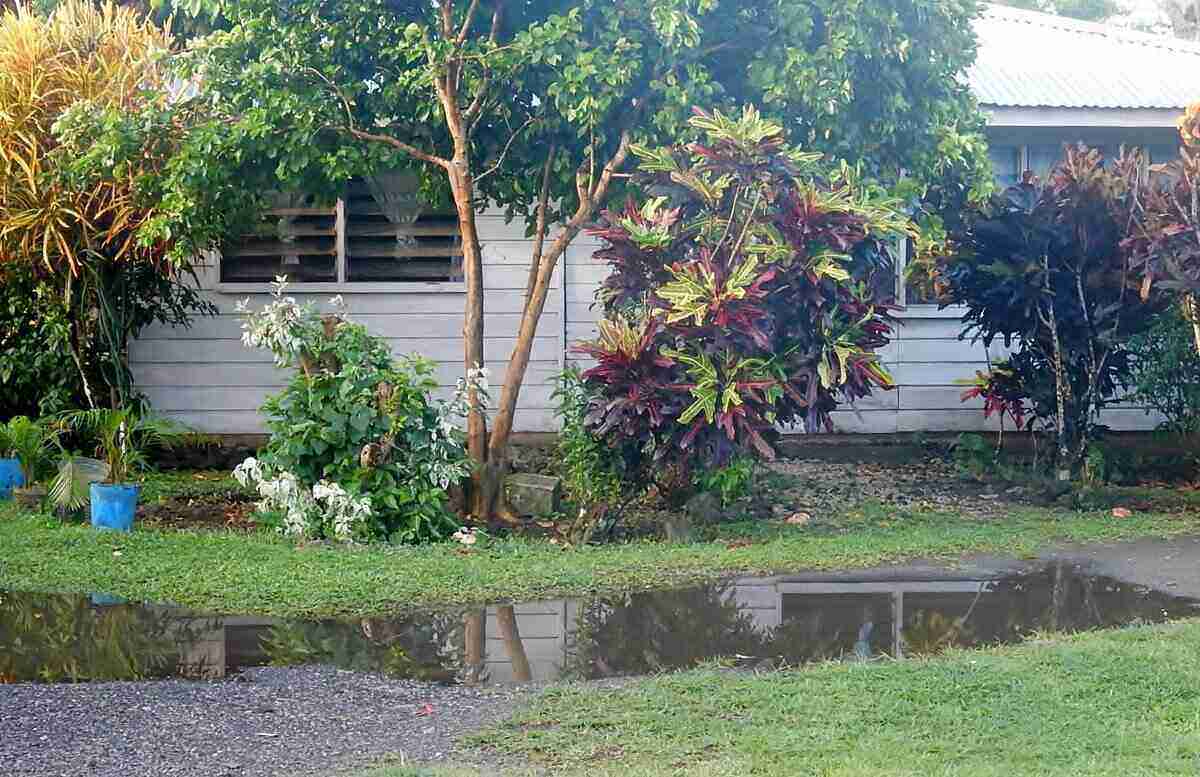
If your yard stays soggy for days after rain, water is pooling near your foundation, or the same spots turn to mud every season, you have a drainage problem.
The right backyard drainage solution depends on the cause: compacted soil, poor grading, overwhelmed gutters, or a naturally low yard. Soggy lawns drown grass roots, breed mosquitoes, and ruin foundations. Fix these issues with aeration, regrading, or French drains.
Lawn Love connects you with local pros who can diagnose and fix yard drainage issues of any scale.
Why yard drainage matters
Even in low- to moderate-risk flood zones, FEMA says a home is 5 times more likely to flood than catch fire over 30 years. But when should standing water in your yard start to worry you?
“When pooling consistently reaches your foundation wall after every rain event, you’ve crossed the line,” explains Victor Coppola, a certified building biologist, NDS Certified Drainage Contractor, and founder of GreenWorks Environmental in New Jersey.
As a certified environmental scientist, Coppola says when soil repeatedly cycles between wet and dry, it shifts and compresses, creating major structural issues.
Other poor drainage risks include:
- Health risks: Water seeping into your basement creates the perfect environment for mold growth.
- Pest infestations: The EPA warns that standing water persisting for 7 days or more creates active mosquito breeding sites, producing biting mosquitoes that carry West Nile virus, Zika, and dengue fever.
- Lawn health: Grass submerged for extended periods loses oxygen to its roots, leading to dead patches and fungal disease.
Signs of poor drainage
“A soggy yard becomes a serious problem when you start seeing changes in your home, like foundation cracks or sticking doors,” says Mike Nichols, owner of Heroes Lawn Care, in Austin, Texas. This indicates that water is putting pressure on the foundation or shifting the soil underneath.
Beyond structural damage, look out for these early warning signs:
- Large puddles or standing water that persists more than 48 hours after rain
- Soggy, spongy soil and muddy patches that never fully dry out
- Brown or yellow dead grass in recurring wet spots
- Visible erosion channels forming after every storm
- Foundation damage, basement moisture, or mold inside the home
Read more: 6 Wet Lawn Problems and How to Fix Them
How to diagnose the root cause
Once you spot the signs, you need to find the source. “My diagnostic starts with mapping water, not guessing,” explains Kevin Thompson, owner of Sylvan Scapes, in Staunton, VA. “I walk the site during or just after a rain, flag the ‘high-to-low’ flow lines, then do a quick infiltration test in the wet zone.”
To test the drainage, Thompson digs a small 6-to-8-inch hole to see how fast the water absorbs.
“If infiltration is slow and the wet spot matches a hard-use area (dogs/kids/mowers), it’s compaction; if water shows up when it *hasn’t* rained, it’s often a spring/seep line or a blocked outlet/downhill pinch point,” he says.
Read more: Reasons Why Your Yard is Flooding
Best ways to improve lawn drainage
Fixing a flooded yard comes down to your budget and the source of the problem. As Nichols says, “The key is matching the solution to where the water is sitting.” Picking the right system from the start ensures your home stays protected for good.
Lawn drainage solutions at a glance
| Solution | Best For | DIY? | Cost range (including labor) |
|---|---|---|---|
| French drain | Subsurface water, foundation protection | Yes | $2,800 - $6,500 |
| Dry well | Collecting water at the end of a drain | Yes | $1,165–$4,420 |
| Yard drain/catch basin | Surface runoff in low spots | Yes | $150–$200 |
| Downspout extensions | Gutter-caused foundation pooling | Yes | $3–$350 |
| Channel drain | Hardscape runoff (driveways, patios) | Yes (Experienced DIYers) | $3,000–$10,000 per 100 ft. |
| Lawn aeration | Compacted soil | Yes | $104-$195 |
| Fill in low spots | Small isolated puddles | Yes | $10–$50/cubic yard |
| Porous hardscaping | Impervious surface runoff | No | $585–$8,850+ |
| Regrade yard | Slope draining toward the foundation | No | $15,800–$44,535/acre |
| Dry creek bed | Decorative drainage channel | Yes (Experienced DIYers) | $3–$7/sq. ft. |
| Rain garden | Persistent saturated low spot | Yes (Experienced DIYers) | $500-$1,600/project |
1. French drains

A French drain is a gravel-filled trench containing a perforated pipe that catches underground water and directs it safely away from your yard and foundation. To use one effectively, you have to match it to the right problem.
“A French drain is for when the soil itself is saturated and water is migrating laterally through the ground toward your foundation,” Coppola explains.
Because it is built for subsurface moisture, Thompson warns against using them for top-level puddles.
“People put in a French drain where the problem is surface runoff on a slope,” Thompson says. Instead, he says, adding a surface collector is a much better fix for above-ground pooling.
If you have clay soil, installation requires extra care.
“What kills most DIY installs is that homeowners size their French drain for loam but lay it into clay,” Coppola says. Because clay absorbs water so slowly, he explains that you must actively redirect the flow so the pipe doesn’t just fill up and sit stagnant.
Pro tip: In clay-heavy soils, always wrap the pipe in geotextile fabric to prevent sediment clogs.
French drain cost: $2,800-$6,500
Warning: Before digging trenches, you must call 811 to mark underground utility lines to prevent lethal accidents.
Read more:
2. Dry wells
A dry well is a large buried basin or holding tank installed at the end of a French drain or creek bed. Coppola says heavy clay soils “sometimes require a dry well to hold volume before it can disperse.”
Water collects in the dry well and disperses slowly into surrounding soil through porous sides.
Note: A dry well works only if the surrounding soil can absorb water, so you should confirm drainage/percolation and place it far enough from the foundation before installation.
Professional installation cost: $1,344-$5,167
3. Yard drains
Acting like an outdoor bathtub drain, catch basins sit at the lowest point of your yard to collect and pipe away pooling water.
They are meant for fast-moving surface water. “A catch basin is the right call when water is arriving fast and pooling at a low point,” Coppola says, listing patios and driveways as main examples.
Nichols agrees, noting they handle sudden downpours much better than slow-draining underground trenches.
Note: “Wrong choice number one I see: people install a catch basin in a low lawn that’s fed by sheet flow, but the basin only grabs water that actually finds the grate,” Thompson says. He explains that without a way to guide the water, it just bypasses the drain and leaves your yard muddy.
To fix this, shape a shallow surface swale to funnel water directly to the drain. He adds, “The basin is the pickup, the grade is the steering wheel.”
Estimated catch basin cost: $150–$200
4. Downspout extensions

If your gutters are dumping water right next to your foundation, simply extending your downspouts is often the easiest fix.
“I’d put it at roughly 40% of the pooling cases I assess are significantly improved just by extending or redirecting downspouts,” Coppola says, adding that buried downspouts with no visible exit are a major red flag.
Note: If you install extensions yourself, pay attention to the angle. “The most common mistake with DIY downspout extensions is not giving them enough slope,” Nichols warns. He explains that flat pipes just hold stagnant water, quickly leading to clogs and mosquito problems.
Options:
- Aluminum extensions: $3–$22
- StealthFlow extensions: $13–$17
- Roll-out drain sleeves: $9–$15
- Buried underground downspout: $225–$350 per downspout ($15–$20/linear foot + ~$150 for a pop-up emitter)
5. Channel drains
Channel drains capture sheet flow from solid surfaces like driveways and patios before it reaches your yard. They are long, linear, grated channels set flush into the ground. They quickly direct water away before it pools in your yard.
Note: Unlike French drains that handle subsurface water, channel drains manage surface runoff from nonporous hardscaping. To figure out which one you need, Coppola says, “Fast pooling during rain equals surface problem; slow creeping dampness hours *after* rain equals subsurface issue.”
- Requires cutting into concrete, so professional installation is highly recommended.
- Ideal for wide hardscapes like driveways, patios, and pool decks.
Professional installation cost: $30–$100 per linear foot, or $3,000–$10,000 for a 100-foot project
6. Aerate the soil
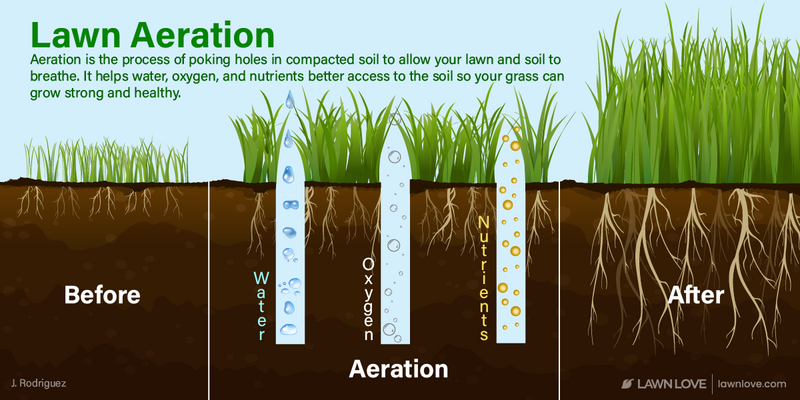
Everyday foot traffic and heavy mowers eventually compact your yard. The University of Minnesota Extension notes that this compaction drastically reduces drainage because the soil pores become too small to move water efficiently.
To fix this, a lawn aerator pulls small soil plugs out of the ground to open up pathways for water to finally drain.
“You’ll typically see improvement on the (next) couple of decent rains (2-4 weeks) if the soil can actually accept water” Thompson says.
But if your yard is full of heavy clay or buried debris, he warns that aeration alone isn’t enough. In those cases, “I’ll pair aeration with compost topdressing and/or a defined outlet system,” he says.
Professional aeration cost: $104 to $195
Read more: How to Aerate Your Lawn
7. Fill in low spots
Small depressions in your yard easily trap water.
“If it’s one localized birdbath in turf, I’ll topdress and level with soil and improve infiltration before I bring in equipment,” Thompson says.
But be careful: Before adding soil, identify and fix the source of the drainage problem, whether that’s compacted soil, runoff from a downspout, or a grading issue. “Adding soil to a low, wet spot can sometimes make things worse,” Nichols cautions.
If the root cause isn’t resolved, he says filling a hole can easily divert water right into your home.
Pro tip: Fill shallow spots gradually with a soil-compost mix, regrade the area so it drains away from your home, and reseed the bare patch.
Costs:
- Topsoil: $10–$50/cubic yard
- Sand: $15–$42/cubic yard
- Compost: $30–$42/cubic yard
- Seeding costs: $0.07-$0.23/square foot
- Sod: $1.70-$2.60/square foot
Read more: Tips to Help Your Lawn Recover from Flooding
8. Replace concrete with porous materials
Replacing solid concrete or asphalt with porous materials stops yard runoff. Permeable alternatives—like composite decking, pea gravel, or pavers—allow water to absorb naturally into the ground instead of flooding your grass.
Costs:
- Concrete removal: $1,380 (range $585–$2,790)
- Composite decking: $8,850 ($5,100–$11,200)
- Pea gravel patio: $20 to $80 per cubic yard
- Paver patio: $2,600 to $7,300 per project
9. Slope the soil away from the house
When water is actively threatening a house slab or pooling against hardscape, Thompson says regrading is usually the safest long-term fix. The soil should slope down at least 1 inch per foot moving away from your home.
“Regrading is the call when I can’t create a reliable outlet path with 1% to 2% slope across the problem area, or when multiple micro low spots are scattered,” he says. Thompson says otherwise, you will chase puddles forever with spot drains.
Legal note: In many states, it is illegal to alter your slope in a way that artificially increases the flow of water onto a neighbor’s property.
Regrading cost: $0.08–$2 per square foot ($15,800–$44,535 per acre)
10. Dry creek bed
A dry creek bed creates a decorative rock-lined channel that safely redirects surface water. It acts as a drainage channel during storms and doubles as a beautiful landscaping feature during dry weather.
- Slows down the velocity of rushing water to prevent soil erosion
- Works perfectly for managing surface runoff on steep slopes
- Requires landscape fabric, river rocks, and pea gravel
Cost: $3–$7/square foot
Read more: 10 Best Plants to Control Erosion in Your Yard
11. Rain garden
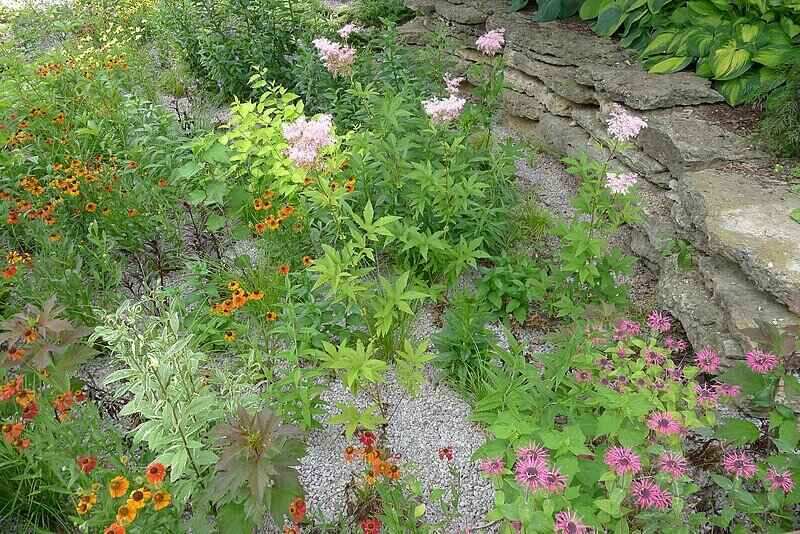
Rain gardens are a beautiful way to manage excess yard moisture, but experts agree they aren’t a standalone cure for severe flooding.
“Rain gardens are reliable when they’re designed like infrastructure,” Thompson says.
He explains that they act as great storage and filtration features, provided you use the correct soil mix, water-tolerant plants, and a planned overflow route.
Nichols agrees that while these plantings are helpful, they won’t solve severe drainage issues. If you have serious foundational issues, he says, you still need grading or underground pipes to physically move the water away.
Water-loving ornamental options: Hostas, ferns, and mosses
Planting thirsty trees and plants: Willows, red maples, green ash, astilbe, hibiscus, and daylilies
Cost: $500-$1,600/project
Read more: How to Build a Rain Garden
FAQs
Yes. Often, homeowners employ multiple strategies to eliminate standing water. Common combinations include adding a dry well to a French drain, or aerating regularly while filling in low spots.
You should clean the exit point once a year to remove debris buildup. You can hire an expert or rent an electric sewer snake to clear the pipe yourself.
Most grass tolerates flooding for a few days. For areas with prolonged saturation, Zoysia, Bermudagrass, and Buffalograss have excellent tolerance. Tall fescue and Kentucky bluegrass have intermediate tolerance.
Hire a local lawn care pro
Fixing yard drainage is rarely a one-size-fits-all job. Because your soil type, yard slope, and the distance to your foundation all play a huge role, choosing the wrong fix can sometimes make the problem worse.
While taking the DIY route is great for simple fixes—like extending downspouts, filling small low spots, or aerating compacted soil—you should always call a professional for widespread flooding, anything threatening your foundation, or projects that require heavy equipment.
If you’d rather leave it to someone who does this every day, Lawn Love makes it simple—get an instant quote, pick a time, and a vetted local pro will handle the rest.
Main Image: A man clears mud from a drainage ditch along a driveway. Photo Credit: Shutterstock
Related Posts: