| Key Takeaways |
|---|
| • Scatter wildflower, pollinator, and edible seeds in one zone and let nature do the rest. • Once established, a chaos garden largely takes care of itself. No mowing, no fertilizing, no irrigation schedule. • Replacing even a small section of turf with drought-tolerant natives can meaningfully cut your water bill. |
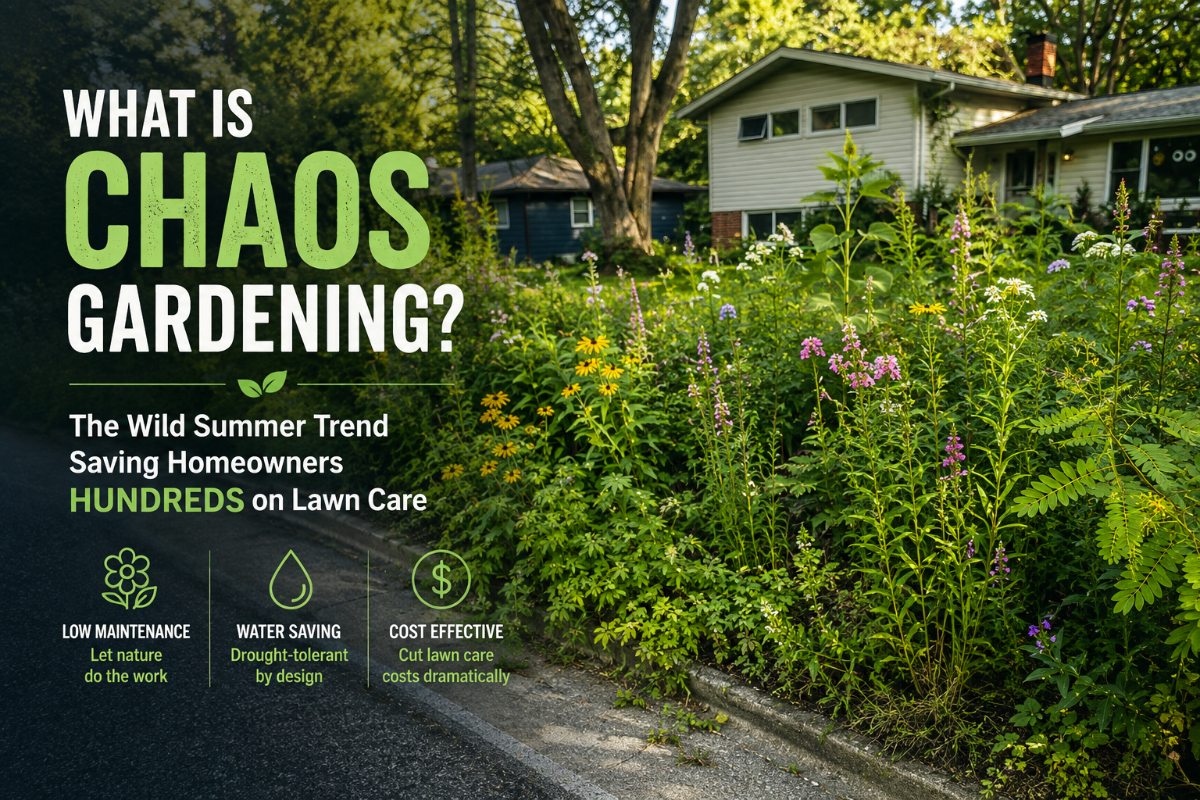
Chaos gardening means scattering wildflower, pollinator, and edible seeds into a designated area and letting nature take over. No meticulous spacing, no fussy soil prep, no irrigation schedule. Just seeds, sun, and survival of the fittest.
While it’s been around for a while, the trend first took hold on TikTok and Instagram around 2023. It has continued to grow in popularity since then, with homeowners trading high-maintenance, perfectly manicured lawns for vibrant, self-sustaining meadow patches that largely take care of themselves.
Ready to let your yard go beautifully wild? Lawn Love connects you with local lawn professionals who can prep a planting zone, clear existing turf, or manage the rest of your yard while your chaos garden thrives.
What is chaos gardening?
“There is a certain beauty in chaos, magnificence in the uncontrollable.” – Hafsah Faizal, We Hunt the Flame
She wasn’t talking about gardening, but she might as well have been.
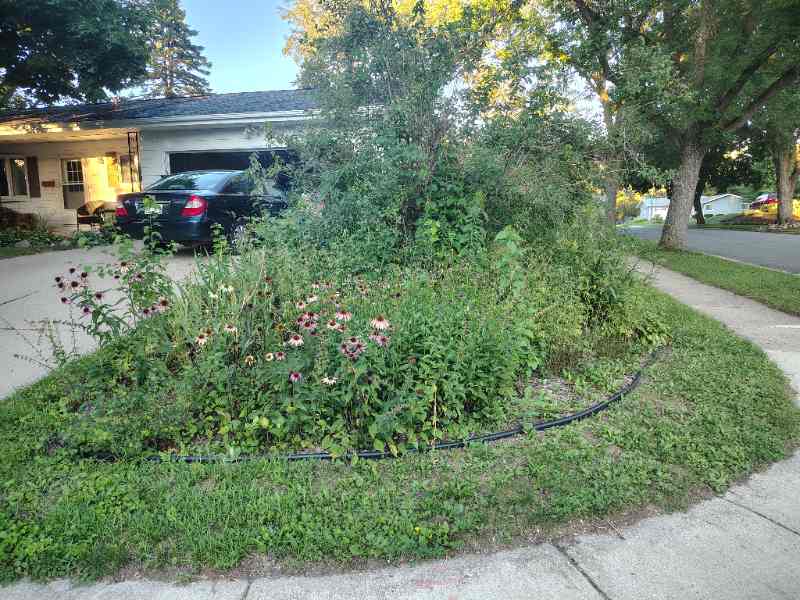
Chaos gardening is a low-intervention planting method where you seed a dense, diverse mix of plants into a single zone and let them compete and co-exist naturally.
Plants suited to your climate, soil type, and light establish themselves. The ones that won’t thrive in the environment don’t take hold. What emerges is a self-editing ecosystem that looks wild but secretly functions efficiently.
The “chaos” is the point. Forget defined spacing, color-coordinated beds, and weekend maintenance schedules (I’m looking at you, weeding). Chaos gardening hands the design brief to nature and walks away.
Scott Wilson, a Colorado-based gardening educator and the YouTube creator behind the Gardener Scott channel, had been practicing a “live and you stay” model for years — where, as he puts it, “the plants that did well stayed, and the ones that failed weren’t repeated.”
“Many plants that just showed up in unexpected areas would be allowed to grow. Some plants that others see as weeds can become a welcome addition. I grew that way for years before I found a name for it.”
Sarah, the TikTok creator behind @the.chaos.gardener, grew up hearing a version of that philosophy from her father.
“Plants want to live. Most things you stick in the ground will grow.”
It took years, and a yard of her own, before it finally made sense.
It’s easy to see why #chaosgarden has racked up millions of views. The before-and-after reveal is tailor-made for short video. You see an unremarkable patch of soil in week one, a riot of color and texture by week ten. It’s the kind of transformation that stops viewers from scrolling.
When @the.chaos.gardener bought her first home, she inherited a yard full of mystery plants. One in particular caused an internet frenzy in her plant identification groups, as everyone wondered if the clusters of grey-green, grass-like foliage were irises or lilies.
After stumping everyone for months, they turned out to be gladiolus of all colors. “It was like opening a surprise box every day in the yard as we saw the petals poke through.”
“After that I was done for,” she says. “I started planting whatever I wanted wherever I wanted.”
She took her plant obsession to TikTok, eventually finding a name for what she was already doing, and building an account with over 16,000 followers.
The aesthetics are part of it, but the reasons people are making the switch go a lot deeper than good TikTok material.
Record heat across the U.S. has made traditional lawn care expensive. About 50% of the contiguous U.S. is currently in drought. Homeowners are tired of pouring water and money into landscaping that turns brown in every heat wave. Chaos gardening offers drought-hardy plants that don’t need babysitting.
Water bills rose 5.1% in 2025, outpacing inflation. The EPA states that outdoor watering accounts for more than 30% of household water use, and 60% in arid regions. About half of that water is wasted through evaporation, wind, and inefficient irrigation. Replacing thirsty turf targets waste and slashes utilities.
Pollinators are in trouble, and homeowners are taking notice. The USDA estimates that about 35% of the world’s food crops depend on animal pollinators — “one in three bites” of food, in the agency’s own framing — and native bee populations have declined. A small chaos garden helps support pollinators.
Read more:
- What is a Pollinator Lawn?
- How to Grow a Wildflower Meadow
- Most Expensive Cities for Lawn Irrigation in 2026
What to plant in a chaos garden
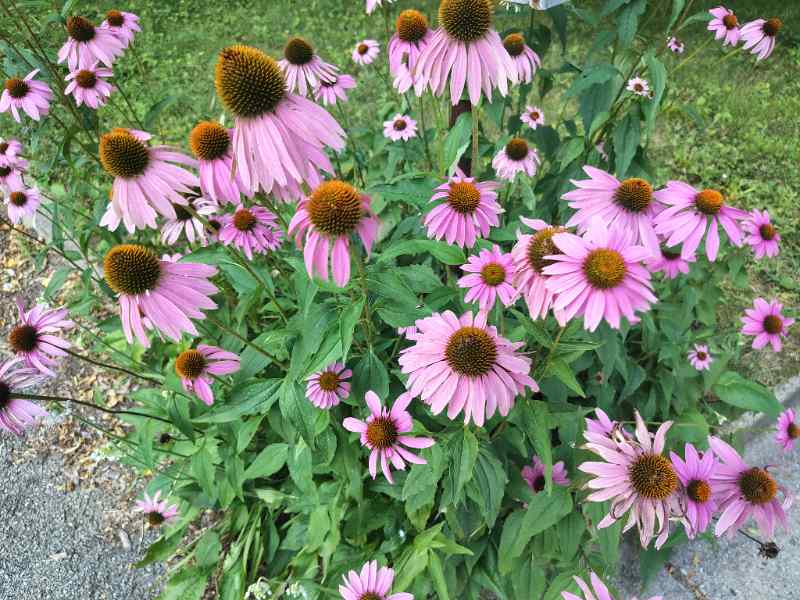
When it comes to choosing what to plant in your chaos garden, the options are nearly endless. Pick what you love, what grows well in your region, and what you want to see from your back porch.
Sarah, @the.chaos.gardener, puts it well: “Working with plants can be an art form and not always an exact, perfect science.”
The best combinations include drought-resilient wildflowers, pollinator attractors, and edibles. Many seed companies sell pre-mixed “meadow” or “pollinator” blends, or you can buy individual seed packets and create your own blends.
Lauren Kurtz, research associate at the UConn Home Garden Education Office at the George Leigh Minor Plant and Soil Health Center, advises looking beyond the marketing when shopping for seeds.
“Not all seeds marketed as ‘pollinator friendly’ or ‘native’ are going to be the best choice for the specific garden conditions. A good-quality seed mix will be site-specific, with examples like dry shade or wet meadow. There should be a combination of annuals and perennials in the mix too.”
Wilson echoes that sentiment from experience gardening in Colorado’s challenging climate.
“Just hoping the plants would grow wasn’t enough. I learned to choose seeds wisely and to recognize which plants did best in my garden . . . Strong plants will return if they were the right plants in the first place.”
Pro tip: Be careful to avoid invasive species like purple loosestrife, Japanese honeysuckle, and kudzu. For information, check your state extension program’s regional invasive watch list.
Wildflowers and native ground cover
| Plant | Bloom Season | Notes |
| Black-eyed Susan | Summer–Fall | Native to most of the U.S. |
| Purple coneflower (Echinacea) | Summer | Attracts goldfinches |
| California poppy | Spring–Summer | Self-seeding; West Coast native |
| Blanket flower (Gaillardia) | Summer–Fall | Thrives in poor soil |
| Wild bergamot | Summer | Excellent bee attractor |
Pollinator powerhouses
| Plant | Bloom Season | Notes |
| Borage | Summer | Top honey bee attractor; edible flowers |
| Marjoram | Summer | Best all-around attractor; attracts bees, hoverflies, butterflies |
| Zinnias | Summer-Fall | Butterfly magnet; heat-tolerant |
| Cosmos | Summer-Fall | Reseeds readily; attracts beneficial predators |
Edible additions
| Plant | Bloom Season | Notes |
| Nasturtiums | Summer-fall | Flowers and leaves edible; self-seeding |
| Dill and fennel | Summer | Host plant for swallowtails |
| Kale or Swiss chard | N/A | Tall structural plant |
| Cherry tomatoes | Summer | Prolific producer in full sun |
My experience: Tall dill stalks topped with bright yellow umbels make a stunning backdrop to shorter plants. Fair warning, though: let them go to seed, and you’ll find dill scattered across your yard for years. As we now sarcastically say at my house, “it’s no big dill.” (It is).
How to start a chaos garden: step-by-step
With the right spot and a little prep work, you can go from bare soil to first bloom in as little as 60 to 90 days. Here’s how to get started.
1. Pick your spot
When starting your chaos gardening adventure, bigger isn’t better. Chaos gardens work best in a defined section, not the whole lawn. A 4×8-foot patch is enough to start.
For the best results, look for south- or east-facing spots with 5–6 hours of direct sun. Avoid areas with standing water.
Every yard has microclimates worth noting. Wilson says “the areas where the snow melts first in spring can be ideal for sowing seeds and letting Nature choose germination times. The shade of a fence or tree can be a good spot for plants that struggle in summer.”
2. Clear the area (minimally)
The amount of prep work you need to do depends on where you’re planting. If you’re turning a section of lawn into a planting bed, at a minimum, you’ll need to remove the grass using one of the following methods.
- Solarization: clear plastic sheeting for 4–6 weeks; heat kills grass and shallow weed seeds.
- Sheet mulching: flattened cardboard over grass, wet thoroughly, topped with 2–3 inches of wood-chip mulch.
- Manual removal: hand-pull for small areas. Avoid herbicides if you’re targeting pollinators since residues can harm beneficial insects.
Once the grass is gone, there isn’t a need to till or deeply amend your planting area. To help with germination, remove any large rocks and use a rake to loosen the top 1 to 2 inches of soil.
Wildflowers, weeds, and lawn grasses all love rich, fertile soil. The difference is that wildflowers are better adapted to poor, infertile conditions than weeds and turf. Leave the soil unamended, and you give wildflowers the competitive advantage.
Plus, if the conditions aren’t ideal, your wildflowers will focus on producing flowers and seeds (to pass along genetic information) rather than on leafy foliage growth.
3. Mix and scatter your seeds
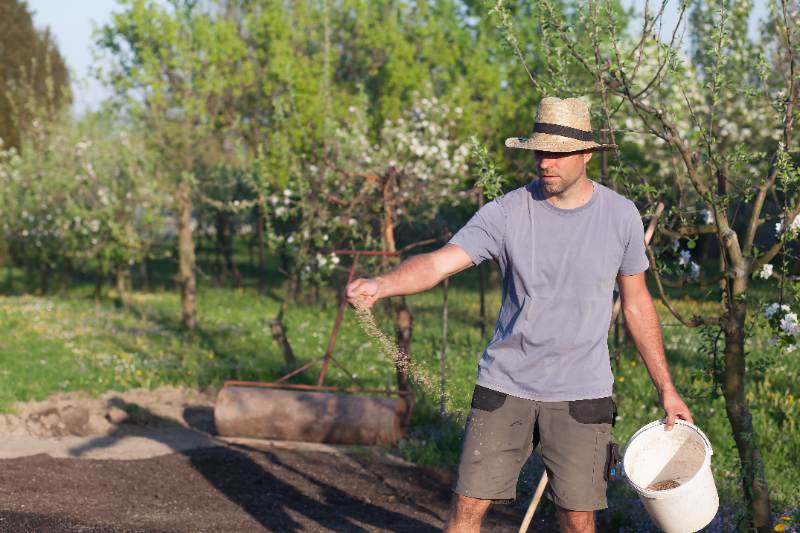
Combine several species in a bucket and mix them well. For even coverage and better distribution of small seeds, add dry sand to your seed mix at a ratio of about 4 parts sand to 1 part seed.
Broadcast seeds by hand or create a DIY seed shaker by repurposing an old spice jar or drilling holes in the lid of a mason jar. Aim for 5–10 seeds per square foot.
Once scattered, lightly rake the area to press seeds into the soil. As a rule of thumb, don’t bury seeds deeper than their diameter, as many wildflower seeds need light to germinate.
Wilson offers great advice: “Don’t be upset if your favorite seeds don’t grow; be content with what does grow. Chaos gardening follows the spectrum from controlled sowing to total randomness. Have fun with all of the possibilities.”
@the.chaos.gardener agrees: “You’re going to lose some plants, and that’s ok. It’s all part of it.”
4. Water consistently for the first 3 to 4 weeks
Water lightly once daily until seedlings reach 2–3 inches tall. Then let rain take over. Scaling back will encourage deeper root growth.
If you go more than 7 to 10 days without rain, give your garden a light watering. Once your plants are established, they’ll become more drought-tolerant, and you may not need to water at all.
5. Let it grow
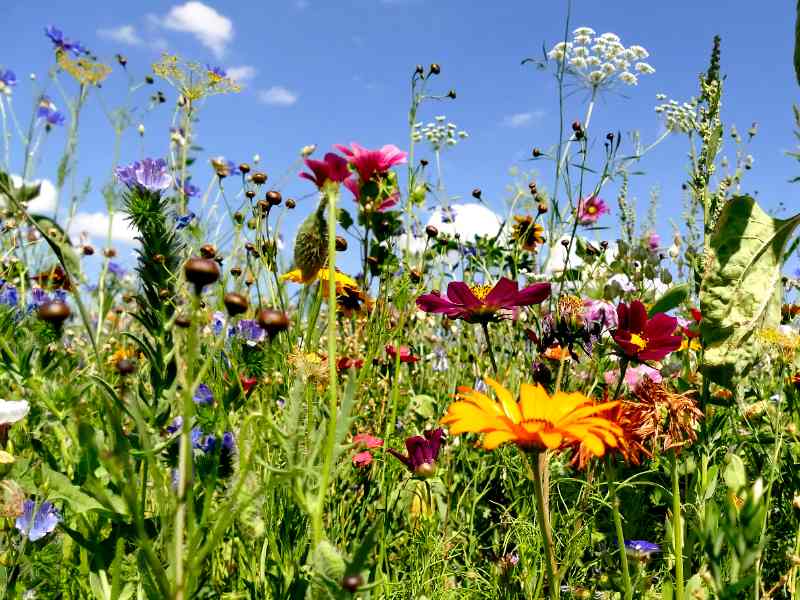
Resist the urge to weed aggressively early on. What looks like a weed in week two is often a wildflower in week six. Rule of thumb: Don’t pull anything until you can identify it.
Kurtz says identifying weeds is critical in chaos gardening.
“Early on, gardeners might think their garden is doing really well, only to find out later in the season that all the thriving seedlings were actually weeds. Recognizing weeds and removing them early will give the desirable plants a better chance of success,” she says.
Once you pull weeds, bag them up and discard them rather than leaving them on site. @the.chaos.gardener learned that lesson the hard way.
“Keeping piles of pulled weeds in your yard is oftentimes simply relocating them and helping them spread,” she says.
How much will you actually save?
Your lawn is probably more expensive to maintain than you think. For most homeowners, mowing, fertilizing, and aeration add up to a significant annual expense. Then add in water costs that climb every year.
| Cost | Traditional lawn (¼ acre) | Chaos garden |
| Annual mowing* | $1,092-$1,638 | $0 |
| Annual fertilization** | $405-$1,050 | $0 |
| Annual aeration*** | $115-$190 | $0 |
| Total | $1,612-$2,878 | $0-$50† |
*Based on 26 mowing visits per year costing $42–$63 per visit.
**Based on 3 annual applications of granular synthetic fertilizer costing $135–$350 per application. Costs vary by fertilizer type, grass type, and region.
***Based on the cost of one annual aeration.
†One-time seed cost of $20–$50; no ongoing mowing, fertilizing, or aeration required once established.
How much you save depends on how much area you convert. Replacing your entire 1/4-acre lawn could save $1,600 or more per year. Converting a 1,000-square-foot patch, about one-tenth of a typical yard, makes a real dent, saving hundreds in mowing, fertilizing, and aeration costs alone.
Water savings add up too. For every 1,000 square feet of lawn replaced, homeowners typically cut 625-935 gallons of weekly irrigation, gallons of weekly irrigation, depending on grass type. (Warm-season grasses need about 1 inch of water per week in summer; cool-season grasses need 1–1.5 inches.)
With U.S. water rates ranging from $0.0028 per gallon in Dothan, Alabama, to $0.0158 per gallon in Seattle, that translates to roughly $21–$177 per year based on a 12-week peak irrigation season. Though many regions irrigate longer, pushing costs even higher.
Replacing even a portion of your lawn with drought-tolerant natives eliminates most of the watering cost.
My experience: I’ll admit, I was skeptical at first. But after turning a couple of spots into chaos garden areas, I’m a convert. Annual flowers are out; wildflower seeds and sunflowers are in. Even in my high desert climate and in drought conditions, they survive without irrigation or fertilizer.
Chaos gardening by region
Match your seed mix to your region. Midwest natives won’t thrive in the Southeast, and vice versa.
| Region | Recommended Plants | Notes |
| Southeast | Black-eyed Susan, native asters, coreopsis, wild indigo | High heat/humidity; pick mildew-resistant varieties |
| Southwest/Arid West | Desert marigold, globe mallow, penstemon | Native drought-adapted species essential |
| Midwest/Great Plains | Prairie dropseed, purple coneflower, compass plant, little bluestem | Deep-rooted prairie natives for wind resistance |
| Pacific Northwest | Oregon sunshine, Douglas aster, yarrow, lupine | Short dry season; plant in fall for spring germination |
| Northeast | Wild bergamot, butterfly weed, Joe Pye weed, New England aster | Late-season bloomers extend color into fall |
FAQs
Possibly, with the right framing. Many HOAs ban “weedy” yards but allow native gardens with proper edging and signage. A clean border, a small “Native Pollinator Garden” marker, and regular deadheading satisfy most covenants. Check your HOA guidelines and consider a short proposal to the board first.
Yes. A raised bed, a 4×4 patch, or a 15+ gallon container works. Scale to 3 to 5 species and choose compact varieties. Containers dry out faster, so they need more frequent watering.
It attracts beneficial insects (bees, butterflies, predatory wasps, lacewings) far more than pests. To limit rodent interest, avoid large quantities of edible crops like corn, squash, or melon in areas close to the house.
Late summer to early fall is ideal for most of the U.S. The soil is still warm enough for germination, and cool fall rains help seeds establish before winter. In warmer climates, early spring works well too. Avoid the hottest, driest stretch of summer.
Let a pro help you go wild
Chaos gardening sounds fantastic, but it takes some elbow grease upfront. Clearing existing grass, installing edging, and keeping the rest of your yard sharp while your meadow takes off is a lot to tackle solo. Lawn Love connects you with a vetted local pro to handle the heavy work.
Main Image: A lush chaos garden with text overlay: What is Chaos gardening?”. Photo Credit: Created using Chapt GPT. Photo taken in Madison, WI – Amy Stenglein / Lawn Love
Related Posts:


