| Key Takeaways: |
|---|
| • "Barkitecture" means designing your yard around how your dog actually uses it (running, digging, sniffing, cooling off) so it protects your lawn AND gives your dog safe ways to play. • Skip toxic plants and choose paw-tough ground covers like clover and creeping thyme. • Barkitecture’s defining features include zoomie tracks, sniff gardens, and digging pits. |
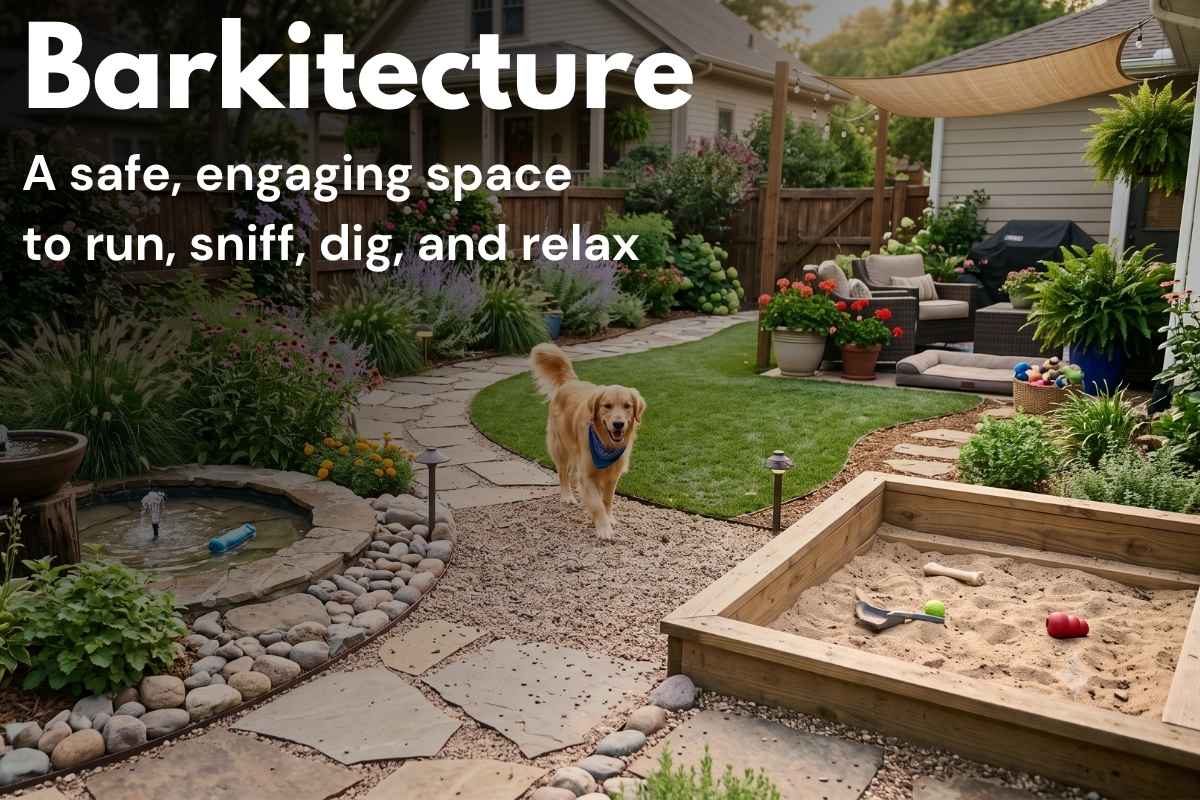
Creating a dog-friendly backyard doesn’t mean sacrificing a beautiful landscape. With the right design choices, you can protect your lawn and plants while giving your dog a safe, engaging space to run, sniff, dig, and relax.
That approach now has a name: barkitecture — the growing trend of designing outdoor spaces around how dogs naturally use them. These 12 dog-friendly landscaping ideas will help you pull it off.
And if you need help taking care of your new dog-friendly yard, Lawn Love can connect you with local mowing pros so you can spend less time on your lawn and more time enjoying your days with your puppy.
- What is barkitecture (and why it’s trending in 2026)
- 12 dog-friendly landscaping ideas
- 1. Add a splash pad or doggy pool
- 2. Plant a sniff and sensory garden
- 3. Build a digging pit
- 4. Create a zoomie track
- 5. Install a dog window
- 6. Create a designated dog zone
- 7. Build a DIY agility course
- 8. Design for shade
- 9. Use garden barriers and raised beds
- 10. Swap toxic plants for dog-safe ones
- 11. Choose paw-tough ground cover
- 12. Reseed with a dog-tough grass
- FAQs
What is barkitecture (and why it’s trending in 2026)
Barkitecture started as a playful term for stylish doghouses, but today it refers to designing an entire backyard around your dog’s needs. That means choosing pet-safe plants, shady places to rest, and spaces where your dog can naturally run, sniff, dig, and play.
It’s also becoming a bigger focus for homeowners. Americans are expected to spend more than $165 billion on their pets in 2026, according to the American Pet Products Association, and the TurfMutt Foundation has named barkitecture one of the year’s top backyard trends, predicting that pet-friendly design will become a primary consideration in outdoor spaces.
The idea is simple: Instead of trying to stop your dog’s natural behaviors, design your landscape to work with them.
“Every dog is unique, from the breed habits down to the individual. So when you’re thinking about your space, think of how you and your dog want to use it,” says Jamie Viebach, horticulture educator at the University of Illinois Extension.
“Some dogs need lots of space to chase a ball or disc, while others want to lounge in the shade.”
Designing with your own dog’s habits in mind is one of the core ideas behind barkitecture.
Here’s how to incorporate barkitecture into your backyard:
12 dog-friendly landscaping ideas
1. Add a splash pad or doggy pool
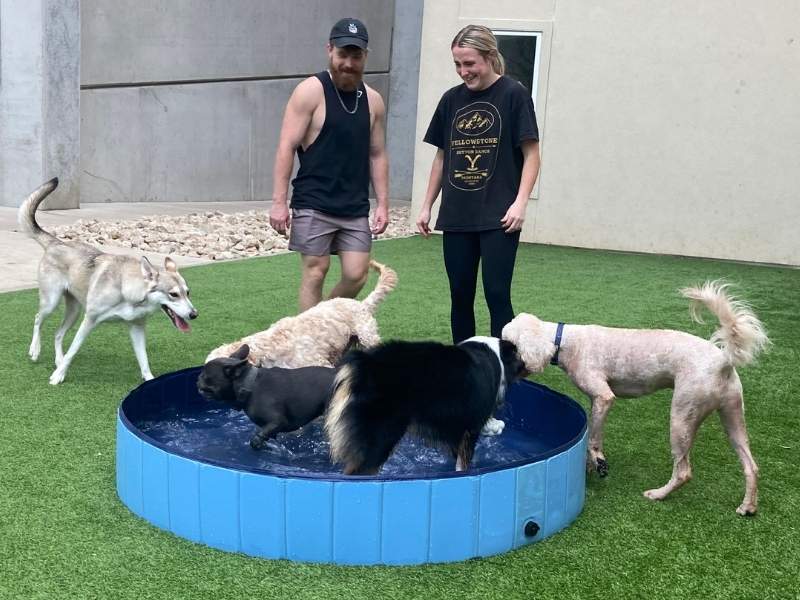
Summers are extra hot under a fur coat. A shallow splash pad or recirculating water feature lets your dog cool off after a game of fetch. On a budget, a hard-plastic kiddie pool ($20 or less) works (skip the inflatable kind, which won’t survive Spot’s claws).
That said, this is one of those backyard upgrades where you really need to know your dog. My dogs hate anything related to water, so a splash pad or doggy pool would be a waste of time, money, and yard space for us. But for water-loving dogs, it can be one of the easiest ways to make summer playtime more comfortable.
Set it a few inches into the ground for stability, and change the water often to prevent bacteria. For a polished look, a shallow pond of smooth (not jagged) stone creates a stylish landscape feature.
2. Plant a sniff and sensory garden
Dogs experience the world through scent, and a dedicated “sniff station” of dog-safe herbs gives them the same mental enrichment as a walk. To build a sensory garden for dogs, fill a raised bed or border with dog-safe herbs and flowers that invite exploration.
“Some pet-safe annuals include celosia, snapdragons, hollyhocks, marigolds, petunias, and nasturtiums,” Viebach says. She also recommends pollinator-friendly flowers such as violets, coneflowers, sunflowers, coreopsis, bee balm, black-eyed Susans, and liatris.
“Roses are also safe from a toxicity standpoint, but the thorns are a consideration, and you may want to avoid them for that,” she says.
Henry Rouhana of Sure-Fix Remodeling in Easton, Pennsylvania, says sniff gardens can provide valuable mental enrichment because the variety of scents keeps dogs engaged.
“One Easton project turned a plain lawn into a sensory path with layered plants that the owners said reduced indoor restlessness,” he says.
3. Build a digging pit

If your dog digs, it will dig somewhere — so give it an approved spot. A designated digging pit saves your beds and your lawn. Here’s how to build one:
- Dig a pit 8-12 inches deep, large enough for your dog to lie down in.
- Line it with a thin layer of fast-setting concrete, poking a few drainage holes in the bottom; let it dry.
- Fill with playground sand (Lowe’s or Home Depot).
Keep it slightly damp in summer — dogs dig to find a cool place to lie down, and a damp pit beats your flower bed. Bury a toy or two to encourage use.
Rouhana has found that designated digging pits work best when they’re incorporated into the overall yard layout.
“In another remodel, I guided the owners to place (the digging pit) near the zoomie track so the dog naturally shifted focus without damaging the rest of the yard,” he says.
4. Create a zoomie track
Many dogs naturally follow the same route around the yard, wearing down the grass into “dog paths.” They also tend to take the shortest, most direct route. So if the easiest way from the porch to the fence cuts straight across your lawn, that’s probably where they’ll go every time.
I’ve learned this the hard way. At my house, my dogs have completely ruined a strip of grass by turning it into their own path, and no amount of overseeding has made it fully bounce back.
Instead of fighting it, design the path on purpose — a deliberate perimeter loop of pavers, pea gravel, or cedar mulch. It channels the zoomies, protects your plantings, and looks intentional.
Tip: Light-colored stones stay cooler underfoot than dark ones, so they’re easier on paws on a hot afternoon.
5. Install a dog window
If you have a solid wood or vinyl fence, a dog window — a small panel of clear, shatter-resistant plastic — lets your dog watch the world while staying safely inside. A more entertained dog is usually a less destructive one.
But this is another upgrade where you need to know your dog. If your dog is reactive, anxious, or easily worked up by people, cars, or other dogs passing by, a fence window may do more harm than good.
One of my dogs would only get more nervous with a front-row view of everything happening outside the yard, so this isn’t something I’d add at my house.
Build and install your own, or have a contractor do it. Either way, test that the panel is solid enough that Fido can’t push through.
6. Create a designated dog zone
If your dog spends hours outdoors, consider giving it a dedicated area of the yard. Fencing off one section helps protect the rest of your landscape while giving your dog a space to run, play, and relax.
Include fresh water, shade, comfortable ground cover, and a few favorite toys. A designated dog zone can also be a great place for a digging pit, agility equipment, or a splash pad.
7. Build a DIY agility course
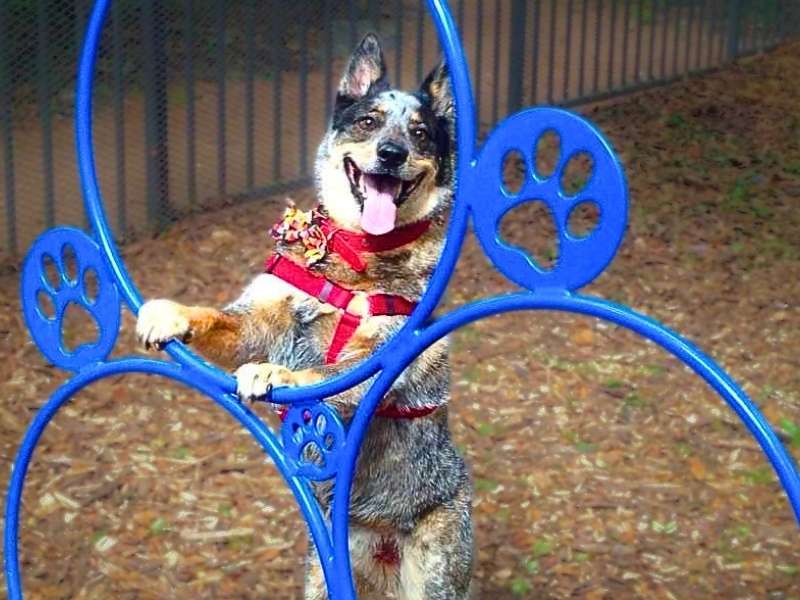
If your pup loves the agility course at the dog park, build a backyard version. Jumps from PVC pipe, balance beams and ramps from a few 2x4s, and an inexpensive tunnel ($30–$40 online) keep an active dog busy (and out of the garden).
Better yet, these features can double as attractive landscape elements when incorporated into your backyard design.
8. Design for shade
Dogs cool by panting and seeking shade, and a dog that digs holes to lie in is often just trying to cool off, so more shade can mean less digging.
Layer your shade by combining tall trees (native species are best for long-term coverage), pergolas or awnings for immediate relief, and a shaded doghouse. For regions with really hot summers (the Southeast and Southwest in particular), design for shade across the whole day, not just 1 hour.
Just don’t make the entire yard shaded. Many dogs still love having a sunny spot where they can lie down and sunbathe. Both of my dogs do this, and they’ll follow the sun around the yard throughout the day.
The goal is to give them options: cool shade when they need relief, and a safe sunny patch when they want to stretch out.
9. Use garden barriers and raised beds

Low wood, stone, or wire edging around trees, shrubs, and flower beds helps protect plants from digging, trampling, and urine while giving the landscape a clean, finished look.
Prefer not to fence your plants? Raised beds lift plants above digging-and-marking height while adding structure to the yard.
Read more: A Beginner’s Guide to Raised Bed Gardening
10. Swap toxic plants for dog-safe ones
One of the most important steps in creating a dog-friendly landscape is choosing plants that are safe for curious pets.
“Some plants that are commonly found in home landscaping are toxic to dogs,” Viebach says. This list includes plants such as English ivy, sago palm, and hydrangeas.
Poisonous plants aren’t the only ones to exclude from your dog-friendly landscaping.
“Barberry isn’t toxic, but it’s known to be a favorite hangout for ticks (plus it’s invasive), so you’ll want to avoid planting those,” she says.
She recommends keeping tempting but potentially harmful plants, such as ornamental alliums, in areas your dog can’t access if they’re prone to chewing on vegetation. Remove or fence them off, and replace them with safe, good-looking alternatives.
You can use the table below for pet-safe plant swaps:
| Instead of this (toxic/fragile) | Plant this (dog-safe) | Why |
| Azalea/rhododendron | Camellia | Similar part-shade foundation look, without the same toxicity risk |
| Sago palm | Rosemary or Mojo pittosporum | Structural evergreen look without the liver-failure risk |
| Tulips/spring bulbs | Zinnias or gerbera daisies | Bright color without toxic bulbs your dog may dig up |
| Standard turf, like St. Augustine | Clover or tall fescue | Tougher under paws; clover resists urine browning, while fescue tolerates traffic |
For more information on toxic plants to avoid, check out our article: Most Poisonous Landscape Plants for Dogs.
Pro Tip: The American Society for the Prevention of Cruelty to Animals website also has information on common plants toxic and non-toxic for dogs.
11. Choose paw-tough ground cover
Your dog can’t ruin grass that isn’t there. In high-traffic spots, replace turf with durable, low-maintenance ground cover. Some dog-friendly options include:
- White clover: Soft underfoot, drought-tolerant, self-repairing, and less likely than traditional turfgrass to develop urine spots.
- Creeping thyme: Fragrant, low-growing, and well-suited for planting between stepping stones or pavers.
- Irish moss, Labrador violet, and silver carpet: Low-maintenance alternatives for areas that see lighter foot traffic.
For mulched beds, choose materials that are safe if curious dogs decide to investigate. Viebach recommends undyed arborist wood chips, cedar, or cypress mulch over cocoa mulch, which contains theobromine (the same compound that makes chocolate toxic to dogs).
She also advises avoiding rubber mulch, since it isn’t beneficial for plants and may pose a hazard if chewed or ingested.
Read more: How to Keep Mulch in Place
12. Reseed with a dog-tough grass
Can’t part with a real lawn? Reseed your dog’s favorite zones with a damage-resistant grass type:
- Tall fescue develops deep roots and wide blades that withstand heavy traffic well.
- Zoysiagrass and Bermudagrass, common warm-season grasses, recover quickly from wear and thrive in warm climates.
- Cool-season grasses like Kentucky bluegrass and perennial ryegrass are also popular choices for active backyards, especially in cooler regions.
Read more: Best Grasses for Dogs
FAQs
Beyond choosing pet-safe plants and durable landscaping materials, don’t overlook everyday maintenance.
“If you compost, you’ll want to make sure it’s secured so dogs and other critters can’t access it,” Viebach says.
Moreover, “While you should provide a source of fresh water for dogs if they’re going to spend any time outside in the heat, you should also make sure to remove standing water like empty buckets, children’s toys, wheelbarrows, etc., so that it doesn’t breed ticks (a major vector for heartworm) and other nasties, like Giardia,” she says.
Read more:
How Do You Prevent Ticks in Your Yard?
How to Compost for Your Lawn and Garden
It can. Durable fencing, low-maintenance ground cover, and well-designed outdoor space appeal to a broad pool of buyers, not just pet owners.
Read more: Top Landscaping Projects to Increase the Value of Your Home
Not always. Rock salt and ice melt products can irritate your dog’s paws and, if licked or ingested, may cause stomach upset or more serious health problems.
Viebach recommends using salt sparingly.
“A standard coffee cup holds enough salt to cover a 10-by-10-foot section of driveway,” she says.
After the snow melts, sweep up any excess salt and dispose of it in the trash to help protect your pets, plants, and local waterways.
Hire a local lawn care pro
A dog-friendly yard with bespoke barkitecture features is easier to plan than to build. The right plants, surfaces, and layout take work (and a little know-how).
If you’d rather leave it to someone who does this every day, Lawn Love connects you with a background-checked local pro for reseeding, mowing, lawn treatments, and much more.
Existing Lawn Love customers can request manual quotes for services like planting, installing barriers, and other light landscaping work via the Lawn Love app.
Main Image: A dog-friendly backyard with a sandbox, pond, and covered seating. Created using Gemini AI and Canva Pro.
Related Posts:


