| Key takeaways |
|---|
| • Remove existing turf before seeding; wildflowers cannot compete with established turf. • Use native grasses for about 50%–80% of the mix to help suppress weeds naturally. • Expect a perennial meadow to look sparse at first but fill in by years 2 and 3. • One acre of wildflower meadow in summer can produce enough nectar to support nearly 96,000 honey bees in a single day. |
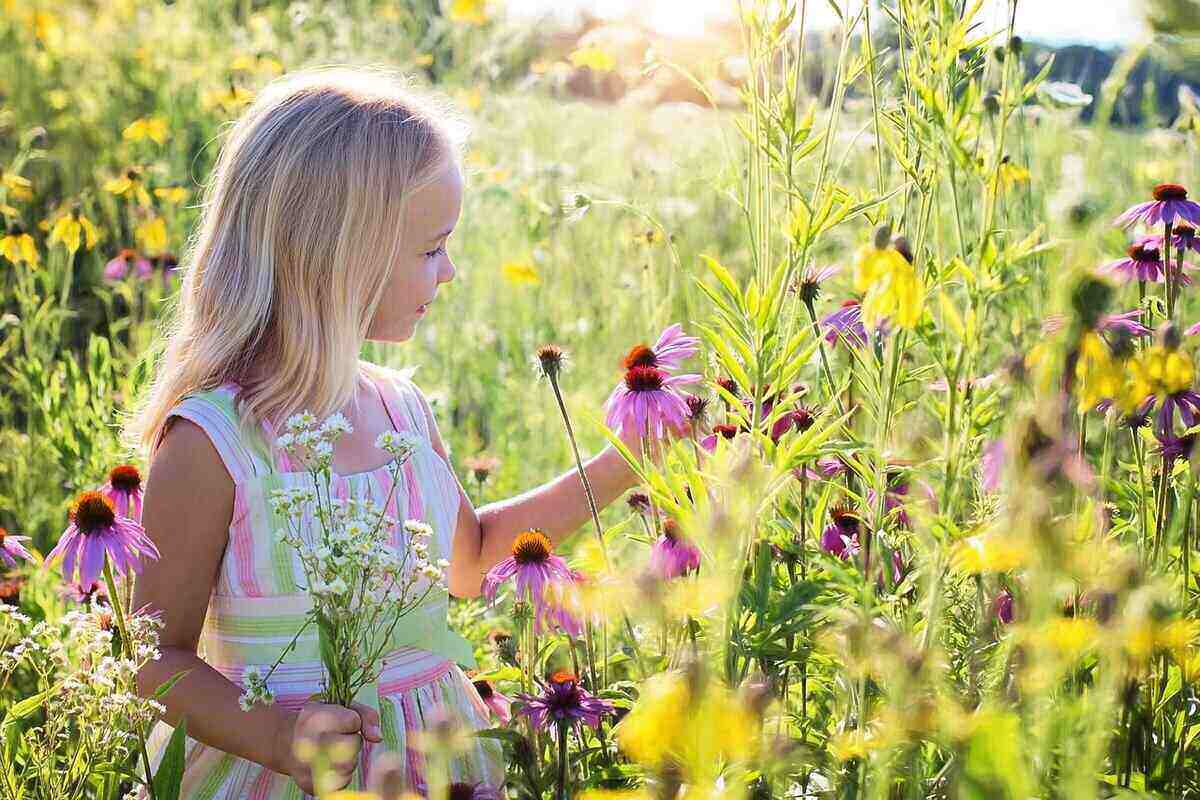
A wildflower meadow is a low-maintenance garden of native flowers, grasses, and plants that thrive without weekly mowing or fertilizers. To grow one successfully, you must remove your existing grass. Then, you scatter a native seed mix and press it firmly into the bare soil.
Replacing traditional turf is a rewarding switch. A meadow looks beautiful from spring through fall, eliminates the need for harsh chemicals, and boosts local wildlife. In fact, meadows host three times more plant and insect species than traditional lawns.
If you’d rather have a pro handle the site prep or installation, Lawn Love’s local gardening pros can help you get started.
Can you plant wildflowers in existing grass?

“Wildflowers do not usually establish well if you just scatter seed over an existing lawn,” explains Jessica Mercer, PhD, horticulturist at Plant Addicts. “Established turf, especially cool season lawn grasses, is too competitive and will usually outgrow young wildflower seedlings.”
She says that while letting the lawn grow long might encourage a few blooms, it will not establish an entire meadow.
Plastic smothering method (slower, less labor):
Mow your lawn short (about 2 inches). Lay heavy, UV‑stable black plastic sheeting (4–6 mil) tightly over the area, overlapping seams and securing edges with bricks, rocks, or landscape staples.
Leave in place 8–12 weeks in warm weather (for fall seeding, cover in mid‑June, remove mid‑September or when most vegetation under the plastic is dead).
When you remove it, grass and most weeds will be dead; rake lightly to break the soil crust and prepare a clean, bare seedbed for wildflower seeding in the next step.
Sod cutter method (faster, more effort)
Use a sod cutter (manual or gas, available to rent) to slice beneath turf roots, then roll up and remove sod to expose bare soil. Lightly water the area the day before cutting to ease removal.
Afterward, rake or shallowly till the top 2–3 inches to loosen soil, remove remaining roots, and create a firm seedbed for wildflower seeding.
Read more: How Much Does Grass Removal Cost in 2026?
How to grow a wildflower meadow: 5 Steps
1. Prepare and weed your site
“The most important step is to remove the existing vegetation and give the seed direct contact with bare soil,” Mercer says.
- Complete your grass removal using one of the methods above.
- Lightly till 6 to 8 weeks before planting if you used a sod cutter. Repeat shallowly every 2 to 3 weeks to eliminate persistent weed seeds.
- If weeds are severe, apply a non-selective, short-residual herbicide, such as a glyphosate‑based product, 3 weeks before planting, then remove dead plant matter.
Warning: Avoid unnecessary deep tilling after using organic, contact‑only herbicides, because tilling brings buried weed seeds to the surface where they will germinate and compete with your wildflowers.
Read more: How to Apply Post-Emergent Herbicides
2. Scatter your wildflower seeds
“For even coverage, mix the seed with a carrier like damp sand or vermiculite,” Mercer says. “Then divide the seed in half and sow one half in one direction and the other half perpendicular to it.”
- Aim for about 60–80 seeds per square foot (roughly 0.5 lb. of seed per 1,000 square feet), or follow the rate on your seed mix label.
- In a bucket, mix wildflower seed with about 2–4 parts clean, dry sand or vermiculite so it’s easier to spread evenly and see your coverage.
- To make things easier on larger areas, Mercer recommends breaking the site into smaller sections so you can track your coverage effectively.
- Broadcast half the mixture walking north to south, then the other half east to west to create an even “checkerboard” pattern on a calm, windless day.
3. Press seeds into the soil
“Pressing seed into the soil is very important because wildflower seed germinates best with good seed-to-soil contact” Mercer says. “If you do not have a roller, lightly rake the seed in and then tamp it down with the back of a rake or another flat surface.”
She adds that you should not bury the seed deeply, because many wildflower seeds need light to germinate and should stay very close to the soil surface.
- Lightly rake the seeded area no deeper than about ¼ inch so seeds settle against the soil without being buried.
- If the soil is already firm and level, you can skip raking and go straight to pressing the seed in.
- Tamp the surface with your feet, the back of a rake, a lawn roller, or a rented cultipacker until seeds are firmly in contact with the soil but still visible.
- On bare or sloped ground, add a thin layer of clean, weed‑free straw mulch to help hold moisture and reduce erosion, keeping 50 percent or more of the soil still visible so seedlings can emerge.
Good seed‑to‑soil contact not only improves germination; it also helps keep seeds from washing or blowing away before they sprout.
4. Water consistently until seedlings are established
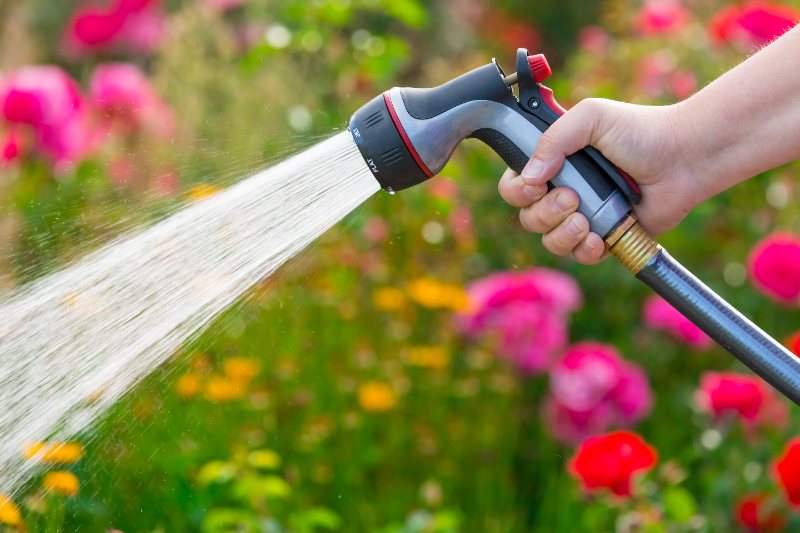
Proper watering is critical during the early stages of growth.
“In the first few weeks, the seedbed should stay evenly moist, but not saturated,” Mercer says. “If rainfall is scarce, check the area often and water enough to keep the surface from drying out during germination.”
As your meadow grows, Mercer says the roots will reach deeper and require less maintenance.
- Weeks 1 to 6 (Germination): Keep the top inch of soil moist until seedlings are 4 to 6 inches tall. Water in the early morning.
- The rest of Year 1: Switch to deeper, less frequent watering. Aim for 1 inch of total water per week (including rain).
- Years 2 and 3: Most established native wildflowers become self-sufficient and will only need extra water during long dry spells.
5. Manage your meadow each season
“Once established, a meadow is lower maintenance than lawn, but you still need to monitor for aggressive weeds, cut back or pull problem plants before they spread too far, and mow high once a year or often enough to prevent shrubs and tree seedlings from taking over,” Mercer says.
- Mowing: Mow once per year in late fall, after flowers have dropped their seeds, on your highest setting (4 inches or more). Leave clippings on the ground for natural reseeding. Never mow tall grasses below 6 inches.
- Watering: Give your meadow 1 inch of water per week in year one. After that first year, only water during extended dry periods.
- Weeding: Avoid broadcast weed killers, as they will easily kill your wildflowers. Instead, walk your meadow regularly and hand-pull invaders like thistles or tree seedlings.
*Note: For stubborn woody plants, cut them at the base and use a carefully targeted stump treatment rather than a wide spray.
Where and when to plant

Wildflowers thrive in open areas with no foot traffic and nutrient-poor soil. For the best results, choose a site that offers:
- Sun: At least 6 hours of direct to partial sunlight daily
- Soil: Uncompacted, well-draining, and nutrient-poor (do not add compost or fertilizer)
- Space: At least 400 square feet, away from pesticides, lawn chemicals, and foot traffic
- Location ideas: Fence lines, yard corners, patio borders, or woodland edges
When to plant your wildflowers: “Fall is often the best time to plant wildflower seeds because many native seeds benefit from winter cold stratification and moisture before germinating in spring,” Mercer says.
She adds that spring planting might work better if your winters are severe or particularly wet.
“The best timing varies by region and should follow the natural seeding cycle of the plants you are using,” Mercer says.
- Northern U.S. (Cooler climates): Plant in mid-to-late spring after the last frost, once the soil warms to 55°F.
- Southern U.S. (Warmer climates): Plant in late fall or early spring. Planting in the fall allows seeds to build a strong root system before going dormant so they emerge strong in the spring.
Best plants for your region
Creating a thriving meadow requires a balanced mix of local wildflowers and supportive native grasses.
“For high pollinator value, start with black-eyed Susan, purple coneflower, and a regionally native milkweed,” Mercer says.
“Black-eyed Susan and coneflower are widely adaptable and provide good color and nectar.”
She says that native milkweed is essential for monarch butterflies, but warns that it is highly toxic to pets like dogs, cats, and horses.
Note: To suppress weeds, wildlife educator Patricia Sutton recommends a meadow made of 50%–80% native grasses. Use warm-season bunchgrasses to crowd out weeds while leaving space for wildflowers. Avoid aggressive, sod-forming grasses like Kentucky bluegrass.
Read more:
Pros and cons of a wildflower meadow
Is a wildflower meadow right for you? Wildflower meadows suit sunny, low-traffic yards and homeowners who want more habitat and less mowing over time, but they need patience, seasonal upkeep, and a quick HOA rules check.
| Pros | Cons |
| ✓ Supports pollinators and boosts habitat diversity. ✓ Helps reduce stormwater runoff and erosion ✓ Can grow in poor, low-fertility soil ✓ Requires relatively little maintenance once established ✓ Usually does not require harsh synthetic chemicals ✓ Improves soil health with deep root systems ✓ Can store more carbon than a regularly mowed lawn | ✗ Takes 2–3 years to fully establish ✗ Does not tolerate foot traffic well ✗ Looks less tidy than a traditional lawnNeeds at least 6 hours of full sun ✗ Not practical as a play area for children or pets ✗ Needs about 400 square feet or more to work well ✗ Weed pressure is usually highest in years 1–2 ✗ Initial grass removal can be labor-intensive ✗ May not fit neighborhoods with strict HOA rules or lawn appearance standards |
Read more: 12 Reasons You Should Grow Native Plants
FAQs
Yes. You don’t need acreage — a 400-square-foot patch is enough for a diverse meadow. For smaller spaces, a wildflower patch along a fence or border works well and requires less site prep than a full conversion.
It depends on the mix. Annual wildflowers grow, seed, and die in one season — they return only if they successfully reseed (which happens naturally if you leave clippings after the fall mow). Perennial wildflowers return from root systems each spring without reseeding.
A wildflower lawn is low-growing and can handle some foot traffic, often blending with existing turf. A wildflower meadow is taller, denser, and better for a dedicated no-traffic area.
Hire a local lawn pro
Mercer says that your meadow might look thin and weedy in its first year because the plants are busy growing deep roots instead of flowers. However, she promises it will look beautiful by year two or three, and completely fill out by year four.
Starting a meadow takes patience, good seeds, and careful soil prep. If you need a hand, Lawn Love’s local gardening pros are ready to help you get started.
Read more:
14 Sustainable Landscape Design Ideas
Main Image: Young girl standing in a wildflower garden. Photo Credit: Pixabay
Related Posts:


