| Key takeaways |
|---|
| • Armadillos dig for grubs, worms, and soil insects. Remove their food, and they’ll move on. • No repellent, mothball, or instant poison is proven to work. • Buried, outward-slanted fencing and live-trapping near burrows and along barriers are the best fixes. |

Here’s how to get rid of armadillos: Treat your lawn for grubs and other soil-dwelling insects to remove their food, block access with buried fencing, and live-trap any that remain. Skip the repellents; none are proven to work.
Armadillos are mostly nocturnal, so you’ll wake up to cone-shaped holes and uprooted plants across your lawn. Left unchecked, they’ll also dig burrows near foundations and decks that can cause structural damage.
A grub-free lawn is your best long-term defense, and Lawn Love’s local lawn care pros can help you get there.
What attracts armadillos to your yard?
Armadillos come for the food under your lawn. Their diet consists of about 90% invertebrates, such as grubs, earthworms, beetles, and ants. A moist, well-watered lawn with loose soil is the easiest place to find them.
Beyond food, armadillos are drawn to yards with easy shelter like brush piles, woodpiles, and gaps under decks. Properties near forests or woodlands are especially vulnerable as armadillos move in from the tree line in search of food.
Armadillo holes and yard damage
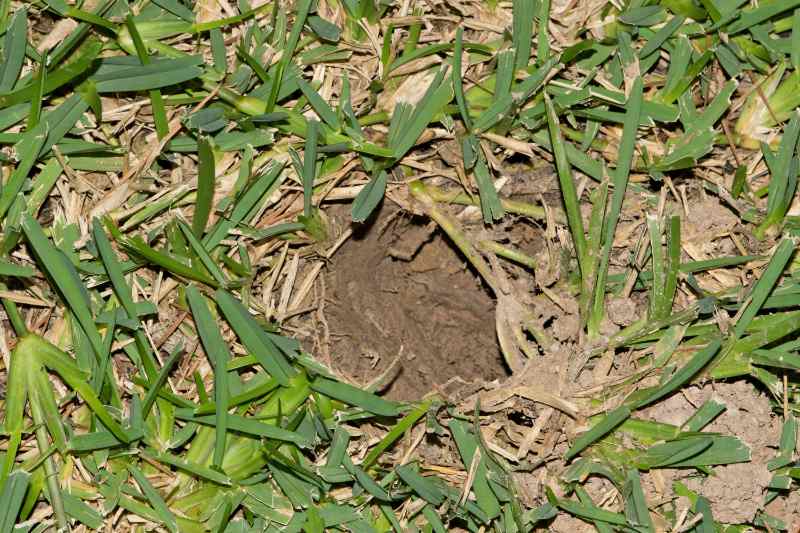
The most common sign of armadillos is shallow, cone-shaped holes scattered across your lawn, typically 1 to 3 inches deep and 3 to 5 inches wide. You’ll also notice uprooted plants, disturbed mulch, and patches of torn-up turf where they’ve been rooting for insects.
Since armadillos are nocturnal, the damage appears overnight. You may also notice a faint musty odor near active burrow sites.
Armadillos also dig burrows up to 15 feet long, often near foundations, driveways, decks, or brush piles. Over time, these can undermine structures, damage tree roots, and expose pipes and wiring.
Not sure if it’s an armadillo? Moles leave raised tunnels and mounds rather than open holes, and skunk or squirrel damage tends to be under 3 inches wide and less than 3 inches deep.
How to get rid of armadillos
No single method will do it, but the more methods you combine, the better your results.
1. Remove their food source
Since armadillos dig for grubs and worms, treating your lawn for grubs is the most effective long-term deterrent. Beneficial nematodes or a labeled grub insecticide shrink the food supply that draws them in.
2. Clear hiding spots
Remove brush piles, leaf litter, and woodpiles from around your yard, and seal gaps under decks and sheds. A tidy, open yard gives armadillos fewer places to burrow and shelter.
3. Install fencing
A buried fence is the most reliable way to protect high-value areas like gardens and flowerbeds. UF/IFAS recommends fencing that is about 24 inches above ground, buried about 18 inches deep, and angled outward at roughly 40 degrees so armadillos can’t dig under or climb over.
“When done correctly, exclusionary fences will keep out the majority of armadillos and reduce the need for other mitigation techniques,” says Marcus Blum, PhD, assistant professor and extension wildlife specialist at Texas A&M AgriLife Extension.
4. Live-trap and relocate
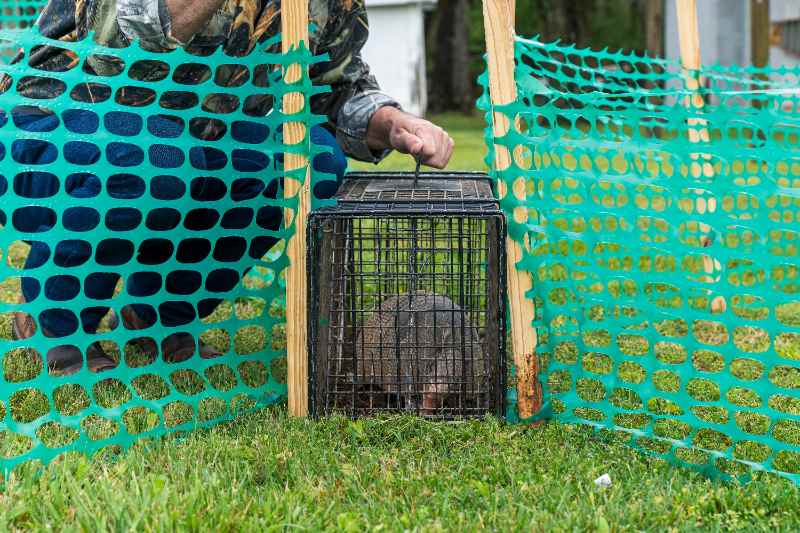
Armadillos don’t take bait, so trap placement is everything. Set a raccoon-sized cage trap at a burrow entrance or along a fence or wall they travel. Cover the wire bottom with leaf litter or soil to encourage entry.
Blum recommends “using funnel systems to direct armadillos into traps rather than attracting them with bait. You can use long boards or the sides of your house or fence to help funnel them into the trap.”
Pro tip: Before setting traps, check your state’s relocation laws.
5. Call a wildlife or pest pro
If digging continues or burrows threaten your foundation, call a wildlife-removal expert. They can safely and legally trap and remove armadillos, and are often the fastest fix for a stubborn problem.
Are armadillos dangerous?
Armadillos aren’t aggressive and rarely bite, but they’re not harmless. According to the CDC, they can carry the bacteria that cause leprosy (Hansen’s disease), and human cases have been linked to armadillo contact in Texas, Louisiana, and Florida.
The Missouri Poison Center warns they may also carry rabies, so don’t handle armadillos bare-handed, and keep pets away.
Do armadillo repellents work?
Mostly no. According to UF/IFAS, no repellents, toxicants, or fumigants are registered or proven to get rid of armadillos. Save your money and effort for what works: removing grubs, fencing, and trapping.
“You can try repellents, but don’t be surprised if they ultimately fail,” Blum says.
Getting rid of armadillos: What works vs. what doesn’t
| Proven to work | Doesn’t work (skip these) |
| Grub and insect control (removes their food source) | Mothballs |
| Clearing brush, woodpiles, and hiding spots | Most sprinkle-on repellents(castor oil works as a limited, short-term deterrent) |
| Buried, outward-slanted fencing | Ammonia |
| Live-trapping at burrows/along barriers | Coffee grounds |
| Professional wildlife removal | Ultrasonic repeller devices |
FAQs
There’s no one-time fix. Permanent control means keeping the yard unappealing year-round by staying on top of grub control, maintaining your fencing, and promptly trapping or removing any armadillo that moves in.
No. Coffee grounds are a popular home remedy, but there’s no evidence that they repel armadillos. Just like mothballs and ammonia, they don’t reliably work. Removing grubs and fencing the area are far more effective.
Not dependably. Cayenne or hot-pepper sprinkles may briefly irritate an armadillo’s nose, but they wash away with rain, and the animal comes back. No pepper-based product is proven to keep armadillos out.
The most effective “natural” approach isn’t a repellent at all. Remove their food from the soil with beneficial nematodes or grub control, and eliminate places where they can shelter. Castor oil granules may help a little, but only briefly.
Skip the repellent sprays. Your money is better spent on a sturdy live trap, hardware cloth or welded-wire fencing, and a grub-control product like nematodes or a labeled insecticide.
Once you’ve confirmed the burrow is inactive, pack it with soil and gravel and tamp it down. Reseed bare spots so the lawn recovers and looks less inviting.
Keep armadillos out of your yard
Keeping armadillos out of your yard comes down to a healthy, grub-free lawn and a little vigilance. If you’d rather leave it to a pro, Lawn Love makes it simple — get an instant quote, pick a time, and a vetted local pro will handle the rest.
Get a free estimate near you →
Main Image: A nine-banded armadillo foraging in a grassy yard. Photo Credit: KMcCall / Pixabay
Related Posts: