| Key Takeaways |
|---|
| • Most lawns need only 1-1.5 inches of water per week • Water deeply 2-3 times weekly, not daily • Early morning (4-7 a.m.) is the ideal watering time • Use the tuna can test to measure water output • Adjust for rainfall and season |

From running the sprinklers daily to ignoring the weather forecast, lawn watering mistakes can leave your grass with shallow roots and fungal diseases, and leave you with a huge water bill.
“The most common mistake I see is watering too frequently but for too short a duration,” says Steve Rice, owner of Lawn Kings in California. “Grass needs deeper, less frequent watering to encourage strong root systems.”
In this article, we’ll address these common lawn watering mistakes and the fixes to keep your lawn looking great and lower your water bills.
Mistake #1: Watering too frequently (instead of deeply)

The problem: A common issue is homeowners want to give their lawn a light sprinkle every other day, especially during hot weather. Daily, light watering keeps the soil moist only at the top.
Grass has no incentive to grow their root systems since the water is always available at the surface. As soon as a hot day hits or you miss a watering, that shallow root system dries out and develops heat stress.
The fix: Water your lawn deeply 2-3 times per week. This forces the grass roots to go down 6 to 8 inches to find moisture.
Cost impact: The EPA says up to 50% of the water we use outdoors is wasted due to evaporation and daily, light sprinkling.
Read more:
Mistake #2: Watering at the wrong time of day
The problem: If you are watering in the middle of the day or late at night, you are likely doing more harm than good.
Watering between 10 a.m. and 4 p.m. is a battle against the sun, as the intense heat and midday winds steal the moisture before it ever reaches the root zone.
BJ Hamilton, owner at Natures Own Landscaping in Springfield, Ohio, warns against this common error.
“The biggest timer mistake I see is people watering at night or late evening thinking it saves water. It doesn’t. It just creates perfect conditions for fungus and disease because the grass stays wet for 8-10 hours,” he says.
The fix: “Early morning (4-7 a.m.) is non-negotiable,” Hamilton says. The air is cool, the winds are calm, and the grass is usually already wet with dew, so you aren’t disrupting its natural cycle. Set your automatic timers to run during this window so the cycle finishes before the sun gets too hot.
Cost impact: Outdoor water use accounts for over 30% of average household water use. The EPA says that inefficient irrigation and overwatering can cause a household to waste up to 25,000 gallons of water annually.
Read more: Pythium Blight: How to Identify and Get Rid of It
Mistake #3: Overwatering your lawn

The problem: More water does not always equal a greener lawn. Saturated soil has no room for oxygen, essentially suffocating your grass roots and inviting moisture-loving weeds like nutsedge and dollar weed. It causes fertilizer runoff and invites fungal diseases.
Rice at Lawn Kings says that homeowners often mistake fungal disease for drought stress.
“In my experience, drought-stressed grass turns bluish-gray and springs back slowly when stepped on, while diseased grass shows irregular patches, yellow halos, or a slimy texture.”
The fix:
Take a soil probe test: “When homeowners confuse drought stress with overwatering, I start with a simple soil probe test. I push a screwdriver or soil probe about 6 inches into the ground. If it slides in easily and the soil feels soggy, it’s overwatering; if it’s difficult to penetrate and comes up dry, it’s drought stress,” Rice explains.
“I’ve seen clients pour on more water thinking they’re helping, only to suffocate the roots. That’s why I always tell them: Check the soil before adding more water,” he adds.
The smell test: Hamilton offers another brilliant diagnostic: “I pull back a small section of turf at the edge of a problem area and look at the soil directly. If the soil is dark, sticky, and smells sour or musty, you’re overwatering and likely dealing with fungal issues or root rot. The smell is the giveaway, as healthy, moist soil doesn’t stink.”
Cost impact: An irrigation system that has a leak 1/32nd of an inch in diameter can waste about 6,300 gallons of water per month.
Read more:
Mistake #4: Ignoring your soil type

The problem: For sandy soil, water drains through it in minutes, often bypassing the roots if you water too long at once. Clay soil is dense and absorbs water very slowly. If you water clay soil for 30 minutes, most of it will pool on the surface and run off into the street.
Quick soil identification:
- Sandy: Feels gritty, water drains in 10-30 minutes, holds little moisture.
- Clay: Feels sticky when wet, takes hours to drain, and holds water too long.
- Loam (ideal): Crumbly texture, balanced drainage.
The fix: “Clay soil here in Ohio is everywhere, and the biggest mistake is running your full 30 minutes straight through. The water just pools on top and runs off,” Hamilton says.
“I tell clients to split it: Run 10 minutes, let it soak for an hour, then another 10 minutes,” he says. “Sandy soil is the opposite problem: It drains too fast. You’ll need to water more frequently but for shorter times, maybe 15 minutes twice a day instead of one long session.”
You can permanently improve heavy clay soil by amending it with compost. Topdressing your lawn with a thin layer of organic compost improves the soil structure, allowing it to drain better and absorb moisture more efficiently.
Mistake #5: Watering without measuring
The problem: Do you know how much water your sprinkler puts out in 30 minutes? If you are just guessing, you are likely way off. Sprinkler output varies based on water pressure and head types.
Without checking, 30 minutes is meaningless. One zone might deliver 2 inches of water in that time, while another delivers only half an inch.
The fix: Take the tuna can test at the start of each season:
- Place 4-6 empty, flat-bottomed cans around your lawn.
- Run your sprinklers for 15 minutes.
- Measure the water depth in the cans with a ruler to find the average.
- Calculate how long you need to reach the 1/2 to 1-inch mark.
Test different zones separately to account for varying water pressure and sprinkler head wear over time.
Read more: How Much Does Sprinkler Repair Cost in 2026?
Mistake #6: Not adjusting for seasons and weather

The problem: A schedule that works in the heat of July will drown your grass in the cool, rainy days of April or October. Setting your sprinkler system in the spring and forgetting about it until the fall is a major mistake. Your lawn’s watering needs change as the temperatures fluctuate.
Seasonal Guidelines:
- Spring: Supplement only if you haven’t received the total 1 to 1.5 inches of water your grass needs through rain.
- Summer: Peak demand at 1 to 1.5 inches/week; monitor for any stress signs.
- Fall: Reduce frequency; evaporation slows down significantly.
- Winter: Minimal to no watering. You won’t water cool-season grasses at all because they go dormant under snow and ice. In milder climates, you should water warm-season grasses only every 2-4 weeks if it’s exceptionally dry.
The fix: “Most of my clients get better results from a $15 rain sensor than expensive smart systems they never program correctly,” Hamilton says. “The sensor automatically shuts off your system when it’s already rained, which prevents the overwatering.”
Read more:
Mistake #7: Using the wrong watering method
The problem: Sometimes the tool itself is the problem. Fine mist sprayers lose massive amounts of water to wind drift, while high-volume heads can cause runoff on slopes.
Watering driveways, sidewalks, and streets is a common sight that signals poor sprinkler head adjustment. Using a single long cycle on sloped terrain guarantees that the water will run to the bottom of the hill, leaving the top dry and the bottom soggy.
The fix:
Adjust your targets and timing: Always point sprinklers away from hardscapes. Water during calm, early-morning conditions to prevent wind drift from blowing mist away from your grass.
Use drip irrigation for beds: For flower beds or shrubs, use a drip irrigation system. It delivers water directly to the soil base with minimal evaporation.
For standard clay/slopes: “For the cycle and soak method, I’ve found that a 30-45-minute rest period between cycles works best for most clay-heavy soils. It gives water time to absorb into the root zone rather than run off or evaporate,” Rice says. “In our California installations, this approach has saved homeowners both water and repair costs from erosion on slopes.”
For heavily compacted clay: “I’ve found 10-minute cycles work better than longer ones here in Springfield because our clay compacts so badly,” Hamilton explains. “But the key is waiting a full 60-75 minutes between cycles and not 30-45. That extra time lets the water actually move down through the clay layers instead of just sitting on top.”
Bonus tips section
Want to optimize your watering even further? Here are some quick wins for better watering and moisture retention:
- Both pros agree that a simple moisture meter is the ultimate cure for overwatering. Hamilton specifically recommends avoiding the cheap two-prong versions in favor of a 12-inch probe that lets you “check moisture at root depth, not just surface level where it’s always misleading.”
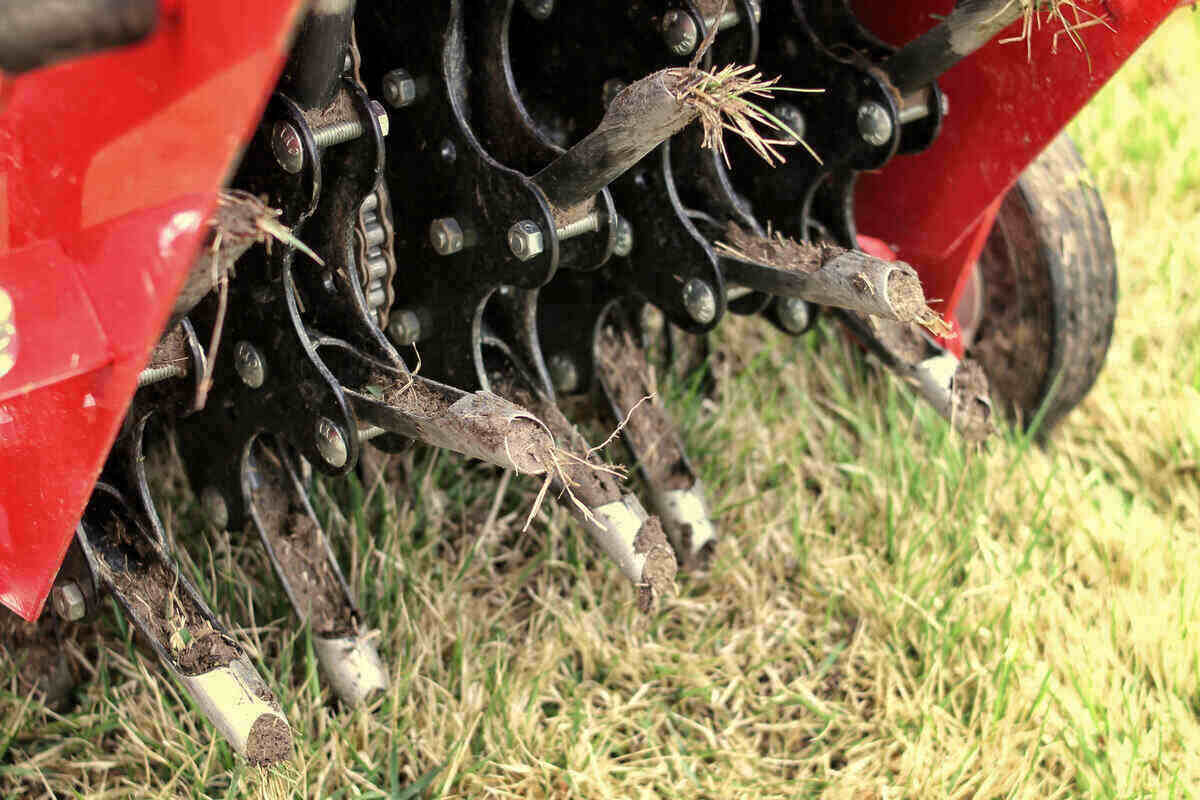
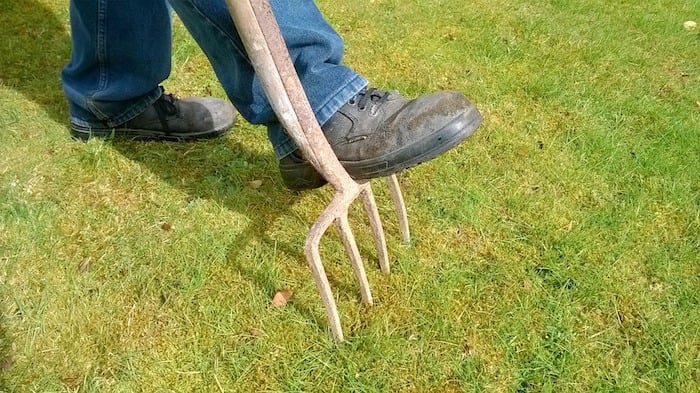
- Aerate compacted soil annually for better water penetration and oxygen flow to the roots.
- Maintain mower height at 3 to 4 inches. Taller grass shades the roots and reduces soil evaporation. And don’t forget the one-third rule of mowing.
- Sharpen mower blades. Clean cuts heal quickly, whereas dull blades tear the grass, increasing water loss and disease susceptibility.
- Apply mulch around trees and garden beds to retain moisture and regulate soil temperature.
- Group plants by water needs (hydrozoning), so your thirsty flowers aren’t drowning your drought-tolerant shrubs, and also customize your watering zones without wasting a drop.
FAQs
The answer is usually found in the soil:
| Symptom | Cause | Solution |
| Blue-gray tint or footprints that won’t disappear | Underwatering | Apply the tuna can test and water deeply immediately |
| Squishy soil, mushrooms, or a musty/sour smell | Overwatering | Stop watering immediately |
| Irregular brown patches with dark smoke ring edges | Fungal disease | Switch to morning watering and apply fungicide if needed |
| Crispy, brown patches that pull up like carpet | Grubs or other lawn pests | Watering can’t fix this. You need pest control. |
Stop wasting water and start growing better grass
The goal is to deliver the right amount of water to the roots exactly when they need it most. Perfect lawn watering takes time, attention, and the right equipment, and not everyone has those.
If tending to your lawn isn’t your strong suit, Lawn Love’s local lawn care pros can handle the work and keep your outdoor area looking lively year-round. From watering and mowing to sprinkler system maintenance and smart controller installation, Lawn Love’s local lawn care pros can handle it all.
Main Image: Watering a lawn with a garden hose. Image Credit: NinaMalyna / Adobe Stock
Related Posts: