| Key takeaways |
|---|
| • The earliest signs are a dull blue-gray color and footprints that linger rather than spring back. • Drought-stressed grass usually recovers with water. Grass that pulls up like a carpet means you have grubs, not a drought. • Most established lawns survive 3 to 4 weeks dormant, and deep watering brings them back. |

The signs of a drought-stressed lawn are easy to miss until the damage is done. Watch for a dull blue-gray color, lingering footprints, curling blades, thinning, weeds, crunchy grass, stalled growth, and cracked soil.
Catching these signs early lets you water before the grass dies back. If you’d rather hand it off during a hot, dry summer, a local Lawn Love pro can keep your lawn healthy and green through the worst heatwaves while you stay inside with the AC on.
What drought does to your lawn
Drought is a stretch of unusually dry weather that leaves the soil short on moisture. For your lawn, it means the roots can’t pull up enough water to keep blades firm, green, and growing, so the grass starts showing stress.
The earlier you catch it, the easier it is to fix. Here’s what to look for.
8 signs your lawn is drought-stressed
1. Discoloration

Drought-stressed grass loses its color as chlorophyll production drops. It fades to a dull blue-gray or blue-green cast before turning yellow.
Mike Marlow, co-founder and owner of Heroes Lawn Care in Omaha, Nebraska, says this color change is your first warning.
“If your lawn has turned into a dusty blue-gray color like a blue spruce tree, that’s the first warning sign I tell people to look for,” Marlow says.
2. Blade curling and wilting
Short on water, grass blades curl inward or fold lengthwise to shrink the surface exposed to the blazing sun and wind.
“The grass is rolling up its blades to get away from the hot sun, and to hold moisture,” Marlow says. It is the grass trying to protect itself, but it also means photosynthesis is slowing, and your lawn is vulnerable to disease.
3. Thinning and patchiness
The lawn turns sparse, with irregular brown patches and bare spots, worst in high-traffic areas. As the grass thins out, the exposed soil erodes and becomes harder to regrow.
Lawns made up of different grass types may thin and brown unevenly. They create a patchy appearance even without foot traffic, because different varieties respond to moisture loss at different rates.
4. Slow or no growth
Growth slows or stops as the lawn goes dormant to conserve energy, and any new blades come in short and sparse.
Dormant grass is alive at the crown, where all new growth happens, and is more vulnerable to foot traffic because it compresses and crushes it when the grass has no water pressure to resist the load.
Illinois Extension recommends limiting all traffic, including mowing, on dormant or drought-stressed grass, because of this reason.
5. Weed growth

Tough weeds, like crabgrass, dandelions, nutsedge, and clover, move into the weak spots, where their deep roots and drought tolerance let them outcompete the stressed grass.
“The shallow roots can’t take the heat, and tough visitors like crabgrass and nutsedge start invading the patches,” Marlow says.
6. Dry, crunchy grass
As water leaves the blades faster than the roots can replace it, the grass loses turgor pressure and turns dry and crunchy, and the blades may break when bent and crunch underfoot.
South Dakota State University Extension says that mowing with a dull blade tears the grass, forcing it to use 40% to 60% more water to recover from each cut.
7. Lingering footprints
Healthy grass springs right back when you step on it, while drought-stressed grass doesn’t. Turf specialists call this “footprinting.”
“When the soil is allowed to dry out, the grass blades are unable to keep water pressure up internally in the plant, and thus are totally limp,” Marlow says. “That’s why when you step on the lawn, your footprints stay flattened in the yard for hours on end.”
8. Cracked soil
Drought dries, hardens, and shrinks the soil until it cracks and resists a shovel or fork. Hard, compacted soil blocks roots, air, and water, making recovery even harder.
“When the ground gets so dry that it cracks and turns rock hard, the water just runs off,” Marlow says. “So I use a wetting agent and run short bursts of sprinklers over the patches so the water can penetrate the crust and get to the roots.”
Drought stress vs. pests and disease
Browning doesn’t always mean a drought. Throwing water at the problem won’t fix bug damage, and it actually makes disease issues much worse. You have to rule out the look-alikes.
Erik Swanson, project director at Corliss Landscape & Irrigation in Ipswich, Massachusetts, says the pattern of the dead grass gives the culprit away.
“Examine the blades closely,” Swanson says. “Drought-stressed grass follows a pattern related to sun exposure. There will be a noticeable, gradual, even pattern from green to brown grass. Bug damage will have irregular patterns in its color.”
Taylor Olberding, founder and co-owner of Heroes Lawn Care, uses a physical test to confirm the issue.
“If you notice brown, scaly patches in your yard, try shoving a long screwdriver down into the ground before you panic about bugs,” Olberding says. “If the ground is baked solid, and you can’t get that screwdriver down into it, you have a thirsty lawn and all it needs is water.”
So, is it drought, grubs, chinch bugs, or disease?
| Problem | Tell-tale sign | Quick test |
| Drought | Blue-gray cast, lingering footprints, even browning | Grass holds firm when tugged; greens up after watering |
| Grubs | Spongy turf, brown patches in mid-to-late summer | Turf pulls up like a carpet (roots eaten away) |
| Chinch bugs | Yellow-brown patches spreading from hot, sunny edges | Part the thatch at a patch edge — tiny bugs scurry |
| Disease | Circular rings or spots, often after humid weather | Damage forms defined shapes, not tied to dry spots |
Read more: Signs of Lawn Pest Damage vs. Disease vs. Drought Stress.
How to revive and prevent it
Drought-stressed grass usually bounces back with the right watering schedule. Most established lawns can survive 3–4 weeks dormant in 80-degree heat. Once those temperatures hit the 90s, that survival window shrinks to just 2–3 weeks before the crowns start to die.
Don’t fertilize
If your lawn goes dormant, don’t apply fertilizer.
“Applying fertilizer now would be a mistake, as the heavy salts would suck what little moisture is left clean out of the roots, burning the turf and forcing the grass to try to grow leaves it cannot possibly support in this heat,” Olberding says.
“Turf grass enters into a dormant state during drought to keep it alive. Fertilizing the grass pumps nitrogen into the soil which signals the plant to start growing even with a lack of water,” Swanson says. “This will cause more browning and thinning. In worst-case scenarios it can kill your grass entirely.”
Instead, you need to adjust your mower and your watering habits.
Raise the mower deck
“The rule of thumb is to raise the mower deck by half an inch to an inch during periods of drought,” Swanson says. “Mow at 3.5 to 4 inches.”
“The taller the grass grows, the bigger its canopy to shade the soil from the scorching sun, and the cooler the dirt will be, encouraging the roots to grow deeper in search of water,” Olberding says.
Watering
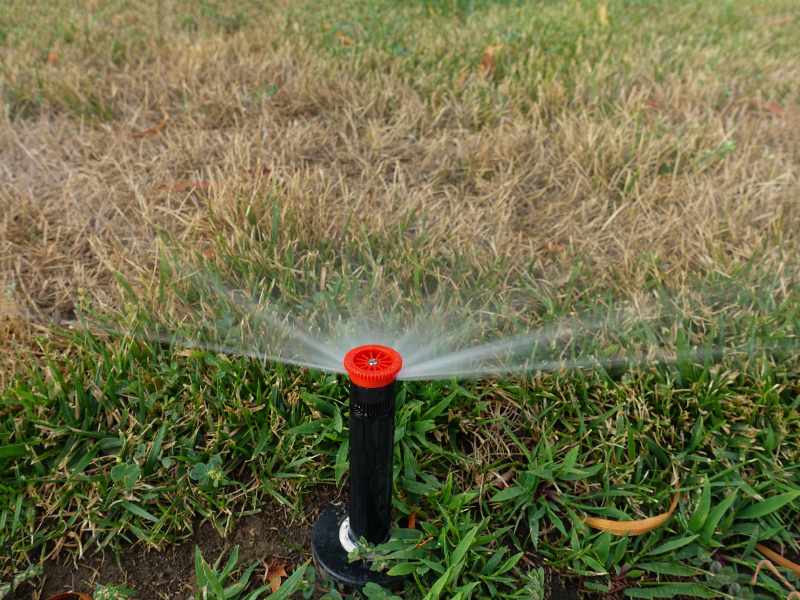
When watering a fully dormant lawn, less is more. Don’t drown it.
“If it does go dormant and turn brown, don’t waste water by drowning it with a heavy soaking,” Olberding says. “Just give it a light sip of about a quarter-inch of water every few weeks, just to keep the base of the plant alive without tricking the lawn into waking up too early and wasting its stored energy.”
Swanson says that adding too much water will just create a new set of problems.
“Dormant grass does not use a lot of water,” Swanson says. “Excess water causes shallow root growth. Extra moisture can also cause disease.”
Read more: How to Help Your Lawn Recover from Drought.
FAQs
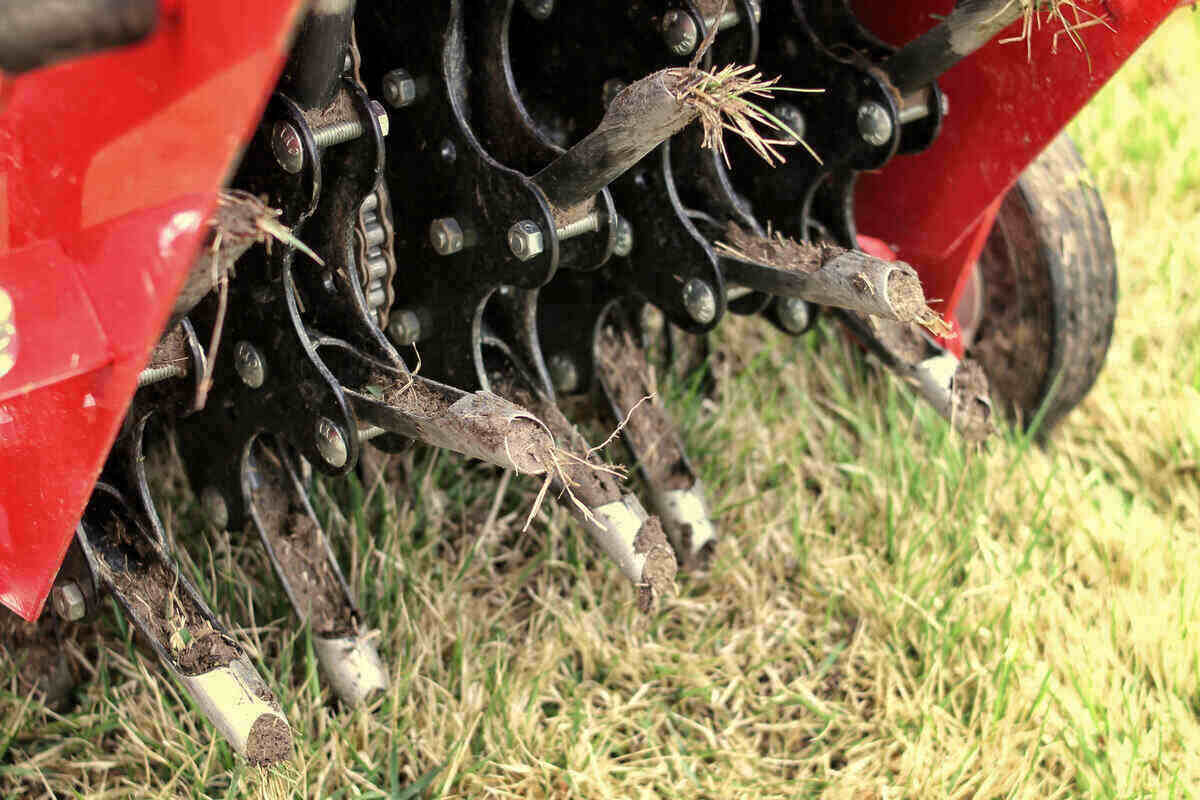
Wait until the cooler weather finally returns to core aerate the compacted soil and overseed any thin spots. Fall is the best time to repair the damage because the soil is still warm, but the cooler air takes the stress off the turf.
Dormant grass is still alive. Once the water returns, most established lawns green up on their own without any reseeding. The only exception is grass that went way too long without water. If the crowns dry out, those patches are dead, and you will need to overseed.
Zoysiagrass is the only grass type that might stay brown for a few weeks longer than others, even after it gets a good watering.
If you want a quick trick to confirm your lawn is surviving, the Virginia Cooperative Extension has a great one: Look for tiny green tissue popping up at the exact base of the brown blades within a day or two of rain. That’s a guaranteed early sign your grass is making a comeback.
It depends on your grass type and how long the drought actually was:
Cool-season grasses bounce back once the temperatures drop and they get water.
Warm-season grasses recover much faster right in the summer heat.
Most lawns start showing green again within 1 to 2 weeks of consistent watering, and a full recovery takes about 3 to 6 weeks for established turf. If you have to overseed dead spots, wait 6 to 10 weeks.
Let the pros handle the heat
Now you know the warning signs of a drought-stressed lawn. You also know the feeling of dragging a hose around a dead yard in the middle of July.
If you want to skip the sweat, Lawn Love connects you with a vetted local pro who knows your local climate and brings the right gear to keep your yard green. Get an instant quote and take your weekends back.
Main Image: A patchy lawn showing dry and dead grass caused by pests, disease, or drought stress — common signs that a lawn needs professional attention. Photo Credit: ImageSine / Adobe Stock
Related Posts: