Dandelions are pretty little flowers, but they’re weeds, and if we’re being honest, we’d much rather enjoy them in an open field than in our lawn.
Fortunately, there are a number of ways to evict them from your property, including pulling them by hand or digging them out, using natural solutions like vinegar, or turning to chemical weed killers.
In this guide, we’ll walk you through the best ways to get rid of dandelions. However, if you decide you’d rather leave it to the pros, LawnLove can help connect you with a weed control pro near you.
Manual removal

The simplest method is to pull them by hand or dig them out to remove the entire weed and taproot. This method is good for small lawns or medium-sized lawns with light infestations, but it isn’t good for large lawns with heavy infestations.
| Pros | Cons |
| Effective | Time-consuming |
| No chemicals involved | Requires effort |
| Cost-effective | Can miss roots |
Estimated time: Removing each dandelion takes about 2 to 3 minutes. For a small yard, set aside 1 to 2 hours. Larger lawns with scattered weeds can be done gradually, over several sessions.
Tools you can use: Some tools are simple, others are ergonomic and designed to save your back. Take a look at the chart below.
| Tool | Characteristics | Cost |
| Dandelion weeder | It looks like a screwdriver with a notched or forked end. | $10 |
| Hori hori knife | A sharp gardening knife with measurement marks. | $22 |
| Stand-up weed puller | A long-handled tool with claws or spikes at the end. | $30 |
| Garden trowel or hand shovel | You can dig around the roots of weeds with it. | $9 |
Instructions:
For best results, pull dandelions early in spring before they flower and spread seeds. Start by watering the area, or do it after rain. Moist soil helps remove the root intact. Identify the dandelion by its yellow flowers, toothed leaves, and a long taproot. Use your tool to loosen the soil around the taproot. Grasp the base and gently pull while wiggling the tool.
My tip: I like to compost the dandelions I remove; I’m only careful not to do it when they have fluffy heads because they can spread the seeds on the compost.
Natural and organic methods
Natural and organic dandelion removal methods are non-toxic and eco-friendly ways to handle weeds without chemicals. Take a look at each of them in detail, including cost estimates, time commitment, and instructions.
Vinegar
Vinegar works as a natural weed killer because it’s very acidic. When you spray it directly on the dandelion’s leaves, it burns and dries them out. While one spray won’t kill the root, repeated applications weaken the plant over time and stop it from growing back. Just be careful; vinegar doesn’t know the difference between weeds and your grass.
Cost: $35 per gallon of vinegar
Estimated time for application: 15 to 30 minutes
Estimated time for results: 24 to 48 hours
Instructions
Use horticultural vinegar with at least 20% acetic acid. Choose a dry, sunny, wind-free day and make sure no rain is expected for 24 hours. Pour the vinegar into a spray bottle or garden sprayer and apply it directly to the center of the dandelion leaves. Avoid nearby grass, as vinegar will kill any plant it touches. Reapply as needed. Vinegar might not kill the root on the first try. Check back in a week and repeat if the plant regrows.
My tip: You can also make a vinegar weed killer with dish soap and salt to make this method more effective.
Boiling water
Boiling water damages their leaves and upper roots. It works best on smaller or younger plants, but won’t kill the entire root in one try. Boiling water is best used for isolated weeds in spots like cracks in driveways or garden paths.
Cost: Free
Estimated time for application: 30 minutes for a small area.
Estimated time for results: Leaves wilt in a few hours, but roots may need multiple treatments.
Instructions:
Heat water to a full boil. Carefully carry the hot water to the dandelion area. Wear oven mittens to protect your hands, and walk slowly to avoid spills. Pour the boiling water over the center of each dandelion. Avoid splashing nearby grass or plants, as the hot water can damage those, too. If the dandelion regrows, reapply boiling water every 2 to 3 days until it stops growing.
Corn gluten meal

Corn gluten meal is a natural pre-emergent herbicide that helps prevent dandelion seeds from sprouting. It won’t kill existing weeds, but it can stop new ones from growing. It also adds a bit of nitrogen to support your grass.
Cost: $52 for 10 pounds of corn gluten meal
Estimated time for application: 30 to 60 minutes, depending on lawn size.
Estimated time for results: Help prevent new weeds if applied before seeds germinate.
Apply corn gluten meal in early spring, when soil temperatures reach 55 degrees. Use a broadcast spreader for larger areas, or spread it by hand for small sections. Lightly water after application to activate the corn gluten meal. Avoid overwatering, which can reduce its effectiveness.
My tip: When I use corn gluten meal on my lawn, I make sure not to plant any new grass seed at the same time, as it blocks all seeds from sprouting, not just weeds.
Chemical control methods
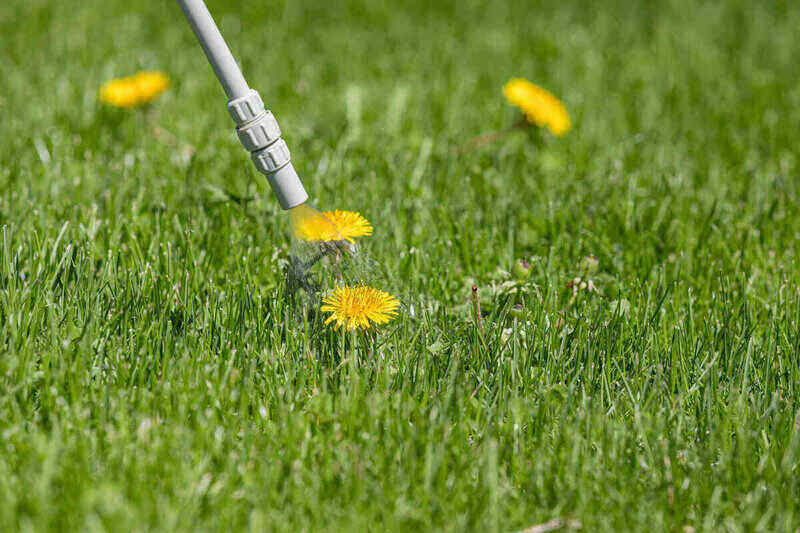
Chemical herbicides kill the leaves and roots of dandelions and provide longer-lasting results than natural options. Use selective herbicides for lawns, and non-selective ones for areas where you don’t mind killing all plants.
Allison Bailey, agriculture and natural resources agent at the University of Georgia, emphasizes the importance of reading the product label carefully before applying any herbicide. “it gives a lot of important information like proper attire (PPE) to wear when spraying, target weeds (significant to read to make sure you’re using the right stuff), re-entry intervals, and any other important safety considerations.” she explains.
Selective broadleaf herbicides
Selective broadleaf herbicides are made to kill specific weeds like dandelions. They won’t harm your grass when used correctly.
Cost: $20 to $30
Estimated time for application: 30 to 60 minutes
Estimated time for results: 3 to 7 days
Instructions: Choose a lawn-safe weed killer labeled “broadleaf” or “for lawns”. Apply on a calm, dry day with no rain expected for 24 hours. Choose early spring when dandelions are actively growing. Avoid mowing 2-3 days before and after treatment. Mix the herbicide according to the label and use a tank or hose-end sprayer for even coverage, focusing on the base and leaves of each plant.
Non-selective herbicides
Non-selective herbicides kill any plant they touch: weeds, grass, flowers, everything. They are best used in areas where you don’t want anything growing, like cracks in driveways, sidewalks, gravel paths, or along fence lines.
Cost: $22 to $40
Estimated time for application: 30 to 60 minutes
Estimated time for results: 1 to 3 days
Instructions: Use only in the right spots. Apply non-selective herbicides in places where you don’t want any vegetation to grow. Avoid using them on your lawn or near garden beds unless you’re spot-treating very carefully. Pick a calm, dry day. Avoid spraying on windy days to avoid spray drift. Spray directly on the dandelion leaves. Avoid stepping in it and walking on grass afterward. Wait until it browns and dies, then pull up the dead plant if you want.
No more dandelions, even if you don’t have time
Dandelions are stubborn, but with the right mix of removal methods and consistent lawn care, you can take back your yard. If you’re short on time, not seeing results, or simply want a little help, a weed-control professional can take care of everything for you so your lawn stays green, healthy, and free from dandelions.
Sources:
Allison Bailey, ANR Agent. College of Agricultural & Environmental Sciences. Personal Interview.
Main Image: Dandelion flowers in a yard. Image Credit: Unsplash
Related Posts: