| Key takeaways |
|---|
| • Skip mowing when temperatures are at or above 90 degrees, and the lawn is dry or dormant. • Raise your mower deck 0.5 to 1 inch above your normal summer setting. • Mow between 8 and 10 a.m. for the best balance of cool temps and dry blades. • Leave clippings on the lawn to return moisture and nutrients to stressed turf. |

Mowing in extreme heat can damage your lawn if you don’t time it right. The fix is straightforward: raise your mower deck, mow before mid-morning, and skip the cut altogether when temps hit 90 degrees or higher, and your grass is dry or dormant.
Heat depletes soil moisture and weakens grass roots. Mowing on top of that stress strips away the leaf blade the plant needs to recover, which leads to brown patches and prolonged dormancy.
If your schedule doesn’t allow for early-morning cuts this summer, local lawn care professionals can handle the mowing on a schedule that works around the heat.
When is it too hot to mow?

There’s no magic number, but most turf specialists draw the line at 90 degrees. Above that, grass loses moisture faster than it can replace it, and mowing strips away the leaf blade that shields the roots from the sun.
- Cool-season grasses (Kentucky bluegrass, fescues, ryegrass) face heat stress even earlier. Photosynthesis declines above 70 to 75 degrees, and an energy deficit kicks in above 80 to 85 degrees, according to the University of Nebraska-Lincoln Turfgrass Science program. By 90 degrees, these lawns may already be in protective dormancy.
- Warm-season grasses (Bermuda, Zoysia, St. Augustine) handle heat better. They keep growing at 90 degrees in their native Texas, Florida, and Southeastern climates. The 90-degree rule matters most when heat is paired with drought.
Read more: Summer Lawn Care Tips
The best time of day to mow in the heat
According to the University of Georgia Extension, the hottest part of the day is closer to 3 p.m. than to noon because the Earth continues absorbing more heat than it releases for several hours after solar noon. Avoid mowing between 11 a.m. and 4 p.m. on hot days.
- The best time to mow is between 8 and 10 a.m. Morning dew has dried, temperatures are still manageable, and the grass has the rest of the day to recover.
- Evening mowing after 5 p.m. is the second-best time of day, but only if the grass dries before dark. Wet blades overnight invite fungal disease.
Heat safety tips:
- Stay hydrated. The CDC recommends 1 cup (8 ounces) of water every 15 to 20 minutes during outdoor work in heat, not just when you’re thirsty.
- Take shaded breaks. Stop every 20 to 30 minutes. Stop completely if you feel dizzy or nauseous.
- Hand off if it’s too hot. If you want to avoid the heat, hire a local lawn care professional to do the work.
Read more: When is the Best Time to Water Your Lawn in Hot Weather?
How high to cut grass in summer
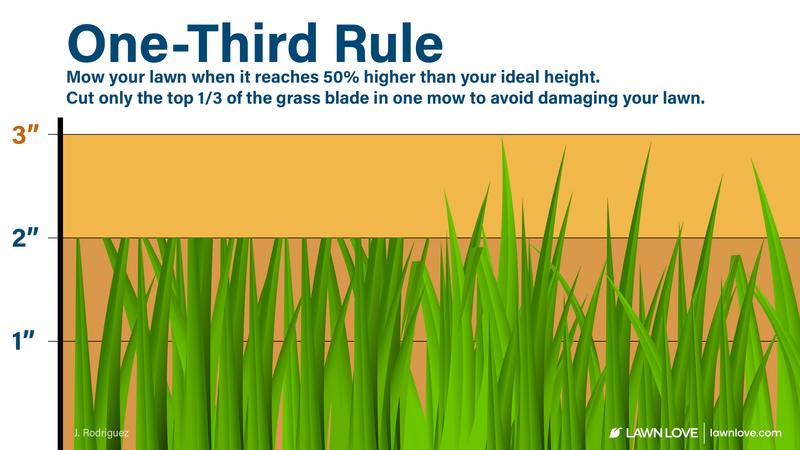
Raising your mower deck is the most effective way to protect grass during a heat wave. Taller blades shade the soil, slow evaporation, and push roots deeper for drought resilience. More leaf surface also means more photosynthesis during recovery once temperatures cool.
University of Minnesota Extension recommends raising mowing height by 1 inch in mid-summer to help the lawn tolerate heat and drying winds. University of Maryland Extension takes it further: don’t mow at all when your lawn is dormant in summer’s hottest, driest stretch.
Follow the one-third rule. Never remove more than a third of the blade in a single mow. If grass has grown tall waiting out a heat wave, mow in two passes a few days apart.
Scott Culala, owner of The Lawn Cypress in Gardner, Kansas, says cutting at about 4 inches and above is best. “Grass height is the biggest thing that people get wrong,” Culala says.
Here’s a quick reference for the most common grass types:
Cool-season grasses
| Grass Type | Recommended Height | Mow When It Reaches |
| Tall fescue | 3.5-4 inches | 4.75-5.25 inches |
| Kentucky bluegrass | 3-3.5 inches | 4-4.5 inches |
| Perennial ryegrass | 2-2.5 inches | 2.75-3.25 inches |
| Fine fescue | 3-4 inches | 4-5.25 inches |
Warm-season grasses
| Grass Type | Recommended Height | Mow When It Reaches |
| St. Augustinegrass | 2.5-3.75 inches | 3.5-5 inches |
| Bermudagrass | 1.5-2 inches | 2-2.75 inches |
| Zoysiagrass | 1.5-2 inches | 2-2.75 inches |
| Bahiagrass | 3.5-4 inches | 4.75-5.25 inches |
| Centipedegrass | 1.5-2 inches | 2-2.75 inches |
| Buffalograss | 2.5-3 inches | 3.25-4 inches |
Sources: Texas A&M AgriLife Extension, University of Minnesota Extension, and University of Maryland Extension.
Leave clippings or bag them?
Leave grass clippings on your lawn. They decompose into a natural mulch that holds moisture in the soil, shades the surface, and feeds your lawn nitrogen as they break down. University of Maryland Extension reports that returning clippings to the lawn can reduce fertilizer needs by up to 25%, which means less demand on an already-stressed root system.
Exception: Rake clippings out if they form thick, wet clumps (usually from mowing overgrown or wet grass), since heavy mats block sunlight and air. Also, bag clippings if your lawn has a fungal disease or pest infestation, since leaving them on your lawn can spread the problem.
Read more: How to Fertilize Your Lawn
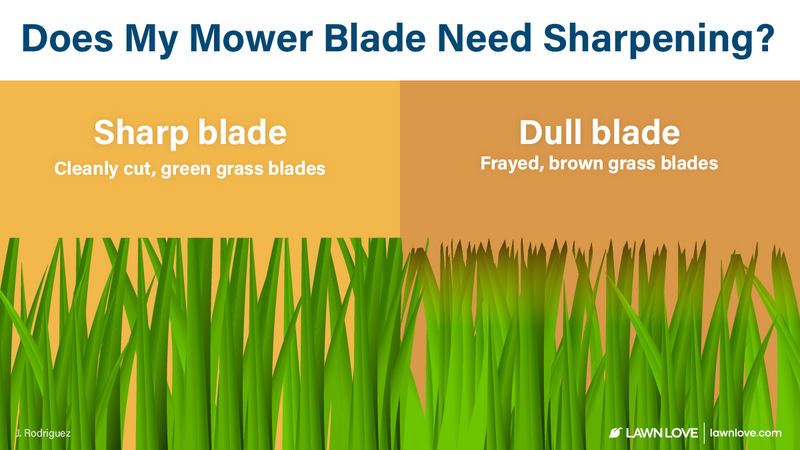
A dull mower blade tears grass rather than cutting cleanly. It shreds the blade tip, accelerating moisture loss and disease risk in heat.
Blade maintenance basics:
- Sharpen every 20 to 25 hours of use, roughly once or twice per mowing season.
- Clean the deck underside after each summer mow. Buildup blocks airflow and ruins the cut.
- Check blade balance after sharpening. An unbalanced blade strains the spindle and cuts unevenly.
- Keep a backup blade. Swap mid-season instead of waiting until the current blade is fully dull.
Scott Culala, owner of The Lawn Cypress in Gardner, Kansas, has watched this play out across hundreds of lawns.
“If the blades are too dull, it won’t just tear a blade of grass. It’ll burn it, and friction is the No. 1 cause to make fungus and everything else spread,” Culala says.
Read more:
Signs your lawn is too stressed to mow
Give your lawn a once-over before starting the mower. Stop and wait if you see:
- Footprinting. Footprints stay visible after you walk across your lawn.
- Curling blades. Grass folds lengthwise to reduce moisture loss.
- Brown or grayish-blue color. Widespread, not patchy.
- Cracked soil. The surface has hardened and split.
- Crunchy feel. Grass crunches underfoot instead of springing back.
Mowing now risks permanent damage to the crown and root system. Water deeply and wait.
Dormant or dead? Brown grass usually means dormant, not dead. Tug a handful and check:
- Dormant grass tugs back, has a uniform tan or straw color across your lawn, and the crown (the white tissue at the base of each blade) stays firm and pale green.
- Dead grass pulls out easily, and patches tend to be irregular rather than uniform.
Chuck Vogt, owner of Metro Lawns in Atlanta, has to reassure customers every summer. “I let the customer know that it’s OK if your yard goes dormant. It’s not killing it. It’s a normal, natural process,” Vogt says.
Read more: Signs of Lawn Pest Damage vs. Disease vs. Drought Stress
How your lawn recovers after heat stress
Most lawns bounce back on their own once temperatures cool and moisture returns. Dormant warm-season grasses typically green up within 2 to 3 weeks of consistent rainfall and cooler nights. Cool-season lawns can take longer, especially if heat damage extends into the crown.
How to help recovery along:
- Water deeply, not often. Aim for 1 to 1.5 inches per week in 1 or 2 long sessions, not daily light watering. Deep watering pushes roots down, which builds resilience for the next heat wave.
- Hold off on fertilizer. Stressed grass can’t use nitrogen efficiently, and applying fertilizer in drought can burn already-struggling roots. Wait until fall to resume feeding.
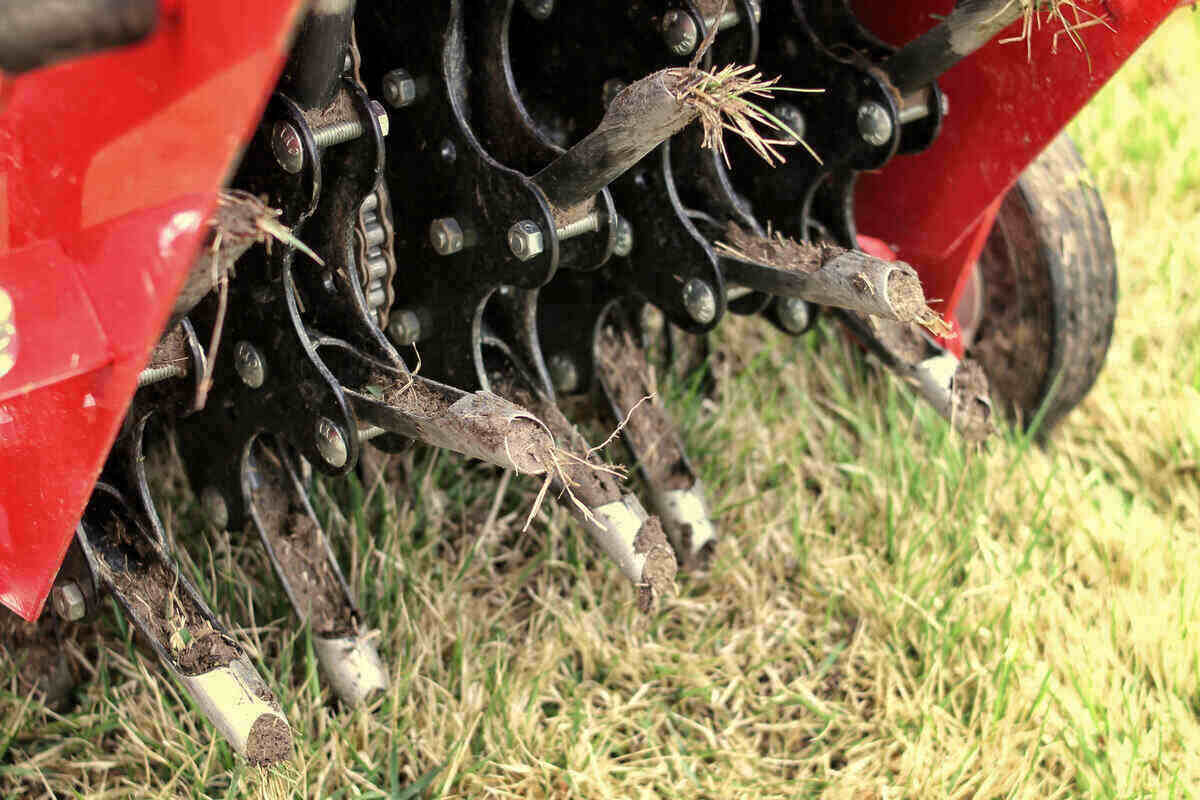
- Aerate and overseed in early fall. Aeration followed by overseeding is the most effective way to repair compacted, thinned summer turf. Bare or thinned patches benefit most from overseeding once temperatures cool. Late spring works for warm-season grasses.
- Be patient. Most lawns look worse before they look better. Resist the urge to mow short or apply quick fixes.
Read more: How to Aerate Your Lawn When to Overseed Your Lawn
FAQs
Water the day before mowing if your lawn is dry. After mowing, wait until the next morning to water (4 to 9 a.m. is best). Avoid evening watering and skip mowing after 5 p.m., since overnight moisture on cut blades invites fungal disease. Under drought restrictions, water only on your designated days and skip mowing until your lawn recovers.
Yes, it can help. Alternating your mowing direction each session prevents soil compaction from repeated wheel tracks and encourages grass to grow upright rather than leaning. Upright growth allows better airflow and reduces disease risk in humid summer conditions. The University of Minnesota Extension recommends mowing at right angles every other session.
Usually yes, if the crown (the growing point at soil level) wasn’t destroyed. Water deeply and stop mowing until new green growth shows. If your lawn doesn’t recover within 3 to 4 weeks after temperatures cool and watering resumes, it may need overseeding or aeration to rebuild density.
Let the pros handle the heat
Mowing in extreme heat takes timing, sharp equipment, and know-how. If you can’t get out to mow before the mid-day heat this summer, Lawn Love can connect you with local lawn care professionals who can handle it all on the right schedule, at the right height, with the right technique.
Read more:
Main Image: A residential lawn mowed by a Lawn Love Pro under intense summer sun. Photo Credit: Illustration by Amy Stenglein / Lawn Love
Related Posts: