| Key takeaways |
|---|
| • NAR reports that a standard lawn care service has a 217% cost recovery at resale. • 53% of Realtors recommend a standard lawn care service before listing a home. • Professional landscaping can increase a home's value by 15% to 20%. • The average homeowner spends 70 hours a year on lawn care. |

Yes, professional lawn care is worth it, and the numbers back it up. According to the National Association of Realtors (NAR), a standard lawn care service delivers a 217% return on investment at resale. That’s one of the highest ROIs of any home improvement project, beating out kitchen remodels and bathroom updates.
But the value isn’t just about selling your home. A well-kept lawn reduces the time you spend on yard work, protects your grass from costly problems like disease and pests, and gives you an outdoor space you actually want to use.
Want to see what professional lawn care would cost for your specific property? Get a free, instant quote from Lawn Love to get an estimate in under 2 minutes.
How lawn care affects home value
Does professional lawn care increase home value? Yes, and among outdoor projects, basic lawn care is one of the clear standouts. The 2023 NAR Remodeling Impact Report shows that standard lawn care service is the least expensive project on the list and delivers the highest cost recovery at resale.
Here’s how it stacks up against other popular projects:
| Outdoor Project | Typical Cost | Cost Recovery at Resale | NAR Joy Score |
|---|---|---|---|
| Standard lawn care service | $415 per year | 217% | 9.4/10 |
| Landscape maintenance | $4,800 per year | 104% | 9.6/10 |
| Overall landscape upgrade | $9,000 | 100% | 9.7/10 |
| New patio | $10,500 | 95% | 9.9/10 |
| Irrigation system | $6,000 | 83% | 9.4/10 |
| Landscape lighting | $6,800 | 59% | 10/10 |
| In-ground pool | $90,000 | 56% | 10/10 |
| Outdoor kitchen | $15,000 | 100% | 9.0/10 |
How much does landscaping increase home value? Other major authorities confirm a massive curb appeal boost:
- In NAR’s report, 92% of Realtors said sellers should improve curb appeal before listing. The most commonly recommended projects were landscape maintenance (74%), standard lawn care service (53%), and tree care (44%).
- Independent analysis from HomeLight, found that a basic lawn care service costing around $268 adds about $1,200 in resale value (352% ROI).
- Fresh mulch, at about $340, recoups roughly 126% of its cost at sale.
- A 2025 study from the University of Texas found that curb appeal alone accounts for an average of 7% of a home’s value and that jumps to 10% to 11% in slower, high-supply markets.
- According to trees.com, poor or neglected landscaping can reduce property value by 10% to 30%.
Professional lawn care vs. DIY

Most homeowners underestimate how much DIY lawn care really costs once you add up equipment, products, repairs, and your time.
A pro service feels more expensive per visit, but the total cost often tells a different story:
| Cost Factor | DIY | Professional |
| Equipment | $500 to $2,000+ upfront | $0 |
| Annual fuel + maintenance | $100 to $300 | $0 |
| Lawn care products | $150 to $400/year | Included in service plans |
| Time spent | Your time | Handled for you |
| Expertise | DIY learning curve | Experienced pros |
| Estimated annual DIY total | $750 to $3,000+ | $1,800 to $2,400 |
Aaron Strickland, owner at Mr. Trim Lawn & Garden Services in Bowmanville, ON, says that DIY attempts to save money often backfire due to chemical application errors.
“The most expensive mistake: Misapplied fertilizer and weed control products. It’s surprisingly common for DIYers to overapply nitrogen, thinking more product equals faster results,” he explains. “Instead, they end up burning the turf, killing the entire lawn, triggering fungal outbreaks, or creating excessive top growth with shallow roots that can’t handle summer heat.”
Strickland warns that fixing that DIY damage “often requires reseeding, soil correction, and months of recovery, far more expensive than a properly timed professional program.”
Jimmy Patterson, president at TruScape LLC, in Irwin, PA, says there is a big difference between DIY equipment and professional supplies.
“Most homeowner-grade application equipment is not calibrated properly, has poor spread and spray patterns, and is (to put it bluntly) just poorly made,” Patterson says. “From a fertilization standpoint, professional companies have advantages of buying and applying stronger fertilizers and pesticides for the same or less cost than a bag of big box store fertilizer that’s half full of filler.”
How to get the most ROI from your lawn care dollars
Not every lawn care investment delivers equal returns. Here’s where to focus for maximum value:
Outsource the chemicals
If you can only afford one service, Strickland says to invest in a professional fertilization and weed control.
“That’s where the biggest long-term return on investment lies because it builds soil health, strengthens root systems, and prevents invasive weeds that are costly to eliminate later. Mowing can be done by the homeowner without long-term damage if done properly, but improper nutrient management compounds year after year,” Strickland says.
Don’t skip aeration and overseeding
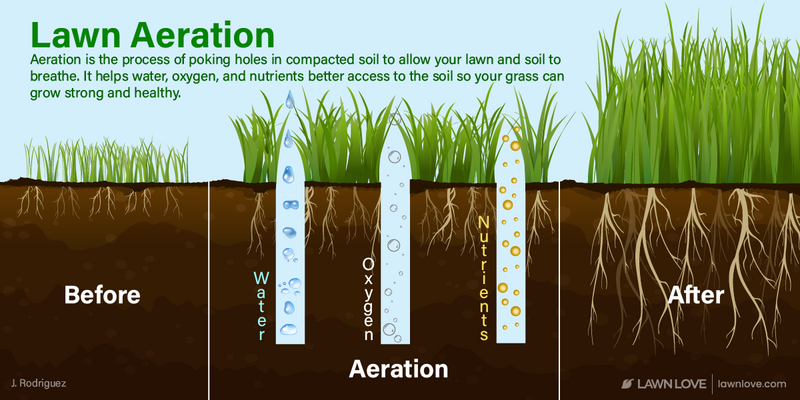
Compacted soil limits everything else you do. Bennett Barrier, CEO at DFW Turf Solutions, in Dallas, Texas, explains that aeration compounds over time.
“In experience, one treatment is very noticeable in reductions in water usage the following season as well as 30 to 40 percent reductions in chemical treatments needed. You’re not maintaining your lawn, you’re building it,” Barrier says.
The hidden ROI
Hiring a pro means you get an expert’s eyes on your property, preventing massive repair bills.
“I’ve walked properties where a homeowner had no idea there was an issue with the grading in his or her yard until water started to pool in the neighborhood of their foundation,” Barrier says. “That’s $3,000 to $5,000 in foundation repair waiting to happen.”
Prioritize consistency
Regular maintenance outperforms one big annual cleanup. “Deferred lawn care isn’t the same and it doesn’t get any better with each season,” Barrier says.
“I’ve seen yards that went without professional care for two years that became full job renovation projects at $4,000 to $6,000. A recurring plan at $100 to $150 a month and that trajectory is stopped entirely.”
Time pre-emergent weed control right
Missing the spring window means fighting weeds all season. Pros know the timing.
Add mulch to beds
Fresh mulch is a relatively low-cost upgrade that many real estate and curb appeal studies consistently rank as a high-ROI improvement at resale.
FAQs
“For homeowners who aren’t planning to sell, the most compelling reason to invest in recurring professional care is asset preservation,” Strickland says. “A lawn isn’t just cosmetic; it protects against erosion, supports proper drainage, reduces heat around the home, and contributes to overall property value stability.
“Neglect leads to compaction, thinning turf, pest infestations, and eventually renovation-level expenses. A structured, professional plan spreads costs predictably over time and prevents major corrective projects. In my experience, that steady, preventative investment consistently delivers a stronger, healthier lawn at a lower lifetime cost than reactive, bare-minimum maintenance ever could,” he continues.
Costs vary by your specific property size, location, and service needs. On average, professional lawn mowing starts at $29 per visit, and the average homeowner spends $150–$200 per month on professional lawn care services.
Most homeowners notice visible improvement within 2–4 weeks, like greener color, cleaner edges, and reduced weeds. Deeper improvements like thicker turf density from overseeding or aeration typically take one full growing season.
Beyond misapplying chemicals, DIY irrigation is a massive money pit for beginners, Barrier says.
“Homeowners buy a kit, install it themselves and then have no proper zone coverage. Dry spots develop, they don’t catch it early enough, and the grass dies in patches,” he says.
“By the time they are calling us they’ve already spent $400 to $600 on the system plus another $300 to $500 to replace dead turf. A professional irrigation set up goes $200 to $350 and gets it right the first time,” Barrier says.
The ROI lies in expert agronomic knowledge, including knowing when not to act.
“Knowing when not to mow is just as important as mowing often,” Patterson says. “At TruScape, we structure our lawn care agreements in flat monthly installments that include an average time spent on a customers’ property based on a 10 year weighted average.
“We understand that we may need to spend time double cutting in the spring with heavy growth. We also understand that mid-July, when we haven’t had rain in weeks and it’s 95 degrees outside, it’s probably best to keep heavy mowers and foot traffic off a stressed lawn,” Patterson continues.
Absolutely. A well-maintained lawn attracts higher-quality tenants, supports higher rental rates, and reduces tenant turnover. It also protects the property value of your investment and can be factored into operating expenses and yearly taxes.
Stop wasting your weekends
Investing in professional lawn care protects your property value and immediately reclaims your weekends. Rather than wasting money on DIY equipment or risking costly chemical damage to your grass, you secure a proven 217% return on investment at resale.
Stop sacrificing your days off to grueling yard work. Get your free quote from Lawn Love in less than 2 minutes, and let our network of vetted local pros handle everything from weekly mowing to seasonal fertilization.
Main Image: A beautifully landscaped front yard with hydrangeas and a manicured lawn. Photo Credit: Jamie Hooper / Adobe Stock
Related Posts:


