Reseeding a lawn involves starting from scratch. Start by stripping away your current lawn before prepping the soil, spreading grass seed, fertilizing, and watering.
In this article, I’ll go over every step involved in how to reseed a lawn.
Just know going in that this is a time-consuming process, so if you don’t think you’re up to it or just don’t want to commit the time, consider hiring a pro.
| Difficulty: Intermediate Estimated time to complete: 2 days of active work, for an average of 10,871 square feet of lawn Project cost: $250 to $650, depending on the type of seed and lawn size |
Supplies needed
Here are all the tools and materials you need for your reseeding project:
- Herbicide, sod cutter, or thick black plastic sheeting
- Shovel
- Topsoil
- Soil testing kit
- Soil amendments
- Tiller
- Phillips head screwdriver
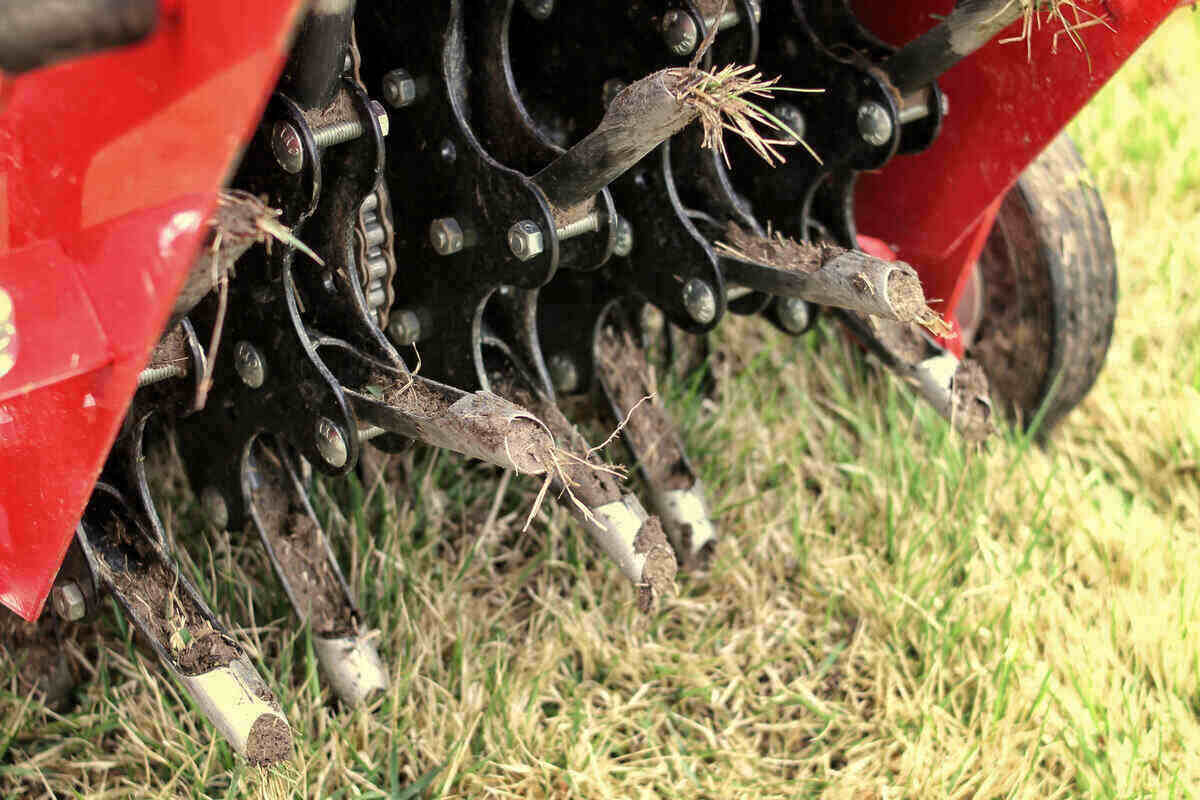
- Core aerator
- Broom rake
- Grass seed
- Broadcast spreader or drop spreader
- Starter fertilizer
Remove existing grass

The first step to reseeding your lawn is to kill your existing grass. There are a few days you can do this:
- Non-selective herbicide: Choose herbicides that contain glyphosate. Cover nearby plants with a tarp and apply the spray with the nozzle close to the grass to prevent overspray. Allow the chemicals a week to work. Don’t use herbicides with imazapyr, as they linger in the soil and prevent new grass from sprouting.
- Sod cutter: If you want quick results, rent a sod cutter from your local home improvement store to remove the lawn surface.
- Black plastic sheeting: Lay 4-mil or thicker black poly across all areas of the grass you want to remove. It can take about three weeks for the grass to dry out and die.
Once all the vegetation has died off, use a spade to remove the grass and weeds.
See Related:
Clear and level area
Clear rocks and debris from the area, and use a shovel to level uneven spots. If there are any low areas, fill them with topsoil. I recommend making sure your yard surface gently slopes away from your home for better drainage.
Test and amend soil
Good soil makes for healthy, strong turf. Test your soil to find out the pH level and nutrient balance. The ideal pH should be between 6.0 and 7.0. Add lime to increase pH and sulfur to reduce it.
If your soil is low in nutrients, you need to apply soil amendments. Here are some of the best organic soil amendments to use when reseeding your lawn:
- Compost: Improves water retention, provides slow-release nutrients, and protects the soil surface from wind erosion.
- Biochar: A charcoal-like material made by burning forestry and agricultural waste. It helps improve water and nutrient retention. Mix it with compost before applying to your lawn for the best results.
- Peat moss: Works well to loosen soil, but it’s dusty, so wet it first to make it easier to work with.
The best soil amendments depend on the type of soil you have. If you send your soil samples to a laboratory, they will recommend amendments and fertilizers to apply.
See Related:
- Different Types of Soil Amendments for Your Lawn
- How to Change Your Soil pH
- How to Soil Test Your Lawn
- How to Read a Soil Test Report
- Till the soil

Rent a tiller from your local home improvement store and till the soil to a depth of six to seven inches. Tilling loosens compacted soil that’s been compressed by foot traffic, equipment, or time.
Compacted soil prevents grass roots from penetrating deeply and restricts the movement of water and air. Breaking up this hard layer improves seed-to-soil contact, giving seeds a better opportunity to germinate.
Smooth the soil
A smooth surface improves seed-to-soil contact. Get rid of any debris from the soil, and use a broom rake to smooth and level the ground. As Dr. Miller explains, “The better the seed-to-soil contact, the better the early establishment will be.”
Choose the right grass seed
You should pick the right grass seed to successfully reseed your lawn. Here are the factors you should consider when choosing a grass type for your yard:
- Location and climate
- Soil type and pH
- Sun and shade
- Foot traffic
- Aesthetics
- Maintenance needs
If you live in the North, choose a cool-season grass. Here are some common options:

In the South, warm-season grass would be a better choice. Here are some common options:

Here are some articles that will help you choose the best grass seed for your lawn, depending on your needs:
- Best Grasses for High-Traffic Areas
- Best Grasses to Walk on Barefoot
- Best Drought-Tolerant Grasses
- Best Grass for Sandy Soil
Spread seeds evenly
Load your grass seed into the grass spreader according to the label instructions. To evenly distribute the seed over your lawn, I recommend bi-directional seeding.
Bi-directional seeding involves making two passes over your lawn, once from north to south and then again from east to west. So, load half of the total amount of grass seed you need, spread it, and then load the other half.
Push spreaders are the best choice for reseeding your lawn. There are two types:
- Drop spreader: Drops seed directly beneath as you push, giving you more control. Ideal for lawns smaller than 5,000 square feet.
- Broadcast spreader: Distributes seed in a broad, overlapping pattern that helps cover large areas quickly. Best for lawns larger than 5,000 square feet.
Your bag of grass seed should tell you what setting to use for your spreader. You can also use slice seeding, but it’s more expensive.
How much grass seed do I need? It depends on the type of grass and the area you’re trying to reseed. Typically, the label on your grass seed bag will tell you how much grass seed you need per 1,000 square feet. To learn more, check out this formula in our guide, How to Grow Grass.
Once you’re done spreading the seeds, tamp them down into the soil for good soil-to-seed contact. Here are some ways you can do this:
- Use the back of your rake to press down on the soil.
- Rake the seeds into the soil.
- Run a lawn roller lightly over your lawn.
See Related:
Apply starter fertilizer
Since your grass needs nutrients to grow, apply starter fertilizer after seeding. Starter fertilizer is specially formulated with more phosphorus and less potassium to support root development, which your grass needs to develop a strong root system.
I caution against using weed and feed fertilizers, since the herbicides in them can stop new grass from germinating.
See Related:
- What is Starter Fertilizer?
- A Complete Guide to Fertilizing New Grass
- Can You Fertilize and Seed at the Same Time?
- Will Fertilizer Kill New Grass?
Protect the grass seeds

Spread a thin layer of light mulch over your lawn to protect newly planted seeds from birds and other animals. Mulch also helps soil retain moisture and prevents erosion.
The most common mulch homeowners use to cover their grass seeds is straw. Michigan State University Extension recommends using clean wheat, oat, or barley straw and avoiding rye straw as much as possible. Using clean straw minimizes the risk of weed seeds hitching along for the ride and making themselves at home on your lawn.
You can also use peat moss to cover your seeds.
See Related:
Water
You need to water your lawn lightly to keep the soil moist as your new grass seeds sprout. It also prevents the seed from moving around. Water once or twice a day, depending on the weather, to keep the soil from drying out. If the soil dries, the grass will die.
Keep watering daily until the new grass becomes established. If you notice any signs of overwatering, like puddles or spongy soil, cut back on watering immediately.
“Water is needed for the germination process. Some homeowners begin watering right after seeding, while others wait for rainfall if it’s expected within a week. Either approach works, but it’s key to keep the soil consistently moist,” says Dr. Miller.
The best time to water your lawn is early in the morning between 5 a.m. and 9 a.m., when there’s less wind and evaporation. If you need a second watering, do it in the early evening, around 6 p.m.
See Related:
- How Often to Water Grass Seed
- How Long to Water New Grass Seed
- When Is the Best Time to Water Your Grass?
FAQs
Reseeding is starting your lawn over from scratch by removing the existing grass and planting new seed. Overseeding is when you spread seed over an existing lawn. “Technically, overseeding involves adding a different grass species to your current lawn. For example, adding ryegrass to Bermudagrass for winter color,” says Dr. Miller.
For more information, check out our articles on How to Overseed a Lawn and Reseeding vs. Overseeding a Lawn.
Non-selective herbicides that contain glyphosate break down quickly, so you can safely plant grass seed after 14 days. Always check the product label.
It depends on the type of grass. Late spring to early summer is the best time to reseed warm-season grasses, while early fall is best for cool-season grasses.
Yes, that’s completely normal. The appearance can differ because of grass type, soil composition, maturity, and care. As your lawn fills in and you keep up with routine, it’ll turn green like your neighbor’s or even better than theirs.
Hire a pro to reseed your lawn
Starting your lawn over from scratch can be time-consuming and labor-intensive. Many people don’t have the time and resources to spend, especially if they are worried about failures. For a big lawn care project like this, it’s always best to hire a professional.
Lawn Love pros can reseed, aerate, fertilize your young grass, and mow it once it’s tall enough. Hire a Lawn Love lawn care pro today to get the job done right at a price you love.
Main Image: A landscaper uses a lawn spreader to disperse grass seed for a new lawn. Photo Credit: Tomasz Zajda / Adobe Stock
Related Posts: