| Key Takeaways |
|---|
| • Match the plant to the conditions: High-altitude survivors handle cold, wind, intense sun, short seasons, and poor soil, so choose varieties bred for that toughness. • Hardy perennials lead the way: Alpine aster, yarrow, sedum, lupine, and columbine thrive at elevation with little fuss, while shrubs and trees like lilac and cotoneaster add structure. • Prep soil and block wind: Mulch, compost, and smart placement help plants hold moisture and stand up to the drying winds common up high. |

Gardening at elevations presents unique challenges. The growing seasons, moisture levels, soil conditions, and pest control up there wildly differ from those at sea level and make gardening trickier.
A vital part of establishing a successful garden higher up is choosing the right kind of plants that thrive in high-altitude landscapes.
This guide walks you through why altitude matters and 15 hardy plants that hold up to the wind, cold, and intense sun, along with the kind of ongoing gardening services that keep a mountain landscape healthy once it’s planted.
Why does high altitude matter for plants?
Altitude matters because high elevations expose plants to harsher conditions than those at sea level. Growing seasons shrink fast up high; parts of Colorado’s Middle Park see fewer than 25 frost-free days a year.
Strong winds, intense sun, low temperatures, and poor soil all slow growth and make a landscape tough to keep healthy.
A few factors that affect plant growth at high elevations include:
- Low temperatures: Drier wind and low air pressure slow growth and shorten the growing season.
- Strong sunlight and radiation: Thinner air lets intense ultraviolet A (UV-A) and ultraviolet B (UV-B) rays damage plant tissue.
- Low oxygen levels: Limited oxygen stresses roots, which need it for respiration.
- Dry air, not humid: Thin mountain air holds little moisture, so soil and plants dry out fast.
- Limited nutrition: Cold, unfriendly soil offers plants fewer nutrients.
- Long-lasting snowpacks: Prolonged dormancy weakens the root system.
- Strong winds: High winds snap stems, speed evaporation, and dry plants out faster.
Read more:
Plants that thrive at high elevations
Here are 15 plants that thrive at high elevations: hardy perennials like alpine aster and yarrow, plus shrubs and trees like cotoneaster, dogwood, and lilac for structure. Most suit Colorado, Utah, and other western high-elevation states:
| Plant | Hardiness zones | Sun needs |
|---|---|---|
| Alpine aster | 4-7 | Full sun |
| Bergenia | 4-8 | Partial to no shade |
| Bleeding heart | 3-9 | Full or partial sun |
| Delphinium | 3-7 | Full sun |
| Lupine | 4-9 | Full sun |
| Yarrow | 3-9 | Full sun |
| Sedum | 3-10 | Full sun |
| Garden phlox | 4-8 | Full sun |
| Boltonia | 4-9 | Full sun to partial shade |
| Columbine | 3-9 | Full sun |
| Blanket flower | 3-10 | Full sun |
| Dogwood tree | 5-9 | Full sun to partial shade |
| Cotoneaster | 5-8 | Full sun to partial shade |
| Mountain pansy | 4-8 | Full sun |
| Lilacs | 3-7 | Full sun |
1. Alpine aster
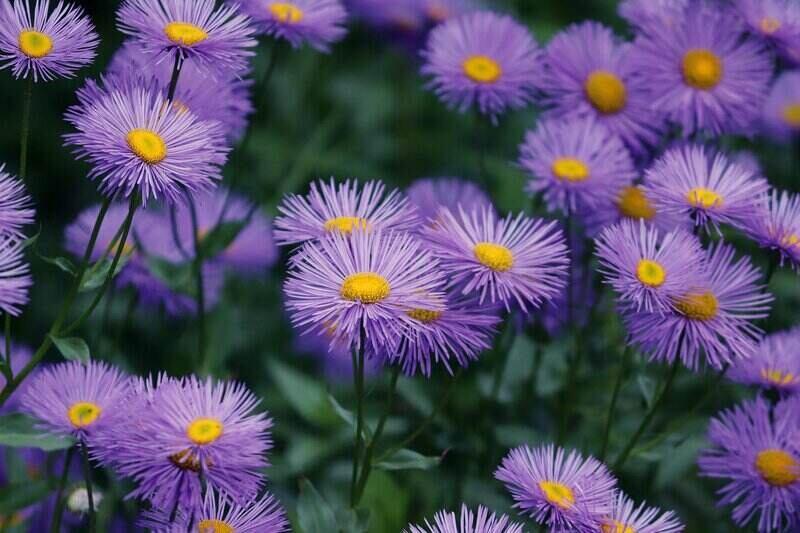
A member of the aster family, the alpine aster is an excellent choice for a mountain garden. This plant produces short-lived blooms that range from blue, pink, and purple to white and gray.
They appear somewhat similar to their relative daisies as they grow a single flower per stalk rather than forming bunches or clusters. They prefer dry, well-drained soil but do well in generally poor soil conditions, too.
Alpine asters should be planted at least a foot apart to allow adequate airflow and growth room. They also do great under drought-like conditions but don’t like humidity.
- Botanical name: Aster alpinus
- Plant type: Perennial
- Mature plant size: 8-12 inches
- Ideal growing conditions: Full sun and well-drained soil
2. Bergenia

Mountainous areas get constant sun exposure in some spots and very little in others, thanks to the rugged terrain. Bergenia, nicknamed pig squeak, is an excellent choice for low-light areas but it’s a hardy plant that would do just fine in the sun, too.
Bergenia produces clumps of small bell-shaped flowers that are usually pink in color. The flowers have thick stems that stand up well to high-speed winds at high altitudes. This plant doesn’t need much moisture to grow, hence it can handle drought longer.
It thrives in the poor soil conditions of higher elevations mainly because it doesn’t require nutritious soil to grow.
- Botanical name: Bergenia
- Plant type: Herbaceous perennial
- Mature plant size: 1-2 feet tall
- Ideal growing conditions: Partial to no shade
3. Bleeding heart

The bleeding heart plant creates beautiful arching stems with heart-shaped red or pink blooms. This plant is a shade lover, but it can tolerate the added sunlight and cooler temperatures of high altitudes.
Bleeding hearts like consistently damp soil.
It looks delicate but is relatively tough: Keep it dry in winter and watered from mid-summer through fall. Bleeding heart pairs nicely with bergenia, another shade lover.
- Botanical name: Dicentra
- Plant type: Herbaceous perennial
- Mature plant size: 2-3 feet
- Ideal growing conditions: Full or partial sun and moist, damp soil
4. Delphinium

Delphinium is for people who like high-maintenance plants. It requires more care than the other hardy plants on the list but still thrives in high-altitude landscapes. This plant grows thickly clustered flowers with long stalks that make it an attractive focal point in any garden.
It’s super tolerant of the cold, one of the reasons it works great at higher elevations. The only challenge with the delphinium plant is that its stalks are hollow and need support to stand against the brutal winds. It also requires regular watering and nutrient-rich soil.
- Botanical name: Delphinium elatum
- Plant type: Flowering herbaceous perennial
- Mature plant size: Up to 6 feet
- Ideal growing conditions: Full sun with nutrient-rich, moist soil
5. Lupine

Lupine practically takes care of itself and shrugs off high-altitude roughness. This pea-family plant features spiky foliage packed with blossoms, thrives in low-nutrient soil and bright sun, and needs the cooler temperatures that mountainsides provide.
Note: This plant is toxic to many animals and humans and should be kept out of reach of children and pets.
- Botanical name: Lupinus
- Plant type: Can be grown both as annuals and perennials
- Mature plant size: 1-4 feet tall
- Ideal growing conditions: Full sun and cool environment
6. Yarrow

Yarrow is one of the few herbs that thrives in high-altitude landscapes. This type of plant loves loamy, dry soil and is generally very low maintenance. Even if you forget about them after planting, they’ll survive just fine.
In fact, yarrow thrives so well in high altitudes and poor soil that it can quickly invade your entire garden. It produces tiny blooms and is mostly used as a medicinal herb.
- Botanical name: Achillea millefolium
- Plant type: Perennial
- Mature plant size: 1-3 feet
- Ideal growing conditions: Full sun and cool environment
7. Sedum

Just like yarrow, sedum is a pretty low-maintenance plant for your high-altitude garden. The other name for these flowers is stonecrop, which says a lot about how hardy this plant is. It comes from a large group of plants and has a huge variance.
Some types will grow as ground covers, some grow tall, while others vary in their hardiness. So, it’s easier to find a sedum plant that does well with intense light, cold winds, and dry soil higher up.
It is an excellent choice for beginners or people who just want to give their high-altitude gardens a try.
- Botanical name: Sedum
- Plant type: Perennial
- Mature plant size: 1-3 feet tall
- Ideal growing conditions: Full sun and cool environment
8. Garden phlox

High altitude means rough winters, but the summers can also be brutal because of direct, long hours of sun exposure. Garden phlox is one of the few plants that does well in the cold and survives under a hot sun without wilting away.
It produces small flowers in clusters forming a large sphere atop a stem. The variety of colors, ranging from white, pink, and yellow to hues of blue and purple, will add a pop of color to any garden.
Garden phlox is an attractive plant for visiting animals and might need a little care and attention because it’s susceptible to powdery mildew.
- Botanical name: Phlox paniculata
- Plant type: Perennial
- Mature plant size: 2-4 feet tall
- Ideal growing conditions: Full sun and well-drained soil
9. Boltonia

Also known as false aster, boltonia is an excellent high-altitude pick because it thrives in poor, sandy, and gravelly soil. This Midwest-native wildflower is drought tolerant, resilient once established, and great at taking care of itself, making it ideal for beginners.
Expect a sea of blooms in late summer and fall.
- Botanical name: Boltonia asteroides
- Plant type: Rhizomatous perennial
- Mature plant size: 3-6 feet tall
- Ideal growing conditions: Full sun or partial shade with moist, rich soil
10. Columbine

Columbine proves high-altitude gardening is not just for drab plants. It produces colorful blooms in shades from red and yellow to white and blue, so you can match whatever complements your garden design.
This short-lived perennial grows well in higher areas as they aren’t much tolerant of extremely hot summers. They do not require additional watering once established and are generally easy to maintain.
- Botanical name: Aquilegia
- Plant type: Herbaceous perennial
- Mature plant size: 1-3 feet tall
- Ideal growing conditions: Full sun with moist, well-draining soil
11. Blanket flower

Blanket flower earns its spot with bright, daisy-like red and yellow blooms that keep coming all summer. This drought-tolerant perennial shrugs off poor soil, intense sun, and heat, making it a reliable, low-fuss choice for high-elevation beds.
- Botanical name: Gaillardia
- Plant type: Perennial
- Mature plant size: 1-2 feet tall
- Ideal growing conditions: Full sun and well-drained soil
12. Dogwood tree

The dogwood tree makes a great high-altitude plant. This flowering, deciduous tree is common from southeastern Canada to eastern North America to New Mexico.
Dogwood bears flowers, which are actually petal-like bracts, that attract pollinators like butterflies and bees. Its red fruit is an easy food source for songbirds and other wildlife.
The leaves on this plant are a beautiful reddish-purple or red that might turn into a poor fall color if grown in full shade. It’s a hardy plant that tolerates heat quite well and makes a great choice for high elevations that receive lots of direct sunlight.
- Botanical name: Cornus florida
- Plant type: Perennial
- Mature plant size: 15-25 feet tall
- Ideal growing conditions: Full sun to partial shade in well-drained soil
13. Cotoneaster

Cotoneaster is a deciduous shrub that is hardy enough to happily grow in higher elevations. The bushes can grow up to a height of 10 feet or more and make great barriers or high hedges in your high-altitude landscaping.
Cotoneaster produces bright red leaves in autumn and berries that lure lots of wildlife and birds to the garden. The blooms have five petals that might open fully or stay half shut.
The blooms are small and creamy white, white, or a shade of pink in color. The foliage can sometimes also develop a beautiful pink and red hue.
- Botanical name: Cotoneaster
- Plant type: Perennial shrub
- Mature plant size: 4-7 feet tall
- Ideal growing conditions: Full sun to partial shade in well-drained, moist soil
14. Mountain pansy

Boasting beautiful yellow or purple flowers, pansies make a great choice for high elevations. It’s a ground-hugging herb that has flowering stems that go up to 20 cm. The flowers are usually yellow or purple, with fine brown lines.
The flowers of the mountain pansy can tolerate dry, cold conditions. In fact, drier soil helps pansies to toughen up and withstand the cold.
- Botanical name: Viola lutea
- Plant type: Perennial herb
- Mature plant size: 4-8 inches
- Ideal growing conditions: Full sun and well-drained, fertile soil
15. Lilacs

If you’re careful about your plant selection, a mountain lilac can outlive every other garden plant. They’re drought tolerant, tough, and have long lifespans. Lilacs get big masses of flowers that spread a sweet fragrance around.
To keep the color going once lilacs fade, Andrew Day, owner of Advanced Quality Lawn in Richfield, Ohio, suggests reaching for companions.
“For extended color after lilacs fade, we often use companion plants like hydrangeas or rose of Sharon in our ‘mixed border shrub’ designs for continuous bloom.”
Lilacs are native to the colder regions of northern China and southeastern Europe and do well in high-altitude cold. They have been hybridized to produce a large variety of colors, so you can add whatever hue you like to your garden.
- Botanical name: Syringa vulgaris
- Plant type: Perennial
- Mature plant size: 2-3 feet tall for dwarf types and 12-15 feet tall for larger varieties
- Ideal growing conditions: Full sun in well-drained, moist, and slightly alkaline soil
Read more:
FAQs
The Himalayan snow lotus (Saussurea) grows at some of the highest elevations of any flowering plant. Closer to home, hardy alpine wildflowers like moss campion and alpine forget-me-not survive the thin air and cold of tall mountain peaks.
Some people use natural remedies for the effects of thin mountain air:
• Ginger, which may ease nausea
• Ginkgo, which some use for headaches and dizziness
• Peppermint, which can soothe queasiness
Check with your doctor first, since altitude sickness can turn serious and often needs rest and descent.
Many plants on this list suit Colorado’s high-elevation conditions. Hardy perennials like alpine aster, yarrow, sedum, lupine, and columbine thrive at elevation with little fuss. Columbine is actually the state flower of Colorado. Shrubs and trees like lilac and cotoneaster add structure. Most of these picks suit Colorado, Utah, and other western high-elevation states.
Make high-altitude landscaping easy with Lawn Love
Choosing the right plants is half the battle. Keeping them healthy through wind, cold, and a short growing season is the other half, and that takes steady, hands-on work.
If you would rather spend time enjoying your mountain view than fighting the elements, let Lawn Love’s local lawn care professionals handle the lawn mowing, weeding, and yard upkeep for you. Get a free estimate and take yard work off your to-do list.
Main photo credit: Red petaled flowers. Michael | Pexels
Related Posts:


