| Key Takeaways: |
|---|
| ● Mowing is riskier for senior adults: Adults 65 and older are roughly twice as likely to visit the ER for mower-related injuries as adults age 18 to 64. ● Don’t ignore the signs: Falling, tripping, struggling to use the mower, or days-long exhaustion after mowing are signs you may need to stop. ● Replace the physical activity: The CDC lists mowing as an aerobic activity for older adults. Replace mowing with light gardening, walking, or water aerobics. |
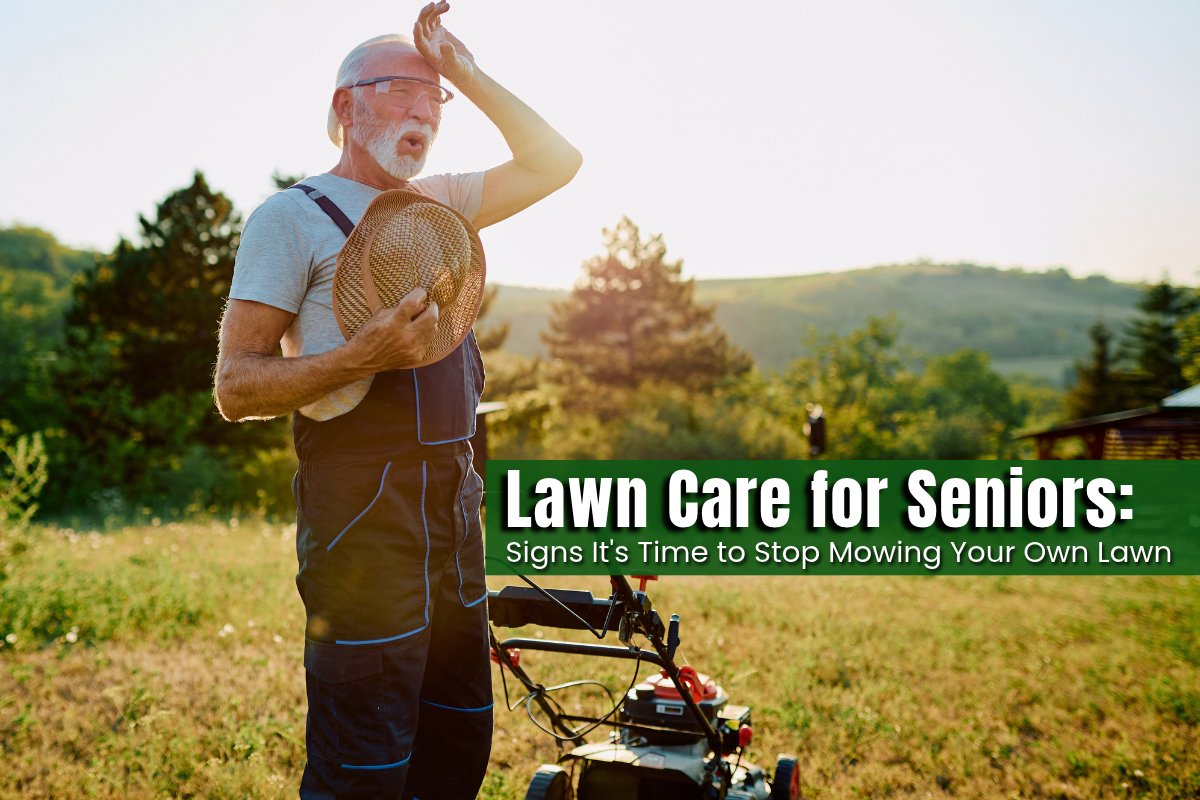
If you’ve had a fall or near-fall while mowing, feel wiped out for hours or days afterward, or your doctor has flagged heart or balance concerns, these are signs it may be time to stop mowing your own lawn.
Good lawn care for seniors is about what your body can safely handle this season, which may include outsourcing your mowing and spending your weekends doing the lighter yard chores.
This guide walks through the physical and medical warning signs, plus what to do instead, including handing mowing off to a Lawn Love pro.
Risks of mowing the lawn
A lawn mower can hurt you in more ways than most people expect. The blade spins at about 160 mph and can throw rocks and sticks at anyone nearby. The engine gets hot enough to burn skin, and riding mowers can tip over on slopes. Many injuries happen while lifting the mower, and some people end up in the ER with pain even after an ordinary mow.
But the risks are not the same at every age.
Adults 65 or older visit the ER for mower-related injuries at roughly twice the rate of adults 18 to 64, according to a Lawn Love analysis of 2025 Consumer Product Safety Commission (CPSC) injury data.
Among the most common causes of ER visits, falls, trips, and slips are at the top of the list for older adults.
Next come physical exertion and cardiac and systemic events: About 1 in 5 mower-related ER visits among adults 65 and older are described as a cardiac event or other medical event such as chest pain, fainting, or dizziness.
The physical warning signs
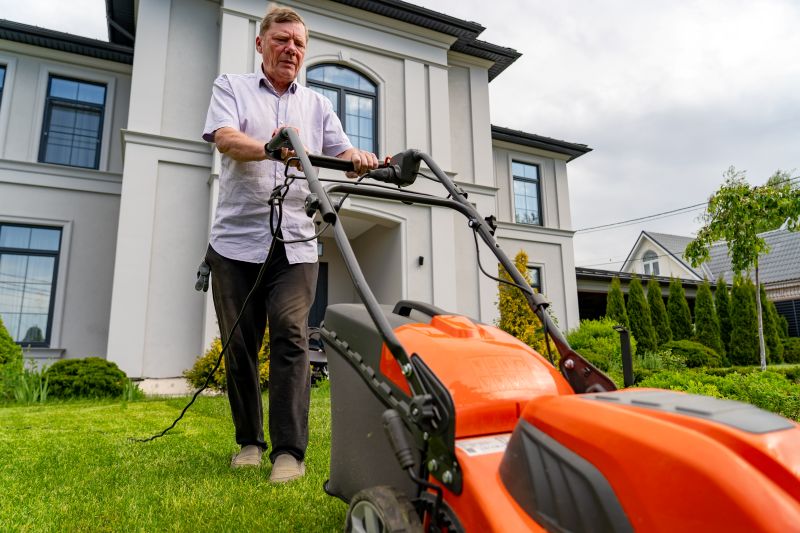
While age is a signal to be more careful, it’s not definitive in deciding when seniors should stop mowing. Health and fitness are.
Laura Akgerman, who assesses this kind of question for Ohio’s AgrAbility program at Ohio State University Extension, avoids judging by age alone. She’s worked with people in their 80s who can still operate equipment safely, and with younger people whose health conditions make certain tasks unsafe.
Her work is mostly with farmers, but the logic is the same for a homeowner running a mower on a suburban lawn: The question is not your age, but whether you can perform the task safely.
Here are a few physical signs it may be time to hand off mowing to a provider:
- You’ve fallen, tripped, or had a near-miss while mowing or moving the mower on uneven ground.
- You feel exhausted for hours, or even into the next day, after mowing. Not just tired, but wiped out.
- You’ve started avoiding slopes, edges near steps, or parts of the yard you used to handle without thinking twice.
- You struggle to start, steer, or mount the mower without something for support.
The medical warning signs
Some health conditions and medications can make mowing riskier for you than for your same-age neighbor:
- Heart conditions. Mowing is not a light activity. The CDC classifies it as a moderate-intensity activity along with riding a bike and playing doubles tennis.
- Balance-affecting conditions, including Parkinson’s, inner ear disorders, or recent vertigo episodes.
- Medications that cause dizziness, low blood pressure, or drowsiness. Ask your doctor or pharmacist whether yours affects mower use.
- Vision changes that make it harder to spot uneven ground, cords, or sprinkler heads before you’re on top of them.
- Osteoporosis or a prior fracture. The same fall can have more serious consequences.
Why heat changes the calculation
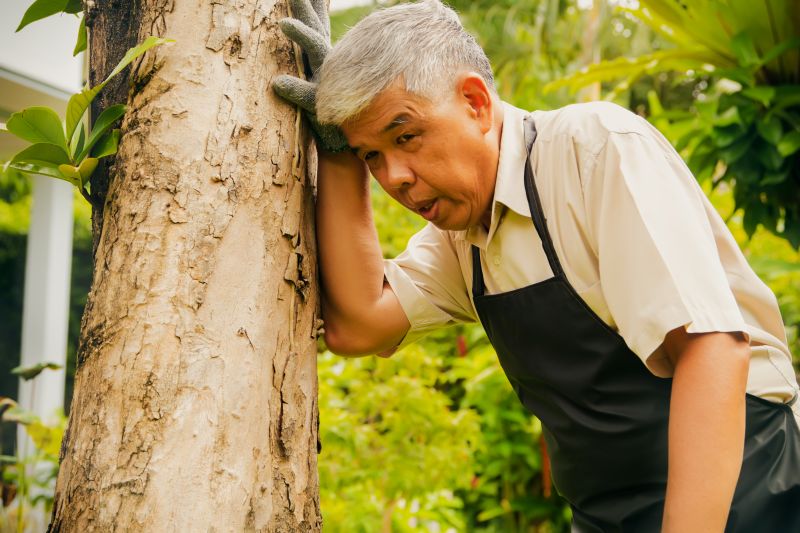
The CDC says aging adults adjust less well to sudden temperature changes and more often have a chronic condition or take prescription medications (blood pressure medications, diuretics) that affect how the body handles heat.
As a result, adults 65 and older are more likely to visit the ER for a mowing-related heat illness. In one 2025 case, a 66-year-old mowed in the heat for over an hour, then passed out and fell. His wife found him on the ground, confused and with low blood pressure.
Read more: The Dangers of Mowing the Lawn in Extreme Heat (and When to Call for Help)
Why “I’ve always done it myself” isn’t reason enough to keep going
What sends older adults to the ER is usually something the body can’t absorb anymore: a missed step getting off the riding mower, a dizzy spell halfway through a row, a heart that struggles with exertion on a hot afternoon. Skill and experience don’t prevent any of that.
More importantly, the same event does more damage than it used to.
A Lawn Love analysis of CPSC data shows that when a mowing injury sends you to the ER, you are more than twice as likely to be admitted at age 65 to 74 as someone 18 to 54, and more than 3 times as likely at 75 or older.
If you still want to mow
If your doctor says mowing is still fine, here’s how to do it safely:
Mow in the cool hours, early morning or evening, never midday. Split an hour-long job across 2 days. Drink water before you start and while you mow.
Tell someone you’re going out. Several 2025 ER cases involved an older adult found on the ground by a neighbor, a spouse, or a grandchild who happened to check.
On a riding mower, turn it off and let the blade stop before every dismount, even to move a sprinkler or pick up a stick.
Know when to stop. Chest pain or pressure, pain spreading to the shoulders, jaw, or neck, lightheadedness, or a racing heart means stop and call for help. Don’t finish the row.
What to do instead of mowing yourself
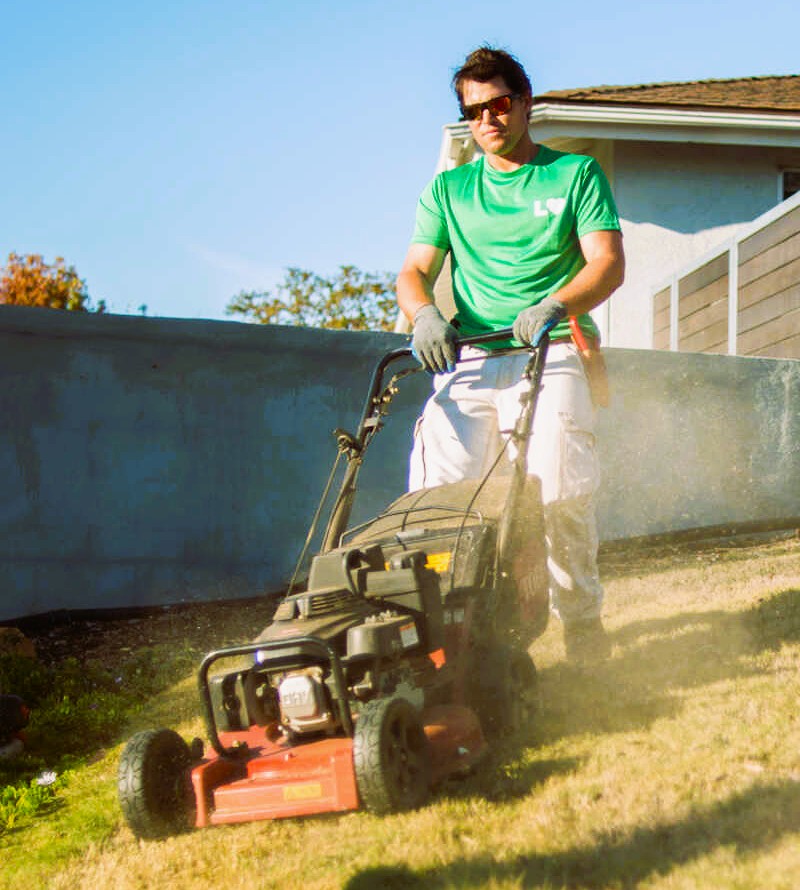
If mowing is no longer safe for you, here are other options to consider:
- Hire a lawn care service. It’s the simplest option. No volunteer schedule to depend on, and it works right away.
- Convert to a low-mow or no-mow yard. Replace turf with mulch, gravel, stone, and drought-tolerant plants.
- Look for free help. Nonprofits like I Want To Mow Your Lawn and Raising Men & Women offer this type of service, and your local Area Agency on Aging (via the Federal Eldercare Locator) can point you to community programs.
- Ask family or a neighbor to cover mowing for a season while you decide what’s next.
Keep the parts you love. Giving up mowing doesn’t mean giving up the yard. Akgerman points out that many people keep gardening long after they stop mowing — raised beds, container gardens, or working from a seated position all help.
Replace the physical activity. Adults 65 and older need 150 minutes of exercise weekly. Replace mowing with something safer, like walking, water aerobics, or a balance and fall-prevention class. Programs such as A Matter of Balance and Stepping On are offered through Area Agencies on Aging and are typically free.
Read more: How to Choose a Lawn Care Company for Aging Parents and Avoid Scams
Hire a local lawn care pro
Mowing safely takes the physical ability to handle heat, uneven ground, and sustained exertion. Not a given for everyone every season. If you’d rather leave it to someone who does this every day, Lawn Love makes it simple: Get an instant mowing quote, choose a time, and a background-checked local pro will come and trim your lawn to perfection.
FAQ
No, there’s no official age. The decision depends on your balance, cardiac health, medications, and how you feel when mowing and in the hours after. A 78-year-old with steady balance and a flat yard may be fine, while a 62-year-old on a blood pressure medication with a sloped lawn may not.
A smaller, flatter yard reduces risk but doesn’t eliminate it. Heat illness and cardiac strain depend on exertion, temperature, and your own health, not on square footage. A short mow on a 95-degree afternoon still carries real risk.
Possibly, for some people, but a push mower still requires balance, grip strength, and sustained exertion. Talk to your doctor before going out and buying the mower.
Read more:
- Hiring a Lawn Care Service for the First Time: What to Expect from Lawn Love
- How to Manage Your Aging Parents’ Lawn Care: Risks, Conversations, and Solutions
Sources:
- Laura Akgerman, MA, CRC, ATP, Disability Services Coordinator, Ohio AgrAbility Program, OSU Extension, Columbus, OH. Personal interview.
- Lawn Love analysis of U.S. Consumer Product Safety Commission (CPSC) National Electronic Injury Surveillance System (NEISS) data, 2025, lawn mower product codes, adults 18+. Figures are weighted national estimates of emergency-room-treated injuries, scaled from a sample of U.S. hospitals, and are approximate. Population rates use U.S. Census Bureau Vintage 2025 population estimates (July 1, 2025). Mechanism categories, such as falls and cardiac events, reflect our reading of the ER narrative notes, not coded diagnoses.
Main Image: An exhausted senior man standing next to lawn mower. Photo Credit: we.bond.creations / Adobe Stock
Related Posts: