| Key Takeaways |
|---|
| • Water lightly and often: Water new grass seed 5 to 10 minutes, 2 to 3 times a day for the first 2 weeks, keeping the top inch moist but never soggy. • Morning is best: Water in early morning with a lighter late-afternoon session, and avoid evening watering, which invites fungus. • Then deeper, less often: As seedlings establish, water less frequently but more deeply, easing toward about 1 inch per week once the lawn matures. |

Water new grass seed lightly for 5 to 10 minutes, 2 to 3 times a day during germination, keeping the top inch of soil consistently moist but never soggy.
Once seedlings sprout and root in, water less often but more deeply, easing toward about 1 inch per week as the lawn matures.
This guide covers the week-by-week watering schedule for new grass seed, the best time of day to water, how climate and soil change the plan, the signs of over- and under-watering, and how long different grasses take to grow.
If you’d rather skip the guesswork, a local Lawn Love pro can help you seed and establish a new lawn the right way.
How long to water new grass seed
Right before planting new grass seed, it’s best to lightly water to help the seed get off to a good start.
“Before putting down grass seed, you need to water the soil so it is wet a few inches deep, but not drown it,” says Mike Marlow, co-founder at Heroes Lawn Care in Omaha, Nebraska.
During germination, water new grass seed for about 5 to 10 minutes, 2 to 3 times a day. That’s how long you should water your new grass seed each day, and how long you need to water new grass seed each session while it sprouts.
Short, frequent sessions keep the top inch of soil moist so the seed never dries out, which is the whole point of watering grass seed the right amount from day one. As for how much to water new grass seed to keep the topsoil moist, aim for the top inch dampened, not drenched.

How long you should water grows as the roots do. The table below shows how long and how often to water new grass seed at each stage, so the top inch stays moist without going swampy.
| Stage | How often | How long per session |
|---|---|---|
| Newly seeded lawn (first days) | 2 to 3 times a day | 5 to 10 minutes |
| Weeks 1 to 2 (germination) | 2 to 3 times a day | 5 to 10 minutes |
| Weeks 3 to 4 (seedlings) | Twice a day | 20 to 30 minutes |
| Weeks 5 to 8 (establishing) | Every other day | 20 to 30 minutes |
| Weeks 9+ (mature) | 2 to 3 times a week | About 1 inch of water total |
Stop the germination watering schedule once the grass sprouts and fills in, usually after 2 to 3 weeks. That’s how long you have to keep watering new grass seed on the frequent schedule before it’s established.
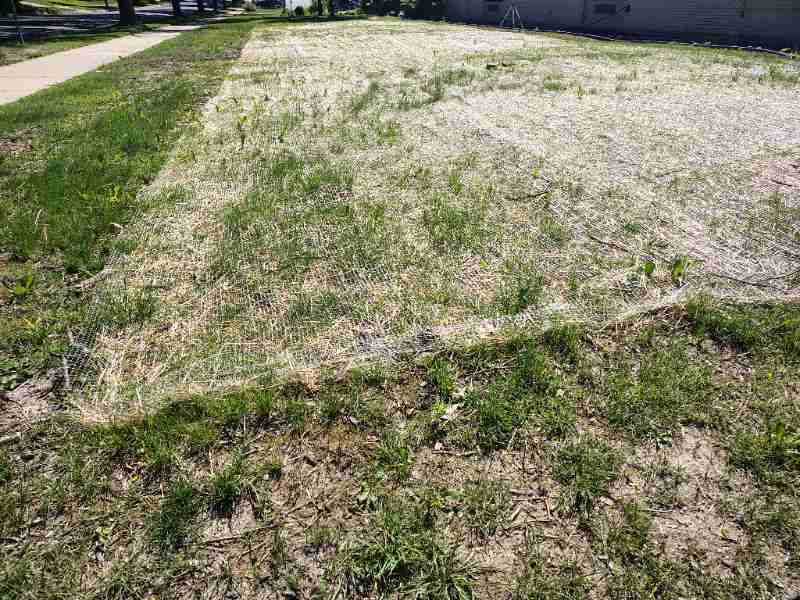
That’s when to switch to about 1 inch per week, watering less often but deeper to push roots down. A straw mulch cover holds moisture, so you can water slightly less often while the seed is coming up.
How long the watering plan lasts depends on how fast your grass grows. See how long you need to water new grass seed by species in the section below, where a starter fertilizer helps speed things along.
Pro Tip: “Spread peat moss over your yard, and it will absorb and hold water like a sponge. This means you may not need to water as often. It also gets lighter when it dries out, helping you know when the soil needs more water,” Marlow says.
Read more:
- How Often to Water Grass Seed
- When Is the Best Time to Water Your Lawn in Hot Weather?
- 7 Signs Your Lawn Needs Watering
When is the best time to water grass seed?
The best time of day to water grass seed is early morning, with a lighter session in the late afternoon. Cooler temperatures mean less water lost to evaporation, and a light afternoon top-up keeps the seed moist overnight.
When and how long to water new grass seed matters most in one way: skip evening watering. Grass that stays wet all night can’t dry out, and that invites fungus.
How climate and soil affect your watering schedule

Treat the schedule above as a starting point, not a rule. Hot, dry climates like Colorado Springs need more frequent daily watering because soil dries out fast, especially during germination.
Cool, humid climates hold moisture longer, so you can water less often, though the seed still needs steady moisture to root. In cool fall weather, how long to water new grass seed often drops to a single morning session, since shorter days and lower temperatures slow evaporation.
Soil type shifts the plan too. Fast-draining sandy soils lose water quickly and need more frequent watering. Heavy clay soils hold water, so water them less to avoid puddles and waterlogging.
Loam sits in the middle and is the easiest to manage. Heavy, compacted ground also benefits from aeration before seeding to open it up for water and roots.
Whatever your climate or soil, do the finger test: Push a finger an inch into the ground, and if it’s dry, it’s time to water. Water more during hot spells and less during cool, wet stretches.
And don’t lock yourself into one rigid routine. As R. Troy Peters, P.E. of Washington State University in Prosser, Washington, explains. “The water needs of grass changes drastically throughout the season. Thus, don’t use a set schedule for your lawn that doesn’t change throughout the season.”
In other words, revisit your watering plan as the weather turns rather than setting it once and forgetting it.
Read more: Complete Guide to Different Soil Types
Signs you’re overwatering or underwatering
Yes, you can overwater new grass seed, and it’s just as harmful as letting it dry out. Here’s how to tell which way you’re erring.
Watch for these signs of overwatering:
- Puddles or standing water that won’t drain
- Mushrooms or fungus popping up
- Soggy, mushy soil
- Yellowing seedlings

“I always tell people to watch for white slime or grass blades lying flat on the ground. These can be signs of fungus caused by the soil staying wet for too long,” Marlow says.
And these signs of underwatering:
- Brown, dry, or crusty soil surface
- Seed that sits and won’t germinate
- Pale, wilting new seedlings
The fix for both is the same: Aim for moist, not soaked. If the top inch is dry, water. If it’s squishy, hold off.
Beyond watering, a little extra care helps a new lawn fill in. Use a balanced N-P-K lawn treatment or starter fertilizer, wait to mow until the grass is 3 to 4 inches, and pull weeds by hand rather than using pre-emergent herbicides.
Lay straw or mulch, and dethatch and aerate before overseeding bare spots or planting on hard dirt. Check our lawn care cost guide before deciding whether to DIY.
How long does grass seed take to grow?
Grass seed germinates in about 5 to 30 days, depending on the species, weather, and soil quality. Fast growers like perennial ryegrass sprout in days; Kentucky bluegrass takes the longest.
A full, mowable lawn usually takes 8 to 10 weeks, and steady watering and a starter fertilizer speed things along. Check the germination rates for popular grasses below.
Germination also depends on soil temperature: cool-season grasses do best around 50°F to 65°F, warm-season grasses around 65°F to 75°F. Seed sown outside its ideal window sprouts slowly or unevenly.
| Grass Type | Germination Rate |
| Bahiagrass | 7 – 14 days |
| Bermudagrass | 10 – 30 days |
| Centipedegrass | 14 – 21 days |
| Fine Fescue | 7 – 14 days |
| Kentucky Bluegrass | 14 – 30 days |
| Perennial Ryegrass | 5 – 10 days |
| St. Augustinegrass | 10 – 30 days |
| Tall Fescue | 10 – 14 days |
| Zoysiagrass | 14 – 21 days |
Cool-season grasses (like Kentucky bluegrass, fescues, and ryegrass) suit northern climates and are best planted in spring or fall. Warm-season grasses (like Bermuda, Zoysia, and St. Augustine) suit southern climates and are best planted in late spring to early summer.
Warm-season seed usually needs more frequent daily watering because it’s sown in hotter weather that dries the soil faster.
Read more: When is the Best Time to Plant Grass Seed?
FAQs
Yes, water sloped areas in shorter, more frequent bursts so the water soaks in instead of running off and washing seed downhill. Let each round absorb before adding more.
Yes, walking on freshly seeded, moist soil compacts it and can bury or crush sprouting seed. Keep pets and people off the area until the grass is established and mowed at least once.
Steady, soaking rain can replace a session if it keeps the top inch moist, so skip watering and check with the finger test afterward. Light drizzle often doesn’t penetrate enough, so a short session may still be needed.
Let a pro handle your new lawn
Consistency and patience are what turn a bag of seed into a lush lawn, and a good pro brings both. If you’d rather not sweat the schedule, Lawn Love can connect you with a local pro to seed, water, and establish your new lawn right.
Main Image Credit: Oli4eben / Canva Pro / License
Related Posts: