Your lawn needs water when it turns bluish-gray, leaves footprints, has dry soil, shows curling grass blades, grows slowly, attracts more insects, or gets weedy. Catching these warning signs early prevents major lawn damage and keeps your grass healthy through dry spells.
Many homeowners wait until their grass is already damaged before they realize it’s dying of thirst. The key is recognizing these signs before your lawn goes into survival mode.
Make sure your lawn is getting the water it needs with our guide on “How Often Should You Water Your Lawn in the Summer?”
1. Color changes
“One of the first indicators of drought stress is a change in turfgrass color and leaf shape,” says Dean Minchillo, Urban Water Program Specialist at Texas A&M AgriLife Extension. “As the grass dries out, it shifts from green to a bluish-gray hue.”
When grass blades are dehydrated, they fold, roll, or wilt, which changes how light reflects off the surface. This creates that telltale blue-gray color before the grass turns yellow or brown. Don’t worry. It bounces back quickly with proper watering. If you wait until it’s yellow or brown, recovery takes much longer.
Related reading:
2. Footprint test
The easiest way to check if your lawn needs water, according to Minchillo, is simple. “Walk across your lawn. If your footprints remain visible and the grass doesn’t spring back, it’s likely too dry.” A thirsty lawn holds your footprints because grass blades lose what scientists call “turgor pressure,” the internal water pressure that keeps grass standing upright.
Try this test in the morning when your grass is most hydrated. If you can still see clear footprints after a few minutes, it’s time to water. For best results, water early morning when temperatures are cooler and evaporation is minimal.
Related reading: ”When Is the Best Time to Water Your Grass?”
3. Dry soil

/ CC BY-SA 4.0
Dry soil gives you clear visual warnings. Look for surface cracking, starting with small hairline cracks that grow into larger gaps several inches wide in clay soil. You’ll also notice water from recent rains or sprinklers just sits on top instead of soaking in, creating puddles that evaporate fast.
“Soil moisture is key to determining whether your lawn is getting enough water. Ideally, you want the soil to be moist to a depth of at least six inches,” says Minchillo. “A simple way to check moisture depth is with a screwdriver. Push it into the soil — if it’s hard to penetrate, the soil is dry.”
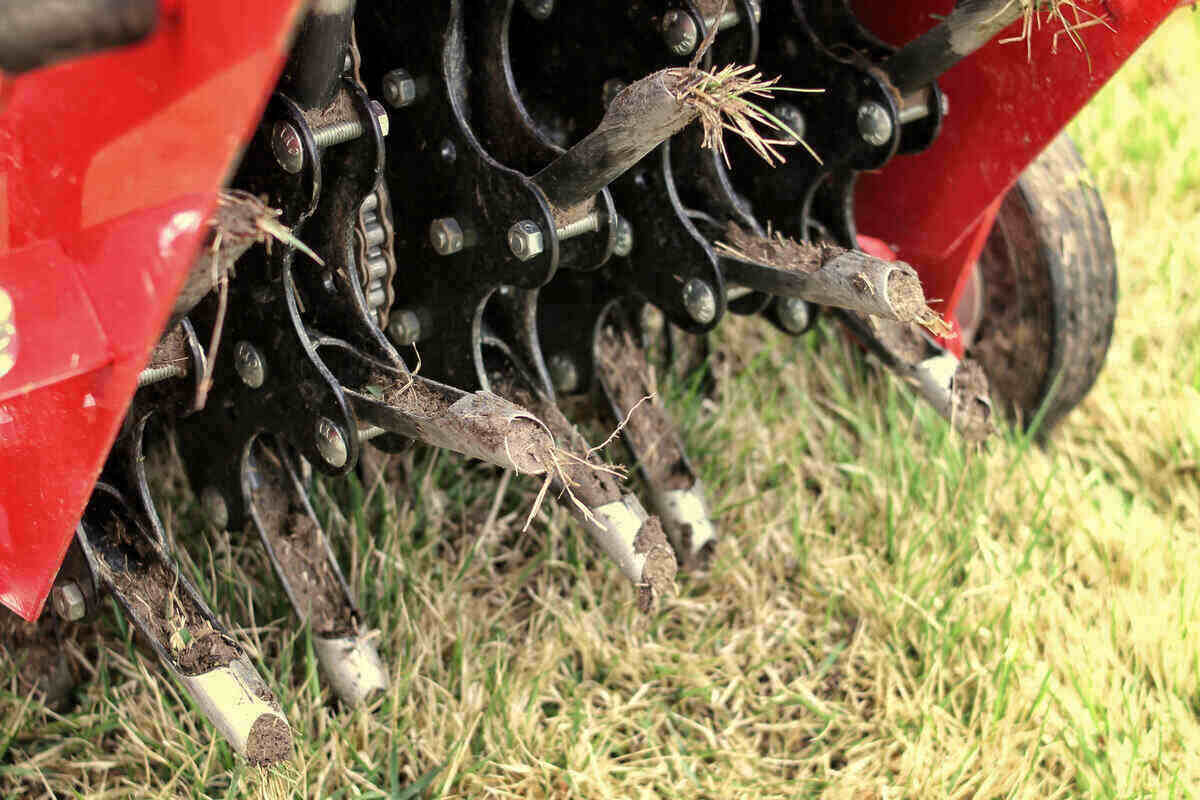
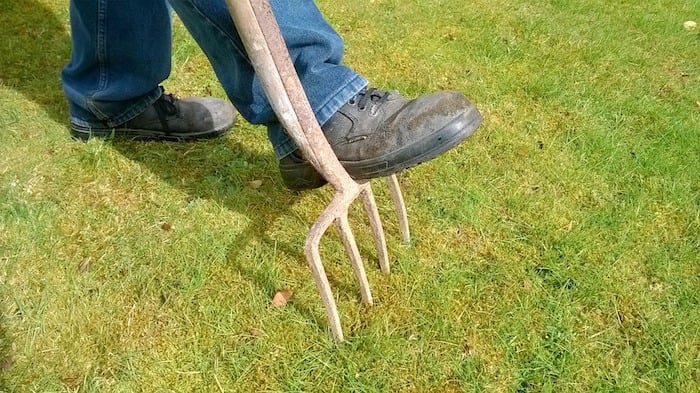
If your screwdriver stops at 2-3 inches even after watering, you’re dealing with compacted soil. This happens most in high-traffic areas where people walk regularly. Aeration solves this by creating holes that let water flow down to the roots where it’s needed most.
Related reading:
4. Curling grass blades
Get down close for this inspection – it’s worth the detailed look. Water-stressed grass blades fold lengthwise to reduce their surface area. “You might also notice the blades curling up like little straws, especially in St. Augustine lawns,” notes Minchillo.
This survival mechanism reduces the leaf surface area exposed to the sun and wind, limiting water loss through evaporation. For the best results, check older grass blades instead of new ones. Young leaves can look wilted even when they have enough water, so look at the mature grass for a true picture.
Related reading:
5. Slow growth
If you’re mowing your grass less often, it might be sending you a message. Without enough water for photosynthesis, grass simply can’t produce the energy it needs to grow. “Shallow watering leads to shallow roots, which dry out quickly in the summer and reduce lawn quality,” notes Minchillo
When grass gets severely stressed, it will eventually go dormant and stop growing completely, and at this point, you’re looking at weeks of recovery time once you resume proper watering.
Related reading: “How to Tell If Your Grass is Dead or Dormant”
6. Insect damage

Water-stressed grass turns into an easy target for destructive insects because weakened turf simply can’t fight back. White grubs and chinch bugs are common summer lawn pests that leave irregular brown or yellow patches that feel spongy underfoot. You can actually peel back sections of damaged turf like old carpet if the root system has been destroyed.
The key is catching insect damage early. Look for patches that don’t respond to watering. If brown spots persist even after deep watering, you’re likely dealing with pest damage rather than drought stress. To check for grubs, lift a section of damaged turf. If you find white, C-shaped larvae underneath, that’s your culprit.
Related reading:
7. Weeds

Weeds love stressed lawns because there’s less competition from your grass. When your grass is struggling, aggressive weeds like crabgrass, dandelions, and nutsedge move in to fill the gaps because many of these weeds are actually more drought-tolerant than your grass, so they thrive in conditions that stress your lawn.
You might even notice native plants appearing where your grass used to dominate. The key is addressing the water stress before weeds establish themselves because once they’re entrenched, you’ll need both proper watering and targeted weed control to restore your lawn
Related reading:
Quick water-stress fixes
“One of the biggest mistakes homeowners make is not watering deeply enough,” Minchillo says. “Many areas have heavy clay soil that absorbs water slowly. Most sprinkler systems apply water faster than the soil can take it in, leading to runoff.”
Minchillo recommends using the cycle-and-soak method.
“Instead of watering for 30 minutes straight, break it into two 15-minute or three 10-minute sessions with 30–40 minutes of rest in between,” he says. “This allows the water to soak in gradually, improving moisture depth and reducing runoff.”
Related reading:
- When is the Best Time to Water Your Lawn in Hot Weather?
- What Temperature is Too Hot to Water Your Grass?
FAQ: Your thirsty lawn questions answered
No, and daily watering actually hurts your lawn. Deep, infrequent watering (2 to 3 times per week) encourages deep root growth. Light daily watering creates shallow, weak roots that can’t handle stress.
Most lawns need 1 to 1.5 inches of water per week, including rainfall. Warm-season grasses typically need less, while cool-season varieties need more during hot summer months. Use a rain gauge or an empty tuna can to measure how much your sprinklers deliver.
Your lawn’s water success story
The difference between a stressed lawn and a thriving one often comes down to timing. Catch these seven warning signs early, and you’ll save yourself hundreds in lawn renovation costs. Wait too long, and you’re looking at overseeding, pest control, and months of recovery time.
If lawn maintenance feels overwhelming while you’re juggling work and family, let Lawn Love professionals handle the details. Our experts provide comprehensive lawn care services, including lawn mowing, lawn pest treatments, weed control, and more to meet your landscaping needs.. They’ll keep your lawn healthy year-round so you can focus on enjoying it.
Related reading:
- What to Know About Outdoor Watering Restrictions
- When to Stop Watering Your Lawn
- How Much Does it Cost to Install a Sprinkler System
Main Image: You can use a hose to water a dehydrated lawn. Photo Credit: akulamatiau / Adobe Stock
Sources:
Dean Minchillo, Urban Water Program Specialist, Texas A&M AgriLife Extension Service. https://dallas.tamu.edu/ and https://twri.tamu.edu/
Kroeger, J. H., Zerzour, R., & Geitmann, A. (2011). “Regulator or Driving Force? The Role of Turgor Pressure in Oscillatory Plant Cell Growth.” PLoS ONE, 6(4), e18549. https://doi.org/10.1371/journal.pone.0018549
“Let Your Lawn Tell You When To Water.” By L.E. Trenholm, assistant professor, and J. Bryan Unruh, associate professor. University of Florida Institute of Food and Agricultural Sciences Extension.
Related Posts: