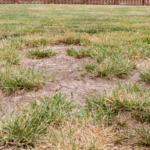
Dry spells stress your trees, and it shows in the form of wilting or discolored leaves, brittle bark and even stunted growth.
The good news is that a few smart techniques help your trees stay strong and resilient during drought. These include watering deeply, mulching around the base to hold in moisture, and trimming excess growth so the tree doesn’t have to work as hard
In this guide, we’ll talk about ways to help your trees survive drought conditions. Not sure what to look for? Check out Signs of Drought Stress in Trees.
Use the right watering techniques
Water deeply

Trees need deep watering, which encourages roots to grow deeper, making the tree more drought-resistant. “Deep, slow watering is more effective as it allows the water to soak in instead of running off,” explains Christopher Evans, forestry extension and research specialist at the University of Illinois Extension.
Hank Stelzer, state forester at the University of Missouri Extension, says that in normal weather, trees need about 1 inch of water per week during the growing season. In dry weather, Stelzer recommends watering deeply every 6-7 days. But if temperatures rise above 95 F, step up watering to every 4-5 days, he says.
Read more: 10 Best Drought-Tolerant Trees
Irrigate in the early morning or evening
The best time to water your trees is at dawn or during the evening, when temperatures are cooler. Hotter midday temperatures evaporate water quickly, robbing the tree of some of the moisture it needs.
Experts at the University of Minnesota Extension also recommend checking the soil and watering if the top 6 to 9 inches of soil in the root zone are dry.
Focus water on the critical root zone
Aim your watering at the area beneath the tree’s canopy, not just near the trunk. Most of the feeder roots are in the top 6 to 12 inches of soil, extending even beyond the canopy. Avoid watering the trunk or leaves, as this can do more harm than good. Watering the tree’s trunk or foliage can promote disease and insect outbreaks, explains Beaus Brodbeck and Jack Rowe from Alabama A&M University Extension.
Try a soaker hose or drip irrigation
During a drought, one of the best ways to water trees is with a soaker hose or a drip irrigation system. These methods deliver water directly to the soil, minimizing runoff or evaporation. Unlike sprinklers, soaker hoses and drip lines release moisture right at ground level, where trees need it most.
Early intervention is important as soon as drought conditions set in. “The big recommendation would be to start supplemental watering in drought conditions, especially when you see those early signs of drought stress,” says Evans.
My tip: If you don’t have a drip system, you can mimic its effect by placing a soaker hose in a spiral pattern throughout the root zone, starting a few feet from the trunk and extending outward.
Water slowly
A slow trickle gives the soil time to absorb the moisture deeply instead of letting it run off or pool at the surface. As Joni Harper, natural resources specialist at the University of Missouri Extension, explains, “Watering slowly allows for more lateral spread.”
My tip: I set a hose to a low flow and leave it for 30 minutes in one spot. Then, I check soil moisture using a long screwdriver to test how deep the water reached. If it hasn’t soaked in at least 8 inches, I water that spot a bit longer.
Mulch properly

Put down a thick layer of organic mulch
Aim for a layer of mulch about 2 to 4 inches deep over the tree’s root zone. Organic mulches like wood chips or pine needles work best because they gradually decompose and improve the soil.
“Mulching mimics the natural environment found in forests where leaves and branches blanket the soil surface, replenishing nutrients as they decompose and creating an ideal environment for root growth,” says David R. Jackson, a former educator at Pennsylvania State University Extension. But, don’t overmulch, piling mulch too deep can harm the tree by reducing soil oxygen.
Cover the root zone under the canopy
Spread mulch as far out as the tree’s branches reach. This covers the root zone where moisture and insulation are most needed. If your tree is in a lawn or tight space and you can’t mulch that wide, you can create a 2 to 3-foot-wide mulch ring around the base of the tree. This makes a big difference for its hydration.
As Evans explains, “Mulching trees can also help retain soil moisture and remove grass and other vegetation competing for that soil water resource. Watering and mulching are especially important for younger or newly planted trees.”
Keep mulch 3-6 inches away from the trunk
Avoid piling mulch against the trunk. It can trap moisture, which can cause rot and invite insects or diseases.
My tip: I follow the “donut rule” – mulch in a ring with a clear space around the trunk instead of piling it up like a volcano.
Reapply when needed
Stick with natural organic mulches like wood chips, bark, straw, and leaves rather than rocks or gravel. Organic mulch conserves moisture and improves soil structure over time as it decomposes. Check your mulch depth at least once a year. Reapply to maintain about a 2 to 4 inch layer.
My tip: In my yard, I always add a fresh inch of wood chips each spring to replace what has decomposed or blown away. This keeps the protective layer consistent.
Prune your trees correctly

“Pruning is very important and should be done annually,” says Allison Kosto at Montana State University. “A good pruning program typically equals healthier trees that are more prepared to withstand drought.”
However, pruning heavily during a drought can actually harm the tree.
Limit pruning in drought conditions
Pruning is generally good. It helps a tree channel its energy only where it needs to go. But overpruning can stress your tree further. It reduces the canopy that shades roots. According to experts at Colorado State University Extension, “Heavy pruning also reduces carbohydrate reserves, making the tree less tolerant of insects, diseases, and drought stress.”
Remove only dead or diseased branches
It’s okay to prune dead limbs, broken branches, or diseased parts of the tree. Removing dead wood doesn’t stress the tree further, and it can eliminate places where pests might breed.
The best time to prune is during the tree’s dormant season, usually in late winter or early spring.
My tip: If a branch isn’t dead or posing a safety risk, I leave it alone. The tree needs every bit of green it has to produce energy and bounce back
Sterilize tools between cuts
Whenever you prune, make sure your pruning tools are sharp. A clean cut heals faster than a ragged tear. Sterilize your pruning tools between cuts, especially if you’re cutting diseased branches.
Experts at the University of Georgia Extension recommend dipping the tool’s blades in rubbing alcohol or using a bleach solution of one part bleach to 10 parts water. Then rinse thoroughly.
Take care of your soil

Test for soil compaction
When soil is hard, water and air can’t reach the roots. Compacted soil under one of my trees felt like concrete from all the time my kids spent playing there.
If you think your soil is compacted, try this simple test: Push a screwdriver into the ground. If it slides in easily, you’re in good shape. If there’s some resistance, the soil may be moderately compacted. But if it’s tough to push in, your soil is heavily compacted.
Aerate if needed to loosen the soil
If your soil is compacted, aerate it to help water, air, and nutrients reach your tree’s roots. The most effective method is core aeration, which involves removing small plugs of soil — about 2 to 3 inches deep — throughout the root zone. This helps the ground soak up water instead of forcing it to pool and run off a hard surface.
Add compost to help trees retain moisture
Soil rich in organic matter holds water better than poor, sandy, or compacted soil. In fact, research shows that soil with 4% organic matter can hold over twice as much water as the same soil with only 1% organic matter, explains Eliza Hensel at the Michigan State University Extension.
My tip: In the fall, I rake up leaves and add them to my compost pile instead of tossing them. When compost is ready, I mix it into the top few inches of soil to boost organic matter and help retain moisture.
Get drought support from an expert
Your trees can weather the toughest dry spells with the right attention and support. But if you’re not certain you’re up to the job, or just prefer to let a pro handle it, contact us. Whether it’s lawn aeration, fertilization, or seasonal yard cleanup, Lawn Love will connect you with a local garden pro to give your trees the best chance to thrive.
Sources:
- Christopher Evans. Forestry Extension and Research Specialist. University of Illinois Extension. Personal Interview.
“Trees in drought: Love and water deeply.” University of Missouri Extension. - “Watering established trees and shrubs.” University of Minnesota Extension.
- “Drought and Landscape Trees: Effects, Signs, and Watering Guidelines.” By Beau Brodbeck and Jack Rowe. Alabama A&M University Extension.
- “Mulching Landscape Trees.” By David R. Jackson, former Extension Educator, Renewable Natural Resources. Pennsylvania State University.
- “Pruning Mature Shade Trees.” By David Whiting, Robert Cox, and Carol O’Meara. Colorado State University Extension.
- “Caring for Trees During Drought.” By Allison Kosto, MSU Broadwater County Extension Agent. Montana State University Extension.
- “Pruning Ornamental Plants in the Landscape.” University of Georgia Extension.
- “Compost can increase the water holding capacity in droughty soils.” By Eliza Hensel. Michigan State University Extension.
Main Image Credit: Brian Kunkel, University of Delaware, Bugwood.org / Ipmimages / CC BY 3.0 US
Related Posts: