| Key takeaways |
|---|
| • The U.S. Senate officially designated April as National Native Plant Month, with 48 states already issuing supporting proclamations. • Native plants support specialist bee and butterfly species that won't visit non-native ornamentals. • 34.7% of native bee species now face elevated extinction risk. • One or two well-chosen native plants in the right spot make a measurable difference. |

It’s official. April is National Native Plant Month. The U.S. Senate recently passed S.Res.665 designating April 2026 as National Native Plant Month — part of a bipartisan effort that began in 2021 and has since seen 48 states and Washington, D.C., issue gubernatorial proclamations in support.
The timing makes sense as more than a third of native bee species now face a high risk of extinction, according to a 2025 NatureServe assessment published in PNAS. Managed honey bee colonies dropped from 5 million in the 1940s to roughly 2.66 million today.
National Native Plant Month is a nudge to take concrete action this April. Plant something native. If you want help turning your yard into a native plant habitat, Lawn Love’s local gardening pros can help you design and plant it.
What is National Native Plant Month?
National Native Plant Month is an annual April observance that encourages homeowners, municipalities, botanical gardens, and businesses to plant, protect, and celebrate native plants of North America.
A native plant is one that grows in a specific region before European colonization — without human introduction. These plants co-evolved with local soils, rainfall patterns, insects, and wildlife over thousands of years, creating ecological relationships that non-native plants can’t replicate.
How did it become official?
Ohio was the first state to designate April as Native Plant Month in 2019, and by 2023, 48 states and D.C. had issued proclamations in support. This movement was driven by a coalition of conservation organizations, botanical gardens, and native plant societies led by the Lady Bird Johnson Wildflower Center, the American Horticultural Society, and the Garden Club of America.
The U.S. Senate made it a national event with its first resolution in 2021 (S.Res.109). The 2026 resolution (S.Res.665) continues the tradition with bipartisan support.
April was chosen because it’s peak planting season across most of the country. The soil is easy to work with, and plants have time to grow deep roots before the summer heat arrives.
Why native plants matter

For pollinators
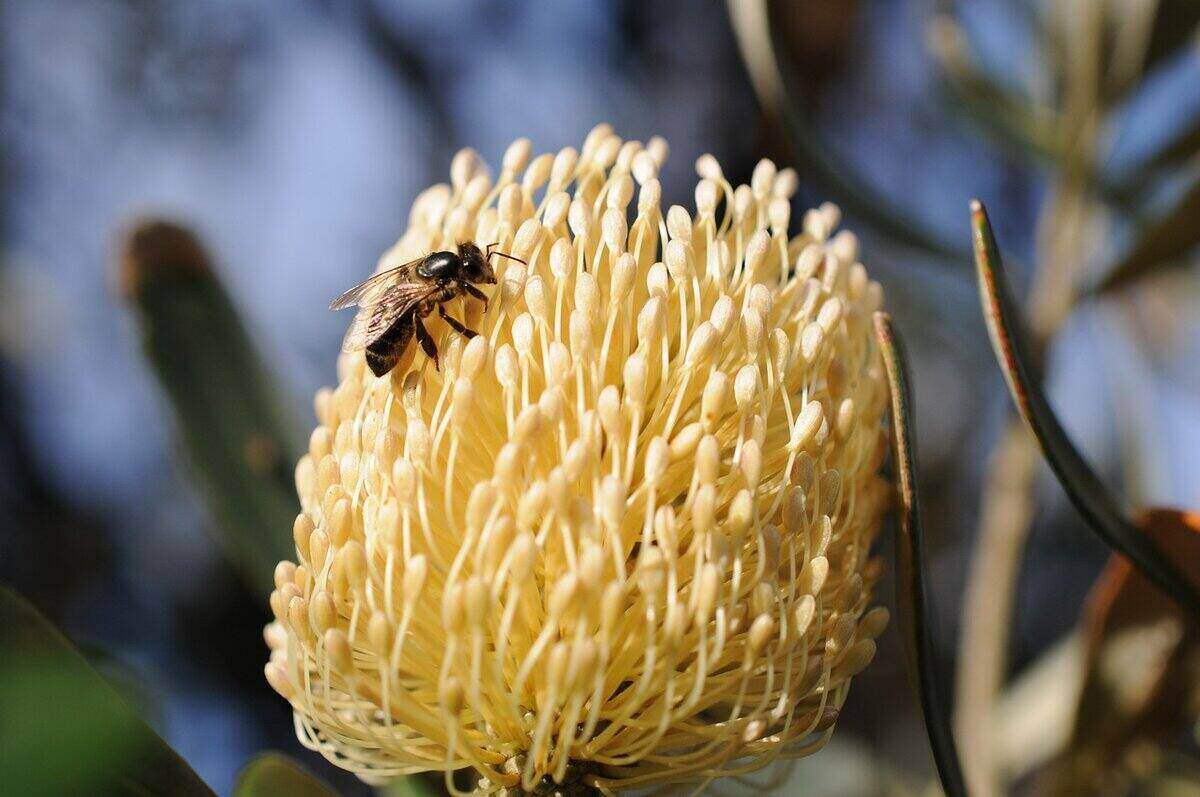
Many bee species are oligolectic. They collect pollen from one or a few plant families. A sweat bee that evolved alongside native goldenrod can’t substitute a non-native aster if goldenrod disappears from the landscape.
In a 3-year Pacific Northwest field study from Oregon State University, researchers Jen Hayes and Gail Langellotto found that wild native plants attracted pollinators 37% of the time compared to their cultivated nativar versions. Cultivars won only 8% of the time. The researchers noted that results varied by species, but wild plants generally came out on top.
Nature Serve’s 2025 assessment found that 34.7% of native bee species face a higher risk of extinction and that pollinators contribute more than $15 billion annually to North American agriculture.
For wildlife
Researcher Doug Tallamy’s work at the University of Delaware documented that native oak trees support more than 500 species of caterpillars, which are the primary food source for birds raising their young. His research found that 90% of the nation’s caterpillars rely on just 14% of native plant genera.
Tyler Wilson, owner at Copperhead Property Maintenance in Tampa, FL, says, “If your goal is supporting birds, a single native oak tree provides significantly more impact through its capacity for shelter and nesting areas compared to a standard flower bed.”
For water and your wallet
Native plants are adapted to local rainfall patterns. Once established (usually after 1 to 2 growing seasons), most require little to no supplemental irrigation, no fertilizer, and little pest management.
Gaetano Virone, a certified landscape water manager and owner of Environmental Designers Irrigation in Wall Township, NJ, says the payback is incredibly fast.
“Homeowners frequently see noticeable savings in their water consumption within the first year, complemented by long-term reductions in maintenance costs for fertilization and pest control.”
As drought restrictions tighten across the South and West, drought-tolerant native landscaping is increasingly the practical choice, not just the ecological one.
How to participate this April

Here are 4 easy ways to take part in Native Plant Month:
Plant one new native: One purple coneflower, a native salvia, or a black-eyed Susan does more for nature than a dozen non-native ornamentals.
Replace a problem plant: If you want to remove an invasive plant like English ivy or Japanese barberry, April is the perfect time. Cash Payne, owner at United Constructors Inc. in Contra Costa County, CA, has a favorite swap.
“When a client rips out something like English ivy, I steer them toward Creeping Wild Ginger as a groundcover replacement,” Payne says. “It’s low-profile, spreads naturally, and won’t destroy your foundation or fencing the way ivy does. It also handles the Bay Area’s shade pockets better than most alternatives I’ve seen specified.”
Find a native plant society sale: Most state and local native plant societies host spring plant sales in April. These sales are the best place to find real, locally grown native plants that aren’t available at big-box retailers. Search “[your state] native plant society spring sale.”
Skip the pesticides during bloom: Many native plants blooming right now are feeding early spring bees. Even applications on nearby plants can accidentally kill beneficial insects during this busy window.
Native plants to try by region
| Region | Recommended natives |
| Southeast / Gulf Coast | Yellow wild indigo, black-eyed Susan, coral honeysuckle, beautyberry, swamp milkweed |
| Northeast / Mid-Atlantic | Wild bergamot, blue wild indigo, cardinal flower, eastern redbud, buttonbush |
| Midwest / Great Plains | Prairie dropseed, switchgrass, prairie blazing star, wild columbine, serviceberry |
| Southwest / Mountain West | Desert marigold, Apache plume, blue grama grass, desert willow, cliffrose |
| Pacific Northwest | Oregon grape, red flowering currant, camas, blue wild rye, Pacific bleeding heart |
| Florida / Deep South | Firebush, coontie, muhly grass, gopher apple, native azaleas |
How to choose the right native plants for your yard
If you feel overwhelmed, start with a gateway native plant that is tough to kill.
“As the chairman of the NJ Board of Landscape Irrigation Contractors with 30 years of experience, I’ve designed thousands of systems to support both high-end aesthetics and local ecology,” Virone says. “For a foolproof gateway, Black-eyed Susans are the gold standard for resilience in our regional climate and soil.”
For Southern yards, Wilson recommends a different native plant favorite.
“Managing properties across the Tampa Bay area has shown me that milkweed is the perfect gateway native because it is incredibly hardy and offers the immediate reward of hosting monarch butterflies,” he says. “It’s a reliable choice for homeowners who want to improve curb appeal without the stress of high-maintenance exotic species.”
Start with your site: Spend a week noticing where your yard is sunny vs. shady, wet vs. dry, and windy vs. sheltered.
Check your ecoregion: Use a native plant lookup tool like Native Plant Hub or your state extension to filter plants by your specific ecoregion and soil type.
Layer heights: When you can, combine one native tree with a few mid-sized shrubs, grasses, and flowering perennials rather than planting a single row of flowers.
Respect your HOA: You can still use natives, but only under the HOA’s rules. You just need to have clean edges, clear paths, repeated plant groupings, and other signs that make the garden feel intentional.
FAQs
No. Many plants growing wild in the U.S. are actually invasive species from other countries. A native plant is a species that lived in your region before European settlers arrived.
A native plant is indigenous to a particular area. A wildflower is any flower that grows in nature without being cultivated. A wildflower may be either native or non-native, meaning that not all wildflowers are natives, and not all natives are wildflowers.
Yes, especially in the first 2 years while their roots grow, you should avoid using fertilizer.
“On soil prep, skip the fertilizer,” Payne says. “Every time we’ve watched clients amend heavily before planting natives, the plants get lazy roots and struggle the moment summer drought hits. Let the plant do the work, that’s literally what it evolved to do here.”
Start with your state’s native plant society. Most of them have a list of local nurseries that sell real native species. Online mail-order nurseries that specialize in native plants are also a good option.
Wilson says if a label says “native” but only gives a cute marketing name with “no Latin name, no cultivar, no pot origin, and it’s already in a bloom cycle that doesn’t match your season,” you should walk away.
“If you can’t verify the exact species on the tag, assume you’re buying a ‘native-adjacent’ lookalike and it may not behave like the real thing,” Wilson says.
Bring your yard back to life
Are you ready to make the most of Native Plant Month? Transitioning your yard to a native, drought-tolerant landscape saves you money and brings beautiful butterflies right to your window.Lawn Love’s local gardening pros can help you choose the right natives for your region, prepare your beds, and get them in the ground at exactly the right time.
Main Image: April: National native plant month. Photo Credit: Susan Hodgson / Adobe Stock, created using Canva Pro
Related Posts: