
Spring returns to Syracuse when the magnolias bloom in Franklin Square. However, winter leaves behind a wet and messy yard.
Follow this Spring Lawn Care Checklist to help your lawn recover from winter and prepare your grass for the summer heat.
Note: We know you are eager to see a green lawn — and maybe smell fresh-cut grass — but working or mowing on a soggy lawn damages the soil. Be patient. Wait for the ground to dry out before you start.
1. Inspect your lawn mower
Your lawn mower has gathered dust during the long Syracuse winter, so don’t wait until the grass is knee-high to check it. In Syracuse, tackle this task in late March while the ground is still too soggy for foot traffic.
The first thing you need to do is sharpen your lawn mower’s blades before the first cut. Grass will get bruised if your mower has dull blades.
But to have a beautiful lawn, it’s important all your equipment is in good working condition before the first cut:
- Battery and electric tools: Inspect cords for cracks, clean air vents of old debris, and fully charge all batteries.
- Gas mowers: Change the oil and spark plug, replace the air filter, and professionally sharpen the blades.
- Hand tools: Scrub rust from shears and shovels, then sharpen edges to make digging and pruning effortless.
- General cleanup: Scrape old, caked-on grass from your lawn mower deck to prevent corrosion and the spread of mold.
Read more: Best Lawn Mower Maintenance Practices
2. Clean up yard debris

Once the ground firms up in early to mid‑April, you will likely find a layer of twigs, branches, and matted leaves left behind. Remove this debris as soon as the ground is dry enough to walk on without leaving footprints.
If left to rot, this damp layer of debris blocks essential sunlight and airflow, creating the perfect environment for “snow mold,” a fungal disease common in Central New York that kills grass patches.
Pay extra attention to the grass strip along sidewalks and driveways. De‑icing salt often burn the grass here, leaving brown patches. Rake to lift salt‑damaged debris, then flush the area with water until soil is moistened but not waterlogged (about 1 to 1.5 inches of water per week).
Official Note: The Department of Public Works collects yard waste once a month from April through October, but only on specific dates set for your quadrant. Violating city yard waste rules (like using plastic bags for leaves) can result in fines.
3. Test your soil
If you didn’t test your soil last fall, conduct a soil test in early April once the ground has thawed. Early soil testing ensures you have results by late April to guide lime and fertilizer timing.
Central New York soils can vary drastically in pH, often leaning alkaline due to local limestone. Without a soil test, you are simply guessing at what your lawn needs, which wastes money and can harm local waterways.
Remember, grass cannot absorb nutrients efficiently if the soil acidity is too high or too low.
Good to know: You can pick up testing kits at the Cornell Cooperative Extension of Onondaga County. Samples are analyzed at their Ithaca lab, and results typically take one to two weeks to return.
Read more:
How to Soil Test Your Lawn
How to Read a Soil Test Report
4. Treat spring lawn diseases
After the heavy snows common to Syracuse finally melt in early to mid-April, you may notice circular, matted patches of grass.
This is likely snow mold, a fungal disease that thrives under deep snow cover on unfrozen ground.
Deal with snow mold immediately because the matted fungal crust suffocates the grass underneath, blocking the sunlight and air circulation required for spring green-up. While unsightly, snow mold damage is often superficial if treated quickly.
Note: The Cornell Cooperative Extension states that fungicides are rarely needed for home lawns. They recommend raking affected areas to encourage drying and repairing severe damage with topsoil and seed once the weather warms in May.
Watch out for these common spring lawn diseases:
- Pink snow mold: Appears as circular patches with a pinkish hue as the snow melts. Though grass often recovers as new growth begins in late April, severe cases might require reseeding. Simply rake out the dead material to improve air circulation.
- Gray snow mold: It occurs where the last of the snow has melted. Gray snow mold rarely kills grass. The best way to remove gray snow mold is to rake the matted area away.
- Red thread: Appears as small circular patches with reddish or pinkish tint in mid-to-late spring when temperatures range from 60 to 75 degrees. Apply light nitrogen fertilizer in mid-spring to help the grass to quickly outgrow this largely cosmetic lawn disease.
- Dollar spot: Develops when nighttime temperatures exceed 50 degrees and grass experiences extended leaf wetness, appearing as small tan patches. Apply nitrogen fertilizer in late spring to promote vigorous grass growth.
Good to know: For lawn disease identification, contact Cornell Cooperative Extension of Onondaga County at 315-424-9485. The extension’s lawn disease identification services cost $5 per sample.
Read More: How to Identify and Treat Grass Fungus
5. Control weeds
Weeds steal sunlight, water, and nutrients intended for your grass. In Syracuse, effective weed control relies on timing your treatments before these invaders establish deep roots.
Good to know: Cornell Cooperative Extension recommends an Integrated Pest Management approach: Prioritize maintaining a dense, high-mowed lawn to crowd out weeds naturally, and use herbicides only when necessary.
Here are common spring weeds in Syracuse:
- Crabgrass: Look for coarse, light-green clumps. Apply a pre-emergent herbicide when soil temperatures at a 2-inch depth reach 50 degrees for three consecutive days.
- Dandelions: These familiar yellow-flowered perennials appear in May with deep taproots. Spot-treat with a broadleaf post-emergent herbicide or dig out the entire root immediately.
- Ground ivy: Creeping vines with scalloped leaves and blue-violet to bluish-purple flowers in mid-spring. To get rid of ground ivy, apply a triclopyr-based post-emergent herbicide during active growth.
- Common chickweed: These low-growing winter annuals with small white flowers thrive in damp soil. Hand-pull common chickweed early or apply a liquid post-emergent herbicide in May.
*Note: Once broadleaf weeds sprout in late spring, switch to post-emergent weed killers.
Warning: Standard pre-emergent herbicides create a barrier that also prevents grass seed from sprouting. If you plan to overseed bare patches this spring, skip applying a crabgrass preventer. Check how to correctly apply pre-emergent herbicides.
6. Control lawn pests

Pests can destroy your lawn from the roots up just as blades begin to green. It is necessary to control them to prevent large dead patches that invite weeds. However, effective control relies on timing and patience, not immediate chemical use.
Here are the spring pests to watch for in Syracuse:
- White grubs: These C-shaped larvae feed on roots in late May to early June, causing loose turf. Spring insecticides fail against them, so rake and reseed damaged areas rather than spraying.
- Bluegrass billbugs: Gray-black weevils seen on driveways in mid-May to late June. Apply targeted insecticide only if you spot more than two adult billbugs per minute on the pavement.
- European crane fly: Dark-gray, worm-like “leatherjackets” appear in May, often attracting feeding birds. Use insecticides only if you confirm a density of over 50 larvae per square foot.
Good to know: The Cornell Cooperative Extension warns that spring grub treatments are usually ineffective. Action is necessary only if you find more than 10 grubs per square foot; otherwise, wait until August for effective control.
Read more:
Common Spring Lawn Pests
Guide to Using Pesticides on Your Lawn
7. Fertilize, if necessary
While early spring rain wakes up your lawn, applying nutrients before the soil warms up often fuels weeds rather than grass. If your soil test indicates your cool-season grass needs a nutrient boost, choose a slow-release nitrogen fertilizer.
Remember that established lawns often do not need early spring feeding if you leave grass clippings on the lawn, as this recycles nutrients naturally.
Apply fertilizer in Syracuse:
- Wait for Memorial Day: Apply in late May once soil temperatures consistently reach 55 degrees to prioritize deep roots over weak, rapid top growth.
- Method: Choose a slow-release, nitrogen-rich fertilizer to avoid burning new shoots and encourage even growth. Apply 1 pound of nitrogen per 1,000 square feet.
- Water it in: Apply fertilizer before a light rain or water with about ¼ inch of water to wash nutrients into the soil.
- Protection: Sweep any stray granules off driveways and sidewalks to prevent runoff into Onondaga Lake and local watersheds.
Good to know: State law prohibits applying fertilizer between December 1 and April 1. Additionally, you must use phosphorus-free fertilizer unless a recent soil test confirms a need or you are establishing a new lawn.
*Note: Instead of chemical fertilizers, consider “topdressing” your lawn in May. Spread a thin layer (one-quarter inch) of compost over your grass and rake it in. This adds organic matter that improves heavy clay soils common in Syracuse and helps the soil hold moisture during summer.
Read more: How to Fertilize Your Lawn
8. Check sprinklers and start watering
In Syracuse, aim to pressurize and inspect your irrigation system in mid-May. Winter ground shifts often crack pipes or misalign sprinkler heads, leading to expensive leaks.
Run a full test cycle to identify and fix repairs before the summer heat necessitates regular use.
- Replace broken sprinkler heads and unclog nozzles to ensure uniform coverage across the entire lawn.
- Adjust sprinkler heads to keep water off driveways and sidewalks, which wastes water and carries pollutants to waterways.
- Place shallow cans on your lawn to confirm the system delivers 1 inch of water weekly.
Start watering in late May only when footprints remain on the grass, indicating drought stress. Lawns generally need 1 inch of water weekly. Use the “can test” to measure output: Place empty tuna cans on the lawn and run sprinklers until they are full.
Good to know: Water between 4 a.m. and 8 a.m. so the grass can dry during the day, which helps reduce lawn diseases.
9. Know when to mow
After waiting patiently through early spring, you will finally see the first signs of green. Don’t mow yet. Your cool-season grass needs consistent warm temperatures to establish roots before you make that first cut.
Wait until late April or early May, when the grass is actively growing and the soil is dry. Mowing too early stresses dormant grass, while cutting on soggy ground causes deep soil compaction.
Follow these rules for the first cut:
- Delay mowing until your grass is at least 3 inches tall to ensure strong root establishment.
- Adjust your lawn mower height to remove only the top third of the grass blade to prevent shocking the plant.
- Mow only when the grass is dry to prevent clumping and the spread of fungal diseases.
- Early morning mowing, after dew evaporates but before afternoon heat, is ideal for your lawn.
Good to know: Maintain a mowing height of 3 inches throughout the season. Taller grass shades the soil, prevents weed germination, and helps the lawn retain moisture during summer.
10. Hold off on dethatching, aeration, and overseeding
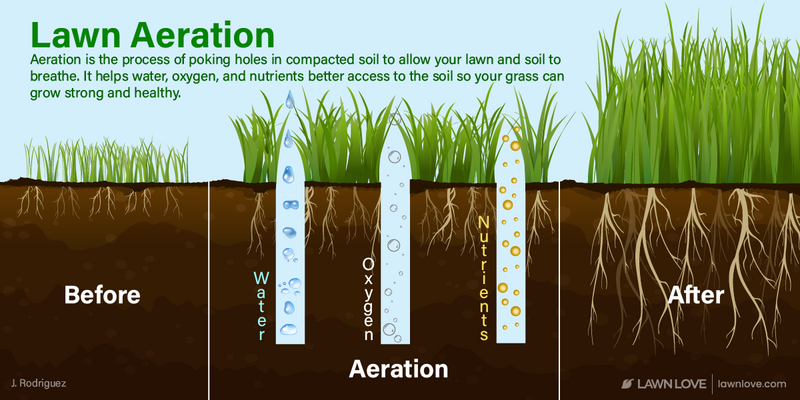
In Central New York, major lawn renovations are best left for late summer or early fall. Aggressive tasks like dethatching and aerating in spring often trigger an explosion of weeds.
Plus, churning up the soil brings dormant crabgrass seeds to the surface, where they germinate quickly. However, if you must intervene this spring, wait until the grass is growing vigorously in late May.
Exceptions for spring renovation:
- Dethatching: Rake out suffocating thatch in late May only if the layer exceeds one-half inch.
- Aeration: If your lawn experiences heavy foot traffic or has compacted clay soil, spring aeration between early and mid-May can provide relief before summer stress.
- Overseeding: Repair bare spots from snowplow damage in mid-May using a perennial ryegrass mix.
Good to know: If you must overseed in the spring, do not use a standard “weed and feed” or crabgrass preventer, as these will kill your new grass seed. Use a starter fertilizer containing Siduron or Mesotrione, which controls weeds while allowing new grass to grow.
Read More:
Why, When, and How to Aerate Your Lawn
4 Best Grass Types for Syracuse
Fall Lawn Care Checklist for Syracuse
Too busy? Hire Lawn Love’s Syracuse lawn care pros
Debris removal, sharpening mower blades, irrigating, fertilizing, aerating, raking — it’s all required for lawn health in spring. Just reading that to-do list can be exhausting.
But depending on the size of your lawn and the amount of spare time you have, you might just want to leave spring lawn care to Lawn Love’s Syracuse lawn care pros.
Main Image: Syracuse, NY neighborhood. Photo Credit: debramillet / Adobe stock. Illustration by Amy Stenglein / LawnStarter
Related Posts:


