| Key Takeaways |
|---|
| • Dry first when you can: Wet leaves weigh several times more than dry ones, so let them dry a bit and pick the method that matches your yard size and layer thickness. • Mulch-mow when you can: Chopping a moderate layer is the easiest, most lawn-friendly option; use a blower or vacuum for large areas and a rake for tight spots. • Don't let them sit: Thick wet layers smother grass, invite mold and turf disease, and turn walkways into slip hazards. |

To clean up wet leaves in your yard, wait for them to dry a bit when you can. Then pick one method: mulch-mow a moderate layer, or use a leaf blower, a leaf vacuum, or a rake for thicker spots.
Knowing how to clean up wet leaves before they damage your lawn is important, because a soggy layer left sitting will smother the grass.
Wet leaves weigh three to five times more than dry ones, so they resist raking and blowing and take real muscle to move. This guide walks through every method, when to use each, and how wet leaves harm your lawn.
If you’d rather skip the wet, heavy work, a local Lawn Love pro can clear the leaves and tidy the yard for you.
Should you wait for leaves to dry before removing them?
Yes, wait for leaves to dry when you can. Dry leaves weigh far less than wet ones, don’t mat together, and move easily with a rake, blower, or mower.
That said, you can’t always wait out the weather. If a thick layer is already down and it keeps raining, don’t let it sit.
For the typical homeowner, mulch-mowing is the best method to remove wet leaves. Use a leaf blower or vacuum for large areas, and a rake for tight spots and garden beds.
If you want to dry wet leaves fast before removing them, spread them out with a rake so air and sun reach every layer. A few hours of dry, breezy weather makes a real difference.
Use a powerful leaf blower

Using a high-powered leaf blower for wet, matted leaves works best on large, open yards and moves leaves into piles far faster than raking.
Best for: Large areas and quick results
Tools you’ll need:
- A high-powered leaf blower
- Goggles and ear protection
How to do it:
- Prepare the area and blower. Check your yard for large branches or stones, make sure the blower is fueled or charged, and put on goggles and ear protection.
- Work with the wind. Start upwind and blow leaves in one direction toward a central pile, keeping the nozzle low and angled to lift wet leaves. I found short bursts of air help dislodge matted spots.
- Move the piles onto a tarp and then bag them.
Read more:
Rake them
Raking wet leaves works, but it’s hard labor because wet leaves are so much heavier than dry ones. It’s the method for small yards and spots a blower would disturb.
Best for: Small yards, concentrated spots, garden beds, and areas where a blower’s blast could disturb mulch or delicate plants
Tools you’ll need:
- Metal leaf rake
- Work gloves
- Leaf bags
- Tarp
How to do it:
- If possible, rake the leaves after they’ve had a little time to dry.
- Rake in sections. Wet leaves are heavy, so don’t try to rake your whole yard in one go. Protect your back by bending your knees slightly and using your arms and core.
- Use a tarp near the area you’re raking. Instead of making lots of small piles, rake directly onto the tarp. When it’s half-full, drag the tarp to your main dump spot, where you can bag the leaves. This trick has saved me countless trips lugging armfuls of leaves.
Use a power rake or dethatcher
If wet leaves have packed into a dense mat that won’t budge with a rake, a power rake (dethatcher) can pull it up. Set the tines shallow, work in overlapping passes across the matted area, then rake or bag the debris it lifts.
This is best for badly matted layers, though it’s a renovation task rather than routine cleanup.
Best for: Lawns with a heavy, matted layer of wet leaves
Tools you’ll need:
- Power rake or dethatcher
- Protective gear: Eye protection, gloves, and sturdy shoes
- Leaf rake to clean up
How to do it:
- Set the height to 0 or +¼ inches so the tines just skim or slightly penetrate the soil surface.
- Walk the dethatcher over the lawn in straight lines. Use the machine much like a lawnmower.
- Collect the debris left by the power rake using a rake.
Read more:
- How to Choose the Right Rake
- What is Dethatching?
- How to Dethatch Your Lawn
- How Much Does Lawn Dethatching Cost
Vacuum them up

A leaf vacuum sucks up leaves, shreds them into small pieces, and collects them neatly in a bag. They come as standalone machines or as blower-vacuum combos.
They handle damp leaves well, but very wet ones may clog the tube or make the collection bag too heavy and difficult to manage.
Many leaf vacuums use an impeller (a spinning fan that shreds leaves as they pass through). Very soggy leaves gum up that impeller, which is why letting them dry a bit first pays off.
Best for: Tight spots where rakes don’t work well, and for anyone who prefers less bending and heavy lifting.
Tools you’ll need:
- Leaf vacuum
- Eye protection and gloves
How to do it:
- Clear large debris first. Twigs, pine cones, or clumps can jam the vacuum. I once vacuumed a pile of wet leaves that hid an acorn cluster; the acorns jammed the tube, and I spent 10 minutes unclogging it. Lesson learned.
- Start at one corner and move in straight, overlapping passes, similar to mowing. Keep the nozzle about 1 inch from the ground.
- Wet leaves are dense, and even with shredding, the bag fills fast. Empty it frequently to keep things manageable.
Mow them to bits

Wondering whether it’s OK to mow over wet leaves and leave them on the lawn? Yes, if the layer is moderate and you chop the leaves finely enough to fall between the grass blades.
You’re not really removing leaves this way, but shredding them feeds the lawn and it’s the easiest method on your body.
Rather than bag every leaf for the landfill, a mulching mower chops up the leaves and saves hauling.
Aaron Steil, consumer horticulture specialist at Iowa State University’s horticulture program, says, “Chopping the leaves up with a mulching mower can help return organic matter to the soil, benefitting the lawn, and for most people, it is easier than raking and removing.”
In short, the shredded leaves rot down into free fertilizer.
Best for: Lawns with a moderate layer of leaves
Tools you’ll need:
- Lawn mower
- Protective gear
How to do it:
- Set your mower to the highest cutting setting.
- Mow as usual, going over the lawn in strips. For best results, you may need two or three passes to chop the leaves finely.
- If you’re collecting leaves in a mower bag, empty it whenever it gets full.
A sharp cut matters, so regular lawn mowing makes leaf season easier. If the job outgrows a weekend, Lawn Love can connect you with a yard cleanup pro or leaf removal service, and you can weigh the leaf removal cost.
Read more:
How wet leaves damage your lawn if left too long
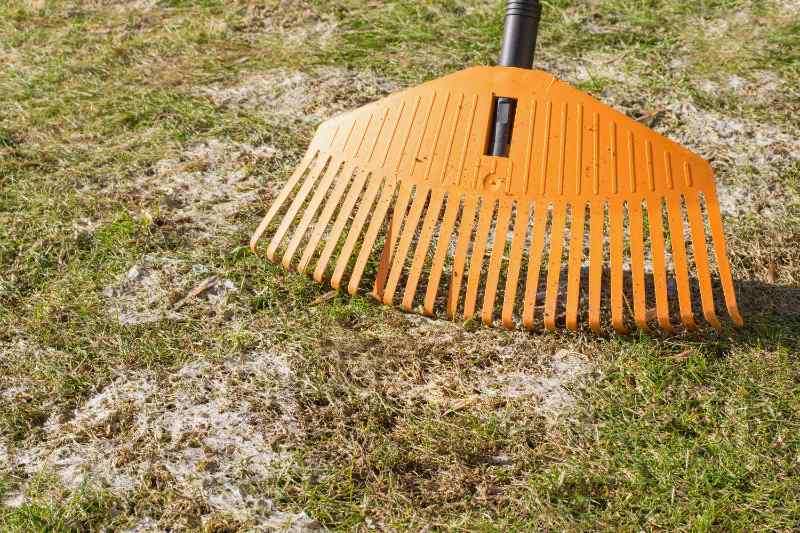
Wet leaves damage grass when left too long because a thick, matted layer smothers the grass beneath it within a week or two. It blocks the sunlight and airflow the lawn needs, and the trapped moisture creates a damp, dark pocket where mold and disease take hold.
As Scott Culala of The Lawn Cypress in Gardner, Kansas, explains, “Most lawn diseases come from over saturation and mold, which tends to happen during high moisture and high heat.” That’s exactly the environment a soggy leaf layer creates.
Removing wet leaves from your lawn before that happens keeps the grass alive.
Here’s what a soggy layer does when you ignore it:
- Smothering: Grass starved of light and air thins out and can die back in patches, leaving bare spots by spring.
- Mold and turf disease: The damp, matted layer invites fungal problems, including snow mold if the leaves stay put under winter snow.
- Slip hazards: On sidewalks, decks, and driveways, wet leaves get slick fast and are genuinely dangerous underfoot.
A light scattering of leaves is fine and even helpful. A packed, wet blanket is not.
Read more: How to Get Rid of Gray Snow Mold on Your Lawn
DIY vs. hiring a leaf removal pro
Generally, you can handle small to moderate leaf loads yourself. Doing it yourself is just the cost of supplies and your time and labor. Hire a leaf removal pro when the job outgrows a weekend of raking.
The average cost of leaf removal is between $76 and $325, depending on lot size, tree count and layer thickness. For bigger jobs, Lawn Love can connect you with a yard cleanup professional or leaf removal service, and you can weigh the cost against a weekend of wet raking.
FAQs
Yes, but wet leaves make bags much heavier and prone to tearing, so fill them only halfway and use thicker paper or contractor-grade bags to avoid splits during pickup.
Yes. Wet leaves compost fine, but they’re a “brown” carbon source, so mix them with “green” material like grass clippings and turn the pile occasionally so it doesn’t go slimy or matted.
It is risky to run electric equipment on soggy ground or in the rain because moisture raises the shock hazard, so wait until the area is not standing in water and plug into a GFCI-protected outlet.
Leave the leaf cleanup to a pro
Wet leaves can smother grass, invite disease, and make walkways slippery if left too long. Clearing them keeps your yard healthy and safe. For a hassle-free solution, Lawn Love can connect you with a yard cleanup professional or a leaf removal service.
Main Image: Raking wet fall leaves off a driveway. Photo Credit: knelson20 / Adobe Stock
Related Posts:


