| Key takeaways |
|---|
| ● Finding native plants: 82% of plant suppliers claim that demand for native plants has noticeably increased over the past 5 years. Our No. 1 city, Austin, Texas, has the best access to local native plant suppliers. ● Going electric: 194 cities (~39%) offer incentives for residents upgrading to electric lawn care equipment. ● Sustainable landscape infrastructure: 81 cities (16%) have an urban heat island mitigation program on the books. |

Native plants have been hard to find this year as demand from homeowners looking to “grow green” with more sustainable residential landscapes outpaced what nurseries could supply.
To find out where the momentum and conditions for sustainable lawn care intersect, Lawn Love looked at Where Eco-Friendly Lawn Care is Taking Root in 2026.
Across nearly 500 of the largest U.S. cities, we looked at access to native plant suppliers, local policies like incentives for upgrading to electric lawn care equipment, and community interest via organizations like Wild Ones.
We considered yard size and water management metrics to see the cities where homeowners have the biggest opportunities to make a difference with their landscaping choices, among 18 total metrics.
Explore our ranking below. To learn how we ranked the cities, see our methodology.
In this article
- City rankings: Where eco-friendly lawn care is taking root in 2026
- Slideshow: City highlights
- Key insights
- Rankings by metric and stats
- Behind the ranking
- Why fall is the ideal time for adding native plants to your landscape
City rankings: Where eco-friendly lawn care is taking root in 2026
How to read this ranking
This isn’t a list of “best” or “worst” cities for sustainable lawn care — it’s a snapshot of where the movement currently has the most traction. Scores combine a couple of different things: proactive adoption (native plant access, policy incentives, water-saving programs) and baseline environmental conditions (water stress, drought susceptibility).
That means a city with strong sustainability programs can still rank lower if it’s working against tougher underlying conditions — and a city with milder conditions can rank higher without necessarily doing more. Use this as a starting point for comparison, not a verdict on any one city’s effort.
See how each city fared in our ranking:
Slideshow: City highlights
Check out the slideshow below for highlights on each of our top 5 cities.
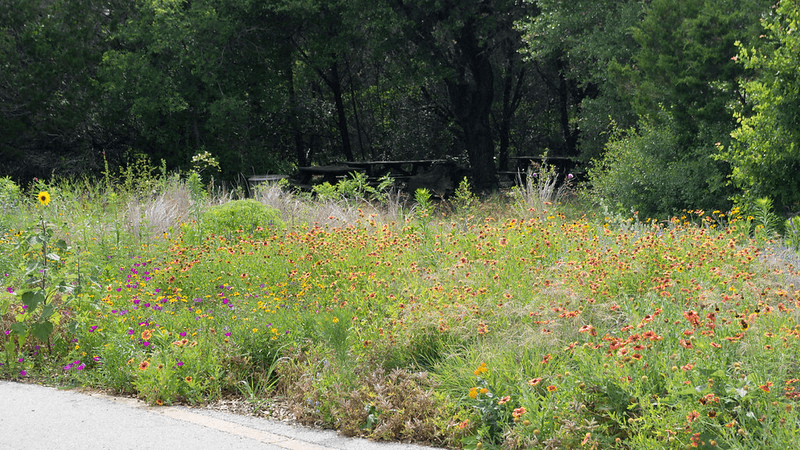
• Best access to native plant suppliers.
• Austin Energy Instant Savings offers seasonal instant rebates for electric lawn mowers.
• The city is mitigating the urban heat island effect with free tree distribution programs, green roof bonuses for developers, and cool pavement pilots.
Local tips: Austin offers several landscape and irrigation rebates for homeowners, from converting turf to natives, to installing a rainwater harvesting system, to recycling graywater for landscape irrigation.
Get inspired with a field trip to Lady Bird Johnson Wildflower Center. Find native plants at The Natural Gardener, Barton Springs Nursery, or Vivero Growers.
Read more: 13 Best Native Plants for Your Austin Garden
Photo credit: Mignon Pelletier / Flickr / CC BY-SA 2.0
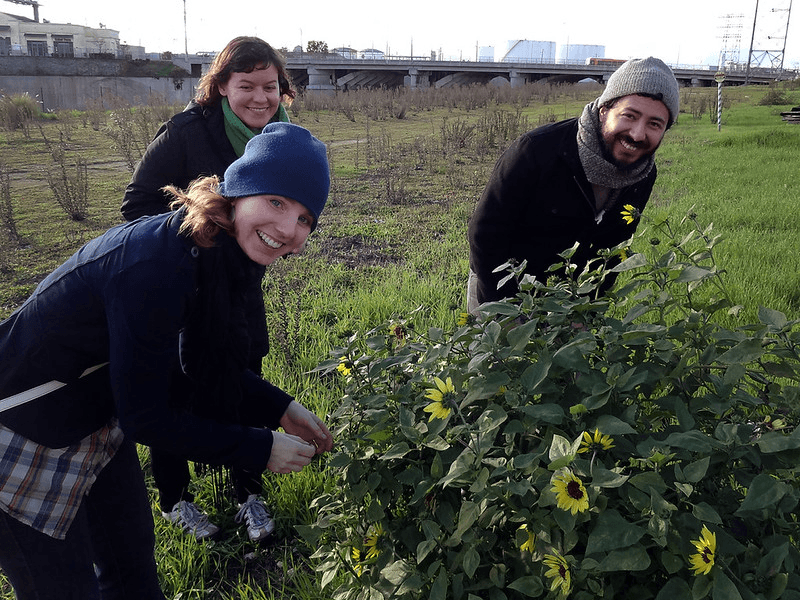
• 5th best access to native plant suppliers.
• The South Coast Air Quality Management District offers up to $250 for electric lawn equipment throughout the year.
• LA is developing multiple water reclamation plants, designed to recycle treated wastewater for many uses, including urban landscape irrigation.
Local tips: Average temperatures in Los Angeles can be about 6 degrees warmer than in surrounding areas. To mitigate the urban heat island effect, LA is investing in green infrastructure, including cool pavement coatings, tree plantings, and replacing pavement with green spaces.
Homeowners can take advantage of the city’s turf replacement rebate, offering $5 per square foot for residential properties.
LA protects native landscapes by requiring a permit for relocating or removing a protected native tree or shrub, including California live oaks, Mexican elderberry, and Southern California black walnut trees.
Explore Calscape for native landscape design inspiration. Find native plants at Artemisia Nursery and Plant Material.
Read more: Drought-Resistant Landscaping Ideas for Los Angeles
Photo credit: Craig Dietrich / Flickr / CC BY 2.0
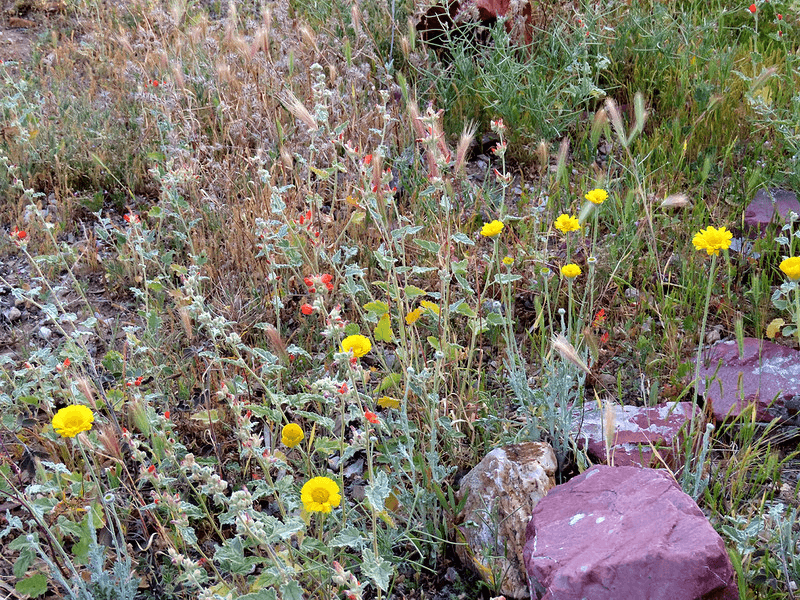
• 2nd best access to native plant suppliers.
• 90th U.S. city for the biggest yard space (13,243 square feet or 0.3 acres) — room for homeowners to make a difference with their landscaping choices.
• Has been recycling water for over 40 years, with a dedicated reclaimed water distribution system that uses 4.7 billion gallons of recycled wastewater for landscape irrigation.
Local tips: Some of Tucson’s green landscaping initiatives include Tucson Million Trees for urban canopy expansion, Storm to Shade for green stormwater infrastructure, and a Native Plant Preservation Ordinance, protecting natives from development.
A variety of eco-friendly incentives are available for homeowners, including discounts for shade trees, rebates for rainwater harvesting and gray water irrigation systems, and trade-in vouchers for lawn and garden equipment upgrades from Pima County.
Find native plants for your yard at Desert Survivors Inc. Join your local Wild Ones chapter or the Tucson Bird Alliance Habitat at Home program to receive educational materials on making your landscape beneficial to wildlife.
Photo credit: Chic Bee / Flickr / CC BY 2.0
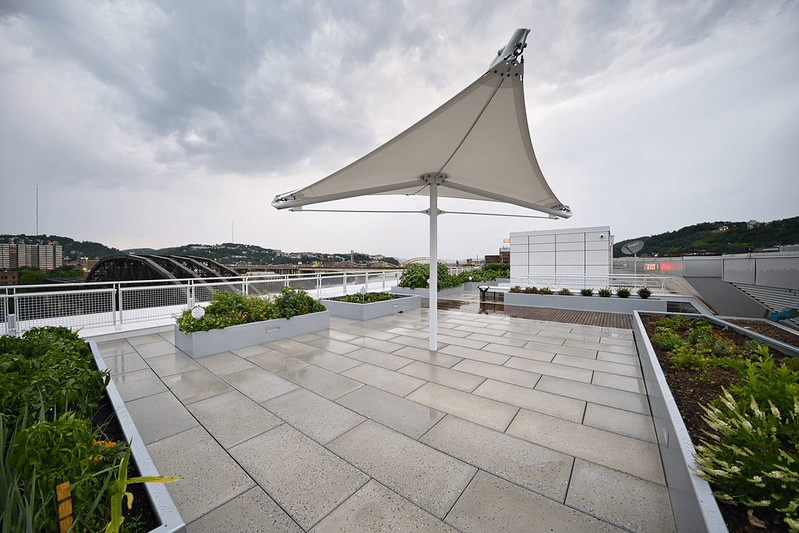
• 10th best access to native plant suppliers.
• The city combats urban heat by investing in canopy expansion, green roofs, and bioswales.
• Pittsburgh Water offers a $40 credit for installing a rain barrel.
Local tips: Pittsburgh is home to the 2nd highest number of living buildings in the U.S., including Phipps Center for Sustainable Landscapes and Frick Environmental Center.
Shop around for your landscape at Audubon Center for Native Plants and Rust Belt Natives.
Become an Urban EcoSteward to help maintain rain gardens around Nine Mile Run or join your local Wild Ones chapter.
Read more: 9 Best Native Plants for Your Pittsburgh Yard
Photo credit: Chris Rycroft / Flickr / CC BY 2.0
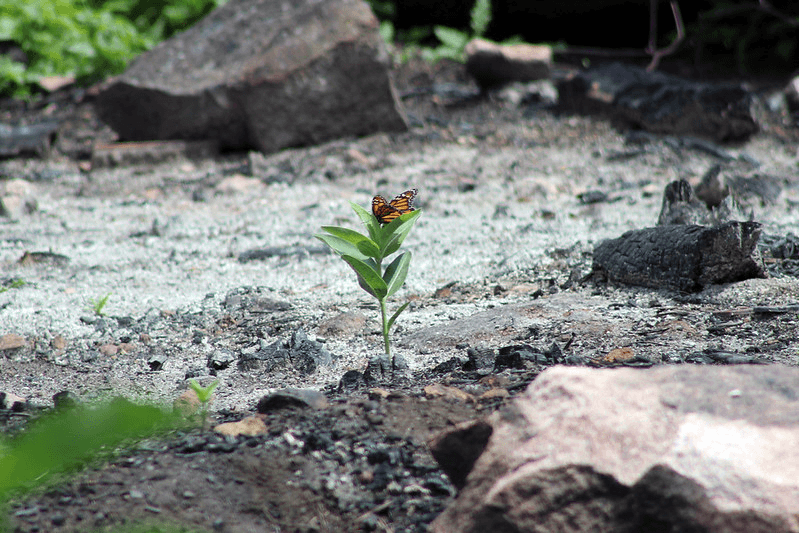
• Urban heat island mitigation: Residents can reduce their stormwater utility fee by up to 45% for installing rain gardens, permeable pavement, green roofs, or stormwater reuse systems with the city’s residential stormwater credits.
• Xcel Energy offers incentives for a variety of electric lawn care equipment, including mowers, trimmers, leaf blowers, snow blowers, edgers, cultivators, and chainsaws.
• 25th best city for rain gardens.
Local tips: Minnesota and Minneapolis encourage eco-friendly landscaping with their Lawns to Legumes and Blooming Boulevards initiatives. Hennepin County offers Good Steward Grants worth up to $25,000 for sustainable landscaping projects.
Residents can find Minnesota native plants at Out Back Nursery & Landscaping.
Join your local Wild Ones chapter to meet fellow native plant enthusiasts.
Read more: Minnesota Native Plants for Your Landscape
Photo credit: USFWS Midwest Region / Flickr / Public domain
Key insights
Thirsty work: What water stress means for going native
Water resources are on the minds of many since drought has impacted over 60% of the lower 48 states so far in 2026. Native plants can help reduce watering needs, but they still need consistent water to get established in the first place.
“Restricting the frequency of landscape irrigation — to 3 days a week, or 2, or just 1 — is the most common and, in my opinion, both the most effective and the most economically efficient strategy.” — Michael Hanemann, Professor of Economics and Julie A. Wrigley Chair in Sustainability, Arizona State University
- Michigan cities have the lowest drought risk, making it easier to upgrade landscapes and experiment with native plants and rain gardens. Michigan also encourages rainwater harvesting.
- Water struggles hit hardest in the Southwest, Colorado, and Kansas. Arizona, Nevada, and New Mexico post the highest average Drought Susceptibility and Water Stress scores. These regions need sustainable lawn care the most, and while going native cuts long-term water use, it doesn’t start off that way. Landscape irrigation can be particularly expensive for homeowners in these regions.
Most native plants need regular watering for 1 to 2 years while their root systems establish, and only settle into their low-water reputation after that.
“It can be simpler and less costly to do it gradually,” says Dan Delventhal, founder of Mow Green in Bridgeport, Connecticut (No. 83). “Often, removing invasive non native plants leads to native plants showing up. Or, choosing one or two native replacements here and there creates progress.”
Sunshine State sustainability
31 Florida cities scored in the top half of our ranking, with many cities having access to local native plant suppliers, a strong urban gardening culture, and encouragement for rainwater harvesting.
One element we couldn’t factor in the ranking but is worth noting is that 36 counties and 98 municipalities legally restrict nitrogen and phosphorus fertilizer use every summer to protect local Florida waterways. It’s no wonder Florida is also one of the best states for birdwatching.
Grassroots and growing
Wild Ones — the volunteer-run group with a local chapter in 204 of our 498 cities — traces back to 9 gardeners in the Milwaukee (No. 73) area who took a natural landscaping workshop in 1977 and turned their enthusiasm into a national movement. Nearly 50 years later, that grassroots energy has spread across the U.S.
For homeowners weighing whether to go native, that kind of built-in community can matter as much as any city rebate. Chapters act as a peer-to-peer knowledge network: Organizing plant swaps, seed exchanges, and native-yard tours.
Rankings by metric and stats
- 194 cities (~39%) offer incentives for residents upgrading to electric lawn care equipment.
- 81 cities (16%) have an urban heat island mitigation program on the books.
- 80 cities (16%) have at least 1 water system using purified recycled water.
- 195 cities (39%) are members of Local Governments for Sustainability (ICLEI).
- 204 cities (41%) have a local Wild Ones chapter.
Cities mitigating urban heat
All the asphalt and concrete in cities makes local temperatures rise, known as the urban heat island effect. Cities are increasingly adopting urban heat island mitigation programs — many of which center on sustainable landscaping practices, like green roofs, tree canopy coverage, and bioswales.
Buying native plants locally
Cities With the Best Native Plant Access
- 1Austin, Texas 13 suppliersAustin, Texas: 13 native plant suppliers, the most of any city in this list.
- 2Tucson, Arizona 11 suppliersTucson, Arizona: 11 native plant suppliers.
- 3Houston, Texas 8 suppliersHouston, Texas: 8 native plant suppliers.
- 4Portland, Oregon 7 suppliersPortland, Oregon: 7 native plant suppliers.
- 5Los Angeles, California 6 suppliersLos Angeles, California: 6 native plant suppliers.
Biggest cities recycling wastewater
Water recycling or reclamation systems treat and purify wastewater so it can be reused for things like landscape irrigation — stretching a city’s water supply further without pulling more from rivers, lakes, or aquifers.
Reclaimed water can also be used to prevent saltwater intrusion, such as at Terminal Island Water Reclamation Plant, where it is used to create a pressure wall of freshwater along the coast that helps prevent saltwater from intruding into the groundwater basin that many Southern California landscapes ultimately draw from.
Largest U.S. Cities Recycling Wastewater
- Los Angeles, California No. 2 overall
- Phoenix, Arizona No. 77 overall
- San Diego, California No. 26 overall
- San Jose, California No. 29 overall
- Jacksonville, Florida No. 53 overall
- Fort Worth, Texas No. 36 overall
- San Francisco, California No. 42 overall
- El Paso, Texas No. 282 overall
- Tucson, Arizona No. 3 overall
- Colorado Springs, Colorado No. 133 overall
Big yards = space for sustainable landscape design
Some cities among the 50 U.S. cities with the largest average yards also scored well in our overall ranking, giving eco-minded homeowners literal room to grow sustainable landscapes.
Room to Grow
- 1Danbury, Connecticut· No. 71 overall 21,475 sq. ft.
- 2Fayetteville, Arkansas· No. 84 overall 20,190 sq. ft.
- 3Stamford, Connecticut· No. 56 overall 19,168 sq. ft.
- 4Bloomington, Indiana· No. 54 overall 18,715 sq. ft.
- 5Cedar Rapids, Iowa· No. 85 overall 18,138 sq. ft.
- 6Asheville, North Carolina· No. 35 overall 17,908 sq. ft.
- 7Knoxville, Tennessee· No. 38 overall 17,850 sq. ft.
- 8Tallahassee, Florida· No. 95 overall 17,026 sq. ft.
- 9Gainesville, Florida· No. 68 overall 16,238 sq. ft.
Behind the ranking
To rank where eco-friendly lawn care is taking root, we compared 498 of the largest U.S. cities across 18 metrics.
Our metrics covered 4 main themes:
- Gardening & Green Living (38%): Number of native plant suppliers, average yard square footage, and rankings pulled from 4 previous studies — Best Cities for Pollinator-Friendly Landscaping, Best Cities for Composting, Best Cities for Urban Gardening, and Best Cities for Rain Gardens.
- Policy & Infrastructure (27%): Number of incentives for electric/smart lawn mowers, ICLEI membership, presence of an urban heat island mitigation program, and number of certified Living Buildings.
- Water Management (24%): Water usage limitation laws, baseline water stress score, rainwater harvesting legality, lawn irrigation cost rank, drought susceptibility, and number of water systems using purified recycled water.
- Public Interest & Engagement (11%): Presence of a local Wild Ones chapter and average monthly Google search volume for top sustainability-related keywords (per 100k residents).
For each of the 500 cities we originally pulled data for, we gathered figures on each factor from the sources listed below. We eliminated 2 cities lacking sufficient data across categories, resulting in a final sample size of 498.
Finally, we calculated scores (out of 100 points) for each city to determine its rank in each factor, each category, and overall. A city’s Overall Score is the weighted average of its scores across all factors and categories. The highest Overall Score ranked “Best” (No. 1) and the lowest “Worst” (No. 498).
Notes:
- The “Worst” among individual factors may not be No. 498 due to ties.
- What we couldn’t include in this ranking due to data limitations: HOA restrictions, fertilizer bans, and turf replacement programs.
Sources
American Council for an Energy-Efficient Economy, U.S. Drought Monitor, Environmental Protection Agency, Federal Emergency Management Agency, U.S. Federal Housing Finance Agency, Google Ads, Homegrown National Park, Lady Bird Johnson Wildflower Center, LawnStarter, Living Future, Local Governments for Sustainability, Other Lawn Love stories, National Agricultural Law Center, U.S. PIRG, State Climate Policy Dashboard, Water 360, Water Education Colorado, Wild Ones, World Resources Institute, World Water Reserve, and Xerces Society
Why fall is the ideal time for adding native plants to your landscape
Transitioning away from a traditional lawn does not require stripping your yard overnight or spending thousands on an immediate overhaul. By replacing turf incrementally — starting with single beds, propagating native perennials from seed, or capturing rainwater — homeowners can build climate-resilient landscapes that support local pollinators while reducing water demands.
Sustainable lawn care is less about achieving instant perfection and more about letting functional, native ecosystems take root over time.
Fall is the ideal time to plant natives. Cooler air combined with soil that’s still holding onto summer’s warmth lets new plantings pour their energy into root growth, and with weed pressure dropping off for the season, natives face less competition for water and nutrients while they get established. Many native seeds also need a cold, moist winter to break dormancy.
By the time spring rolls around, fall-planted natives are already rooted in and ready to bloom for the season’s first pollinators.
Having a hard time finding native plants near you? “Many native plant nurseries will now ship directly to the customer’s home,” says Jamie Viebach, Horticulture Educator with the University of Illinois Urbana-Champaign. “Nurseries that are dedicated to the sale of native plants will ensure that they are grown in a way that best supports your local pollinators.”
Explore our guides below to help make your lawn more sustainable.
- The Native Plant Shortage Is Real — Here’s How to Find What You Need
- 12 Reasons You Should Grow Native Plants
- 17 Best Xeriscaping Plants for Your Landscape
- 14 Sustainable Landscape Design Ideas
- How to Install a Rain Barrel
- Top 9 Eco-Friendly Grass Alternatives for Sustainable Lawns
- How to Make the Switch to Organic Lawn Care This Spring
- Native Cultivar vs. Straight Species Native Plants
- Fire-Resistant Plants for Your Landscape
Hire a local Lawn Love crew to fill your landscape with native plants this fall.
Media resources
Main photo credit: Anthony / Adobe Stock / License
Related Posts:


