| Key takeaways |
|---|
| ● Finding native plants: 82% of plant suppliers claim that demand for native plants has noticeably increased over the past 5 years. Our No. 1 city, Austin, Texas, has the best access to local native plant suppliers. ● Going electric: 194 cities (~39%) offer incentives for residents upgrading to electric lawn care equipment. ● Sustainable landscape infrastructure: 81 cities (16%) have an urban heat island mitigation program on the books. |
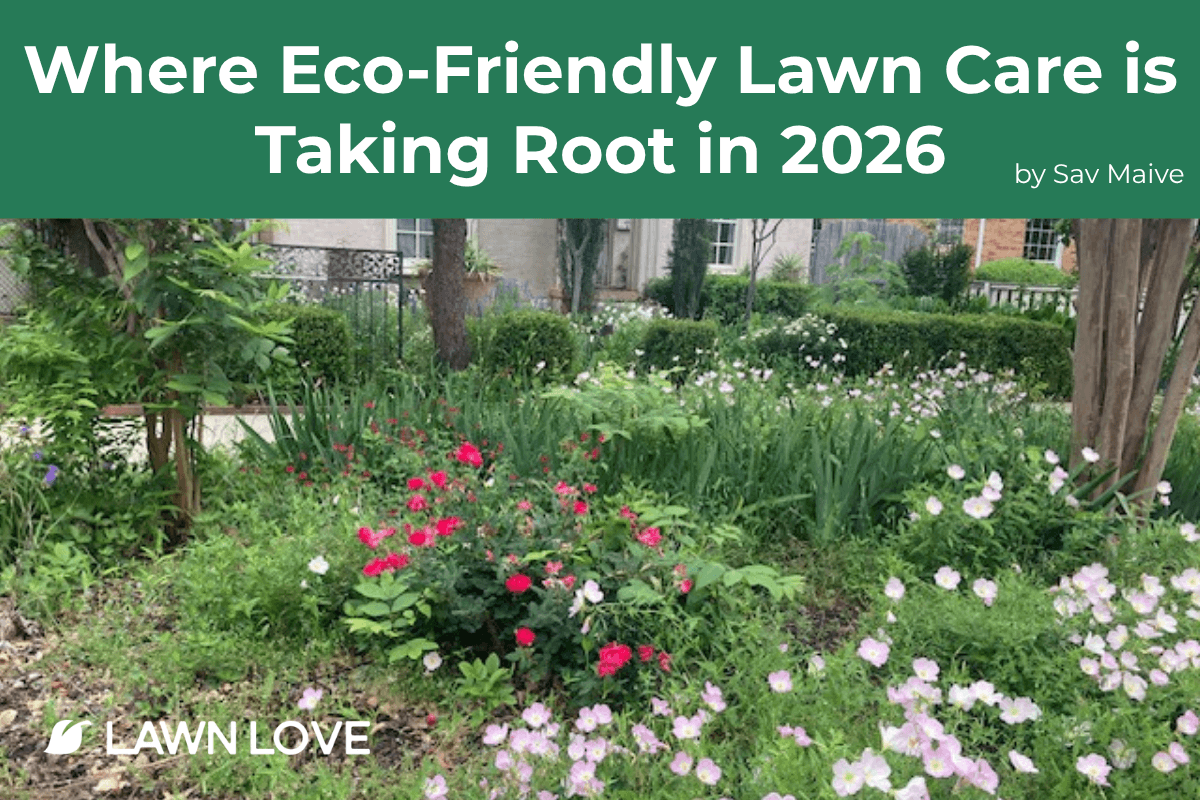
Native plants have been hard to find this year as demand from homeowners looking to “grow green” with more sustainable residential landscapes outpaced what nurseries could supply.
To find out where the momentum and conditions for sustainable lawn care intersect, Lawn Love looked at Where Eco-Friendly Lawn Care is Taking Root in 2026.
What is eco-friendly lawn care? Across nearly 500 of the largest U.S. cities, we looked at access to native plant suppliers, local policies like incentives for upgrading to electric lawn care equipment, and community interest via organizations like Wild Ones.
We considered yard size and water management metrics to see the cities where homeowners have the biggest opportunities to make a difference with their landscaping choices, among 18 total metrics.
Explore our ranking below. To learn how we ranked the cities, see our methodology.
In this article
- City rankings: Where eco-friendly lawn care is taking root in 2026
- Slideshow: City highlights
- Key insights
- Rankings by metric and stats
- Expert take: Hear 8 from sustainable lawn care experts
- Behind the ranking
- Why fall is the ideal time for adding native plants to your landscape
City rankings: Where eco-friendly lawn care is taking root in 2026
How to read this ranking
This isn’t a list of “best” or “worst” cities for sustainable lawn care — it’s a snapshot of where the movement currently has the most traction. Scores combine a couple of different things: proactive adoption (native plant access, policy incentives, water-saving programs) and baseline environmental conditions (water stress, drought susceptibility).
That means a city with strong sustainability programs can still rank lower if it’s working against tougher underlying conditions — and a city with milder conditions can rank higher without necessarily doing more. Use this as a starting point for comparison, not a verdict on any one city’s effort.
See how each city fared in our ranking:
Slideshow: City highlights
Check out the slideshow below for highlights on each of our top 5 cities.
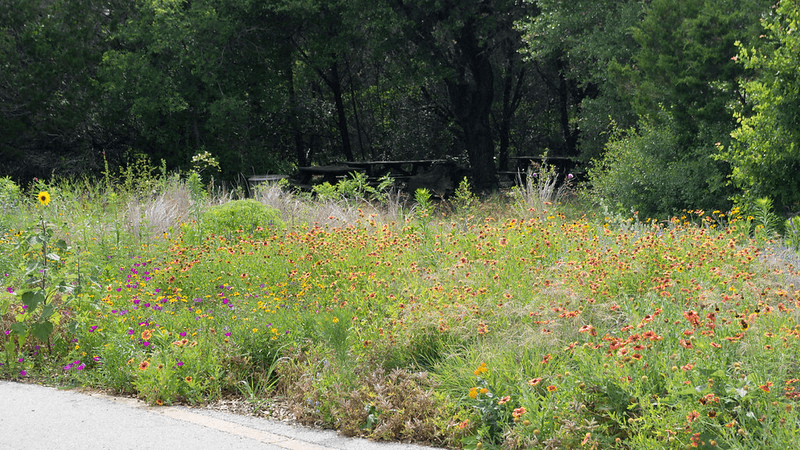
• Best access to native plant suppliers.
• Austin Energy Instant Savings offers seasonal instant rebates for electric lawn mowers.
• The city is mitigating the urban heat island effect with free tree distribution programs, green roof bonuses for developers, and cool pavement pilots.
Local tips: Austin offers several landscape and irrigation rebates for homeowners, from converting turf to natives, to installing a rainwater harvesting system, to recycling graywater for landscape irrigation.
Get inspired with a field trip to Lady Bird Johnson Wildflower Center. Find native plants at The Natural Gardener, Barton Springs Nursery, or Vivero Growers.
Read more: 13 Best Native Plants for Your Austin Garden
Photo credit: Mignon Pelletier / Flickr / CC BY-SA 2.0
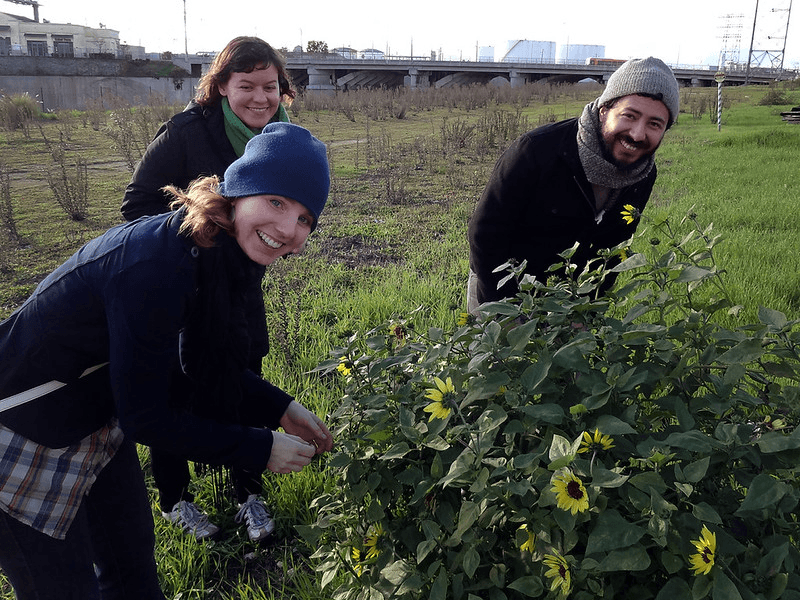
• 5th best access to native plant suppliers.
• The South Coast Air Quality Management District offers up to $250 for electric lawn equipment throughout the year.
• LA is developing multiple water reclamation plants, designed to recycle treated wastewater for many uses, including urban landscape irrigation.
Local tips: Average temperatures in Los Angeles can be about 6 degrees warmer than in surrounding areas. To mitigate the urban heat island effect, LA is investing in green infrastructure, including cool pavement coatings, tree plantings, and replacing pavement with green spaces.
Homeowners can take advantage of the city’s turf replacement rebate, offering $5 per square foot for residential properties.
LA protects native landscapes by requiring a permit for relocating or removing a protected native tree or shrub, including California live oaks, Mexican elderberry, and Southern California black walnut trees.
Explore Calscape for native landscape design inspiration. Find native plants at Artemisia Nursery and Plant Material.
Read more: Drought-Resistant Landscaping Ideas for Los Angeles
Photo credit: Craig Dietrich / Flickr / CC BY 2.0
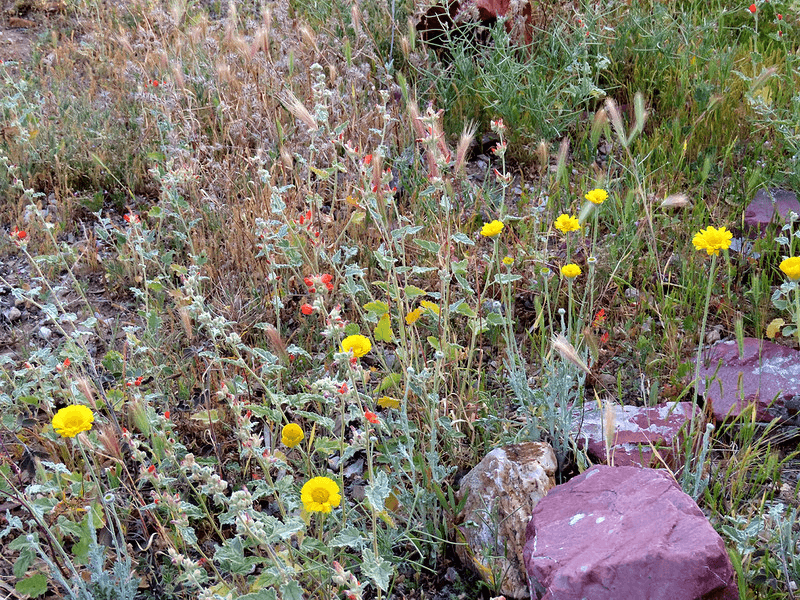
• 2nd best access to native plant suppliers.
• 90th U.S. city for the biggest yard space (13,243 square feet or 0.3 acres) — room for homeowners to make a difference with their landscaping choices.
• Has been recycling water for over 40 years, with a dedicated reclaimed water distribution system that uses 4.7 billion gallons of recycled wastewater for landscape irrigation.
Local tips: Some of Tucson’s green landscaping initiatives include Tucson Million Trees for urban canopy expansion, Storm to Shade for green stormwater infrastructure, and a Native Plant Preservation Ordinance, protecting natives from development.
A variety of eco-friendly incentives are available for homeowners, including discounts for shade trees, rebates for rainwater harvesting and gray water irrigation systems, and trade-in vouchers for lawn and garden equipment upgrades from Pima County.
Find native plants for your yard at Desert Survivors Inc. Join your local Wild Ones Southern Arizona chapter or the Tucson Bird Alliance Habitat at Home program to receive educational materials on making your landscape beneficial to wildlife.
Photo credit: Chic Bee / Flickr / CC BY 2.0
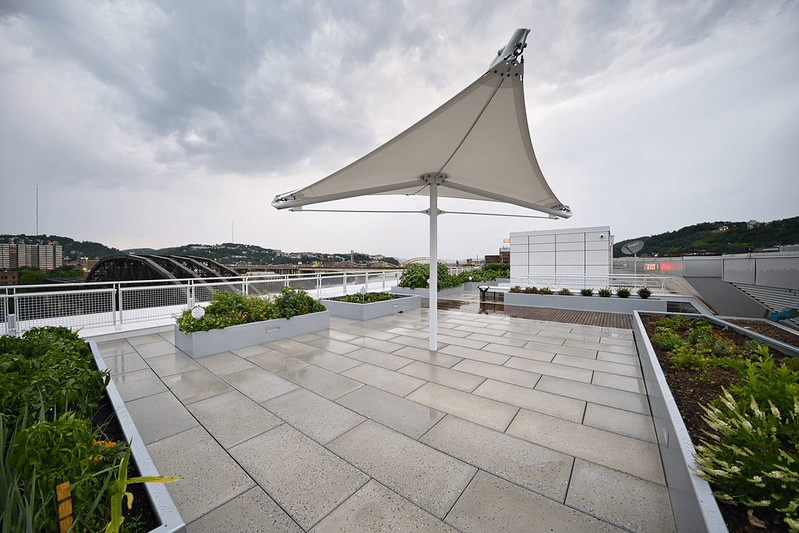
• 10th best access to native plant suppliers.
• The city combats urban heat by investing in canopy expansion, green roofs, and bioswales.
• Pittsburgh Water offers a $40 credit for installing a rain barrel.
Local tips: Pittsburgh is home to the 2nd highest number of living buildings in the U.S., including Phipps Center for Sustainable Landscapes and Frick Environmental Center.
Shop around for your landscape at Audubon Center for Native Plants and Rust Belt Natives.
Become an Urban EcoSteward to help maintain rain gardens around Nine Mile Run or join your local Wild Ones Western PA chapter.
Read more: 9 Best Native Plants for Your Pittsburgh Yard
Photo credit: Chris Rycroft / Flickr / CC BY 2.0
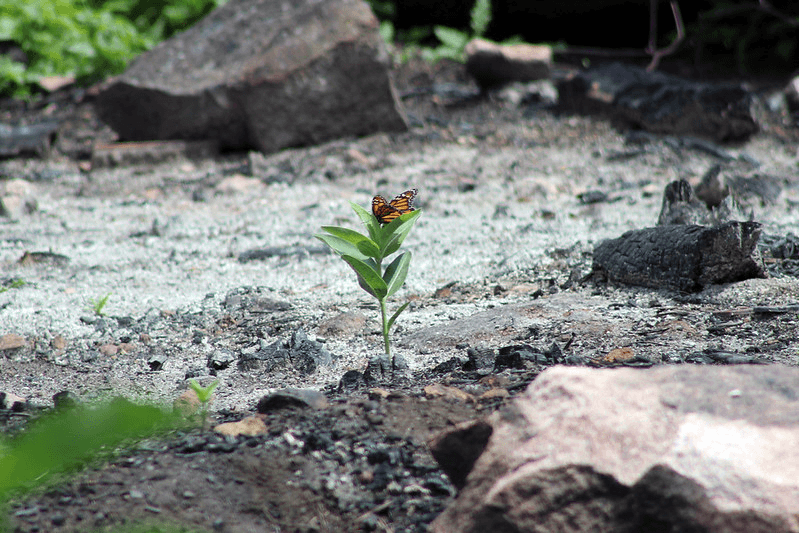
• Urban heat island mitigation: Residents can reduce their stormwater utility fee by up to 45% for installing rain gardens, permeable pavement, green roofs, or stormwater reuse systems with the city’s residential stormwater credits.
• Xcel Energy offers incentives for a variety of electric lawn care equipment, including mowers, trimmers, leaf blowers, snow blowers, edgers, cultivators, and chainsaws.
• 25th best city for rain gardens.
Local tips: Minnesota and Minneapolis encourage eco-friendly landscaping with their Lawns to Legumes and Blooming Boulevards initiatives. Hennepin County offers Good Steward Grants worth up to $25,000 for sustainable landscaping projects.
Residents can find Minnesota native plants at Out Back Nursery & Landscaping.
Join your local Wild Ones Twin Cities chapter to meet fellow native plant enthusiasts.
Read more: Minnesota Native Plants for Your Landscape
Photo credit: USFWS Midwest Region / Flickr / Public domain
Key insights
Thirsty work: What water stress means for going native
Water resources are on the minds of many since drought has impacted over 60% of the lower 48 states so far in 2026. Native plants can help reduce watering needs, but they still need consistent water to get established in the first place.
Restricting the frequency of landscape irrigation — to 3 days a week, or 2, or just 1 — is the most common and, in my opinion, both the most effective and the most economically efficient strategy.” — Michael Hanemann, professor of economics and Julie A. Wrigley Chair in Sustainability, Arizona State University
- Water struggles hit hardest in the Southwest, Colorado, and Kansas. Arizona, Nevada, and New Mexico post the highest average Drought Susceptibility and Water Stress scores. These regions need sustainable lawn care the most, and while going native cuts long-term water use, it doesn’t start off that way. Landscape irrigation can be particularly expensive for homeowners in these regions.
- Michigan cities have the lowest drought risk, making it easier to upgrade landscapes and experiment with native plants and rain gardens. Michigan also encourages rainwater harvesting.
Most native plants need regular watering for 1 to 2 years while their root systems establish, and only settle into their low-water reputation after that.
“It can be simpler and less costly to do it gradually,” says Dan Delventhal, founder of Mow Green in Bridgeport, Connecticut (No. 83). “Often, removing invasive non native plants leads to native plants showing up. Or, choosing one or two native replacements here and there creates progress.”
Sunshine State sustainability
31 Florida cities scored in the top half of our ranking, with many cities having access to local native plant suppliers, a strong urban gardening culture, and encouragement for rainwater harvesting.
One element we couldn’t factor in the ranking but is worth noting is that 36 counties and 98 municipalities legally restrict nitrogen and phosphorus fertilizer use every summer to protect local Florida waterways. It’s no wonder Florida is also one of the best states for birdwatching.
Grassroots and growing
Wild Ones — the volunteer-run group with a local chapter in 204 of our 498 cities — traces back to 9 gardeners in the Milwaukee (No. 73) area who took a natural landscaping workshop in 1977 and turned their enthusiasm into a national movement. Nearly 50 years later, that grassroots energy has spread across the U.S.
For homeowners weighing whether to go native, that kind of built-in community can matter as much as any city rebate. Chapters act as a peer-to-peer knowledge network: Organizing plant swaps, seed exchanges, and native-yard tours.
Rankings by metric and stats
- 194 cities (~39%) offer incentives for residents upgrading to electric lawn care equipment.
- 81 cities (16%) have an urban heat island mitigation program on the books.
- 80 cities (16%) have at least 1 water system using purified recycled water.
- 195 cities (39%) are members of Local Governments for Sustainability (ICLEI).
- 204 cities (41%) have a local Wild Ones chapter.
Cities mitigating urban heat
All the asphalt and concrete in cities makes local temperatures rise, known as the urban heat island effect. Cities are increasingly adopting urban heat island mitigation programs — many of which center on sustainable landscaping practices, like green roofs, tree canopy coverage, and bioswales.
Buying native plants locally
Cities With the Best Native Plant Access
- 1Austin, Texas 13 suppliersAustin, Texas: 13 native plant suppliers, the most of any city in this list.
- 2Tucson, Arizona 11 suppliersTucson, Arizona: 11 native plant suppliers.
- 3Houston, Texas 8 suppliersHouston, Texas: 8 native plant suppliers.
- 4Portland, Oregon 7 suppliersPortland, Oregon: 7 native plant suppliers.
- 5Los Angeles, California 6 suppliersLos Angeles, California: 6 native plant suppliers.
Biggest cities recycling wastewater
Water recycling or reclamation systems treat and purify wastewater so it can be reused for things like landscape irrigation — stretching a city’s water supply further without pulling more from rivers, lakes, or aquifers.
Reclaimed water can also be used to prevent saltwater intrusion, such as at Terminal Island Water Reclamation Plant in Los Angeles, where it is used to create a pressure wall of freshwater along the coast that helps prevent saltwater from intruding into the groundwater basin that many Southern California landscapes ultimately draw from.
Largest U.S. Cities Recycling Wastewater
- Los Angeles, California No. 2 overall
- Phoenix, Arizona No. 77 overall
- San Diego, California No. 26 overall
- San Jose, California No. 29 overall
- Jacksonville, Florida No. 53 overall
- Fort Worth, Texas No. 36 overall
- San Francisco, California No. 42 overall
- El Paso, Texas No. 282 overall
- Tucson, Arizona No. 3 overall
- Colorado Springs, Colorado No. 133 overall
Big yards = space for sustainable landscape design
Some cities among the 50 U.S. cities with the largest average yards also scored well in our overall ranking, giving eco-minded homeowners literal room to grow sustainable landscapes.
Room to Grow
- 1Danbury, Connecticut· No. 71 overall 21,475 sq. ft.
- 2Fayetteville, Arkansas· No. 84 overall 20,190 sq. ft.
- 3Stamford, Connecticut· No. 56 overall 19,168 sq. ft.
- 4Bloomington, Indiana· No. 54 overall 18,715 sq. ft.
- 5Cedar Rapids, Iowa· No. 85 overall 18,138 sq. ft.
- 6Asheville, North Carolina· No. 35 overall 17,908 sq. ft.
- 7Knoxville, Tennessee· No. 38 overall 17,850 sq. ft.
- 8Tallahassee, Florida· No. 95 overall 17,026 sq. ft.
- 9Gainesville, Florida· No. 68 overall 16,238 sq. ft.
Expert take: Hear from 8 sustainable lawn care experts
Sustainable lawn care is a balancing act. It requires matching plants to your yard’s unique conditions, maximizing natural sunlight and water, and timing installation so your landscape thrives year after year.
We asked experts in horticulture, landscape design, and water economics how homeowners should approach going native — from sourcing plants to setting up their first rain barrel. Their full insights are below.
- Baoxin Chang (Texas A&M University): The biggest misconception is that native landscapes are maintenance-free — they actually demand more plant-specific knowledge than a lawn.
- Douglas Tallamy (University of Delaware): The real misconception is curb appeal, not cost or upkeep — a well-designed native yard doesn’t have to look wild.
- Scott Curry (Colorado State University): Homeowners intimidated by supplier gaps can start their own plants from seed.
- Jessica Lubell-Brand (University of Connecticut): Natives are climate-adapted, not carefree — they can still struggle with pests and disease, and won’t always hold visual interest year-round.
- Dan Delventhal (MowGreen LLC): Overwatering, more than drought itself, is usually what pushes cities into landscape watering restrictions.
- Michael Hanemann (Arizona State University): Capping landscape irrigation to a few set days a week is the most common — and most cost-effective — way cities respond to water shortages.
- Jamie Viebach (Illinois Extension): Big-box “native wildflower mixes” are rarely local ecotypes — check the label for botanical names, or buy single-species seed packets instead.
- What’s the biggest misconception homeowners have about going native with their landscaping — cost, maintenance, or curb appeal?
- For homeowners in a city with few local native plant suppliers, what’s the best way to actually source native plants and start a pollinator-friendly yard?
- Where rainwater harvesting is legal, what should a homeowner know before setting up their first system?
- In cities with high water stress but no usage restrictions yet, what’s the tipping point that usually forces a city to act?
- When a homeowner buys a ‘native wildflower mix’ at a big-box store, how often are they actually getting ecologically appropriate local ecotypes versus aggressive cultivars or non-native fillers?








What’s the biggest misconception homeowners have about going native with their landscaping — cost, maintenance, or curb appeal?
Perhaps cost is the biggest misconception, because many shy away for fear of costs, while others throw down for design work and a significant project.
It can be simpler and less costly to do it gradually. And maintenance will be slightly lower due to the suitability of the climate for the plant. Often, removing invasive non native plants leads to native plants showing up. Or, choosing one or two native replacements here and there creates progress.
For homeowners in a city with few local native plant suppliers, what’s the best way to actually source native plants and start a pollinator-friendly yard?
There are usually sustainability people in the city who can provide resources. Often, just a short distance away, there is a suburban nursery with offerings.
Check sustainability groups who cooperate with seed exchanges and plant sales.
In cities with high water stress but no usage restrictions yet, what’s the tipping point that usually forces a city to act?
People water too much in general. That usually forces cities to clamp down. Watering is often a once-a-week thing, if at all (maybe you got the one-inch quota by rain). Greatly misunderstood issue, watering is.
When a homeowner buys a ‘native wildflower mix’ at a big-box store, how often are they actually getting ecologically appropriate local ecotypes versus aggressive cultivars or non-native fillers?
This can be ascertained by reading the label or calling the vendor. Online resources like American Meadows are really good about specifying their mix contents.
In cities with high water stress but no usage restrictions yet, what’s the tipping point that usually forces a city to act?
When I served on the staff of the California Water Resources Control Board in 1986-88, helping to draft a proposal for what was called a new California Water Ethic, I consulted Cooperative Extension specialists at UC Riverside to identify low water-using forms of turf that might be required for urban landscape uses — the type of grass used can make a big difference.
Cities impose landscape watering restrictions when there is a water shortage — typically due to a drought. Restricting the frequency of landscape irrigation — to 3 days a week, or 2, or just 1 — is the most common and, in my opinion, both the most effective and the most economically efficient strategy (other economists dispute the last statement, but they are wrong).
What’s the biggest misconception homeowners have about going native with their landscaping — cost, maintenance, or curb appeal?
I think the biggest misconception is curb appeal. Our culture has adopted the perfect manicured lawn as a status symbol of the rich or at least of the good citizen. Any landscape that differs from that static image can give people pause.
But we can reduce the size of our lawns, which do not sequester carbon, support pollinators, support food webs, or manage our watersheds, and landscape with native plants that do all of those things without it being wild and messy. If your native yard is messy, you are not maintaining it or have designed it poorly.
For homeowners in a city with few local native plant suppliers, what’s the best way to actually source native plants and start a pollinator-friendly yard?
It’s true, right now in many places the demand for native plants exceeds the supply. But this is a business opportunity for nurserymen, and more and more are carrying natives to meet this demand.
The advent of AI can help you find native sources. Just ask an AI search engine where to find natives, or particular natives in your county or city, and sources will pop up in seconds.
When a homeowner buys a “native wildflower mix” at a big-box store, how often are they actually getting ecologically appropriate local ecotypes versus aggressive cultivars or non-native fillers?
Almost never. Those seed packets are assembled without ecoregion in mind. Many of them include non-native plants like poppies and snapdragons along with a few natives.
What’s the biggest misconception homeowners have about going native with their landscaping — cost, maintenance, or curb appeal?
Sometimes the word “native” can elicit thoughts of rugged grasslands, thickets of brush, and unkempt forests that aren’t always the most attractive to look at. In many residential cases, this isn’t the case. Residential xeriscapes can take on many forms that still provide strong ecological, social, and economic benefits while still creating a lot of curb appeal. Native plants of the United States are diverse and beautiful in all the different eco-regions. With proper plant selection, it is easy to achieve a landscape that is interesting all year-round!
Side note: let’s not confuse xeriscaping with “Zeroscaping.” That term has been really damaging to native plant adoption because it makes it sound like zero plants are okay when converting turfgrass. That couldn’t be further from the truth, as large swaths of unshaded gravel can negatively impact neighborhoods and cities in many ways. Plants are truly the critical element in creating the best native and water-conservative landscapes.
Landscape conversion can be costly. A Denver Water Board consultant quoted between $5 and $10 per square foot for finished projects. This can seem like a daunting investment, but there is a saving grace. Studies in extension journals have indicated that front yard landscapes that prioritize mature and diverse plant material offer a higher real estate selling price when you go to sell your home. The study quoted between 5% and 12% higher selling prices. This is a loose connection right now, and more research is needed to confirm this finding, but there is a promising return on investment structure for residential properties!
No landscape is maintenance-free; that is a myth. For native style herbaceous landscapes, you are really trading pushing a lawn mower for picking some weeds; they both take time in the end.
I personally find tending my garden therapeutic as it gives me a release from the fast-paced digital world we all now live in. In truth, that is an intangible benefit that many don’t consider; caring for and growing things creates good feelings, and that can have a positive impact on mental health.
Gardening is one of the most popular hobbies in the world for a reason, so why not let your front yard become a fun hobby instead of a nuisance?
For homeowners in a city with few local native plant suppliers, what’s the best way to actually source native plants and start a pollinator-friendly yard?
This can be a difficult challenge for smaller communities. There are not reputable garden centers that have the native plants people are looking for everywhere, but gardeners are crafty.
One suggestion I would have is to propagate your own from seed. Some of the more common native perennials like coneflowers, blanket flower, penstemon, and grasses can be started inside similar to garden vegetables.
Kits with grow lights, a heater, cell packs, and growing medium are available online for a reasonable price. Start with plants that don’t need any complex process to start; some natives require specific protocols to germinate seeds and might be outside the means of the average homeowner.
Start with research on the process for plants you want to grow, then have fun growing!
In cities with high water stress but no usage restrictions yet, what’s the tipping point that usually forces a city to act?
An agricultural economist put it best: People can handle cutting back on lawn watering a little bit, but once water supply starts to affect whether you can flush your toilet or not, that’s a problem.
Once water scarcity starts to creep into the public’s day-to-day lives is really the answer. I think people would be surprised how much water supply affects the cost of food, urban beautification, recreation, and public safety. In the western United States, water in major reservoirs really does have an impact on all those areas.
When a homeowner buys a ‘native wildflower mix’ at a big-box store, how often are they actually getting ecologically appropriate local ecotypes versus aggressive cultivars or non-native fillers?
This isn’t my area of expertise either, sadly. It’s hard to know exactly what’s in those seed packets.
The best thing I can say is buy your seeds from a reputable garden center or a garden-focused online shop. Always read the label; if it discloses the seed mixes, with special attention to the botanical names, compare that to the plant you are intending to grow and make sure it matches.
I would avoid mixes in general; aim for single-species seed packets so it’s easier to identify exactly what you have.
For homeowners in a city with few local native plant suppliers, what’s the best way to actually source native plants and start a pollinator-friendly yard?
Many native plant nurseries will now ship directly to the customer’s home. Look for a nursery that is located in or in a state adjacent to your state) and specializes in native plants. While many traditional nurseries may have some native plants available for sale, chances are they may not have locally sourced genetics, plants may be cultivars (an issue for some gardeners), and most importantly, plants may be treated similarly to conventional ornamental plants, which can include the application of pesticides.
Nurseries that are dedicated to the sale of native plants will ensure that they are grown in a way that best supports your local pollinators.
Where rainwater harvesting is legal, what should a homeowner know before setting up their first system?
First, figure out where you intend to use the water. This will help you select which gutter to attach your rain barrel to. Water from your roof is not recommended to be used on vegetable gardens or edible plants, but is fine for ornamental plants, houseplants, car washing, etc.
Next, you’ll want to estimate how much water you’re looking to hold. If you’re collecting from your home’s roof, calculate the approximate square footage that empties into the gutter you will attach your rain barrel to. There are online calculators that will help you figure out how much water this will translate to in an average rainfall. Use that to find an appropriately sized rain barrel.
You’ll want a way to divert water if your rain barrel is full or if you’re in an area that experiences freezing temperatures in winter. There are specialized attachments you can use on the gutter to help direct water into the barrel, or out somewhere else.
Make sure your barrel is insect-tight. This usually means having a screen over the intake to prevent mosquitoes from being able to enter and reproduce in the standing water.
Having a thumb valve at the bottom of the rain barrel makes it easy to turn the water on and off. These usually also have a threaded opening to attach a hose. The rain barrel should also be up on blocks or a stand so that gravity can help increase the water flow.
When a homeowner buys a ‘native wildflower mix’ at a big-box store, how often are they actually getting ecologically appropriate local ecotypes versus aggressive cultivars or non-native fillers?
Rarely, if ever. Every “wildflower mix” I have seen sold at big box stores in my area (Illinois) has been filled with maybe 1-2 native species (often the more aggressively spreading ones, with totally unknown genetics), many non-native species that may or may not actually help pollinators (and are unlikely to come back the following year because they are not suited for your zone) and very often a few species that are known to be invasive.
I highly discourage people from buying these kinds of mixes unless you know what you’re looking at. Check the list of plants to see if they’re recommended to plant in your area. The easiest way to check anything you are unsure of is to do an internet search for “[plant name] [your state] invasive.”
You’re better off buying individual seed packets for plants that fit the conditions of the site you want to plant. While it may be more work (and more expensive), you’ll see better results in the long term.
What’s the biggest misconception homeowners have about going native with their landscaping — cost, maintenance, or curb appeal?
Natives are promoted as being well adapted to the local climate, which is true; however, they are not carefree, where nothing bothers them. They can be susceptible to insect and disease problems. Also, natives may not look great all year round like homeowners have come to expect from selected non-native landscape plants.
For homeowners in a city with few local native plant suppliers, what’s the best way to actually source native plants and start a pollinator-friendly yard?
Native plants can be purchased online from nurseries, or maybe plan a road trip to a specialty garden center in the suburbs of your state.
When a homeowner buys a ‘native wildflower mix’ at a big-box store, how often are they actually getting ecologically appropriate local ecotypes versus aggressive cultivars or non-native fillers?
Native mixes from box stores are most likely not local at all. Yes, they may contain seed from non-native plants and even invasive species.
What’s the biggest misconception homeowners have about going native with their landscaping — cost, maintenance, or curb appeal?
I do think native plant gardens have a reputation for looking wild and unwieldy, but to me, that is more about the gardener than the garden itself.
There are hundreds of native plants available in trade, and many of them fit quite nicely in a more traditional garden aesthetic. So even if you aren’t looking to convert your lawn into a full-on meadow, there are still plenty of native plants for you.
For homeowners in a city with few local native plant suppliers, what’s the best way to actually source native plants and start a pollinator-friendly yard?
Luckily, the native plant industry is steadily growing, and there are more and more opportunities to get native plants for your landscape. Most, if not all, states in the U.S. have a native plant or wildflower society that often lists native plant nurseries and pop-up native plant sales or swaps. This information is increasingly more common on the websites of state agencies like departments of agriculture or natural resources, or at university extension sites.
If there truly aren’t any options near you, many retail nurseries will ship plants directly to customers. Just make sure that if you are purchasing native plants from out of state, it is truly native to your area. Not all plants that are native to Minnesota are found in Maine, Maryland, or Montana.
When a homeowner buys a ‘native wildflower mix’ at a big-box store, how often are they actually getting ecologically appropriate local ecotypes versus aggressive cultivars or non-native fillers?
I have definitely seen a fair share of ‘native wildflower’ seed packets with non-native seeds included. I can’t speculate how common or uncommon this is, but I would say unless you’re comfortable reading the back of a seed packet and determining whether the species included are native or not, I would seek out seeds from a reputable nursery.
Cultivars of native plants are a bit of a different question. There is certainly some evidence that native cultivars don’t provide the same ecosystem services as straight species, but I am hesitant to suggest that we let perfection be the enemy of good. I think it comes down to gardeners’ goals for their properties — if you are trying to create a naturalistic wildlife habitat, then sure, straight species are the way to go. But if there are native cultivars that have traits that appeal to you as a gardener, I think there is a place for native cultivars.
What’s the biggest misconception homeowners have about going native with their landscaping — cost, maintenance, or curb appeal?
One of the biggest misconceptions about alternative landscaping approaches, such as native plant gardens, is related to maintenance. Compared with traditional home lawns, native plant landscapes are often perceived as low-maintenance or maintenance-free.
While lawns require regular mowing, irrigation, and fertilization during the growing season, these management practices are well understood by the general public. As long as proper mowing, irrigation, and fertilization practices are followed, lawn maintenance can actually be relatively straightforward because turfgrass provides a uniform surface, especially across larger areas.
In contrast, maintaining a native plant garden is often more site-specific and requires greater planning as well as knowledge of the individual plant species within the landscape. The complexity of garden designs can also limit the use of powered maintenance equipment. For example, weed control in many native plant gardens relies heavily on hand-pulling, which is time-consuming and may present safety concerns such as exposure to stinging insects or thorny plants.
Another common misconception is related to cost. Most lawn grasses are perennial and do not need to be replanted each year. However, if annual plants are incorporated into a garden design, they must be purchased and replanted every season. Similarly, if mulch is used as a ground cover, it must be replenished periodically to maintain both its functionality and aesthetic appeal.
Regarding curb appeal, a well-maintained lawn can continue to provide an attractive appearance even during dormancy while requiring relatively little maintenance. In contrast, gardens containing species that enter dormancy during cooler seasons may experience a significant decline in visual appeal, particularly if seasonal interest has not been incorporated into the design.
Where rainwater harvesting is legal, what should a homeowner know before setting up their first system?
One of the first things homeowners should consider is conducting a water quality test. Many plants are sensitive to water characteristics such as pH, salinity, and concentrations of certain elements. Testing can help determine whether the harvested rainwater is suitable for irrigation or whether treatment may be necessary before use.
Homeowners should also understand the water requirements of the plants they intend to grow and estimate the amount of rainwater they are likely to collect throughout the year. Comparing water demand with expected water availability can help determine whether supplemental irrigation sources will still be needed. This assessment can also serve as a guide when designing an irrigation system and developing an irrigation schedule.
There is much more to consider when discussing sustainable landscaping, including its ecological, social, and economic impacts. My responses only scratch the surface of these topics, but I hope they provide useful context.
Behind the ranking
To rank where eco-friendly lawn care is taking root, we compared 498 of the largest U.S. cities across 18 metrics.
Our metrics covered 4 main themes:
- Gardening & Green Living (38%): Number of native plant suppliers, average yard square footage, and rankings pulled from 4 previous studies — Best Cities for Pollinator-Friendly Landscaping, Best Cities for Composting, Best Cities for Urban Gardening, and Best Cities for Rain Gardens.
- Policy & Infrastructure (27%): Number of incentives for electric/smart lawn mowers, ICLEI membership, presence of an urban heat island mitigation program, and number of certified Living Buildings.
- Water Management (24%): Water usage limitation laws, baseline water stress score, rainwater harvesting legality, lawn irrigation cost rank, drought susceptibility, and number of water systems using purified recycled water.
- Public Interest & Engagement (11%): Presence of a local Wild Ones chapter and average monthly Google search volume for top sustainability-related keywords (per 100k residents).
For each of the 500 cities we originally pulled data for, we gathered figures on each factor from the sources listed below. We eliminated 2 cities lacking sufficient data across categories, resulting in a final sample size of 498.
Finally, we calculated scores (out of 100 points) for each city to determine its rank in each factor, each category, and overall. A city’s Overall Score is the weighted average of its scores across all factors and categories. The highest Overall Score ranked “Best” (No. 1) and the lowest “Worst” (No. 498).
Notes:
- The “Worst” among individual factors may not be No. 498 due to ties.
- What we couldn’t include in this ranking due to data limitations: HOA restrictions, fertilizer bans, and turf replacement programs.
Sources
American Council for an Energy-Efficient Economy, U.S. Drought Monitor, Environmental Protection Agency, Federal Emergency Management Agency, U.S. Federal Housing Finance Agency, Google Ads, Homegrown National Park, Lady Bird Johnson Wildflower Center, LawnStarter, Living Future, Local Governments for Sustainability, Other Lawn Love stories, National Agricultural Law Center, U.S. PIRG, State Climate Policy Dashboard, Water 360, Water Education Colorado, Wild Ones, World Resources Institute, World Water Reserve, and Xerces Society
Why fall is the ideal time for adding native plants to your landscape
Transitioning away from a traditional lawn does not require stripping your yard overnight or spending thousands on an immediate overhaul. By replacing turf incrementally — starting with single beds, propagating native perennials from seed, or capturing rainwater — homeowners can build climate-resilient landscapes that support local pollinators while reducing water demands.
Sustainable lawn care is less about achieving instant perfection and more about letting functional, native ecosystems take root over time.
Fall is the ideal time to plant natives. Cooler air combined with soil that’s still holding onto summer’s warmth lets new plantings pour their energy into root growth, and with weed pressure dropping off for the season, natives face less competition for water and nutrients while they get established. Many native seeds also need a cold, moist winter to break dormancy.
By the time spring rolls around, fall-planted natives are already rooted in and ready to bloom for the season’s first pollinators.
Having a hard time finding native plants near you? “Many native plant nurseries will now ship directly to the customer’s home,” says Jamie Viebach, horticulture educator with the University of Illinois Urbana-Champaign. “Nurseries that are dedicated to the sale of native plants will ensure that they are grown in a way that best supports your local pollinators.”
Explore our guides below to help make your lawn more sustainable.
- The Native Plant Shortage Is Real — Here’s How to Find What You Need
- 12 Reasons You Should Grow Native Plants
- 17 Best Xeriscaping Plants for Your Landscape
- 14 Sustainable Landscape Design Ideas
- How to Install a Rain Barrel
- Top 9 Eco-Friendly Grass Alternatives for Sustainable Lawns
- How to Make the Switch to Organic Lawn Care This Spring
- Native Cultivar vs. Straight Species Native Plants
- Fire-Resistant Plants for Your Landscape
Hire a local Lawn Love crew to fill your landscape with native plants this fall.
Media resources
Main photo credit: Jeff Herman, modified by Sav Maive (text added)
Related Posts:


