| Key takeaways: |
|---|
| ● Fall's cooler air and warm soil make it an excellent time to plant trees, shrubs, and perennials. ● Plant spring-flowering bulbs once the soil temperature drops below 60 degrees. ● A fresh layer of mulch, a clean edge on garden beds, and one more mow tie a yard together for the last weeks before winter. |

The best fall landscaping ideas combine seasonal color with planting trees, shrubs, and spring bulbs while the soil is still warm, and refreshing beds with mulch before winter.
If you don’t want to spend your autumn weekends working on your yard, Lawn Love helps you connect with local landscaping and gardening pros who can handle your entire fall yard prep.
- 1. Plant a tree or shrub while the soil is still warm
- 2. Plant spring-flowering bulbs now for next spring
- 3. Swap in fall-blooming annuals and perennials
- 4. Add ornamental grasses for movement and winter interest
- 5. Build a layered planting bed instead of a single row
- 6. Refresh mulch in garden beds
- 7. Edge and define garden beds
- 8. Divide overgrown perennials
- 9. Cut back selectively and leave some seed heads standing
- 10. Add fall-blooming container arrangements
- 11. Clean paths and patios
- 12. Give your lawn one last defined mow
- 13. Add a fire feature or seating area
- 14. Plant a fall vegetable or herb bed
- 15. Regrade and fix drainage issues
- FAQs
1. Plant a tree or shrub while the soil is still warm
In cool and temperate regions, early fall through late October is a good planting window, while in warmer climates, planting can continue through late fall and winter.
Possible choices include maples, redbud, crabapple, and most deciduous shrubs. You should hold off on broadleaf evergreens like rhododendrons until spring.
Tammy Sons, founder and CEO of TN Nursery in Altamont, Tennessee, cautions against pruning a new or established tree during the fall simply because it looks overgrown. For most deciduous trees, that right time is late winter dormancy, not fall, so stick to planting during this period.
“The biggest mistake I see is people cutting a tree down simply because it looks too big, without asking themselves why and when it should be pruned,” Sons says. “I would much rather homeowners make a few cuts at the right time than severely reduce a healthy canopy in one sudden blow.”
2. Plant spring-flowering bulbs now for next spring
Tulips, daffodils, crocus, and hyacinths are the best bulbs for fall planting, once soil temperatures cool to 60 degrees or below. Cluster them in groups of 5 or more near a front walkway or under a deciduous tree for a natural look.
Squirrels, chipmunks, voles, and other wildlife may dig up or eat newly planted tulip and crocus bulbs. If you want to skip the extra labor, plant daffodils, alliums, or snowdrops instead of tulips because squirrels generally leave them alone.
If you do want to go with tulips and crocus, Colorado State University Extension recommends covering the plantings with a layer of fallen leaves, then covering them with a piece of burlap, staked into the ground with landscape staples.
Read more: A Complete Guide to Planting Spring Bulbs in Fall
3. Swap in fall-blooming annuals and perennials
Mums, asters, ornamental cabbage, and ornamental kale can restore color to beds and containers as summer displays fade. They also hold up well when the first frosts arrive, making them good choices for pots, porches, and front-yard beds.
Where conditions allow, add regionally suitable sedums, coral bells, or goldenrod for foliage, texture, and height.
Read more: 5 Late-season Perennials for a Fall Garden
4. Add ornamental grasses for movement and winter interest
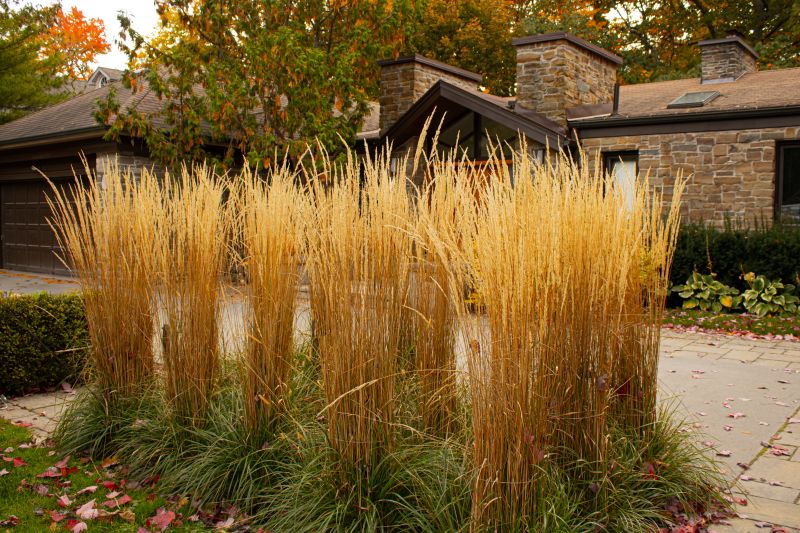
Feather reed grass, switchgrass, and little bluestem catch low fall light and stay standing through winter. This gives a yard structure even after everything else has died back.
Little bluestem, in particular, turns a warm bronze-orange in the fall and is highly deer-resistant, making it a good choice almost anywhere in the country.
Read more: How to Care for Ornamental Grass
5. Build a layered planting bed instead of a single row
Straight bed rows are fine, but they’ll look a bit boring and static after a few seasons. Why not plant in layers?
Put a small flowering tree or shrub in the back, mid-height perennials in the middle, and low groundcover up front. This setup looks more intentional, and you’ll have something blooming at different times of the year.
6. Refresh mulch in garden beds
A new 2-3-inch layer of mulch improves the look of a bed, moderates soil temperature swings through the fall-to-winter transition, and helps new plantings retain moisture. Keep mulch a few inches back from tree trunks and shrub stems to avoid rot.
But do you need to remove old mulch first? Tyler Mainka, president at Best Bark Mulch in Pewaukee, Wisconsin, advises against it.
“Removing all your old mulch is more work than installing mulch, and now you have to pay for mulch at the end of the season too,” Mainka says.
However, Mainka warns against mindlessly piling more on. “Adding another new 2-3 inch layer of mulch will bury your soil and cut off the airflow around your plants in your beds.”
Instead, Mainka suggests a simpler refresh.
“You can take a rake and fluff up the areas that are faded out from the sun that you would like to look newer,” he says. “The reason mulch looks bad is mostly due to the sun fading its color and just the exposure to elements like rain.
“That layer below has stayed pretty safe, you’d be amazed at what a fluff can do,” he points out. “If there are low spots that the mulch has washed away due to rain, then it’s best to grab some bags of mulch to top up those low spots back to 2-3 inches.”
7. Edge and define garden beds
A crisp edge between lawn and bed does more for curb appeal in an afternoon than almost any other single project. You can use a half-moon edger or a spade for a clean cut, or use power tools.
“Most regular-style homeowner weedwackers can be turned vertical for edging beds, if you can hold your hand steady and move straight,” Mainka says.
For a professional look, his company relies on specialized equipment.
“We don’t use anything except an EZ Trench BE400. It produces the firmest and straightest edge with minimal physical labor involved,” he explains. “It also spits out the ground into a beautiful soil material that you can use.”
Read more: 11 Lawn Edging Ideas
8. Divide overgrown perennials
Fall is a workable window to divide many perennials that have outgrown their space, but the right time depends on when the plant blooms. As a rule, you should divide spring-blooming perennials in fall and divide summer or fall-blooming perennials in spring, once new shoots are a few inches tall.
You’ll know a perennial needs dividing before you even measure anything. According to the University of Minnesota Extension, plants needing to be divided produce smaller or fewer flowers than in past years, develop a bald or dead spot at the center of the crown, or require staking to keep from flopping over.
Keep in mind that warm-season ornamental grasses like switchgrass and little bluestem establish best when divided in early spring.
9. Cut back selectively and leave some seed heads standing
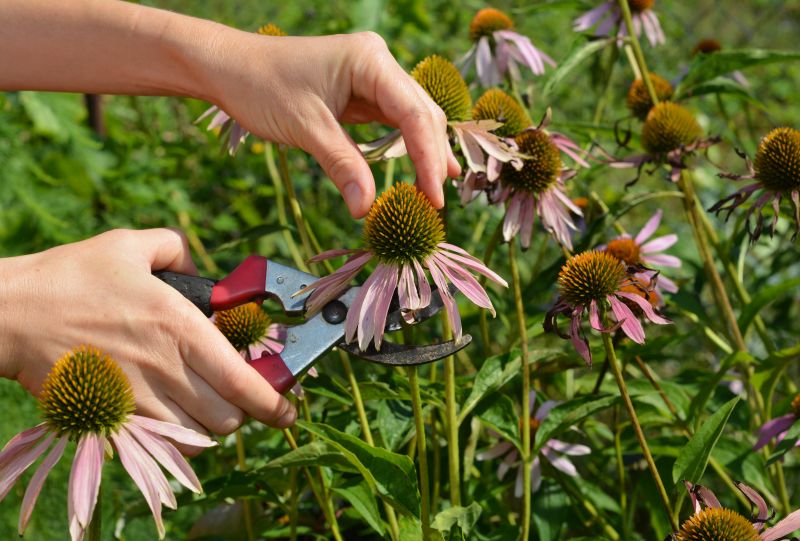
It’s tidier to cut spent perennials to a few inches above the ground, but leaving some pithy or hollow stems standing over winter gives bees and other pollinators a place to overwinter.
Taylor Olberding, franchise owner at Heroes Lawn Care in Omaha, Nebraska, recommends leaving certain plants alone.
“Perennials I like to leave standing would be purple coneflower since the seed heads serve as a winter food source for goldfinches,” Olberding says. “And the stems, they make good nesting spots for native bees.
“Black-eyed Susans, too. I leave those up because those stiff stems act like little snow fences, catching leaves and snow, and that naturally insulates the roots.”
For other plants, Olberding takes a different approach.
“Peonies and garden phlox, those I’ll cut down to about 2 inches above the ground, and I do it after the first hard freeze,” he says. “Reason being, they get sick really easily. There’s this fungus called powdery mildew, and it spreads fast.
“Plus if you leave those dead leaves sitting there on the ground, that lets the fungus overwinter and it’ll just ruin next year’s growth,” he adds.
10. Add fall-blooming container arrangements
A pair of large pots by the front door filled with mums, ornamental kale, and a few pumpkins or gourds is one of the fastest curb-appeal upgrades available. Use a well-draining container and pick a size a couple of inches larger than the root ball.
Adjust your watering habits for the season.
“Fall containers, I water those a lot less than my summer pots,” Olberding says. “Usually once, maybe twice a week.
“Cooler, shorter days, that slows soil evaporation down. But when I do water, I still water them all the way through,” he explains. “And I always check the soil with a finger first, because established roots are dense, and if you let them go bone dry, they’ll actually reject water.”
Read more: 12 Small Front Yard Landscaping Ideas
11. Clean paths and patios
Fall flowers and freshly edged beds stand out more when the paths beside them are clean. Sweep away fallen leaves, then wash off the dirt and buildup left behind by summer. It’s a simple way to brighten a front walk or make a patio more inviting for cool-weather afternoons.
If you use a pressure washer, check that it’s suitable for the surface and test a small, hidden spot first. Too much pressure can damage softer stone or dislodge the sand between pavers.
Read more: 14 Backyard Patio Ideas on a Budget
12. Give your lawn one last defined mow
If you have cool-season grass, lower the mowing height slightly for the final cut or two of the season. If you have warm-season grass, raise the mowing height about a half inch. A tidy, even lawn is the first step for every other fall landscaping project.
“For the very last mow of the year, you want to slowly lower your mower, bring the grass down to right around 2 to 2.5 inches. That’ll help you avoid snow mold without scalping the lawn,” Olberding says.
Read more: How Short to Cut Grass Before Winter
13. Add a fire feature or seating area
Fall is the best time for outdoor evenings. A simple fire pit with a few chairs or a bench extends your yard’s use into the cooler months.
“The number one thing people overlook in fire pits is vertical clearance. People forget to look up! I never put a fire pit under low-hanging branches or roof lines, because that rising heat and those stray sparks, they can ignite dry autumn leaves,” Olberding says.
14. Plant a fall vegetable or herb bed
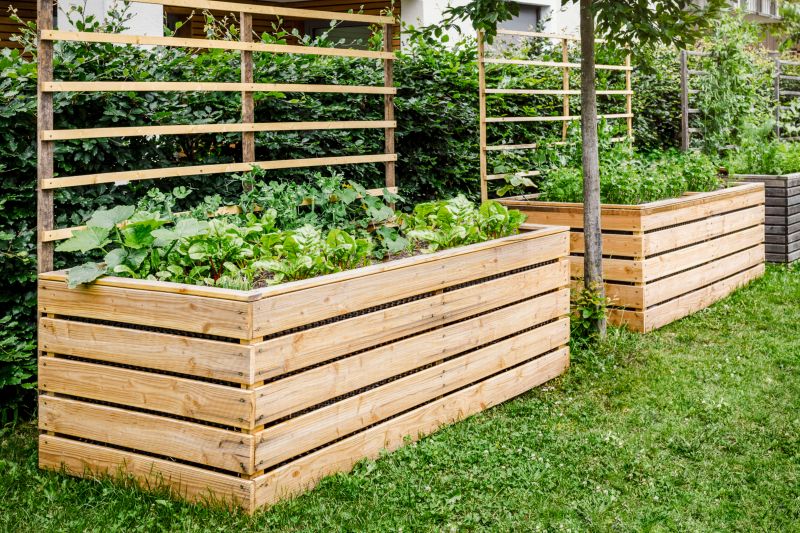
If you want to grow your own food and save money at the grocery store, fall is the perfect time to plant cool-season veggies like kale, spinach, and garlic. All three double as attractive additions to a landscape, not just a food source.
Read more: 5 Vegetables That Thrive in a Fall Garden
15. Regrade and fix drainage issues
With summer growth cut back, fall is the easiest time to see a yard’s hidden issues. Sightlines, bare spots, and awkward transitions are all more visible now than in July. Sketch out changes for next spring while the problem areas are obvious.
“And once summer foliage dies back, the first thing I’m looking for, structurally, is poor drainage and soil erosion,” Olberding says. “Low spots where water’s pooling where heavy rain washed the topsoil away. Those turn into a mud pit by spring, guaranteed.”
“So I use that late fall window, while the ground’s still workable, to regrade slopes, redirect downspouts, put in stone borders, whatever it takes to protect the yard before winter really hits,” he adds.
FAQs
In USDA zones 9 through 11, where the ground rarely freezes, late fall through winter is the best planting window for trees and shrubs, since it avoids the extreme summer heat and drought stress that can stall root growth.
Most trees, shrubs, and perennials need 6 to 8 weeks in the ground before a hard freeze to establish roots.
Keep in mind that average first frost dates range from early September in USDA zone 3 to late November or December in USDA Zone 8 and warmer.
A professional yard cleanup costs between about $32 for a simple job, like clearing dry leaves from a small yard, and over $443 for a full-yard cleanup.
Get expert help with your fall landscaping
Not every project on this list is a weekend DIY job. Some jobs, like bed edging, tree planting, and perennial division, are best left to a professional with the right equipment.
Lawn Love helps you connect with a local gardening and landscaping pro who can bring any of these ideas to life this season.
Sources:
- UF/IFAS Extension
- NC State Extension
- Rutgers NJAES
- Kansas State University Extension
- University of Maryland Extension
- UMass Extension
- Arbor Day Foundation
- Oklahoma State University Extension
- Colorado State University Extension
- University of New Hampshire Extension
- Alabama Cooperative Extension System
- NC State Extension Plant Toolbox
- Penn State Extension
- University of Minnesota Extension
- LSU AgCenter
- University of Minnesota Extension
- South Dakota State University Extension
- Piedmont Master Gardeners
- Xerces Society
- Cornell Cooperative Extension
- Ohio State University Extension
- Iowa State University Extension
Main Image: A maple tree drops its leaves onto a suburban lawn. Photo Credit: Spiroview Inc. / Adobe Stock
Related Posts:


