| Key takeaways |
|---|
| • Flip the trimmer vertically to edge. • Walk forward with the cutting line at a 90-degree angle to the pavement. • Mow first and use the mowed height as your edging guide. • For routine maintenance, you usually don’t need a dedicated edger, but a blade edger is still best for new or severely overgrown edges. |
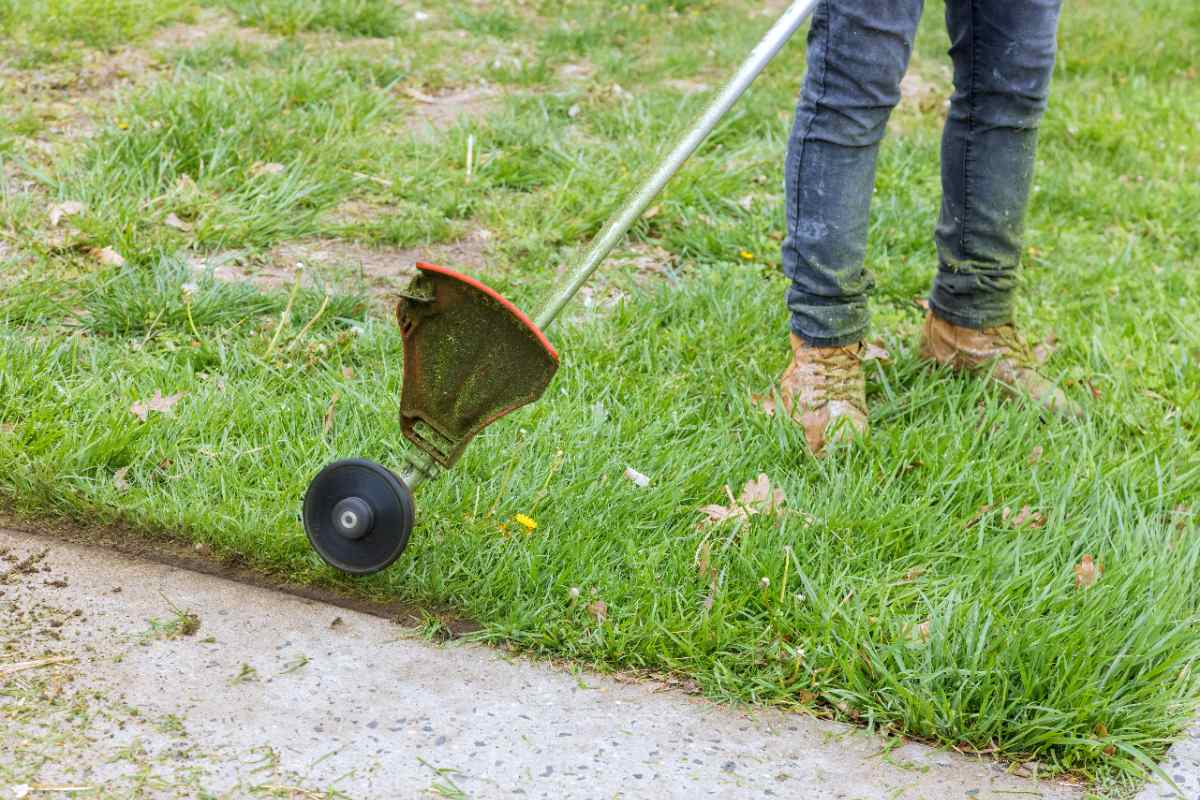
Most homeowners already own a string trimmer, also called a weed eater, and it can double as a lawn edger with one simple adjustment. By flipping the trimmer so the cutting head runs vertically, you can edge along driveways, walkways, and garden beds without buying a separate tool.
If you aren’t getting the results you want, Lawn Love connects you with local lawn care pros who will edge, mow, and trim your yard for a perfect finish every visit.
String trimmer vs. dedicated edger: key differences
| Feature | String trimmer | Dedicated edger |
| Cuts with: | Nylon string | Metal blade |
| Can trim grass/weeds: | Yes | No |
| Creates new edges: | Yes, but less cleanly | Yes |
| Maintains existing edges: | Yes | Yes |
| Avg. cost: | $95–$350 | $30–$300 |
| Best for: | All-around yard maintenance | Ultra-crisp, defined borders |
What you’ll need
- String trimmer (gas, battery, or corded electric)
- Safety glasses or goggles
- Ear protection
- Closed-toe shoes or work boots
- Long pants
- Work gloves
When choosing your trimmer:
Steve Rice, owner at Lawn Kings in Valencia, California, strongly prefers a straight shaft.
“I lean heavily toward a straight shaft because it gives me better reach and a more stable vertical angle,” Rice explains. “Curved shafts tend to fight you when trying to keep a consistent edge line.”
Taylor Olberding, franchise owner at Heroes Lawn Care in Omaha, Nebraska, says that the line profile makes a big difference.
“Square or diamond-shaped lines have sharper edges, so they cut more cleanly and help create a crisper edge,” Olberding says. “Round line works, but it tends to tear more than it cuts, especially in thicker growth.”
Step-by-step: How to edge with a string trimmer

Step 1: Mow first
Always mow your lawn before edging.
“We always stick to the ‘mow, edge, blow’ sequence because mowing sets a clean, consistent height across the lawn,” Olberding says. “That finished cut acts as a visual guide, so when you edge, you’re not guessing where the line should be. It also keeps cleanup efficient. You edge once, then clear everything at the end instead of going back and forth.”
Step 2: Check and adjust your string
Make sure you have enough line. While some pros remove the debris guard for better visibility, you should leave yours on.
“I’ve seen homeowners ask about removing the debris guard, and I don’t recommend it,” Rice says. “The visibility improves, but I’ve personally had debris kick back hard enough to chip a window and bruise a shin, so the safety trade-off isn’t worth it.”
Step 3: Flip the trimmer head vertically

Rotate the trimmer so that the cutting head is vertical, and the line spins along the edge you’re cutting, keeping the debris guard between you and the line so it blocks flying clippings while you work.
Step 4: Position the line at 90 degrees
Hold the cutting line perpendicular to the pavement to create a clean, straight drop-off between the lawn and the hardscape.
Your posture here is very important. Olberding says that the biggest mistake homeowners make is “wrist-steering,” which leads to uneven, wavy lines.
“It’s better to keep your arms steady, lock in your elbows, and move with your whole body,” he advises. “Keep the trimmer head vertical and at a consistent height. Tilting it too much is what causes scalping,” Olberding says.
Step 5: Walk forward slowly and steadily
The easiest way to figure out your spin direction is to briefly run the trimmer and watch which way the debris flies.
“You want to walk so the debris is thrown away from the driveway or bed, not into it,” Rice says.
When you start walking, manage your throttle carefully.
“I run close to full throttle for a clean, crisp cut but ease off slightly in tight areas to stay precise,” Rice explains. “Going too soft on power usually results in frayed edges instead of that sharp, professional line.”
Step 6: Blow clippings off hardscapes
Use a leaf blower to clear clippings from driveways, walkways, and patios. Wet grass clippings on concrete can stain and become slippery.
Pro tips for cleaner edges

- Keep a steady pace: Slowing down or stopping mid-pass creates uneven cuts.
- Don’t edge wet grass: “I’ve learned the hard way that moisture causes the line to tear instead of slice,” Rice says. “This leaves ragged edges and compacts the soil along the trench, which makes future edges look uneven and harder to maintain.”
- Don’t “dig” with the trimmer: Let the string do the work. “Most uneven edges I see come from people tilting the head inconsistently, walking too fast, or holding the trimmer too low and ‘digging,’ which scalps the edge instead of slicing it,” Rice says.
When to use a dedicated edger instead
String trimmers work great for maintaining existing edges, but there are times when you need a metal blade instead:
You’re creating a brand-new edge: A string trimmer can rough out the shape, but a dedicated edger cuts cleanly through compacted soil and roots to create a deep, well-defined trench.
You want perfectly vertical lines: A dedicated edger uses a guide wheel to hold the blade completely straight. With a string trimmer, the angle depends entirely on your wrist control, so any slight slip creates an uneven or slanted cut.
You’re dealing with curved bed edges: A spinning nylon string is hard to control along tight curves, and can easily stray into your flower beds. A blade edger contacts the soil at a single point, making it much easier to trace clean arcs around your landscaping.
Your edge is severely overgrown: “Sometimes, a string trimmer just isn’t the right tool,” Olberding says. “If the edge has completely overgrown, with thick turf, compacted soil, or roots creeping over the pavement, you’ll need a dedicated edger with a metal blade to cut that line back in. Once the edge is re-established, a string trimmer is perfect for maintaining it every week.”
FAQs
Most string trimmers can double as an edger. Some models have a rotating head or dedicated edging mode, but even fixed‑head trimmers can edge if you simply tilt the tool so the line runs vertically along the border.
People soak their trimmer line because it adds moisture back into the nylon. This makes it more flexible and less brittle. It reduces how often the line snaps and helps it cut more cleanly, especially in thick or dry grass.
Not when done correctly. The risk comes from running the line too low and scalping the soil, or going too close to tree trunks, which can damage bark.
Ditch the trimmer and hire a pro
Mastering the perfect edge takes a lot of practice, patience, and a steady hand. If you do not have the time to perfect your technique, Lawn Love connects you with local lawn care professionals who mow, edge, trim, and blow for a clean, consistent finish.
Main Image: A person edges a lawn along a sidewalk with a petrol string trimmer. Photo Credit: ungvar / Adobe Stock
Related Posts:


