| Key Takeaways |
|---|
| • Nashville claims the top overall spot: With a tree canopy covering 57% of the city and 706 square kilometers of coverage, Nashville ranked No. 1 among the 468 cities studied. • Columbus, Georgia, leads on canopy percentage: This city boasts the highest tree canopy percentage in the ranking, at 70%, plus the longest-running Tree City USA commitment, at 10 years. • Desert cities struggle with harsh climates: Urban areas in Nevada, New Mexico, Colorado, and Arizona scored near the bottom, as drought and invasive pests make it harder and more expensive to grow trees there. |

Where can forest lovers enjoy city life under beautiful tree cover?
To measure up urban tree canopies of the U.S., Lawn Love looked at 14 metrics to rank 2025’s Top Cities for Tree Huggers.
Stroll through our ranking below. To learn how we ranked the cities, see our methodology.
🌳Across all 500 cities in our ranking, the average tree canopy percentage is 26%.
🌲The average tree canopy coverage is 48 sq km.
💚About 74% of cities in our ranking are recognized by Tree City USA.
In this article
- Top 5 cities for tree huggers
- Tree city rankings
- Key insights
- City of Trees, USA: What’s in a name?
- Urban tree canopy metric highlights
- Expert take
- Behind the ranking
- Reciprocal roots: Tree care at home
Top 5 cities for tree huggers
Check out the slideshow below for highlights on each of our top 5 cities for tree huggers.

Tree Canopy Percentage: 57% | Rank: 14
Tree Canopy Coverage: 706 sq km | Rank: 1
Number of Arboretums & Public Gardens: 3 | Rank: 16
Number of Urban Tree Initiatives: 3 | Rank: 8 (TIE)
Historical Annual Average Precipitation: 4.21 inches | Rank: 54
Local tips: Apply to receive 1-3 free trees to plant in your backyard.
Check out 50 different tree species growing downtown with the Nashville Downtown Arboretum map.
Davidson County has a goal to plant 500,000 trees by 2050. Help make that happen by volunteering with the Nashville Tree Conservation Corps, Nashville Tree Foundation, and Root Nashville.
Best Native Plants for Nashville
Photo credit: digidreamgrafix / Adobe Stock / License
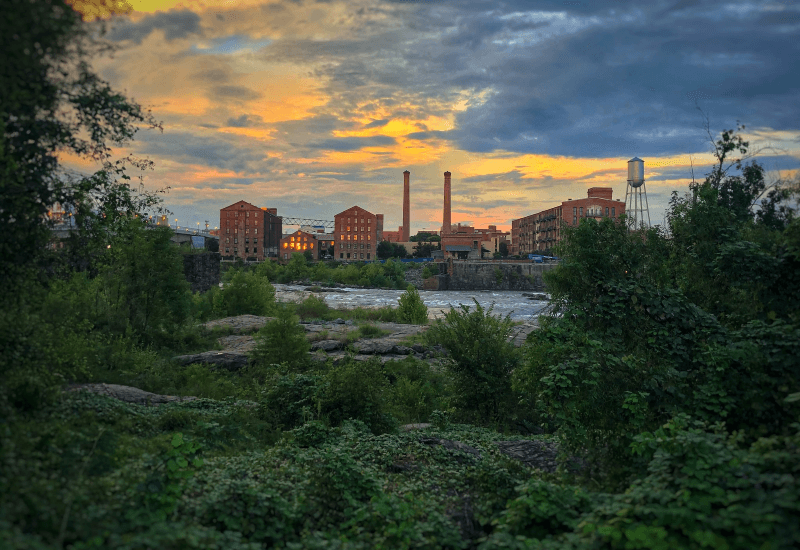
Tree Canopy Percentage: 70% | Rank: 1
Tree Canopy Coverage: 389 sq km | Rank: 7
Number of Urban Tree Initiatives: 3 | Rank: 8 (TIE)
Tree City USA Commitment: 10 | Rank: 1
Historical Annual Average Precipitation: 4.07 | Rank: 82
Local tips: Trees Columbus received $900,000 to plant 500 trees across city parks by 2028.
Go birding at the Columbus Botanical Garden among the forest of mixed hardwood trees.
What Zone is Georgia for Planting?
7 Georgia Landscaping Ideas for Your Home
Photo credit: Shelby L. Bell / Flickr / CC BY 2.0

Tree Canopy Percentage: 53% | Rank: 22
Tree Canopy Coverage: 183 sq km | Rank: 22
Number of Arboretums & Public Gardens: 2 | Rank: 28 (TIE)
Number of Tree Maintenance Services: 245 | Rank: 12
Drought Index Score: 0 | Rank: 1
Local tips: The “City in a Forest” has a goal to conserve and plant 1 million trees by 2030 with help from local nonprofits like Trees Atlanta.
Explore the Atlanta Beltline Arboretum, an 85-acre greenway growing 369 different species of trees and shrubs. Check out the Storza Woods and Conifer Garden at the Atlanta Botanical Garden.
11 Low-Maintenance Landscaping Ideas for Atlanta
What Zone is Georgia for Planting?
7 Georgia Landscaping Ideas for Your Home
Photo credit: Rajesh / Adobe Stock / License
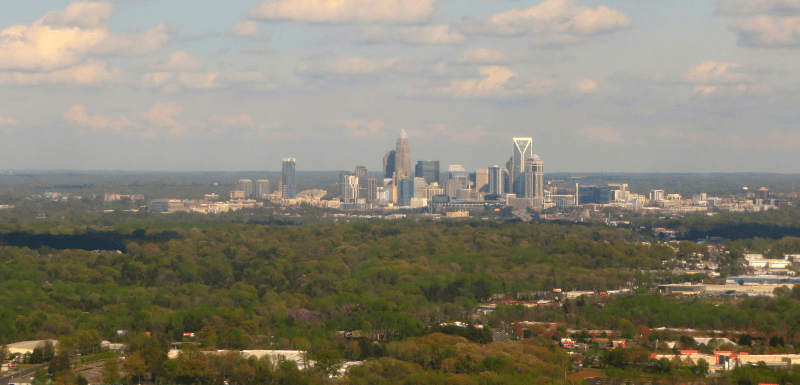
Tree Canopy Percentage: 47% | Rank: 40
Tree Canopy Coverage: 339 sq km | Rank: 9
Number of Arboretums & Public Gardens: 4 | Rank: 12
Number of Tree Maintenance Services: 251 | Rank: 9
Tree City USA Commitment 9 | Rank: 16
Local tips: Register for the next TreeAdoption event or become a volunteer with TreesCharlotte.
Help inventory the city’s canopy by logging your trees with Tree By Tree and identify and promptly remove any invasive vines or other species.
Queen City is home to the Bartlett Tree Research Lab and Arboretum, which boasts over 15,000 plant records — including the world’s largest magnolia cultivar collection — on 350 acres.
9 Low-Maintenance Landscaping Ideas for Charlotte
Photo credit: Ken Lund / Flickr / CC BY-SA 2.0
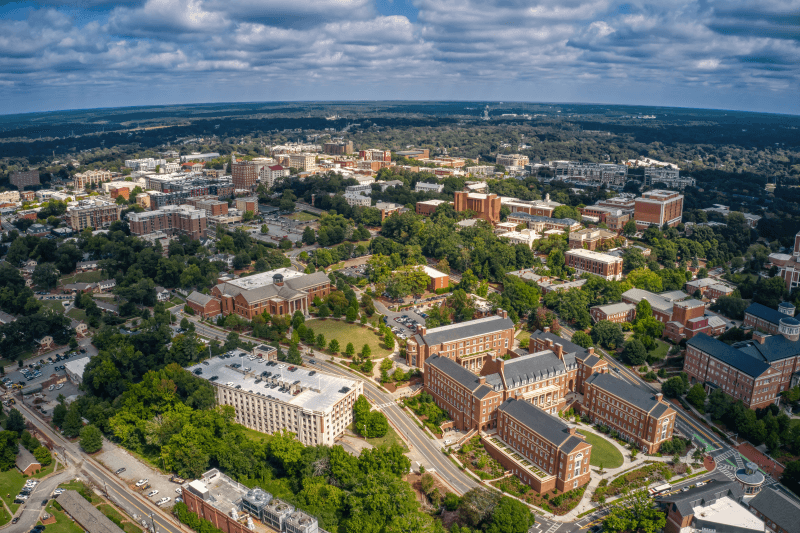
Tree Canopy Percentage: 65% | Rank: 4
Tree Canopy Coverage: 197 | Rank: 21
Average Yard Square Acreage: 0.5 | Rank: 9
Number of Arboretums & Public Gardens: 2 | Rank: 28 (TIE)
Historical Annual Average Precipitation: 4.08 inches | Rank: 81
Local tips: The University of Georgia at Athens is home to both a Campus Arboretum and the State Botanical Garden of Georgia.
The city is home to a local legend, landmark, and resident — the “Tree That Owns Itself.” Lore claims that this tree has legal ownership of itself and the land within 8ft of the tree’s base.
What Zone is Georgia for Planting?
7 Georgia Landscaping Ideas for Your Home
Photo credit: jacob / Adobe Stock / Standard
Tree city rankings
See how each city fared in our ranking:
Key insights
369 cities in our ranking are part of Tree City USA. 15 cities, including Columbus, Georgia (No. 2), Portland, Oregon (No. 19), and Philadelphia (No. 29), tie for being among the longest-running members, each boasting over 46 years of recognition by Tree City USA.
Baltimore (No. 31) branches out with the most Urban Tree Initiatives with the USDA Forest Service, followed by Philadelphia and Gainesville, Florida (No. 17). These initiatives include urban forest research projects, tree cultivation training programs, and forest rehabilitation efforts.
Urban desert regions in Nevada, New Mexico, Colorado, and Arizona score near the bottom, with less dense urban canopies and harsh climates making it more difficult and expensive to successfully grow a tree. Some forests are struggling due to drought and invasive pests, with the rate of tree deaths doubling in New Mexico between 2023 and 2024.
Humid regions like those in Tyler, Texas (No. 26), Georgia, and the coastal regions of Virginia have the best climate for trees to grow without being significantly impacted by drought or freezing temperatures.
New York (No. 7) has the most arboretums and public gardens, 16 recognized by Botanic Gardens Conservation International, followed by Washington, D.C. (No. 42) and Cincinnati (No. 11).
Dallas (No. 44) has the most tree maintenance services, 433, followed by San Antonio (No. 48).
Expert take
Having a robust backyard tree canopy comes with a plethora of benefits — including an increase of up to 15% in property value.
We turned to a panel of tree experts to learn more about conserving canopies and for some tree care advice. Climb through their insights below.
- How can regular folks — including apartment dwellers — advocate for trees in their area?
- What are three common ways people unintentionally harm or kill trees?
- What are three iconic trees decorating the American landscape that everyone should know?
- What advice would you give homeowners looking to resolve a tree-related dispute with their neighbors (e.g., tree branches landing on the other side of the fence)?

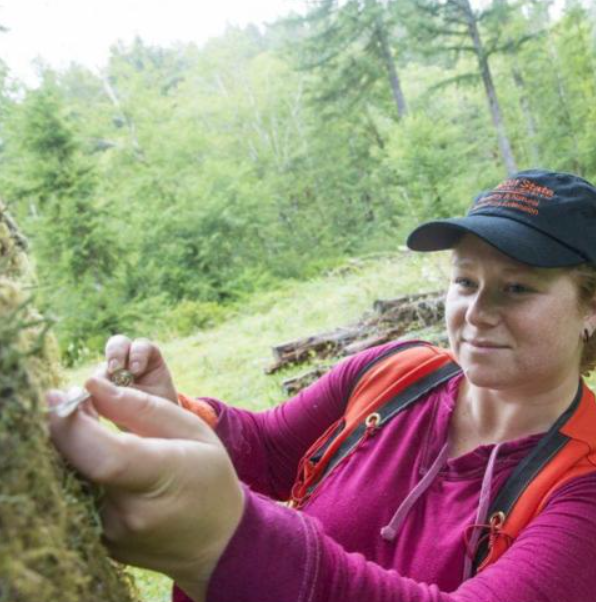

How can regular folks — including apartment dwellers — advocate for trees in their area?
Showing their strong preference for well-managed trees and greening around their apartment complex is one option. Different organizations also offer tree giveaway programs and tree planting events that might be available depending on your area.
What are three common ways people unintentionally harm or kill trees?
One common issue is damage to tree roots, either through soil compaction too close to the tree or cutting roots during construction or utility ditching. Oversalting in the winter can also damage trees, as can over-trimming or over-pruning trees.
What are three iconic trees decorating the American landscape that everyone should know?
This is hard because it is so regionally dependent! In the east and midwest, white oak is an iconic species that is hugely important for wildlife and is also economically and culturally important. Maple species, red maple and sugar maple, provide beautiful fall colors and are also quite iconic in landscapes across their range in the eastern U.S.
What advice would you give homeowners looking to resolve a tree-related dispute with their neighbors (e.g., tree branches landing on the other side of the fence)?
While over-pruning can damage trees unintentionally, regular tree maintenance and proper pruning can help avoid this type of conflict. People may also want to carefully consider species and site selection when planting new trees to try to avoid this issue (i.e. smaller ornamentals may be better suited to locations closer to the property edge or under power lines, etc, whereas larger canopy trees should have plenty of room to spread.)
How can regular folks—including apartment dwellers—advocate for trees in their area?
You don’t have to own land to make a difference for trees in your community. One way to help is by voting for local leaders who prioritize urban tree programs and green spaces. You can also get involved by volunteering with community organizations that plant and care for trees in parks, neighborhoods, and other public spaces. Even small efforts, like supporting tree-friendly policies or spreading awareness, can help make your area greener and healthier.
What are three common ways people unintentionally harm or kill trees?
Most tree damage isn’t caused by bad intentions—just a lack of awareness. One big mistake is compacting or damaging the roots, whether by parking cars on them, adding too much heavy soil, or even just constant foot traffic. Construction near trees can also be a problem, as digging and grading can disturb the root system. Another issue is altering the natural water flow, which can drown the tree or leave it struggling for moisture. These stress trees and make them more vulnerable to disease, pests, and decline.
What are three iconic trees decorating the American landscape that everyone should know?
America is home to some truly legendary trees! The coastal redwood takes the title of the tallest tree in the world, towering over 300 feet high. The bristlecone pine is the oldest tree, with some living over 4,000 years. And a personal favorite, the sugar pine, holds the record for the longest pine cone, stretching up to two feet long! These trees are not just impressive, but they also play vital roles in their ecosystems.
What advice would you give homeowners looking to resolve a tree-related dispute with their neighbors?
The best approach to any tree dispute is open and respectful communication. Start by talking with your neighbor to find common ground and work toward a solution together. It also helps to understand local tree ordinances so you know your rights and responsibilities. If your neighbor owns the tree, offering support—whether that’s sharing maintenance costs or helping with cleanup—can go a long way in keeping the conversation positive and productive.
How can regular folks — including apartment dwellers — advocate for trees in their area?
They can demand that city officials establish more public parks and gardens in their cities. People should purchase houses in areas with high tree coverage so that real estate developers feel the importance of the natural environment around their developed sites. People should teach their children about the importance of trees.
What are three common ways people unintentionally harm or kill trees?
People can transport harmful insects and diseases from one area to another area where healthy trees exist. People can convert mixed-species forestlands to a monoculture, which are very susceptible to pests, diseases, and other extreme climate events. Development projects can change the soil and water conditions which can be harmful to existing trees. These projects usually either increase water flow or decrease soil moisture.
What are three iconic trees decorating the American landscape that everyone should know?
They are red maple, loblolly pine, and Douglas fir.
What advice would you give homeowners looking to resolve a tree-related dispute with their neighbors (e.g., tree branches landing on the other side of the fence)?
Rather than going to court, I always encourage both parties to settle it via negotiation. The beneficial party should pay the affected party. The court or any other local authority should encourage a mutual settlement in such cases.Dallas (No. 44) has the most tree maintenance services, 433, followed by San Antonio (No. 48).
City of Trees, USA: What’s in a name?
Urban tree canopy metric highlights
Behind the ranking
First, we determined the factors (metrics) that are most relevant to rank the Top Cities for Tree Huggers. We then assigned a weight to each factor based on its importance and grouped those factors into 3 categories: Tree Canopy, Urban Tree Infrastructure, and Climate. The categories, factors, and their weights are listed in the table below.
For each of the 500 biggest U.S. cities, we then gathered data on each factor from the sources listed below the table. We eliminated 32 cities — including Houston, San Diego, Jacksonville, and Tucson — lacking sufficient data in a single category, resulting in a final sample size of 468 cities.
Finally, we calculated scores (out of 100 points) for each city to determine its rank in each factor, each category, and overall. A city’s Overall Score is the average of its scores across all factors and categories. The highest Overall Score ranked “Best” (No. 1) and the lowest “Worst” (No. 468).
Notes:
- Tree City USA Commitment is an index based on the length of time a city has been recognized by Tree City, USA.
- We considered the Number of Arboretums & Public Gardens recognized by Botanic Gardens Conservation International, which may not encompass all arboretums within a city.
- The “Worst” among individual factors may not be No. 468 due to ties.
Sources
Almanac, Arbor Day Foundation, Botanic Gardens Conservation International, Federal Emergency Management Agency, Google, National Oceanic and Atmospheric Administration, Native Plant Finder, NCSL, The Real Yellow Pages, Reference USA, U.S. Department of Agriculture, U.S. Federal Housing Finance Agency, and U.S. Forest Service
Reciprocal roots: Tree care at home
Maintaining and growing urban tree canopies can go a long way toward improving community health.
From improving air and water quality, to stormwater management, to lowering energy bills and noise pollution, to beautifying the community, there are numerous physical and mental advantages for living in a region with dense tree cover.
“Planting trees around your home isn’t just about adding beauty — it can save you money. In the summer, trees provide shade that helps keep your house cool, while in the winter, they act as windbreaks, reducing heating costs.” – Lauren Grand, associate professor at Oregon State University
It costs an average of $540 to $645 to have a tree planted professionally and an average of $420 for professional tree trimming.
Find inspiration to plant a tree in your backyard and guides on keeping it healthy below:
- Use the National Tree Benefit Calculator tool to assess the value of existing or potential tree growth in your neighborhood.
- Homeowners in dry regions should opt for drought-tolerant trees, while hurricane and tornado-prone homeowners should shop for wind-resistant trees.
- Fill your landscape with stunning flowering trees.
- Watch out for signs of drought stress in trees and learn how to take care of your trees during a drought.
- Look out for common pests that damage trees like Japanese beetles.
- Keep an eye out for deficiencies like iron chlorosis.
- Know when to remove a tree and how to safely transplant a tree.
- Schedule a tree inspection to check for any dangerous branches, pest infestations, or other issues that might impact the health of trees on your property.
Hire a local Lawn Love crew to clear your backyard and make room for growing a forest of your own.
Main photo credit: zinkevych / Adobe Stock / License
Related Posts: