| Key takeaways |
|---|
| • Water deeply, let the soil dry, then water again to encourage deep root growth and drought tolerance. • Most lawns need 1 to 1.5 inches of water weekly, split into 1 to 3 sessions by soil type. • Weather affects watering frequency. Heat, wind, and low humidity increase water loss. Rain and high humidity reduce it. |

Getting your summer lawn watering schedule right starts with your soil type and adjusting for weather conditions like temperature, humidity, and wind. Most lawns do best with deep watering 1 to 3 times a week.
The difference between a lush green carpet and a crispy brown disaster is often watering frequency, not just amount. Timing it right encourages deeper roots and drought tolerance.
If summer heat is drying out your lawn faster than you can keep up, Lawn Love’s local mowing pros can take lawn care off your plate while you focus on the sprinkler schedule.
- Watering deep and infrequently vs. light and daily
- How often to water based on soil type
- The relationship between watering frequency and amount
- Adjusting frequency for climate
- High heat, summer dormancy, and your watering schedule
- How to tell if your lawn needs water
- Adjusting watering frequency for special situations
- Summer watering under restrictions
- FAQs
Watering deep and infrequently vs. light and daily
The goal of summer lawn irrigation is to water deeply and infrequently, wetting the soil to a depth of at least 6 inches each time. After watering, you wait for the soil to dry and the grass to show signs it needs water, and then water again. “Each irrigation should wet the roots thoroughly and then drain away, leaving the roots free to
breathe and grow before the next irrigation comes in,” says Shakunthala Nair, extension associate with the University of Arizona Cooperative Extension.
K-State Extension explains that this method mimics natural rainfall and encourages roots to grow deeper in the soil. When they do, your grass becomes more drought-tolerant.
If you water for 10 minutes every day, all of the moisture is found in the top inch. Roots stay shallow, and the lawn browns quickly if you miss a day.
How often to water based on soil type
Your soil type is the most important factor to consider when determining how often to water your lawn. Water retention and drainage are directly related to soil type.
Note: The following frequency recommendations are guidelines for soil types, not hard-and-fast rules. Your exact watering schedule should be tailored to your soil, grass type, and climate.
See more: How Your Soil Type Changes Everything About Watering Your Lawn
Sandy soil: Water 2 to 3 times per week
Sandy soil has larger, loose particles that absorb water quickly but also drain very quickly. The soil dries out quicker, so you’ll need to water more frequently.
Clay soil: Water 1 time per week
Clay soil absorbs water slowly and holds onto it for much longer. Watering too often (or too much at any given time) often leads to pooling and runoff.
Use the cycle-and-soak method: Run your sprinklers in short cycles with rest periods in between, letting water soak in rather than run off.
Loam soil: Water 2 times per week
Loam soils are an ideal blend of sand, silt, and clay. The silt and clay hold moisture well while the sand provides drainage.
The relationship between watering frequency and amount
Most lawns typically need 1 to 1.5 inches of water per week, including rainfall. Divide that number by your weekly session count to determine how much to apply each time.
| Grass type | Water per week |
| Cool-season grasses | |
| Kentucky bluegrass | 1.5 to 2 inches |
| Tall fescue | 1.25 to 1.5 inches |
| Perennial ryegrass | 1 to 1.5 inches |
| Fine fescue | 1 inch |
| Warm-season grasses | |
| Bermudagrass | 1 to 1.25 inches |
| Zoysiagrass | 1 inch |
| St. Augustinegrass | ~1 inch |
| Centipedegrass | 0.75 to 1 inch |
| Bahiagrass | 0.50 to 0.75 inch |
| Buffalograss | 0.5 to 1 inch |
Adjusting frequency for climate
Once you have a general soil-based watering schedule, the next step is accounting for climate. Weather conditions can speed up or slow water loss from the soil and through the grass itself.
High humidity slows evaporation, so you can water less frequently. Wind dries out soil faster, so you may need to water more frequently.
A half inch of rain can replace a watering session. If rainfall meets your lawn’s total weekly water needs, shut off your irrigation system entirely.
“This is a good reminder to turn off automatic irrigation systems to conserve water — something many homeowners overlook,” says Dr. Baoxin “Bob” Chang, assistant professor of Turfgrass Science at Texas A&M University.
High heat, summer dormancy, and your watering schedule

Cool-season grasses
Cool-season grasses in the North thrive in temperatures between 60 and 75 F but have shorter root systems and are more sensitive to summer heat. Most go into summer dormancy between 80 and 90 F.
As temperatures climb, watch for signs of drought stress and water as needed rather than sticking to a fixed schedule. Once your lawn goes dormant, scale back to survival watering, giving your grass about ½ inch of water every 2 to 3 weeks to keep the crown moist.
According to Amanda Folck, statewide extension educator for Turfgrass Management at the University of Nebraska-Lincoln, once grasses enter summer dormancy, the most important factor is patience.
“When temperatures start to cool down and adequate water inputs return, cool-season grasses will gradually go back to a green and healthy canopy.”
Warm-season grasses
Warm-season grasses in the South are built for heat, thriving between 80 and 95 F. Unlike cool-season grasses, they are much less likely to go dormant.
“Transpiration is one of the primary ways grasses release heat back into the atmosphere, so as long as there is sufficient water available, they will not go dormant during the summer,” Chang says.
To keep them green, you may need to water more frequently as temperatures rise. Avoid letting them go dormant, since recovery can take until the following spring.
During periods of extreme heat, adjust your expectations.
“As long as the grass is not completely desiccated, a slightly wilted lawn is acceptable and will recover quickly once adequate water is restored,” Chang says.
Note: Transition zone homeowners may have either grass type. Knowing which you have matters in the heat.
How to tell if your lawn needs water

Automated schedules are a helpful place to start, but a better approach is to let your lawn tell you when it’s thirsty.
- Color changes: Grass shifts from green to a dull bluish-gray.
- Footprint test: Walk across the lawn. If footprints remain visible rather than spring back, it’s time to water.
- Curling blades: Grass blades that roll or fold lengthwise indicate dehydration.
Folck recommends checking soil moisture before turning on the sprinklers by pushing a screwdriver 6 inches into the soil.
“If it is dry, you need to add water. If you have soil attached to the screwdriver, you have enough,” she says.
My tip: If you notice drought stress in one area, check for a misaligned sprinkler head or a problem that can mimic drought stress before increasing water to the entire lawn.
Adjusting watering frequency for special situations
- Sloped lawns need water in shorter, more frequent sessions to prevent runoff.
- Shaded areas can go longer between watering sessions because of slower evaporation.
- New sod or seeded lawns need daily water for the first 2–3 weeks while roots establish.
Summer watering under restrictions
Sometimes, how often you water your lawn isn’t up to you. Many municipalities enforce outdoor watering restrictions during summer, limiting which days or times you can irrigate.
Once you know your local guidelines, make the most of your allowed watering days:
- Water in the early morning between 5 and 9 a.m. to minimize evaporation.
- Water longer on allowed days to compensate for missed sessions.
- Audit your sprinkler heads once a season. According to the EPA, a poorly maintained irrigation system can waste up to 25,000 gallons of water annually.
Read more: How to Maintain Your Lawn During a Drought
FAQs
No. One to three deep sessions per week are better in every climate. Even in Arizona’s extreme summer heat, Shakunthala Nair says, “warm-season grass lawns do not need to be watered every day. The correct way to water is once every three days.”
At 90 F and above, the correct approach depends on your grass. Cool-season grasses will likely be dormant or heading there. Once you see signs of dormancy, scale back to survival watering.
For warm-season grasses, water when your lawn shows signs it needs water. In extreme heat, that may mean watering more frequently, but try to water no more than every 3 days.
Early morning, between 5 and 9 am, is the best time to water your grass. Temperatures are cool, the wind is calmer, and the water pressure is typically higher. Avoid watering at night. Wet grass sitting overnight can promote fungal disease.
The type of sprinkler you are using determines how long to water. Fixed spray heads deliver water the quickest; rotor heads are slower. To measure your system’s output, place empty tuna cans on the lawn and time how long it takes to fill an inch.
Leave the lawn work to the pros
Getting summer lawn watering right takes practice, the right equipment, and time you may not have. Lawn Love makes it simple. Get an instant quote, pick a time, and a vetted local pro will handle mowing, fertilization, aeration, and more while you focus on the sprinkler schedule.
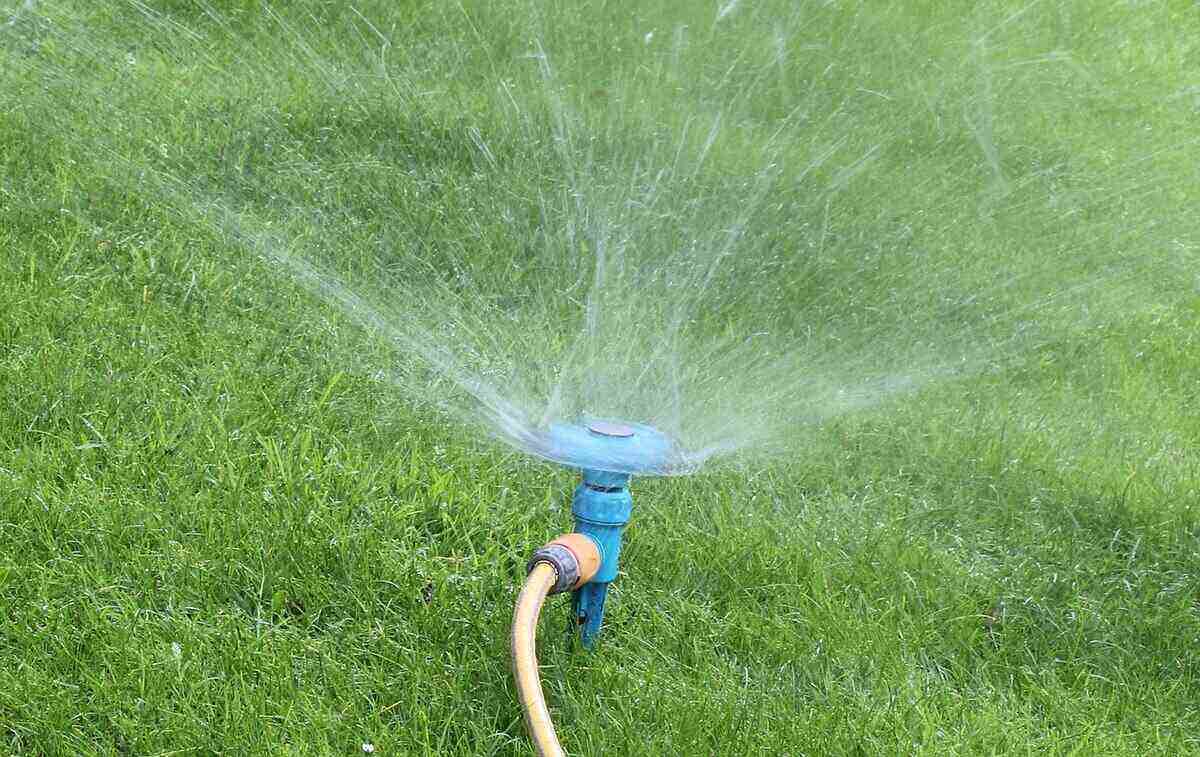
Main Image: Lawn sprinkler waters a Central Florida yard. Photo Credit: Whitney Lehnecker / Lawn Love
Related Posts: