| Key takeaways |
|---|
| • Identify the disease before you treat it; the right fix depends on which fungus you have. • Most lawn fungus is driven by excess moisture and stressed grass; fix those conditions first. • Cultural fixes prevent and reverse most cases; reach for a fungicide only if the disease is spreading. |
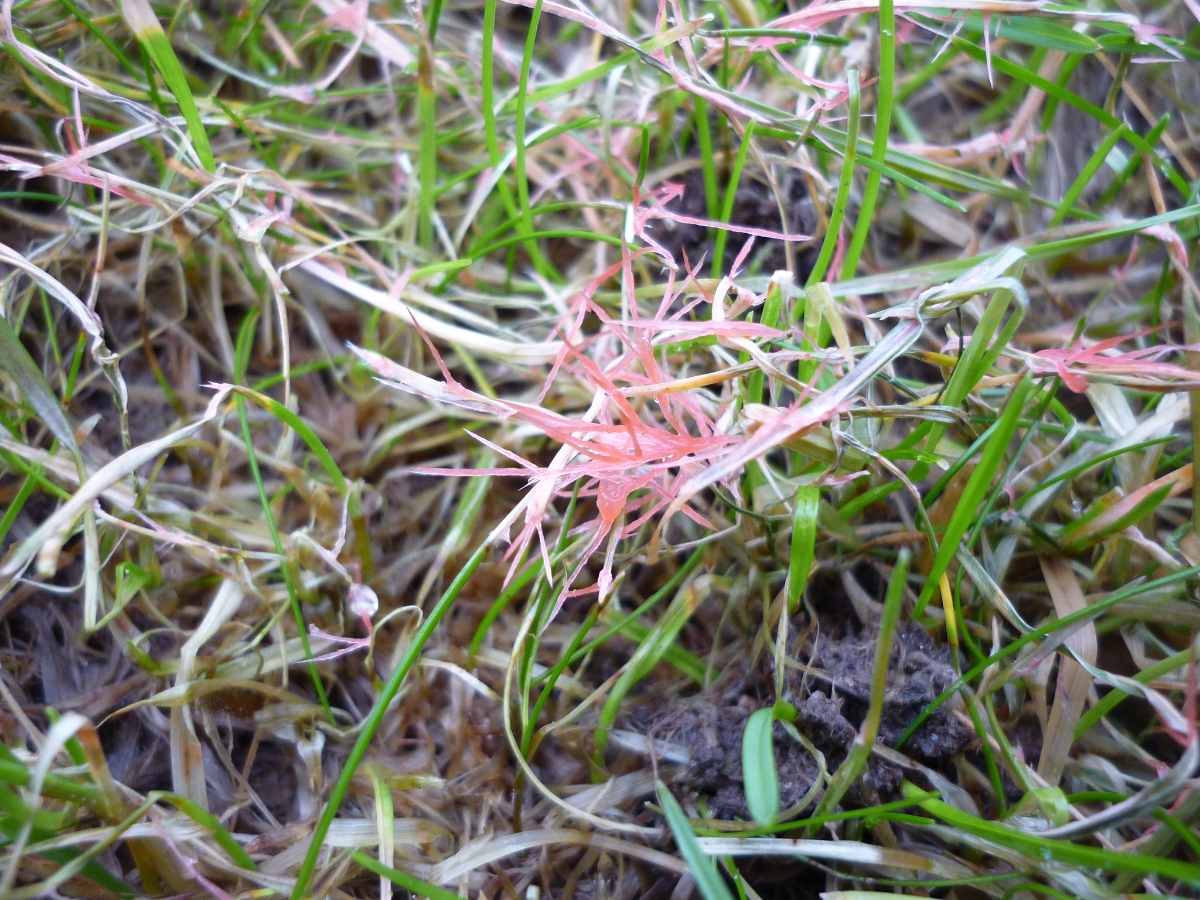
To treat grass fungus, first identify the disease, then fix what’s feeding it. That means watering early in the morning, mowing correctly, adjusting nitrogen, and improving drainage. Apply a fungicide only if the disease is active and spreading.
Grass fungus (also called lawn fungus or yard fungus) shows up as discolored patches, rings, spots on the blades, or as threadlike growth and powdery residue. But a healthy lawn can fight most fungal diseases on its own, especially with the right cultural practices.
If you’d rather hand the upkeep to someone else, Lawn Love’s local lawn care pros can keep your lawn mowed, watered, and fed to help keep disease away.
What does grass fungus look like?

As Dr. Shaohui Wu, turfgrass health specialist at Ohio State University, explains: “If it’s caused by fungal diseases, there would be distinct markings or lesions on the leaf blades.”
Grass fungus usually appears as circular patches, rings, or irregular discolored areas (brown, tan, yellow, gray, or reddish), often with spots or lesions on individual blades. Some patches form a “frog-eye” pattern, with the center remaining green.
You may also see white, cobweb-like threads (mycelium), greasy-looking patches, or a colored powder (white, grayish, or orange-red) that rubs off on your shoes.
“In the early morning, fungal mycelium can be present,” Wu adds.
Not every brown patch is fungus, though. Here’s how to tell it apart from other common lawn problems:
- Fungus: patches with spots or lesions on the blades, threads or powder, often ring-shaped; worst in warm, humid, or wet weather.
- Heat or drought stress: uniform browning with a bluish, hazy cast; bounces back with watering.
- Grubs: brown grass that feels spongy underfoot and lifts up like loose carpet because the roots are chewed off; peaks late summer.
Even when you spot surface symptoms, the real damage may already be deeper, says Dr. Phil Harmon, turfgrass pathologist at the University of Florida.
“Yellowing and patches in the turf canopy tend to show up after the real damage below ground is done,” he says.
Common types of lawn fungus (and how to treat each)
There are 16 fungal diseases that cause most lawn problems in the U.S. The symptoms, conditions, and treatments below are based on information from university extension resources for both warm- and cool-season lawn diseases.
Lawn fungus identification and treatment
| Disease | What it looks like | Thrives in | How to treat |
|---|---|---|---|
| Anthracnose | Yellow-to-bronze patches; tiny black fruiting bodies on stems | Hot, humid summers; low-fertility turf | Azoxystrobin or propiconazole if severe |
| Brown patch | Brown circles, smoky ring, tan lesions | Summer; warm nights >60 F; leaves wet for 10+ hrs. | Azoxystrobin |
| Dollar spot | Silver-dollar-sized tan spots; white cobweb mycelium | Spring through fall; low nitrogen; drought stress; heavy dew | Propiconazole |
| Fairy ring | Dark-green or dead rings; mushrooms | Spring through fall; buried organic matter; heavy thatch | Aerate; add nitrogen to even color |
| Gray leaf spot | Diamond-shaped tan to gray spots; twisted tips | Summer; hot, humid weather; high nitrogen; shade | Azoxystrobin or propiconazole if severe |
| Gray snow mold | Gray-white crusty patches after snowmelt | Late fall to early spring; snow on unfrozen ground | Rake to dry |
| Large patch | Yellow-orange circles; brown perimeter | Fall and spring; cool, wet weather; excess nitrogen | Azoxystrobin or propiconazole, fall preventive |
| Leaf spot/melting-out | Dark blade spots; thinning patches | Cool, wet spring/fall; mowing too low | Fungicide if spreading |
| Necrotic ring spot | Straw-colored grass rings; with green center | Cool, wet; spring and fall compacted soil | Propiconazole or azoxystrobin, spring preventive |
| Pink snow mold | Pink-tinged circular patches | Late fall to early spring; cool, wet; snow cover | Rake to dry; fungicide for severe cases |
| Powdery mildew | White powdery coating | Spring and fall; shade; poor airflow; humidity | Fungicide rarely needed |
| Pythium blight | Greasy patches; cottony mycelium at edges | Hot, humid summer nights >70°F; wet leaves | Mefenoxam or azoxystrobin, preventive |
| Red thread | Pink-to-red patches with red threadlike strands on blades | Cool, wet spring/fall weather; low nitrogen | Add nitrogen; improve drainage; fungicide if severe |
| Rust | Orange/yellow powder on blades | Late summer/fall; low nitrogen; shade | Fertilize; water in AM; mow regularly |
| Spring dead spot | Circular, straw-colored patches; roots and stolons blackened and rotted | Fall to spring as bermudagrass enters dormancy; cool soil temps; excess fall nitrogen; thatch | Reduce fall nitrogen; aerate; dethatch; propiconazole or azoxystrobin preventively in fall |
| Summer patch | Yellow-to-bronze circles; may have frog-eye center | Hot summers; compacted, wet soil | Aerate; water deeply; propiconazole or azoxystrobin preventively in spring |
| Sources: Clemson Cooperative Extension, NC State Extension, Penn State Extension, University of California IPM, Utah State University Extension, University of Maryland Extension, University of Missouri Extension, Michigan State Extension, USGA | |||
How to treat grass fungus

Treating grass fungus is a 4-step process: identify it, correct the cultural conditions, apply a fungicide if needed, then help the lawn recover.
1. Identify the disease
Match your lawn symptoms to the information above. The correct treatment — especially the nitrogen and fungicide choices — depends on which disease you have.
2. Fix the cultural conditions
This is where most cases are won. Fixing the conditions that feed the disease, including moisture, fertility, and airflow, often resolves the problem without chemicals.
- Water deeply and infrequently between 5–9 a.m. so grass blades dry out during the day; avoid evening watering.
- Mow at the recommended height with sharp blades; never remove more than one-third of the blade.
- Reduce thatch by dethatching, and aerate to break up soil compaction so water drains rather than sits on the soil surface.
- Adjust nitrogen fertilizer rates based on the disease: ease off for brown patch; increase for dollar spot, red thread, and rust.
Wu emphasizes the importance of mowing hygiene.
“Sanitize mower blades with a 10% bleach solution or Lysol to avoid contaminating healthy plants, and replace blunt mower blades that can create more routes of entry for pathogens.”
3. Apply a fungicide
While the tendency is to reach for chemical controls immediately, try to avoid using fungicides on your lawn unless necessary. Using them too frequently can cause pathogen resistance.
If the disease is active and spreading, you’ll want to apply fungicide to control it. Make sure to match the active ingredient in a fungicide product to the disease:
- Propiconazole works well on dollar spot
- Azoxystrobin targets brown patch and large patch
- Chlorothalonil is a broad contact option, but avoid it for summer patch, as it can worsen the disease.
- For an organic route, look for Bacillus amyloliquefaciens (strain D747).
Spot-treat the affected area rather than the whole lawn, and always follow the label directions.
Preventive application is especially important for recurring diseases. As Harmon notes: “Once large patch is diagnosed in a lawn, expect it to occur there again next year.”
4. Help the lawn recover
Once the disease is under control, overseed thin areas, maintain cultural practices from Step 2, and avoid over-fertilizing. Badly damaged lawns can take more than one season to fully bounce back.
What causes grass fungus?
Fungal spores are always present in soil. They only become a problem when conditions are favorable:
- Prolonged leaf wetness from evening watering, poor drainage, or heavy dew
- Heat and humidity, especially warm nights above 60 degrees F
- Compacted soil and heavy thatch that trap moisture on the soil surface
- Mowing too low or with dull blades, which stresses the grass
- Too much or too little nitrogen, depending on the disease
How to prevent grass fungus
Prevention is the same set of cultural habits that treat it. Water deeply in the morning, mow at the recommended height with sharp blades, dethatch and aerate to improve airflow and drainage, fertilize on a balanced schedule, and clean up clippings and debris in disease-prone seasons.
A vigorous, well-maintained lawn rarely gives fungus a foothold.
FAQs
Mild cases can fade once the weather dries out and you correct watering and mowing. But an active, spreading disease usually won’t disappear without intervention.
Cold slows most fungi down, but it doesn’t kill them. Spores overwinter in the soil and thatch and flare up again when warmth and moisture return. Snow mold is an exception and thrives under snow.
Cultural fixes are the most effective natural treatment. An OMRI-listed biological fungicide (Bacillus-based) is a reliable low-toxicity option. Home remedies like baking soda or neem oil have limited, inconsistent results.
Yes. Wu advises homeowners to “mow healthy turfgrass first and the infected area last, bagging infected clippings.” Spores can travel on mower blades, so sanitize the deck between areas and clean it thoroughly after mowing.
Apply at the first sign of disease, or preventively just before high-risk weather. Reapply on the label’s interval (often every 14–28 days) while conditions stay favorable.
Most turfgrass fungi are grass-specific and won’t infect your flowers, shrubs, or vegetables. They will spread across the lawn by wind, water, foot traffic, and mower blades, so contain it early.
The lawn fungi themselves are generally not dangerous to pets or people. The bigger caution is fungicides. Stay off treated areas until they’re dry, and follow all label safety instructions.
Keep your lawn healthy and disease-free
Stopping grass fungus comes down to consistent, correct lawn care. Morning watering, the right mowing height, and optimal soil conditions take know-how and time you may not have.
If you’d rather leave it to someone who does this every day, Lawn Love makes it simple. Get an instant quote, pick a time, and a vetted local pro will handle the rest.
Get a free estimate near you →
Main Image: Red thread disease spreads through a lawn, producing distinctive pink and coral fungal strands among bleached and dying grass blades. Photo Credit: Kris Lord / Flickr / CC BY 2.0
Related Posts:


