Lawn rust is a fungal disease that appears as yellow or orange powder on your grass blades, giving your lawn a dusty, faded look. It commonly occurs during late summer and early fall when your grass is stressed or growing slowly.
While it won’t kill your lawn, rust can weaken the grass and make it more vulnerable to other problems. That’s why it’s important to spot lawn rust early and understand what’s causing it, so you can give your lawn the care it needs to recover.
In this guide, you’ll learn what lawn rust is, how to identify it, what causes it, and how it spreads.
Types of rust fungus
Rust doesn’t refer to a single species of fungus but a family of fungi that cause similar rust-colored diseases on your lawn. Some common rust diseases include leaf rust, stem rust, stripe rust, and crown rust
These names reflect the different appearances or parts of the plant they affect. According to Tim Abbey, extension educator at Penn State University Extension, “Although there are differences among these diseases with respect to the symptoms and portion of the plant affected, they generally occur under the same environmental and cultural conditions.”
Whether it’s stripe, crown, or leaf rust, the disease will look and act much the same on your lawn, causing orange powdery spots and slowing the growth of your grass.
Signs and symptoms

One of the earliest signs of lawn rust is discoloration.
“Rust is probably the easiest lawn disease to see without a microscope,” according to Ginny Rosenkranz, principal agent associate at the University of Maryland’s College of Agriculture & Natural Resources. “The green blades of grass develop yellow-orange spots on top of the leaves, and from a distance, the lawn will have a yellow-orange color.”
Common symptoms include:
- Patches of grass grow slowly and thin out.
- Grass blades turn yellow, starting at the tips.
- The lawn appears less vigorous.
- Orange or rusty-brown spots or streaks appear on the grass blade.
- Orange powder sticks to your fingers after touching an infected blade.
As the disease progresses, these yellow-orange spots, caused by fungal spores, may rupture, releasing a fine, dusty coating. Even if you don’t notice rust on the lawn, Rosenkranz points out, “you will notice the orange rust color on your shoes or the fur of your pets after walking on the grass.”
What causes lawn rust
Lawn rust is caused by fungal pathogens that infect turfgrass leaves. The underlying cause of a rust outbreak is often a combination of the fungus and a slow-growing lawn due to stress or poor maintenance.
Several factors can set the stage for rust disease:
- Fungal spores and infection: The direct cause is spores of the rust fungus landing on your grass blades. These spores germinate and infect the leaf if conditions are moist enough.
- Weather and moisture conditions: Warm days (above 60°F) and cool nights create morning dew, which can keep grass blades wet for over 10 hours, explains Rosenkranz. Prolonged leaf wetness is necessary for the spores to germinate and for the disease to develop rapidly.
- Drought or water stress: Rust appears on lawns that have been drought-stressed. Dry conditions weaken the turf and let rust get established.
- Soil pH: Lawns with imbalanced soil pH are more vulnerable to rust. Rosenkranz notes that most lawn grasses prefer soil with a neutral pH between 6 and 7.
- Lack of nutrients: Lawns that are under-fertilized, especially lacking nitrogen, are targets for rust. That was the case in my yard. I hadn’t fed the lawn all summer, so by late August, it was hungry and growing slowly, making it easy pickings for rust.
- Shade and poor air flow: Shade slows grass growth and keeps grass damp longer.
- Low mowing heights: Mowing grass too low stresses it.
Read more:
- 6 Wet Lawn Problems and How to Fix Them
- The Best Height to Cut Your Grass
- How to Fertilize Your Lawn
How lawn rust spreads
The orange spores are the seeds of the fungus, and they are easily dispersed. According to lawn experts at the University of Illinois Extension, wind, water, shoes, turf material, and lawn equipment spread the spores.
Here’s how it happens:
- Wind: Rust spores are lightweight and can become airborne with the slightest breeze.
- Water: Water can move rust spores short distances.
- Physical contact: Rust spores stick to shoes, lawn mower wheels, garden tools, pet fur, and clothing.
- Infected turf material: Infected sod and grass clippings could spread the disease. Rust can also overwinter in the lawn as dormant mycelium or as hardy spores in old leaf tissue.
Read more: How to Clean a Lawn Mower Deck
Impact of rust on your lawn

When you see your lawn turning orange, it’s natural to worry that you’re about to lose your grass. The good news is that lawn rust is mostly a cosmetic disease. It discolors the grass and can make the lawn look pretty bad for a while, but it rarely kills it. However, rust can weaken your lawn and create indirect problems like:
- Appearance: The most immediate impact is an ugly lawn. A green lawn can turn yellow-orange and patchy due to rust.
- Grass health and vigor: The rust fungi siphon nutrients from the leaves to produce spores, leaving the grass weakened. If a large percentage of the leaf area is covered in rust pustules, its ability to photosynthesize is reduced, and over time, severe rust infection can thin the lawn.
- Susceptibility to other stresses: Rust stresses the grass, which can make the lawn more vulnerable to other problems like drought damage, winter kill, or other diseases.
For me, rust mostly impacted my pride in my lawn; the beautiful green turns orange. But knowing it’s usually cosmetic is a relief. Once I addressed it, those effects started to fade pretty quickly.
Grass types prone to rust
All lawn grasses can develop rust, but cool-season grasses tend to have more rust problems than warm-season ones. According to turfgrass specialists at the University of California’s Integrated Pest Management Program, blue grasses, rye grasses, zoysiagrass, and tall fescue are among the most affected.
Rosenkranz highlights that Kentucky bluegrass and perennial ryegrass are particularly susceptible. She explains that rust appears on these turf types “sometimes in the spring but usually in the late summer when high heat or drought stresses the lawn.”
Read more:
- Kentucky Bluegrass: How to Grow and Care for It
- Perennial Ryegrass: How to Grow and Care for It
- Zoysiagrass: How to Grow and Care for It
- Tall Fescue: How to Grow and Care for It
Prevention and treatment
By the time you see that orange dust on your lawn, rust is already in action, but there’s plenty you can do to prevent lawn rust from taking hold and to treat it if it appears. The key to both prevention and treatment is good lawn care practices. These are your main strategies:
- Fertilize properly
- Proper watering
- Regular mowing
- Reduce shade
- Improve air flow
- Manage thatch
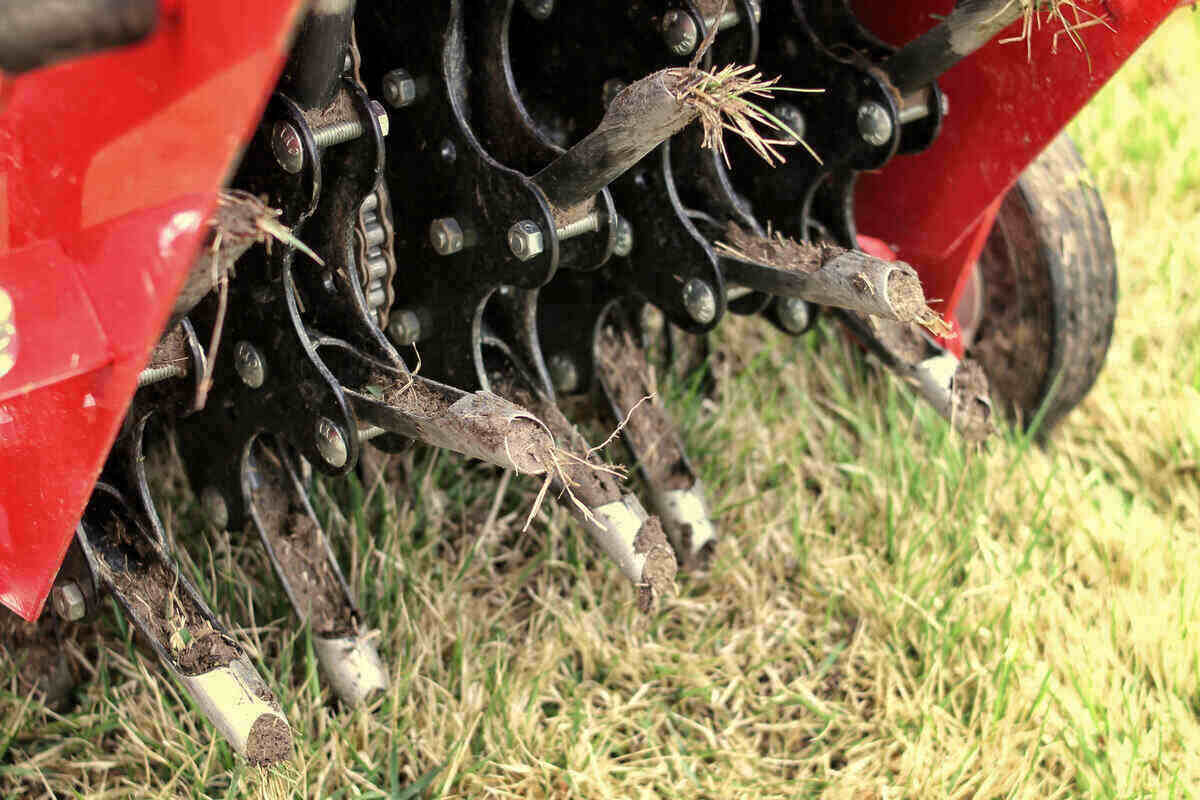
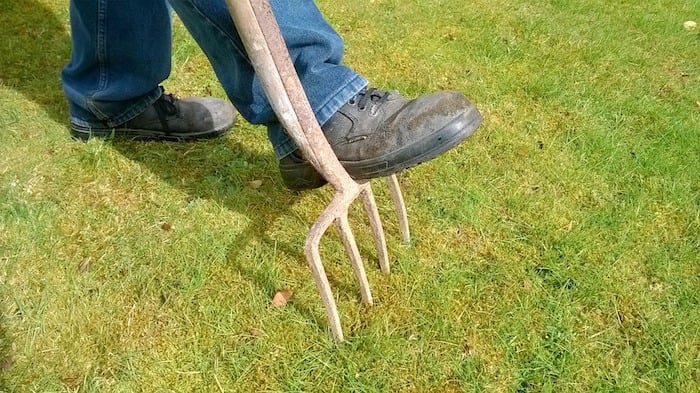
- Aerate your lawn
- Use resistant grass varieties
- Fungicides
From rusty to ready: Professional lawn help
Lawn rust might look alarming, but with the right care, your grass can bounce back fast. Sometimes, the easiest way to get results is by calling in a professional.
LawnLove can connect you with a lawn care professional in your area, whether you need help with regular mowing, aeration, fertilization, or even a thorough yard cleanup. Let a lawn care expert do the tricky stuff so you can get back to enjoying your yard.
Sources:
- “Turfgrass Diseases: Rust Diseases (Causal fungi: Puccinia spp.).” By Tim Abbey, Extension Educator, Horticulture. Penn State Extension.
- “Rust Diseases.” By Richard Latin, Professor of Plant Pathology. Purdue University Extension.
- “Rust in Turf.” By Lee Butler. Extension Coordinator and Jim Kerns. Associate Professor and Extension Specialist. Entomology & Plant Pathology. North Carolina Cooperative Extension.
- “Preventing Rust Diseases on Home Lawns.” University of Illinois Extension.
- “Rust.” University of California’s Integrated Pest Management Program.
Main Image: Rust disease in tall fescue. Photo Credit: Alfredo Martinez / professor and extension plant pathologist at the University of Georgia Extension
Related Posts: