| Key takeaways |
|---|
| • Know your weed type before you treat — the right method for tall grassy weeds differs from broadleaf weeds. • Weeds are often a symptom of a soil problem: compaction, low fertility, or wrong pH. Fix the underlying cause, and fewer weeds return. • The best long-term defense is a thick, healthy lawn — dense grass shades the soil and prevents weed seeds from germinating. |

When your yard is overrun with weeds — tall, thick, and well-established — you need a plan, not just a spray bottle.
The fastest way to deal with overgrown weeds depends on where they are and how bad the situation is. A quick spot treatment works for small patches. A lawn that’s mostly weeds needs a completely different approach.
Weeds are a frustrating and time-consuming part of lawn maintenance — but with the right approach, you can gain the upper hand. If you want a beautiful lawn without the extra work, Lawn Love weed control pros can handle the heavy lifting for you.
Know your weeds — and what they’re telling you about your soil
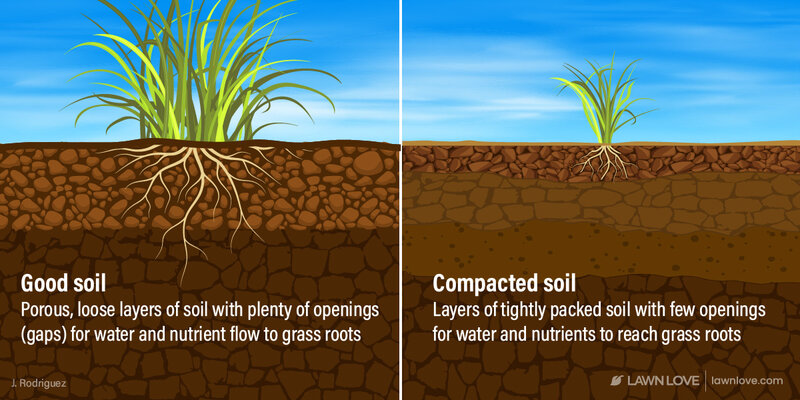
Weeds in your yard are a good indication you have an underlying soil problems. When turf struggles, weeds quickly take over.
“The most common issue I find under a heavily weeded lawn is pH imbalance combined with compacted soil,” says Tyler Wilson, owner of Copperhead Property Maintenance in Lutz, FL. “Weeds colonize where healthy grass can’t compete.”
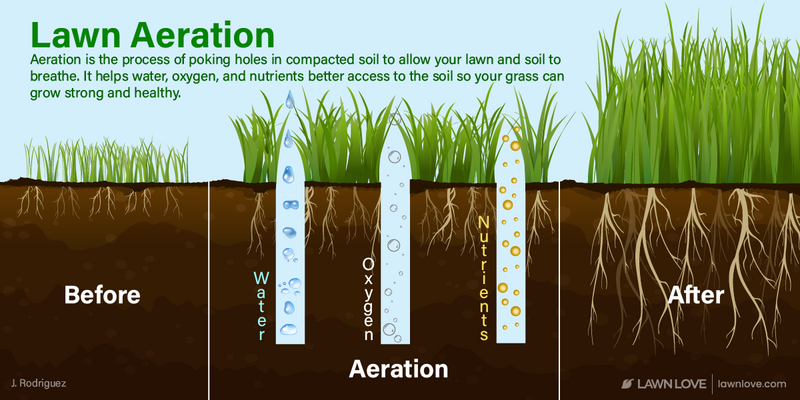
To fix this, Wilson recommends performing a soil test and core aeration before you apply any fertilizer.
Different weed species signal specific soil imbalances:
- Compacted soil: Chickweed, plantain, white clover, pigweed, dallisgrass, burdock, stinging nettle, dandelion
- Acidic soil: Moss, sorrel, buttercup, plantain
- Low fertility soil: Plantain, dandelion, white clover, crabgrass, thistle, carpetgrass, yarrow
- High fertility soil: Lamb’s quarter, stinging nettle, chickweed, pigweed, purslane
Note: If multiple types of weeds point to the same issue, verify the condition with a soil test. You can also test for compaction by pushing a screwdriver into moist soil; if it resists, aerate your lawn to restore balance.
Pro tip: Accurate weed identification ensures you choose the correct treatment, as some weed seeds survive underground for decades. Take a photo and send it to your local Cooperative Extension office, or upload it to a plant ID app (PictureThis, Google Lens, PlantNet).
Read more:
How to get rid of tall weeds quickly
Tackling knee-high weeds requires a strategic approach — spraying them immediately rarely works.
“Spraying tall, established weeds means the herbicide hits the outer leaf surface but struggles to translocate into the root system effectively,” Wilson says.
Andrew Day, owner of Advanced Quality Lawn in Richfield, Ohio, agrees, adding, “For knee-high weeds, I prefer to mow them down first, then treat the fresh regrowth.“ He says this ensures better herbicide absorption on actively growing leaves.
“Mowing also reduces the amount of herbicide needed and helps achieve a uniform application, especially for weeds like crabgrass where seeds form low to the ground,” Day says.
To eliminate overgrown patches effectively, follow these steps:
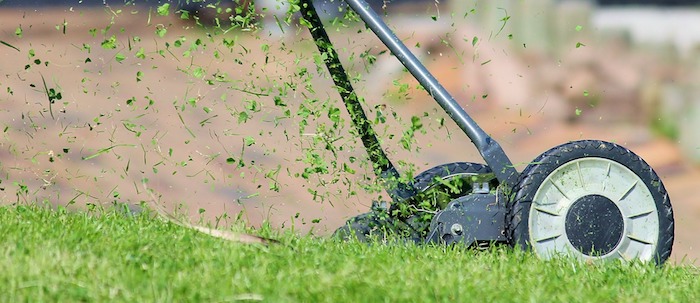
- Mow and bag: Cut the weeds down on your mower’s lowest setting. Always bag and trash the clippings to stop seed heads from spreading.
- Wait for regrowth: Let 3-4 inches of fresh green leaves emerge. New growth absorbs weed killers much faster than thick, mature leaves.
- Treat the area: Apply a post-emergent herbicide — glyphosate (Roundup) for non-selective kill, or a broadleaf-selective product if you want to spare surrounding grass. Spray on a calm, sunny day when weeds are actively growing. You’ll see results within days.
- Natural options (garden beds only): Horticultural vinegar or organic sprays work where selectivity isn’t a concern. They are less effective on deep-rooted perennial weeds.
Finally, follow up with aeration, overseeding, and fertilizer so healthy grass fills the bare spots before new weeds can germinate.
Read more:
- Broadleaf Weeds vs. Grassy Weeds: How to Tell Them Apart
- When to Apply Post-Emergent Herbicide
- 14 Ways to Kill Weeds Permanently
- The 12 Best Weed Killers of 2026 [Reviews]
Weeds next to a curb or driveway
The soil next to the concrete is typically compacted and warm. These conditions create prime crabgrass territory.
“The heat radiating off hardscape genuinely does accelerate germination there,” Wilson says.
Day suggests a multi-pronged approach.
“I heavily rely on targeted pre-emergent herbicide applications in early spring,” he says. He specifically targets the window when soil temperatures reach 55 to 60 degrees to stop heat-loving weeds before they sprout.
Remember, if you have a section of lawn where there are more weeds than grass (like crabgrass against a curb), you may need to do a renovation:
- Mow and bag: Cut weeds on the lowest setting and discard the clippings.
- Aerate and prep: Relieve soil compaction and level the area with compost.
- Seed and feed: Apply starter fertilizer — early spring for summer annuals, fall for winter annuals. Then, spread grass seed, and press it in.
- Water: Keep the soil consistently moist.
For the best results, plant warm-season grasses in late spring and cool-season grasses in early fall.
Read more:
Weeds in flower beds and garden beds
Flower and garden beds lack competing ground cover, making them easy targets for weeds.
“In established garden and flower beds, careful hand-pulling is a crucial first step for deep-rooted perennial weeds. You must ensure the entire taproot is removed to prevent regrowth,” Day says.
For stubborn, overgrown weeds, Wilson uses a targeted method.
“I have my crew hand-pull first to create physical clearance around good plants, then use a small foam brush with a systemic herbicide applied directly to the weed leaf.” Wilson says this guarantees zero spray drift and protects your flowers.
Effective methods for garden beds include:
- Pull or hoe weeds while the soil remains moist for clean root extraction.
- Block sunlight using cardboard, wood chips, or thick mulch to stop seeds from germinating.
- Spray horticultural vinegar or carefully use a weed torch on young surface weeds.
- Paint non-selective herbicides directly onto stubborn weed leaves using a foam brush to guarantee plant safety.
Read more:
Overgrown ‘jungle lawn’
An extremely overgrown yard is beyond what standard residential equipment can handle — this is a job for the pros.
When facing a yard completely swallowed by weeds, Wilson relies on a heavy-duty approach that focuses on renovating and starting from scratch.
“When stepping onto a ‘jungle’ property that is almost 100% overgrown with weeds, our exact first step is a comprehensive property clean-up,” he says.
He explains that by cutting down all the vegetation and hauling away the debris first, his team can “properly assess the underlying property and begin a tailored reclamation plan focusing on establishing healthy turf and plants.”
FAQs
Any time of year works, but the season before you plan major lawn work is ideal — test in fall for spring renovation, or late summer for fall overseeding.
The best time is spring, targeting weeds before they fully sprout, or fall, when perennial weeds are most vulnerable before winter. For maximum absorption, apply it early in the morning when dew has dried, temperatures are mild, and the wind is calm.
You can rototill annual weeds before they go to seed, but you should never rototill perennial weeds. Tilling chops up the underground rhizomes and taproots of perennial weeds, which will actually multiply and spread the infestation throughout your garden.
Hire a local lawn care pro
Getting rid of overgrown weeds takes the right tools, the right timing, and a game plan for what comes after. If you’d rather hand it off, Lawn Love can connect you with weed control pros. Get an instant quote, pick a time, and a local pro will handle the rest.
Main Image: An abandoned brick home overtaken by weeds and overgrown vegetation. Photo Credit: Daniel Tuttle / Unsplash
Related Posts: