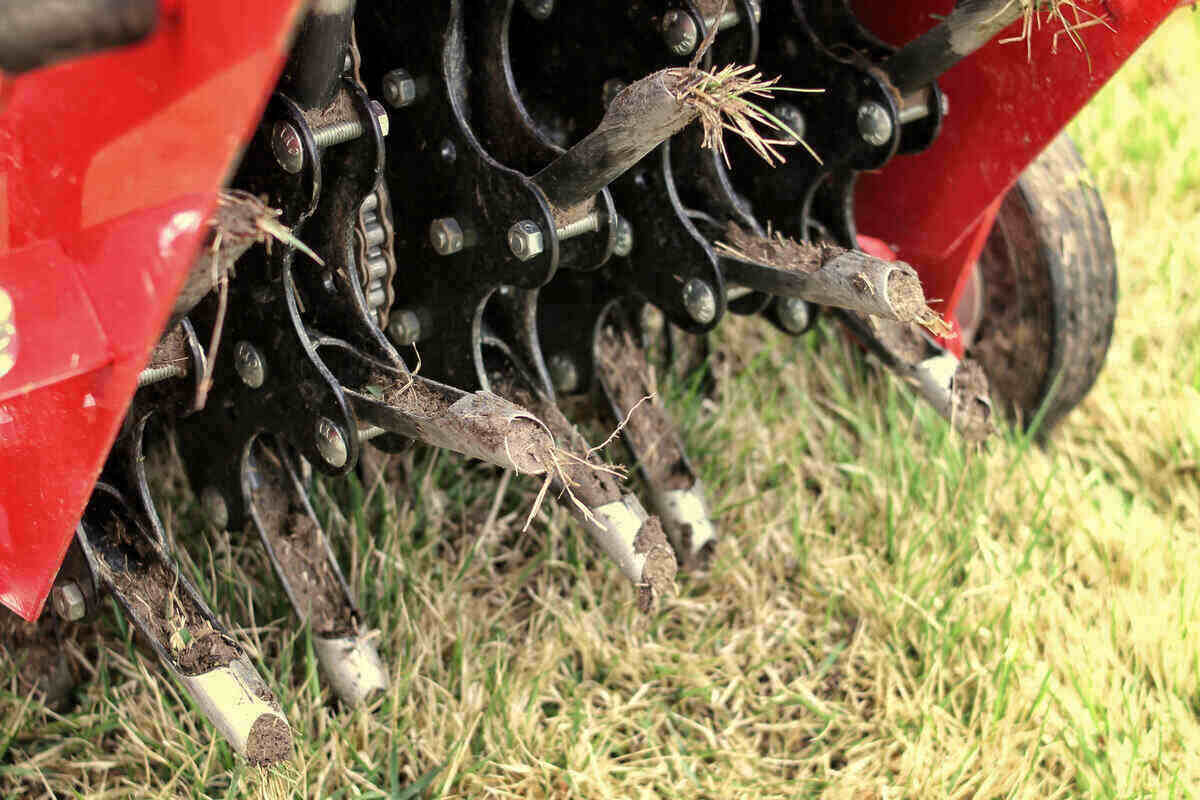
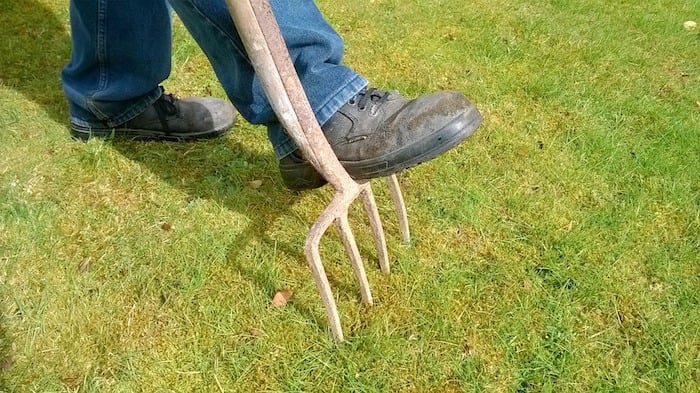
Aerating loosens compacted soil and is an effective way to prepare your lawn for overseeding by creating a soft, porous bed where seeds can germinate effectively. But it’s not always necessary to aerate before overseeding if the underlying soil isn’t hard and dense.
Whether aerating or not, the strategy is the same: creating good seed-to-soil contact. We’ll explain how to do that without aerating.
If you’re overseeding without aerating, you should mow your lawn as short as possible, rake deeply, dethatch, and add soil amendments. After overseeding, gently rake in the seeds, apply starter fertilizer, and water your grass.
| Skill level: Intermediate Estimated time to complete: 5 to 6 hours, for an average 8,000 to 9,000-square-foot lawn Project cost: $100 to $150 |
Tools and materials needed
Before you start overseeding your lawn, make sure you have these supplies ready:
- Dethatching tool
- Lawn mower
- Screwdriver
- Fertilizer spreader
- Rake
- Enriched topsoil
- Grass seed
- Starter fertilizer
Select grass seed

Analyze your lawn and identify what you want to improve before selecting a grass seed. If you have Kentucky bluegrass, overseeding with tall fescue can increase disease resistance, while overseeding fine or tall fescues with Kentucky bluegrass can create a denser lawn.
If you live in a transition zone – the geographical belt across the middle of the country with generally milder temperatures – you can also mix warm-season and cool-season grass types to keep your lawn more vibrant longer. Just know that this strategy requires more careful fertilization and watering to keep both grass types happy.
Mow low
Mow your grass to an inch or shorter to give your seeds the best chance of reaching the soil and taking root. Bag the clippings as you go so they don’t interfere with the seed-to-soil contact.
Rake
If you’re overseeding without aerating, you should rake your lawn deeply to break up the top layer of soil and improve seed-to-soil contact. This also helps the new grass get oxygen, water, and nutrients it needs to grow green and healthy.
Use a back-and-forth motion to rake more deeply and remove loose grass clippings, fallen leaves, or debris that could get in the way of the seeds.
Dethatch

If there’s a thick layer of dead material in your lawn – thatch – get rid of it before overseeding. Thatch is beneficial if it’s less than half an inch thick, but anything more than that blocks seed-to-soil contact.
Dr. Grady Miller, an Extension turfgrass specialist and professor at North Carolina State University, says, “If you’re overseeding without aerating, dethatch aggressively to improve seed-to-soil contact. However, if your turf is already good and you’re just overseeding to make it look better, avoid aggressive dethatching, as that can damage the existing grass.”
You can use a manual dethatching rake for small lawns or light thatch buildup. It has sharp, saw-toothed tines that dig into the thatch layer and pull it up. This method uses body force to break up the thatch, so it can be time-consuming and labor-intensive.
Dig the tines firmly into the thatch layer, then pull the rake toward you. If the thatch is very thick, rake the lawn again at a 90-degree angle to your first pass to loosen it. Bag loose thatch sitting on top of the grass.
If you have a large lawn, I recommend using a verticutter, which you can rent from your local home improvement store. A verticutter is a vertical mower with a series of rotating tines that dig into the thatch.
Check out our article on How to Dethatch Your Lawn for step-by-step directions.
Add enriched topsoil
When you’re overseeding without aerating, it’s important to create a smooth and nutrient-rich bed for your seeds to grow.
Spread a ¼-inch layer of enriched topsoil evenly across your existing lawn using a fertilizer spreader. Enriched topsoil is loamy soil mixed with organic matter that improves seed-to-soil contact and provides immediate nutrition for early root development. Check out our guide to Topdressing a Lawn for more information.
Spread grass seeds evenly
Fill the fertilizer spreader according to the label instructions for overseeding, and walk across your lawn in a similar pattern to how you mow.
The amount of grass you need depends on the type of grass and the size of the area you’re overseeding. The back of the bag should tell you how much seed to use per 1,000 square feet. Check out the formula in our guide on How to Grow Grass for more information.
If you’re overseeding small patches, you can use a handheld spreader. It spreads seed in an arc like a broadcast spreader, but on a smaller scale. However, if you’re overseeding a large area or your entire lawn, I recommend using a push spreader. There are two types:
- Drop spreader: Drops seed directly beneath the spreader as you push, giving you more control over the target area. Ideal for smaller lawns that are less than 5,000 square feet.
- Broadcast spreader: Distributes seed in a wide, overlapping pattern that helps you cover a lot of ground in a relatively short time. Best for lawns larger than 5,000 square feet.
Check out our article on Types of Fertilizer Spreaders for more information.
Gently rake
After overseeding, press the seeds into the soil with the back of a rake for good seed-to-soil contact. You can also rake the seeds lightly into the soil or run a roller over the area.
Apply starter fertilizer

Use a spreader to fertilize the newly seeded areas with starter fertilizer. It provides the new grass with the nitrogen, phosphorus, and potassium it needs to grow strong. Starter fertilizer is specially formulated to have more phosphorus and less potassium for healthy root growth.
Check out our Guide to Fertilizing New Grass for more information.
Water well
Water your new grass lightly once or even twice a day, depending on the weather, to make it sprout. Keep watering daily until the new grass is as tall as the established grass. If you notice any signs of overwatering, like puddles or spongy soil, cut back on watering immediately.
The best time to water your lawn is from 5 a.m. to 9 a.m., when there’s less wind and evaporation. If your grass needs watering a second time, do it in the early evening, around 6 p.m.
Check out these articles on watering your grass seed for more information:
- How Often to Water Grass Seed
- How Long to Water New Grass Seed
- When Is the Best Time to Water Your Grass?
Wait to mow your grass until it’s at least four inches tall, and keep people and pets off it as much as possible so you don’t stress it. Once it’s that tall, you can return to your regular lawn care routine.
“Use a push mower to mow your newly seeded grass initially, as heavier mowers like riding or zero-turn models can damage the young blades,” cautions Dr. Miller.
FAQs
Don’t. Compacted soil can make it hard for seeds to make good contact with the soil and for water and nutrients to reach the roots. If you’re unsure whether your soil is compacted, push a screwdriver a couple of inches into the soil. If there’s resistance, you have compacted soil.
If the thatch is more than half an inch thick, it can get in the way of good seed-to-soil contact and prevent water and nutrients from reaching the roots.
The seeds germinate within seven to 10 days, and you’ll start seeing new grass growth in three to four weeks.
Hire a pro to overseed your lawn
Overseeding can give a boost to your tired grass, but it’s time-consuming and labor-intensive. If you don’t have the time or energy to do all of this, it’s best to leave it to the pros.
Lawn Love pros can overseed your lawn, fertilize it, and mow it when it’s tall enough. If your soil is compacted, they can also aerate your lawn to prepare it for overseeding. Hire a pro through Lawn Love today to get the job done right at a price you love.
Main Image: Person seeding a lawn using a spreader. Scott Habermann | Adobe Stock
Related Posts: