| Key takeaways |
|---|
| ● Cool-season grasses stop when daytime highs drop below 50 degrees (soil in the 40s), warm-season grasses stop earlier, around soil temps in the mid-50s. ● Your final mow should be slightly shorter than a summer cut, but never scalped. Dropping the height too far exposes the crown to winter injury. ● The last mow isn't the end of fall lawn care. Fertilizing and leaf cleanup continue for weeks after mowing stops. |
Knowing when to stop mowing for the season comes down to one rule: Stop when your grass stops growing. Don’t stop on a set date.
For cool-season grasses, this happens when daytime highs go below 50 degrees, and soil temperatures drop into the 40s. That can happen anywhere from mid-October to mid-November in northern climates, depending on the weather. Warm-season grasses stop growing sooner, once soil temperatures fall into the mid-50s.
What’s the clearest sign you’re done? Look at the lawn a week or two after the last cut. If it looks the same length, growth has stopped. It’s time for the final mow.
Not sure if you’re there yet? Lawn Love’s local mowing pros can make the call and handle the final cut for you.
Why the calendar isn’t a reliable guide
There’s no universal “last weekend of mowing season” that applies everywhere. Picking a random date in advance, like Halloween or Thanksgiving, is a guess that’s often wrong in either direction.
Grass growth is tied to soil temperature. It doesn’t care about the month. The same lawn can need a mid-November mow in a warm year and be done by early October in a cold one.
Horticulture extension specialists point out that your specific location and the current weather patterns have a bigger effect on timing than any fixed rule of thumb.
The temperature thresholds that matter
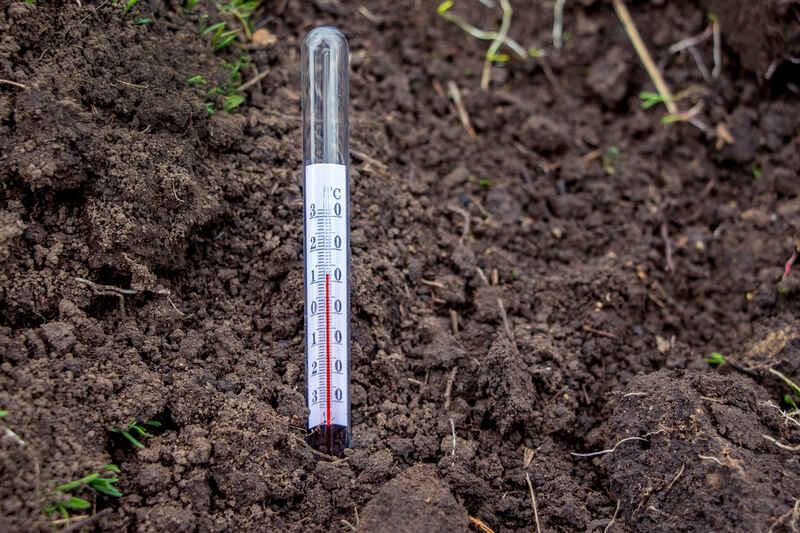
Want to know if you are close to your last mow of the season? Check the soil temperature rather than the air temperature. Roots and crowns respond to what’s happening a few inches underground before the visible top growth shows it.
- Cool-season grasses: Growth slows sharply once daytime air temperatures remain below about 50 degrees and soil temperatures drop into the 40s. According to Iowa State University Extension, shoot growth effectively stops at soil temperatures below about 40 degrees.
- Warm-season grasses: These shut down earlier in the season, once soil temperatures fall into the mid-50s, because they need warmer soil to produce new growth.
Here is exactly when you can expect that final cut based on your region:
| Region | Grass type | Last mow window |
| Northeast, Upper Midwest | Cool-season | Late October–mid-November |
| Pacific Northwest | Cool-season | Mid-November–early December in mild years |
| Transition zone (Mid-Atlantic, lower Midwest) | Mixed cool/warm | Late October–mid-November (cool); Mid-October to early November (warm) |
| Southeast (Piedmont/inland) | Warm-season | Mid-October–November |
| Deep South, Gulf Coast | Warm-season | Mid-to-late November |
| Central/South Florida, southern Texas coast | Warm-season | Rarely fully stops; drop to every 10–14 days through winter |
| Mountain/high elevation | Cool-season | Early to mid-October |
Sources: University of Minnesota Extension, Swanson’s Nursery, USA Sod, Clemson Home & Garden Information Center (HGIC), NC State Extension, University of Georgia Extension, Iowa State University Extension and Outreach, LSU AgCenter, Texas A&M AgriLife Extension (Aggie Turf), Colorado State University Extension
You can push a basic soil thermometer, or even a meat thermometer, a few inches into the ground for a useful reading. It beats guessing off a weather app.
But what if you don’t want to check the soil? Mary Helen O’Leary, business owner at Heroes Lawn Care in Omaha, Nebraska, has a visual trick.
“You don’t need a thermometer, you just need to observe signs like hostas are laying on the ground, or when the grass tips stay perfect for 10 days,” O’Leary says.
Signs the last mow is coming
A few visible cues confirm that the last mow is coming:
- Growth has visibly stalled. If the lawn looks about the same height 1 to 2 weeks after the last cut, the grass has stopped growing.
- Daytime highs settle into the upper 40s to low 50s. One cold day followed by a 60-degree rebound doesn’t count.
- Leaves are dropping steadily. It’s not a growth signal on its own, but it usually overlaps with the final mow window.
- Occasional light frost doesn’t mean growth has stopped, but a pattern of regular frost means the end of mowing season is here.
A single cold snap isn’t enough to call it quits. A warm week right after can restart the growth. Watch for a consistent pattern across a couple of weeks.
How to handle the final cut
The last mow deserves a bit more care than a routine summer pass:
- Go slightly shorter for cool-season grass. Step the height down gradually over the final 2 or 3 mows. Don’t drop the deck all at once and finish around 2 to 2.5 inches.
- Slightly raise the height for warm-season grass. Rather than stepping the height down, raise warm-season grass about a half-inch above its usual mowing height for the final mow of the season. That’s enough to protect the crown without leaving blades long enough to mat under the frost.
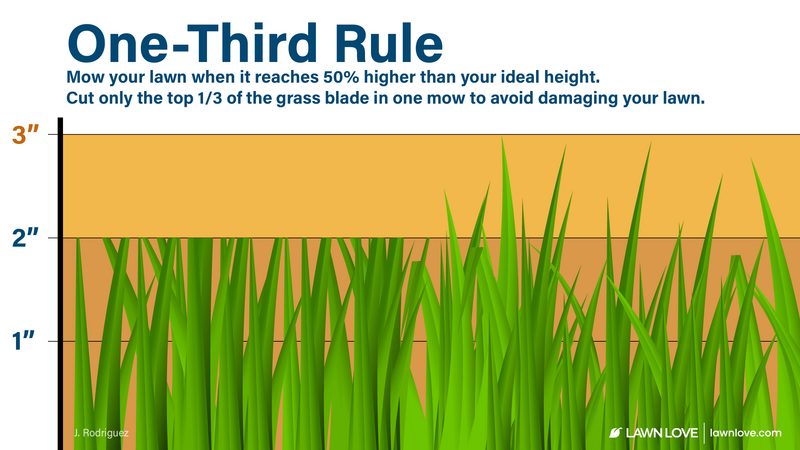
- Apply the one-third rule. Never remove more than a third of the blade length in a single pass.
- Avoid mowing frozen or frost-covered grass. Frozen blades are brittle and tear rather than cut cleanly. Driving a mower over frosted grass leaves lasting brown, foot-shaped, or wheel-shaped damage.
- Whatever you do, don’t scalp the yard. O’Leary says this is the ultimate rookie move. “The biggest mistake is cutting the lawn extremely short on the final mow just to avoid mowing again because removing too much grass at once stresses the roots and leaves the lawn exposed to winter damage,” O’Leary says.
What not to do once you’ve stopped
Putting the mower away doesn’t mean your lawn no longer needs attention.
A warm spell after your final cut can restart growth, so keep checking your lawn every week or two through November. If the grass grows past your last-cut height, that was not actually your final mow. Get one more pass in before the ground freezes.
“If that grass grows an inch after the last cut, you still need to mow because allowing the grass to sit in the winter can increase the chance of mold or rot,” O’Leary says.
You also have to manage fallen leaves.
“Yes, a thin layer of leaves is usually fine, but if the leaves are more than an inch thick, they can block air and sunlight and kill the grass,” O’Leary says.
Feed your lawn one last time before you lock the shed.
“Apply fertilizer around the time the grass stops growing so the roots can store those nutrients and use them in spring,” O’Leary says.
Once your fertilizer is down and the leaves are clear, winterize your mower so it’s ready for next year.
FAQs
Yes, it can. University of Wisconsin–Madison’s horticulture extension says that applying fast-release, high-nitrogen fertilizer in late fall can increase the risk of snow mold because it triggers a late growth surge, leaving the grass unable to harden off before winter.
If you’re fertilizing near your final mow, choose a slow-release or winterizer formula to reduce that risk, since slow-release nitrogen doesn’t flood the leaf tissue with the disease-prone growth that snow mold exploits.
Newly seeded grass follows its own clock. New seedlings shouldn’t be mowed until they reach roughly one-third taller than your normal mowing height, which for many cool-season seedlings takes 4 to 6 weeks after seeding.
If you overseeded shortly before your lawn’s usual last-mow window, the new grass may need one additional cut after the rest of the lawn has already stopped growing, simply to get that first trim in before winter.
Keep watering as long as the ground isn’t frozen. You need to water your lawn at least once more before you winterize your irrigation system and shut it down for the year. Grass crowns still need to rehydrate before dormancy sets in.
Hang up the keys for winter
Putting the mower away for the season is a great feeling. You reclaim your weekends and stop worrying about the rain schedule. Guessing the timing of your last mow of the season leaves your yard exposed to disease and severe winter damage. You have to monitor soil temperature and track grass growth to nail that final cut.
Not sure if your lawn still needs a mow, or if you’ve already hit the final cut? Lawn Love’s local lawn mowing pros can make the call and handle the final cut for you, right on schedule.
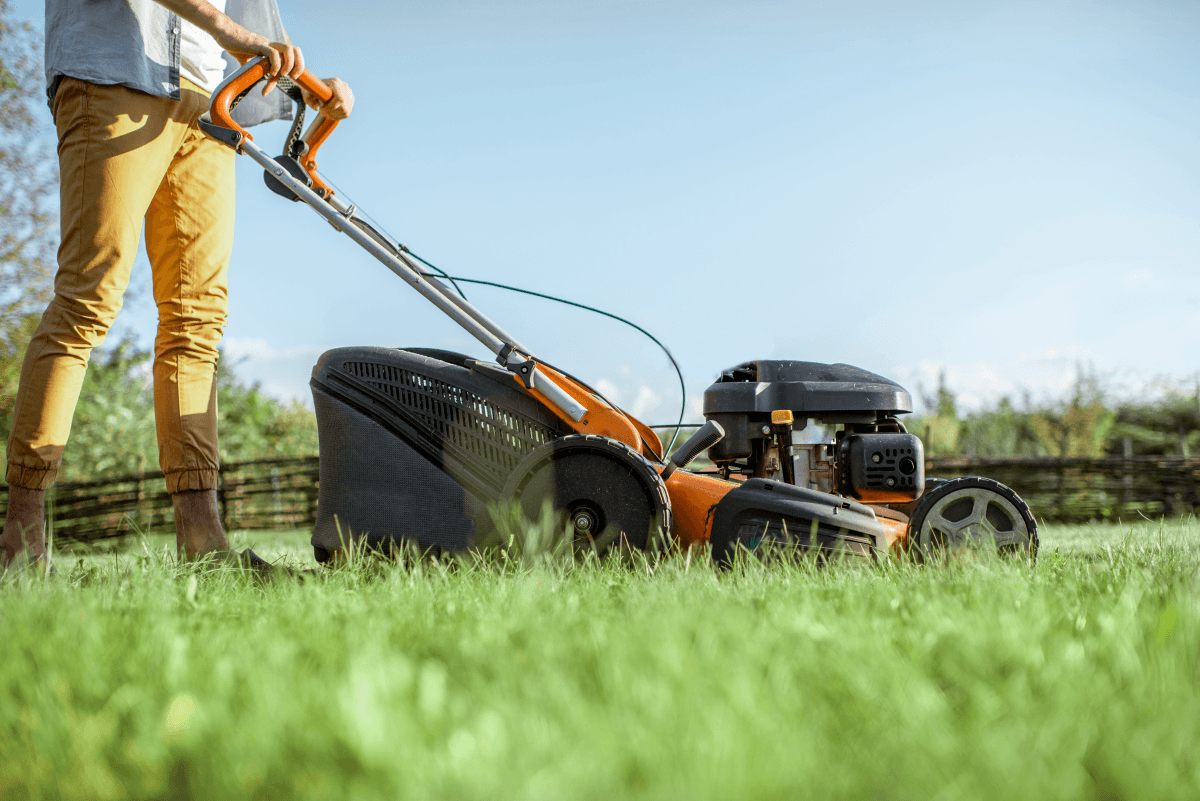
Main Image: A man mowing his backyard lawn with a mower. Photo Credit: rh2010 / Adobe Stock
Related Posts: