| Key Takeaways |
|---|
| ● Keep off frozen or frosty grass: Those trips across the yard can leave footprints you’ll still see in spring. ● Plan your setup: Carry decorations along the sidewalk or driveway, and stay off soggy ground. ● Check your equipment: Use lights and cords rated for outdoor use, plug them into GFCI-protected outlets, and give your ladder firm, level footing. |

What do holiday lights and your lawn have to do with each other? More than you might think. All those trips across the grass to hang lights, straighten decorations, and plug everything in can leave damage you’ll notice in spring.
A little planning for holiday lights and your lawn can save you some repair work later. Checking your HOA’s decorating rules can save you from having to take everything down after spending hours putting everything up.
If getting the yard ready is already more work than you have time for, Lawn Love’s local lawn care pros can help with leaf removal and yard cleanup. You don’t have to spend the whole weekend doing both.
How decorations and foot traffic damage turf
| Decoration | Lawn risk | Better approach |
| Light strings | Foot and ladder traffic damages grass | Test first and use existing walkways |
| Stakes and anchors | Can hit buried lines | Contact 811; locate private lines separately |
| Inflatables and heavy displays | Cover and flatten grass | Use suitable non-lawn spots; lift, don’t drag |
| Extension cords | Trip hazards and wet connections | Keep walking routes clear and connections dry; use outdoor cords only |
| Ladders | Unstable footing on soft soil | Use firm, level ground |
A lawn can handle plenty of activity when it’s growing. When growth slows or stops, recovery takes longer.
Zack Nienaber, owner of Nienaber And Sons Lawn Care L.L.C., serving Greater Cincinnati, says, “Even though grass goes dormant in winter, it can still be damaged.”
“Walking repeatedly over frozen grass can break grass blades, while heavy decorations, ladders, and equipment can flatten turf and compact the soil. You might not notice the damage until spring when the lawn starts growing again.”
According to the University of Nebraska–Lincoln Extension, repeated traffic on frozen turf can cause damage ranging from minor wear to dead patches that need reseeding. The evidence may stick around long after the holidays, and you may see footprints come spring.
What about frost? You don’t need rock-hard ground to have a problem. University of Nebraska–Lincoln Extension also warns that walking across grass on a frosty morning can leave visible damage after the frost disappears.
“Whenever possible, stick to driveways, sidewalks, and existing walkways. If you have to cross the lawn, use one designated path instead of walking all over the yard,” Nienaber says.
“Try to limit trips, carry equipment instead of dragging it, and avoid driving heavy equipment over frozen or wet grass.”
Read more:
Stakes, ladders, and frozen ground
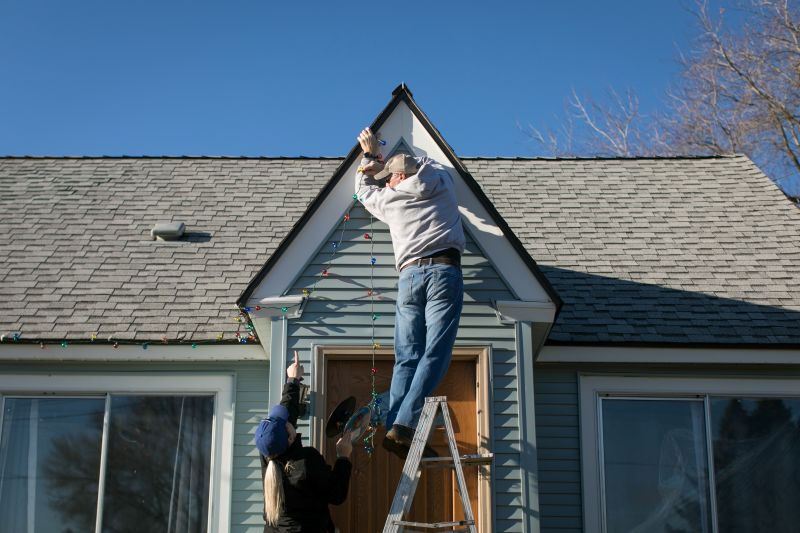
Before you drag one of Santa’s glittering reindeer out of the attic, test the lights inside. Yes, inside. It’s warmer, and it’s much easier to find the dead string before you’re standing in the yard with a ladder and opinions.
Then plan the route:
- Where will the cords run?
- Where will you plug everything in?
- What can you install without walking across the lawn?
- What needs to wait for better weather?
Nienaber’s biggest advice: “Plan your lighting setup before installation. A little extra care with where you walk and place decorations can save homeowners a lot of lawn repair work in the spring.”
Put up your decorations before the ground freezes, if you can. But check your HOA’s rules first. Some communities care about when decorations can go up, not just when they light up.
Read more: Benefits of Winterizing Your Lawn
Ladders first, lawn second
Check the ground before you set up your ladder. It needs to be firm and level, not soft enough for the feet to sink in or slick with patches of ice. If that happens, find another spot. Don’t try to make it work by putting loose boards or bricks underneath.
Follow the ladder’s instructions, stay away from overhead power lines, and move the ladder instead of leaning sideways to reach one more clip. The Consumer Product Safety Commission warns about falls while hanging holiday decorations.
Never climb a ladder to hang lights and decorations by yourself. Someone should be there to hold the ladder and help handle decorations. And, if something were to happen, they can call for help.
The lawn can recover from a skipped section. You may not.
Don’t guess what’s underground
Those yard stakes can hit more than dirt.
811 notes that some utility lines are buried only a few inches below the surface. Before driving stakes or anchors into the yard, contact your state 811 center and follow its requirements. Wait the required time and confirm all utilities have responded before you start.
“Always check before putting stakes into the ground. Look for sprinkler systems, invisible dog fences, and landscape lighting wires. Contact 811 before digging to have participating public utilities marked,” Nienaber says.
“Keep in mind that private irrigation lines and pet fences may not be covered, so check with the installer or have those lines located separately. When in doubt, use installation methods that don’t require ground stakes,” he continues.
Use the anchors the manufacturer specifies. If the ground is frozen, wait. You’re not adding holiday magic by forcing a stake into frozen soil.
Inflatables and heavy displays
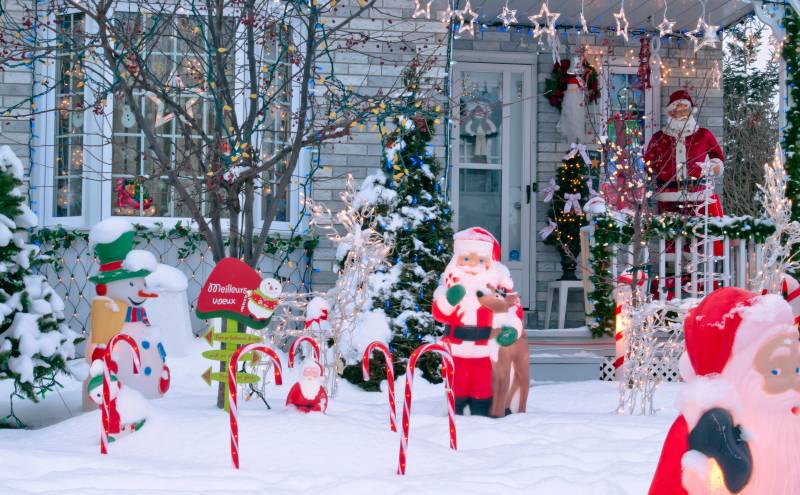
A giant snowman looks considerably less impressive when he’s lying face-down across the lawn.
Before buying an inflatable, consider its footprint when it’s off, not just its height when it’s on. Where will the fabric fall? Will you need to walk out every morning to untangle it from the other decorations?
Put the display where you can reach it from the sidewalk or driveway, if possible. That saves you walking across the grass every time something needs adjusting. Avoid spots where water collects.
Have room on the patio instead? Check that you can anchor the decoration as instructed and still leave room for people to get past without blocking a walkway or exit.
For displays that sit on the lawn, pay attention to the grass underneath. Lift decorations instead of dragging them when you move or remove them.
Should you move everything every week? Nienaber says plywood or temporary ground-protection panels can “help spread out weight and reduce pressure on the grass.”
He recommends using them “for walking paths and equipment access when necessary” and says homeowners should avoid leaving heavy displays sitting directly on the lawn for long periods. “I also wouldn’t leave tarps covering grass for extended periods because they can trap moisture.”
The simplest precaution is also the least expensive: Put out fewer large decorations, and don’t leave them there longer than necessary.
Extension cord and outdoor electrical safety
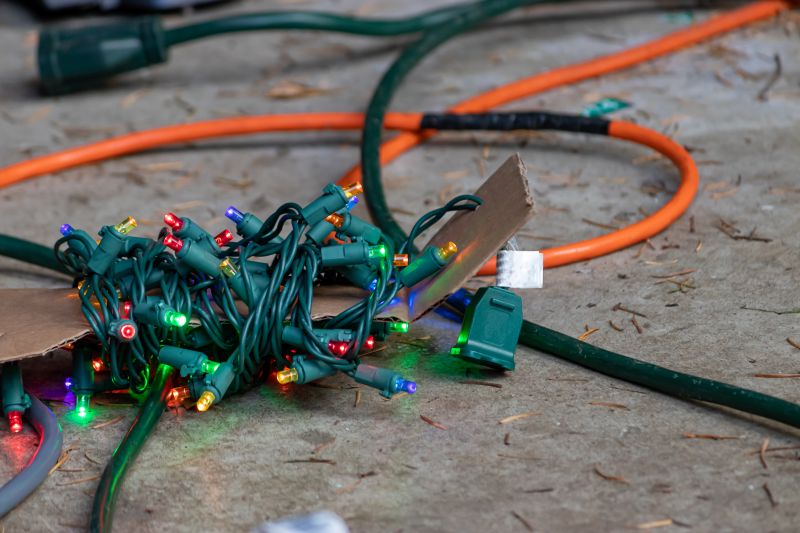
The lights worked last year. Check them anyway.
The CPSC says to throw out light sets with broken or cracked sockets, frayed or bare wires, or loose connections. Don’t use extension cords with cuts or fraying, either.
Read the labels on everything:
- Lights and cords: They should be rated for outdoor use.
- GFCI protection: The CPSC recommends plugging outdoor lights into a ground-fault circuit interrupter-protected outlet or a portable GFCI.
- Connection limits: Follow the manufacturer’s limit on how many sets you can connect.
- Timers and accessories: They also need to be suitable for outdoor use and rated for the equipment.
- Connections: Keep plugs and connectors out of puddles and snow.
A GFCI helps protect against shock by cutting power when current leaks from its intended path. It’s not the same thing as a surge protector. One doesn’t replace the other.
Use light clips made for the job. Don’t attach cords with nails, staples, or whatever is in the junk drawer. Then set an outdoor-rated timer, if your equipment allows it. It saves electricity and keeps you from walking across the lawn in slippers to unplug everything.
Can an HOA make you take decorations down?
In many communities, yes. But the HOA’s power comes from its governing documents and applicable law, not from holiday spirit or neighborhood grumpiness.
Check your HOA’s declaration, covenants, and rules before you put up the decorations. Those documents spell out the restrictions, but state law may limit what the HOA can enforce.
Look for:
- Start and removal dates: Check when decorations can go up and must come down. There’s no nationwide HOA decorating calendar.
- Display size and placement rules.
- Approval requirements.
- Light or music curfews.
- Restrictions on common property.
If the rule isn’t clear, ask for it in writing. Don’t rely on the neighbor’s inflatable with three seasons of seniority. It may have approval. It may have a notice waiting in someone’s inbox.
Religious displays may get extra protection
State law sometimes limits what an HOA can prohibit.
Texas gives us one example. Under the published text of Texas Property Code § 202.018, a property owners association generally can’t prohibit a resident from displaying religious items on their property or dwelling when the display is motivated by sincere religious belief.
The statute still allows some restrictions. An HOA may act when a display:
- Threatens public health or safety.
- Violates another law.
- Sits on property the association owns or maintains.
- Sits on commonly owned property.
- Breaks setback, right-of-way, or easement rules.
- Is attached to street lamps, fire hydrants, utility poles, or similar fixtures.
That protection doesn’t turn every decoration into a religious item. An inflatable Santa doesn’t automatically qualify just because Christmas is a religious holiday.
And Texas isn’t every state. Check your own documents and state law. For a dispute, talk with an attorney familiar with HOA law.
Taking It All Down and Repairing the Lawn

Takedown deserves the same care as setup.
Unplug everything first. Lift displays instead of dragging them. Then walk the yard and collect the stakes, clips, cords, and plastic tie wraps you promised yourself you’d remember. You don’t want to run over them with the mower in spring.
“Once the ground thaws and dries, remove decorations and gently rake flattened grass to loosen it,” Nienaber says. “Some areas will recover on their own as temperatures warm up.”
If the grass doesn’t recover, he recommends repairing the remaining bare spots.
“If bare spots remain, loosen compacted soil and reseed with an appropriate grass type. Severely damaged areas may need additional soil and new seed or sod.”
When should you reseed? Cool-season lawns generally establish best in early fall. If you have warm-season grass, plan to repair bare spots in late spring or early summer, when the soil is warm enough for new grass to get established.
If you plan to use weed prevention, read the label before you buy. Nebraska Extension warns against common pre-emergent herbicides such as prodiamine or pendimethalin when overseeding.
Read more:
FAQs
Let’s start with what the notice actually says. If your decorations were supposed to come down last weekend and they’re still up, removing them may resolve the issue. Ask the HOA to confirm that.
If you disagree with the notice, respond in writing before the deadline and ask how to challenge it.
That depends on what you put out and how much grass it covers. Check underneath your decorations during the season, and don’t leave them out longer than necessary. Choose a day when the ground isn’t frozen or soggy to take them down, if possible.
A surge protector is not a substitute for the GFCI protection your outdoor lights need. Whether to add surge protection depends on your equipment and its instructions.
If you use a surge protector, it must be rated for outdoor use, suitable for its location, and used within its electrical rating. Follow its instructions and those of your lights.
It won’t make an overloaded circuit safe, and an indoor power strip doesn’t belong outside just because you’ve tucked it behind a decoration.
Protect your lawn after the lights come down
Holiday decorating shouldn’t ruin your lawn. When the decorations come down, give the lawn a chance to recover before deciding what needs repair. Keep your trips short, stay off frosty grass, and put the cords where they belong.
If your lawn needs help after the reindeer retire for the season, Lawn Love’s local lawn care pros can help with cleanup and ongoing care.
Main Image: Holiday lights cover a snow-dusted hedge in front of a brick home. Photo Credit: Bill Chizek / Adobe Stock
Related Posts: