| Key takeaways |
|---|
| • Summer patch starts underground in spring. By the time you see brown circles in summer, root damage has already occurred. • The fungus thrives when soil pH is 6.5 or higher and soil temperatures exceed 65 degrees F. • Cultural controls (aeration, deep watering, raising mowing height) matter more than fungicides once you see symptoms. • Resistant grass types include creeping bentgrass, perennial ryegrass, and tall fescue. |
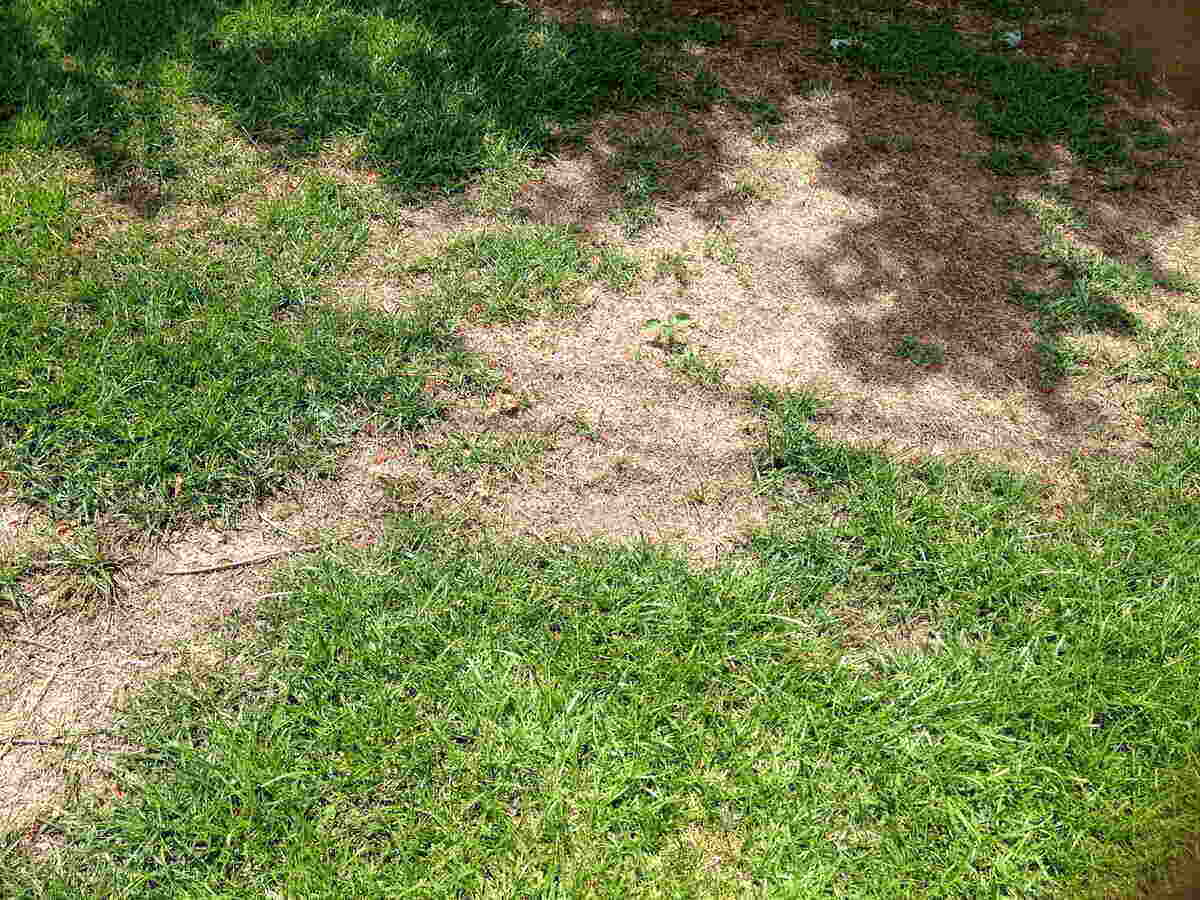
If brown circular patches are ruining your grass this summer, you might have summer patch. This root disease looks exactly like drought stress, but watering it won’t help. The fungus attacks in the spring, so by the time you see the dead circles in July, your roots are already rotting. Fortunately, a few simple changes to your lawn care routine will stop the spread.
If you are dealing with a severe lawn disease and don’t want to spend your weekends with treatments, Lawn Love connects you with a local lawn care pro who can assess the problem and get your lawn back on track.
How to identify summer patch
Summer patch looks a lot like other lawn diseases and turf injuries. To know for sure, a qualified diagnostician should examine the diseased turf with a microscope.
So what does summer patch look like on the lawn? Here are the symptoms to look for:
- It appears as crescent-shaped or circular patches of slow-growing, wilted, thin grass.
- Sometimes the patches contain healthy grass in their center, giving them a frog-eye appearance.
- The patches range from a few inches to 3 feet in diameter, but can appear larger when they merge.
- Affected grass blades turn reddish-brown, then tan, then a light straw color.
- Roots, rhizomes, and crowns are black and rotten.
While the “frog-eye” pattern is the classic textbook symptom, you shouldn’t rely on it. Steve Rice, owner at Lawn Kings, in Valencia, CA, says it’s actually quite rare.
“Maybe 1 out of 10 jobs,” Rice says. “Most homeowners never see that clean ring. Instead, they get irregular, stressed-looking patches that could be mistaken for drought or even pet damage.”
To figure out what is really going on, Rice performs a simple field test: he tugs on the grass.
“If it lifts easily with shallow, dark, rotted roots, it’s summer patch. If the roots are still deep and firm, it’s likely drought,” he explains.
Summer patch vs. brown patch
Summer patch and brown patch are the most commonly confused lawn diseases. They look similar, but are caused by different fungi, damage different parts of the grass plant, and require different treatments, including different fungicide timing.
| Feature | Summer patch | Brown patch |
| Causal fungus | Magnaporthiopsis poae | Rhizoctonia solani |
| Most affected grasses | Kentucky bluegrass, fine fescue, annual bluegrass | Perennial ryegrass, tall fescue, bentgrass |
| Where damage occurs | Roots and crowns | Leaf blades only |
| Appearance | Circular patches; often frog-eye center | Circular patches; smoke-ring border at low mowing heights |
| Active conditions | Soil temps >65F; high summer heat after rain | Night temps >68F; high daytime humidity |
| Fungicide timing | Primarily preventative (late spring, soil temps >65F) | Curative and preventative |
Summer patch vs. necrotic ring spot
Summer patch isn’t the only root disease that makes circles in cool-season lawns. Necrotic ring spot (Ophiosphaerella korrae) looks so similar that the University of Nebraska found the two diseases “cannot be distinguished in the field,” and lab confirmation takes up to 3 to 6 months. The good news is that the cultural fixes are almost identical.
| Feature | Summer patch | Necrotic ring spot |
| Infection timing | Spring (soil temps around 65F) | Spring and fall (60–75F) |
| Symptom timing | Midsummer (July–August) | Spring, fall, and summer stress periods |
| Patch size | A few inches to 3 feet | 6 inches to several feet; often larger over time |
| Frog-eye pattern | Possible | Common, especially in older patches (2+ years) |
| Most affected grasses | Kentucky bluegrass, fine fescue, annual bluegrass | Kentucky bluegrass, fine fescue |
| Fungicide timing | Primarily preventative (late spring, soil temps >65F) | Primarily preventative (late spring, soil temps >65F) |
If you’re not sure which disease you have, treat the cultural causes first and send a sample to a diagnostic lab before spending money on fungicides. These labs specialize in the accurate diagnosis of turfgrass disease and are often located at state universities.
What causes summer patch in the yard?
The summer patch fungus begins attacking grass roots in spring when soil temperatures hit 65 degrees F. Symptoms don’t appear until midsummer, typically early to mid-July, when the infected roots struggle to support the grass blades during drought and heat stress.
By the time symptoms of summer patch begin to appear, the roots are already damaged. Left untreated, patches expand at a rate of 2-4 inches per year.
Will summer patch strike your lawn? Here are conditions that encourage the disease:
- Soil pH is 6.5 or greater
- Soil temperatures exceed 65 degrees Fahrenheit
- Soil compaction
- Poor drainage
- Heat stress
- Drought stress
- Excessive nitrogen fertilizer
- Low mowing heights
- Heavy rainfall followed by extended periods of high temperatures
- Excessive thatch buildup
- Watering too often and for short periods
- Weak root system
How to get rid of summer patch
The best way to control summer patch is with lawn care practices that relieve stressors and increase root strength. Why? Because heat stress, drought stress, and a weak root system often trigger summer patch outbreaks.
Perform the following treatments on your lawn to help get rid of summer patch:
1. Aerate
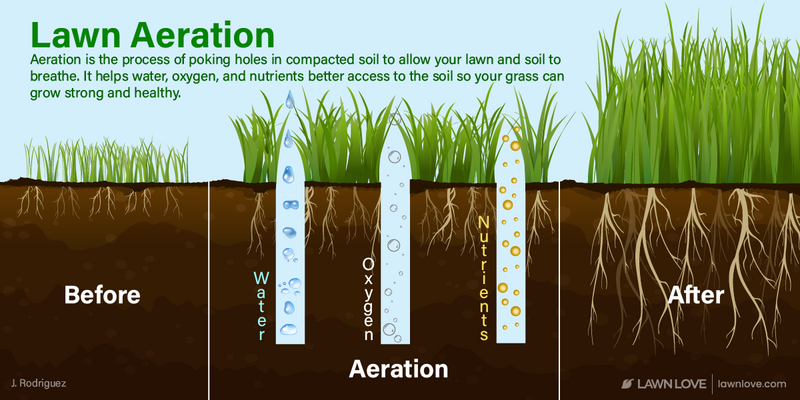
Aerate compacted soil to reduce compaction, improve drainage, and help water and nutrients reach damaged roots.
You should avoid aerating directly over active summer patch circles.
“It can spread the fungus,” Rice says. “I usually hold off aerating those areas until the disease is under control.”
2. Raise the mowing height
Raise the mowing height to your grass type’s highest recommended mowing height to reduce stress on weakened plants. Never remove more than 1/3 of the blade in a single mow.
“I typically recommend going about 0.5 to 1 inch higher than your normal cut,” Rice says. “The extra blade length helps shade the soil and keeps roots cooler.”
3. Water deeply and infrequently
When homeowners see brown patches in July, their first instinct is often to water heavily. However, excessive watering during an active summer patch outbreak basically feeds the pathogen and suffocates the already weak root system.
“One client watered daily trying to save their lawn, and within two weeks, the patches doubled in size because the soil stayed warm and saturated, perfect conditions for the disease to spread,” Rice says.
Water your lawn in the early morning before 10 a.m. Deep, infrequent watering encourages a stronger, deeper root system that can better withstand summer patch pressure.
4. Dethatch the lawn

Dethatch your lawn if thatch exceeds 1/2 inch. Thick thatch harbors dormant fungus and blocks water penetration.
5. Adjust soil pH
Adjust soil pH down to 5.5–6.0 if tests show a pH above 6.5. Summer patch is most severe in alkaline-leaning soils, so gently acidifying with appropriate fertilizers or soil amendments can slow infection.
Rice suggests applying elemental sulfur in light, split applications rather than one heavy dose.
“We corrected the pH over a few months by spacing treatments 4-6 weeks apart and watering it in well. It’s slower, but it avoids stressing already weakened turf.”
6. Create a balanced fertilizer regime
Avoid fertilization practices that encourage top growth at the expense of root development.
7. Reseed affected areas

Overseed affected areas with perennial ryegrass or tall fescue, both of which are highly resistant to summer patch. If a lawn has severe circular dead spots, reseeding is mandatory.
“If the area is completely brown and the crown is gone, it’s not coming back,” Rice says. To prevent the lawn from looking visually mismatched, stick as close as possible to the original grass type and blend, and overseed the entire lawn lightly, not just the dead spots.
Summer patch fungicide treatment
If your lawn has a history of summer patch, apply a preventative fungicide that contains azoxystrobin or propiconazole in spring when soil temperatures reach 65 degrees F.
Apply at large water volumes, up to 5 gallons per 1,000 square feet, to reach grass crowns and the upper root zone. To achieve this deep soil penetration without professional equipment, Rice recommends slow, repeated watering cycles.
“Instead of dumping water all at once, I recommend watering in shorter intervals. Let it soak, pause, then repeat, so it moves down to the root zone without runoff,” he explains.
Plan for 2-3 applications at 28-day intervals starting in late spring for strong control. A single application is rarely enough.
Remember that fungicides work best as a preventative. Applications made after symptoms appear in midsummer are generally ineffective.
“By the time you see symptoms, the damage is already done at the root level, and fungicides at that stage are like putting a bandage on something internal,” Rice says.
How to prevent summer patch in the yard
Summer patch attacks lawns that are under stress and have weak root systems. Poor fertilization, bad watering habits, and mowing too low will hinder the lawn from developing strong roots.
The best way to help your grass establish a deep root system is to maintain your grass. The extra yard work might not sound so appealing, but proper maintenance also will help your lawn fight off other turfgrass diseases.
The following lawn care treatments will help your lawn grow healthy and strong, making it more resistant to summer patch and other diseases:
- Remove leaves and other debris from the yard. Lawn debris provides an excellent place for fungus to remain dormant. A thick layer of leaves can also harm your lawn by blocking the turf’s access to sunlight.
- Mow the grass regularly (and correctly). If you mow too low, you risk scalping your lawn. Scalping is stressful for your turf, and it makes your lawn vulnerable to summer patch. And remember, never remove more than ⅓ of the grass blade during a single mow.
- Plant grass seed that’s disease-resistant and suitable for your lawn. Not every grass type will grow well in your yard. Talk to a local lawn care professional about whether you should grow warm- or cool-season grass and which disease-resistant varieties are the best choice for you.
- Test your soil. The healthier your soil, the healthier your lawn. A soil test reveals what nutrients your soil is lacking and how you can improve its fertility.
- Fertilize your grass. After performing a soil test, implement a fertilization regime that meets your lawn’s nutritional needs.
- Aerate compact soil. Core aeration relieves compact soil by creating small holes in the ground. Aeration allows water, nutrients, and oxygen to access the root system.
- Remove thatch that exceeds ½-inch thick. Thatch is the dead organic matter that accumulates between the turf and the soil surface. A thin thatch layer is healthy for the lawn, but a thick layer may harbor dormant fungus.
- Overseed the lawn. Routine overseeding keeps the turf dense and green.
FAQs
Summer patch is a problem of cool-season lawns like Kentucky bluegrass and annual bluegrass, in regions that combine cool springs with hot, often humid summers.
Warm-season grasses such as Bermudagrass, Zoysiagrass, and St. Augustinegrass aren’t hosts for summer patch. If you’re growing these species and seeing patches, it’s probably another disease.
With consistent cultural treatment, aeration, adjusted watering, higher mowing height, and overseeding with resistant grasses, you can usually see gradual improvement over the rest of the growing season.
In severely damaged spots, full recovery often takes one or more seasons, especially if you rely on cultural practices rather than preventive fungicides.
Yes, and this is one of the most frustrating things about it. The fungus lives in the soil and thatch. It tends to wake up in the exact same spots every spring when soil temperatures hit 65 degrees F.
If your lawn had summer patch last year, you are very likely to see it again unless you fix the underlying problems. The only way to break the cycle is through preventive fungicide treatments and consistent lawn care.
Leave the fungus to the pros
You always dreamed of having a big yard for your family to enjoy, but who knew it would take so much work to maintain? Skipping the lawn chores might save you time, but it’s only going to make your lawn vulnerable to unsightly diseases. No one wants to spend time outdoors when the grass looks ugly.
Take back your free time and keep your lawn healthy by hiring a local lawn care professional. A lawn care pro can tackle existing lawn diseases while also preventing future outbreaks. Hiring a qualified professional allows you to prioritize friends and family over a fungus.
Main Photo Credit: pxfuel
Related Posts: