Choosing the best fall lawn fertilizer depends on your grass. Cool-season lawns thrive on a nitrogen boost in autumn, while warm-season grasses slow down and benefit more from potassium to toughen up before winter.
Understanding this difference is important because the wrong fertilizer at the wrong time can weaken your lawn. Too much nitrogen in warm-season grass in fall, for example, can spur new growth that frost quickly damages. On the other hand, skipping a nitrogen feeding on cool-season grass weakens roots and causes grass to green up more slowly in the spring.
This guide will help you choose the right fertilizer with confidence, setting your lawn up to thrive through the cold months and bounce back beautifully when warmer days return.
Why fall lawn fertilization matters

Proper fall fertilization can improve your lawn’s winter resilience and spring vigor. According to Piedmont master gardeners at the Virginia Cooperative Extension, autumn feeding produces a denser turf with more extensive roots, which means improved fall-spring color, fewer weeds, and less disease heading into the next season.
However, fall fertilizer is not a one-size-fits-all approach for every grass type.
Cool-season grasses like those found in the North need fall feeding to fuel growth and build up food reserves for winter.
Warm-season grasses have the opposite cycle: by fall, they begin slowing down and preparing for dormancy. These lawns must “harden off” rather than put out tender new growth, so heavy fertilization at this moment is not appropriate for them.
Read more: What’s the Difference Between Fall Fertilizer and Winter Fertilizer
Understanding NPK ratios for fall

Every fertilizer bag label lists three numbers representing the percentage by weight of nitrogen (N), phosphorus (P), and potassium (K) in the product. Here’s what each element does:
- Nitrogen (N): The most important nutrient. It drives green growth, increases turf density, and helps grass store energy for winter and a rapid green-up in spring.
- Phosphorus (P): Supports root development but isn’t usually needed in established lawns.
- Potassium (K): Builds overall plant health, improving disease resistance and cold hardiness.
Choosing the right NPK ratio for your lawn starts with knowing your soil’s nutrient levels. “Professional soil testing before fall and spring fertilization provides the most accurate fertilizer recommendations for your specific lawn conditions,” says Carmen Ketron, horticulture agent at Clemson University Extension.
Read more:
- What is N-P-K? A Guide to Understanding Fertilizer Ratios
- How to Soil Test Your Lawn
- How to Read a Soil Test Report
Best fertilizer for cool-season grass types
Cool-season grasses put on their strongest growth during the cooler months of fall. The main driver is nitrogen, which fuels recovery from summer stress, boosts green color, and stores energy for spring growth. Potassium is also valuable in the fall, toughening grass against cold and disease, while phosphorus should only be added if a soil test shows it’s needed.
According to Ketron, “Cool-season lawns perform best with fertilizers in a 4-1-2 ratio (nitrogen-phosphorus-potassium), commonly available as 16-4-8 formulations.” Blends such as 20-0-10 or 24-0-11 also provide the strong nitrogen kick and balanced potassium that these lawns need as they head into winter.
Ketron also emphasized timing. Cool-season grasses respond best to a two-step schedule, one application between September and November, and another in February. The split approach keeps nutrients available through the lawn’s winter growth period. It’s especially helpful for sandy soils, which lose nutrients quickly. By dividing the applications, you give your lawn consistent support to stay healthy through winter and thrive again in early spring.
Read more:
Best fertilizers for warm-season grass types
Warm-season grasses thrive in summer but naturally slow down as temperatures drop. By fall, the goal is not to push new growth but to help the lawn prepare for dormancy.
If your lawn is still growing in early fall, a light application of a low-nitrogen, high-potassium fertilizer such as 10-0-20 or 5-0-15 can improve cold tolerance and disease resistance. Potassium strengthens roots and helps turf endure stress, but only apply it if a soil test shows a need.
Ketron emphasizes the importance of timing: “Warm-season grasses should not receive fertilizer after August 15.” Fertilizing too late, she says, encourages tender new growth that won’t survive frost, and once the grass is dormant, “fertilizing dormant warm-season grass primarily feeds weeds rather than your desired turf.”
Wayne Wells, turfgrass specialist at Mississippi State University Extension, adds that if you do apply a winterizing fertilizer, it should be done early: “Time the winterizing fertilizer application when temperatures begin to moderate and days begin to shorten, but before the turf goes dormant.”
Once the lawn begins turning brown or dormant, skip fertilizing altogether. Holding off ensures you’re not wasting product and that your grass will wake up healthier when warm weather returns.
Read more:
Your next step for a healthier lawn
Fall fertilization gives your lawn the strength it needs to handle winter and bounce back in spring. And since autumn also means falling leaves, it’s the perfect time to take care of both. LawnLove can connect you with a local professional to handle fertilization or leaf removal, so your yard is ready for the season without the extra work.
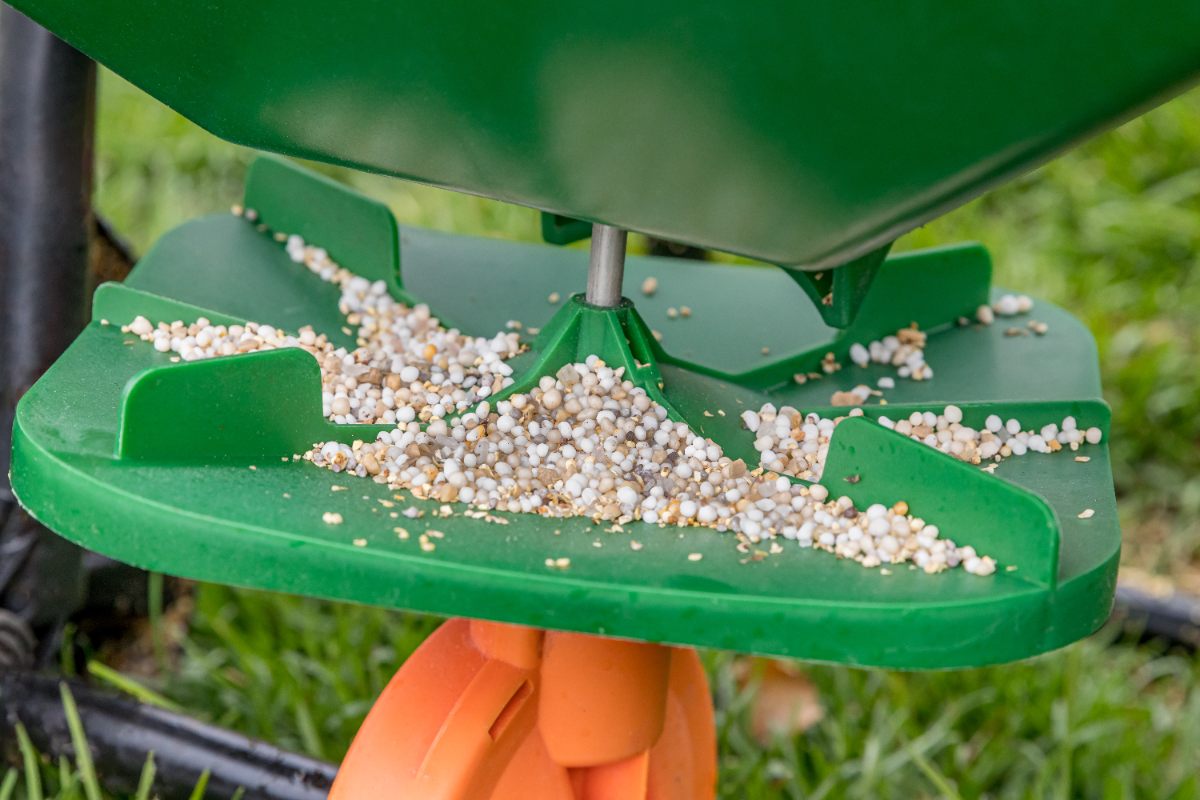
Main Image: Closeup of lawn fertilizer spreader with granules of fertilizer. Photo Credit: JJ Gouin / Adobe Stock
Sources:
Carmen Ketron. Urban Horticulture Agent. Clemson University Extension. Personal Interview.
“Fertilization of Cool-Season Grasses.” By Piedmont Master Gardener. Virginia Cooperative Extension.
“Fall fertilization of warm-season turf species.” By Dr. Wayne Wells is an Extension Professor and Turfgrass Specialist. Mississippi State University Extension.
Related Posts: