| Key Takeaways |
|---|
| • Removal is cosmetic: Pulling, mowing, or raking removes visible mushrooms, but the fungus underground stays alive. • Mushrooms signal conditions, not disease: They usually point to damp, shady soil or decaying organic matter, not a sick lawn. • Prevention is the lasting fix: Improving drainage, watering less often, and clearing debris keeps mushrooms from coming back. |

To get rid of mushrooms in your yard, pull or mow them off as soon as they appear, then fix the damp, shady conditions that feed them. Clearing debris, improving drainage, and watering less often keep them from coming back.
Although mushrooms can make your yard look a little wild, they rarely harm your lawn. Ben Vogel, a master gardener and community educator at the University of Minnesota Extension, explains that “mushrooms are the fruiting bodies of a larger underground fungus called mycelium.”
He says their presence means your soil is full of beneficial microbes that recycle nutrients and keep it healthy.
Still, frequent growth can signal too much shade, poor drainage, or decaying organic matter. You can improve all three, and this guide shows you how. For fallen leaves and yard debris, LawnLove’s local pros offer a leaf removal service that clears the material mushrooms feed on.
How to get rid of mushrooms in your yard
The fastest way to get rid of mushrooms in your yard is to pull them by hand or mow them off, then bag and trash them. Home remedies can kill the visible caps, but none of them reach the fungus underground.
| Method | What it does | Limitation |
| Pull by hand | Removes caps before they release spores | Fungus underground survives |
| Mow and bag | Clears many mushrooms at once | Spreads spores without a bag |
| Vinegar | Burns the visible caps | Can burn grass and plants |
| Baking soda | Slows fungal growth | Too much makes soil alkaline |
| Dish soap | Breaks down the outer layer | Quick fix only |
| Fungicide | Treats diagnosed fungal disease | Not recommended for ordinary mushrooms |
Pull mushrooms by hand
Mushrooms are a natural part of a healthy soil ecosystem, but not everyone likes the look of them popping up in the yard.
Karla Griesbaum, extension specialist at the University of Illinois Extension, notes that it’s fine to leave them alone if they don’t bother you.
“If you are worried about consumption by pets (some are toxic) or do not like the sight of them, I would recommend physical removal shortly after their appearance with gloved hands,” she says.
Vogel also advises picking mushrooms early. While removing them doesn’t eliminate the underground fungus, it helps prevent spores from spreading and inhibits regrowth.
How to do it:
Wear gloves.
Grasp the mushroom at the base and pull it out. I like to carry a bucket of soapy water while I work. I drop each mushroom into the bucket so the soap kills the spores and prevents spreading.
For stubborn mushrooms, use a trowel to loosen the soil.
Toss mushrooms into a sealed plastic bag and dispose of them in the trash.
Mow regularly

Regular mowing removes mushroom caps and helps control the damp, shady conditions mushrooms like. Overgrown grass traps moisture at the soil level and hides small mushrooms, letting them spread spores. Mowing won’t kill the underground fungus, but it supports a drier, healthier lawn.
How to do it:
Mow at the recommended height for your grass type. Never cut more than ⅓ of the grass blade at a time. Maintain sharp mower blades to avoid damaging your grass.
Use a bagging attachment to collect clippings, especially when mushrooms are present. Mowing over them without a bagging attachment can spread spores across your yard.
Read more:
Spray with vinegar
Vinegar is a popular home remedy thanks to its strong acidity. Many people use it to kill weeds, and sometimes mushrooms.
However, Griesbaum cautions that “using vinegar or other chemicals to eliminate mushrooms will most often not get rid of the entire underground network of fungus and can harm plants and grass as well.”
If you still want to try it, use horticultural vinegar, which contains 20% to 30% acetic acid. Regular household vinegar isn’t strong enough. Always apply carefully.
How to do it:
Pour horticultural vinegar into a spray bottle or pump sprayer. Wear gloves and eye protection, since it can burn skin and irritate eyes.
Choose a dry, calm day. Apply directly onto the mushroom cap. When I apply vinegar, I like to use a piece of cardboard or a plastic lid with a hole to shield surrounding areas. This trick lets me target mushrooms with precision without burning my lawn.
Repeat if new mushrooms appear.
Read more:
Sprinkle baking soda
Baking soda is another common remedy. It raises the soil’s pH level, creating an environment that mushrooms don’t like. It may dry out or kill the visible mushrooms, but unless you fix the underlying cause, such as moisture or decaying matter, they’ll return.
Vogel explains that “household products such as vinegar or baking soda are not effective and can harm turf. They burn the surface fruiting bodies but leave the underground fungal network untouched.”
If you want to experiment anyway, note that baking soda is considered fungistatic, says Linda Chalker-Scott at Washington State University. She explains that baking soda can slow fungal growth but won’t eliminate it. It’s a safe option, though using too much can make the soil too alkaline.
How to do it:
Mix 2 tablespoons of baking soda with 1 gallon of water.
Pour the solution into a spray bottle or watering can.
Spray or pour it over the mushrooms and the surrounding soil.
Reapply weekly or after rain.
Pour dish soap solution
Dish soap breaks down a mushroom’s outer layer, killing the visible part and slowing surface growth. It won’t kill the underground mycelium, but it’s a quick fix.
Eva Maria Pabon, a horticulture agent at the University of Florida’s Institute of Food and Agricultural Sciences (IFAS) Extension, says mushrooms are helpful because they feed on decaying matter and signal healthy soil. If you want them gone, though, try a dish soap solution.
How to do it:
Mix 1-2 tablespoons of dish soap into a gallon of water. I always use biodegradable soap; it treats the fungus problem without harming my lawn’s natural balance.
Poke holes around the base of each mushroom.
Pour the soapy water slowly into each hole.
Spray the top of the mushrooms.
Apply fungicides only if needed
“For ordinary mushrooms, fungicides aren’t necessary,” Vogel says. These products don’t reach the underground fungus, so they rarely solve the problem.
Griesbaum agrees: “Unless you are facing a distinct fungal infection of a tree or other plant, and this has been identified by an arborist or other professional, I do not recommend using fungicides on lawns.” Fungi, she says, belong in healthy soil.
Robert Olen, horticulturist at the University of Minnesota Extension, adds, “There are no fungicides recommended for control.” He suggests that homeowners focus instead on removing decaying wood or other organic material in the soil. Applying a small amount of nitrogen fertilizer, he says, can help speed up natural decay.
How to do it:
Use fungicides only if a professional diagnoses a fungal disease and recommends a specific product.
Follow their guidance closely for safe and effective results.
Read more:
Why mushrooms grow in your yard
Mushrooms grow when an underground fungus has moisture, shade, and decaying organic matter to feed on. The mushroom is only the fruiting body. The fungus itself lives in the soil and thatch, often for years.
Most lawn mushrooms don’t hurt your grass, but some are toxic if eaten. If kids or pets play in the yard, remove mushrooms as soon as they appear. Never eat yard mushrooms, since wild lawn mushrooms are very difficult to identify and can be dangerous.
Read more:
How to keep mushrooms from coming back
To keep mushrooms from coming back, take away what the fungus needs: moisture, shade, and food. These changes take more effort than pulling mushrooms, but they are the only lasting fix.
Reduce excess moisture

Mushrooms thrive in damp spots caused by overwatering, poor drainage, and compacted soil. Julie Weisenhorn and Bob Mugaas at the University of Minnesota Extension note that lawn mushrooms often appear after heavy rain or excess watering. They rarely indicate lawn disease.
“Water less often but more deeply, and irrigate in the morning,” recommends Vogel. This allows the soil to dry out during the day, making conditions less favorable for fungi.
For compacted soil, choose core aeration over spike aeration.
“Core aeration is better for removing thatch, reducing soil compaction,” says James A. Murphy, director of the Rutgers Center for Turfgrass Science in New Brunswick, New Jersey.
Griesbaum also suggests planting water-loving native plants in very wet areas. These plants absorb excess moisture, improve drainage, and help balance the ecosystem.
How to do it:
Adjust your watering schedule. Lawns typically need no more than 1 inch per week, including rainfall.
Water early in the morning to allow the grass to dry throughout the day.
Inspect your lawn for areas where water pools after rain and consider regrading or installing drainage solutions to redirect water flow.
Aerate compacted soil to improve water infiltration and reduce surface runoff.
Ensure gutters and downspouts direct water away from the lawn to prevent oversaturation in specific areas.
Read more:
Minimize shade
More sunlight dries out the shady, damp spots where mushrooms tend to appear.
How to do it:
Prune low limbs: Cut low-hanging tree limbs to let more light reach the grass.
Trim shrubs: Thin dense shrubs to improve light penetration and airflow.
Rethink crowded trees: In some cases, remove crowded or poorly placed trees.
Read more:
Remove decaying organic matter

Mushrooms feed on decaying materials like roots, buried wood, and thick thatch. Since they lack chlorophyll, Olen explains, mushrooms cannot produce their own food and instead depend on the natural decay happening in the soil.
Weisenhorn and Mugaas point out that mushrooms are often part of nature’s cleanup crew, breaking down dead plant material and returning nutrients to the soil.
To limit their growth, reduce their food sources. Rake up dead grass and leaves in the spring, and aerate your lawn to improve drainage.
Don’t let fall debris sit, either. A heavy layer of dead grass and wet leaves left all winter “can hold moisture and cause problems for the grass underneath,” says Mike Marlow, co-founder of Heroes Lawn Care in Omaha, Nebraska.
How to do it:
Rake up leaves, plant debris, and dead grass.
Dig or grind out stumps and leftover roots after taking out trees.
Aerate once a year to loosen compacted soil.
If thatch is more than ½ inch thick, dethatch to remove it and help the soil breathe.
Keep mulch no deeper than 4 inches, and age fresh wood chips at least 6 months before spreading them, since nuisance mushroom fungi thrive on fresh chips.
Read more:
FAQs
No, nothing you spread on the soil will stop mushrooms from coming up. Lime only changes soil pH, so add it only if a soil test shows your lawn needs it.
Individual mushrooms fade when the weather turns warmer and drier. They can keep returning for several years until the buried organic matter they feed on is used up.
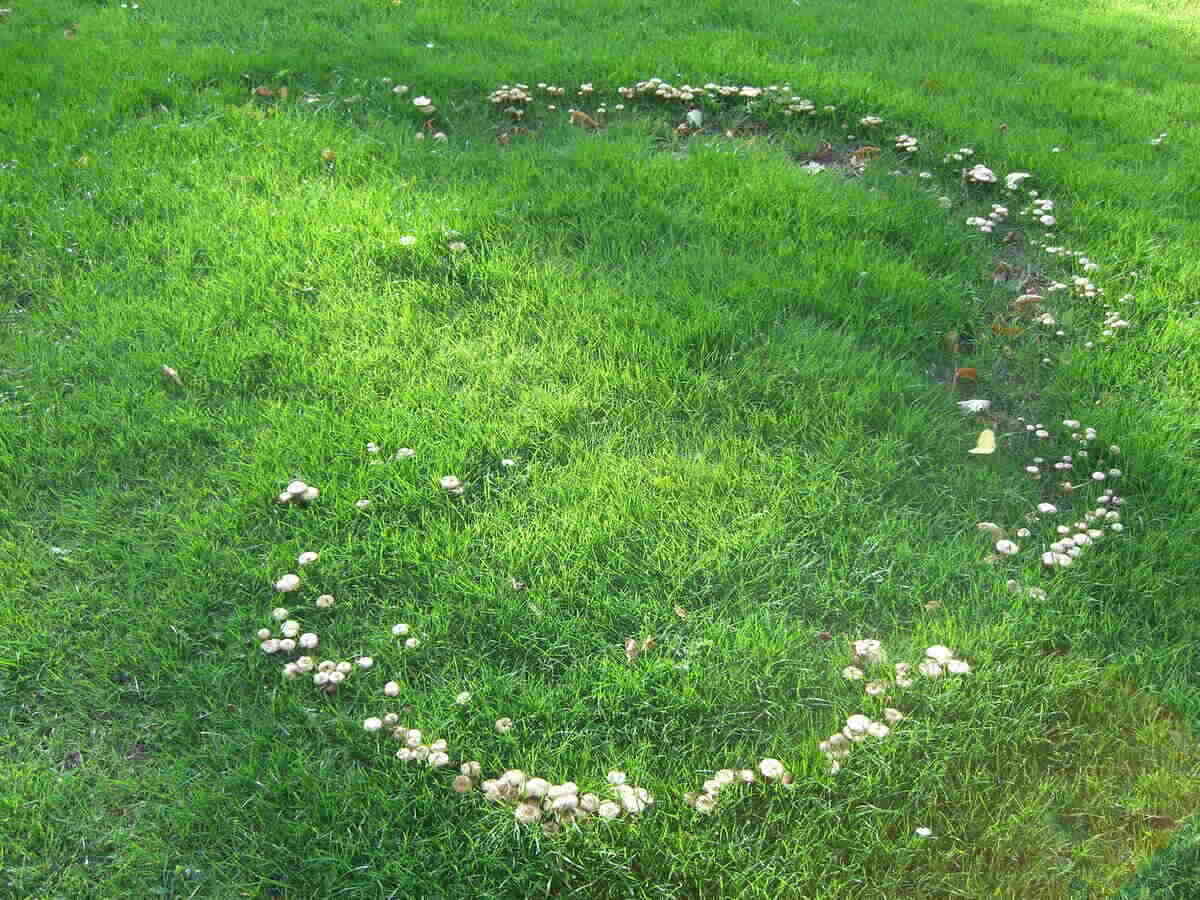
A fairy ring is a circle or arc of mushrooms or dark green grass that forms as the fungus grows outward. Ring-forming fungi create rings 1 to 12 or more feet across, and mushrooms may or may not be present.
Need a hand with your yard?
Mushrooms are manageable with a few smart changes, like improving drainage and reducing organic buildup. If they keep coming back, LawnLove can connect you with a local expert.
LawnLove’s local mowing pros keep your grass trimmed and clippings bagged, so spores don’t spread across the yard.
For soggy, compacted soil, LawnLove also offers a lawn aeration service that helps water drain and takes one more chore off your to-do list.
Main Image Credit: Mushrooms grow in a lawn. Photo Credit: Vanessa Bentley | Adobe Stock
Related Posts: