| Key Takeaways |
|---|
| • Start with soil and grass type: A soil test and knowing whether you grow cool-season or warm-season grass guide every other lawn care decision. • Mow high and water deeply: Cut no more than one-third of the grass blade at once, and water about 1 inch per week, including rain. • Time tasks to your grass type: Fertilize, aerate, and overseed cool-season lawns mainly in fall and warm-season lawns in late spring and early summer. |
Successful lawn care for beginners starts with learning your soil and grass type. Then you mow, water, fertilize, and control weeds on a seasonal schedule that suits your grass.
This guide covers soil testing, grass types, and the core tasks of watering, mowing, fertilizing, and weed control. You’ll also find seasonal chores, a lawn care schedule, basic tools, pest and disease tips, and common beginner mistakes.
Short on weekends? LawnLove’s local pros can take over the mowing, and our lawn treatment service covers fertilizing.
Start with your soil and grass type
First, test your soil and identify your grass type. A soil test, repeated every 2 to 3 years, shows which nutrients your lawn lacks and whether the pH needs adjusting. Your grass type, cool-season or warm-season, then sets the calendar for mowing, fertilizing, and seeding.
Test your soil
Healthy soil is the foundation of a resilient lawn. Just like your body needs vitamins, minerals, and nutrients to function at its best, your lawn needs the same to grow properly.
Have your soil tested in a laboratory every 2 to 3 years. That’s the interval North Carolina State University (NC State) gives in its extension gardener handbook. A do-it-yourself (DIY) kit gives a quick read in between.
Here’s what a soil test can tell you:
Soil type
Your soil type shapes how often you water and aerate. A lab test reports the share of sand, silt, and clay in your soil, which tells you how it holds water and air.
The 4 most common soil types are:
| Soil type | Texture and drainage | What it means for your lawn |
| Clay | Very fine texture; holds water like a sponge | Water less often, but watch for compaction that starves roots of air |
| Sandy | Coarse texture; drains fast | Water more often, since sandy soil doesn’t hold moisture |
| Silty | Medium-sized particles between clay and sand | Moves nutrients to roots better than clay, but can compact |
| Loamy | Mix of clay, sand, and silt | The ideal soil: holds moisture, drains well, and is fertile |
There are also combinations of soil types, such as silty clay, sandy clay, and clay loam.
A soil test will also tell you about your soil’s fertility, salt levels, and organic matter percentage. All these aspects can help you take care of your lawn so that it continues to be healthy for years to come.
Pro tip: If your lawn is large, you might have different soil types in different areas, so make sure you sample multiple locations on your landscape when conducting your soil test.
pH level
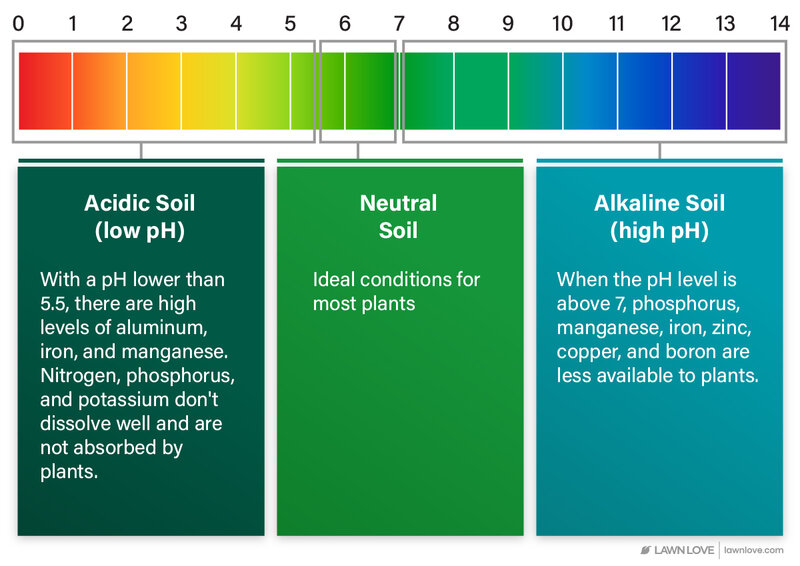
Just knowing if your soil comprises sand or clay isn’t enough. You also need to know if it’s acidic or alkaline (or somewhere in between), which is what the pH level will tell you.
The pH is measured on a scale from 0 to 14; any number below 7 means the soil is acidic. Numbers above 7 mean the soil is alkaline. A pH of 7 means the soil is neutral.
Most turfgrasses grow best in slightly acidic soil with a pH between 6.0 and 7.0. A pH that is too high or too low can lead to nutrient deficiencies and a weaker lawn:
Too acidic (pH below 6.0): You’ll most likely need to amend your soil with lime to raise the pH.
Too alkaline (pH above 7.0): Add sulfur to lower the pH.
Joseph Demkovich, brand president at Heroes Lawn Care in Austin, Texas, says there are visual signs your soil pH is off.
“If your yard’s going patchy and yellow even though you’ve been fertilizing it or moss is starting to take over, there’s a good chance your soil pH is off,” Demkovich says.
Understand your grass
Knowing the type of grass you have is crucial because it determines your care routine. Different types of grass need specific treatments at different times. For example, each grass type has a different growth cycle that determines watering and fertilizing.
There are 2 categories of grass types: warm-season grasses and cool-season grasses.
Warm-season grasses
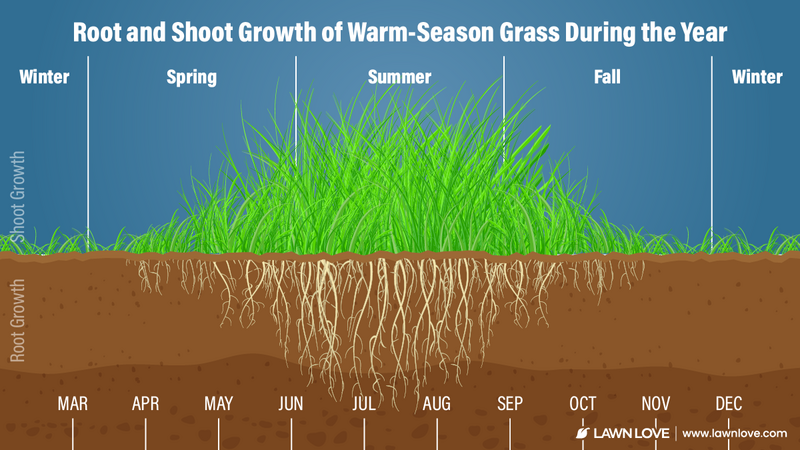
If you live in the Southern states, you probably have warm-season grass. These species thrive in summer heat and grow most actively from late spring through summer. Warm-season grass types include:
Bahiagrass
Bermudagrass
Centipedegrass
St. Augustinegrass
Zoysiagrass
Warm-season grasses generally handle drought better than cool-season grasses thanks to deep roots. They grow during the summer and go dormant and brown when temperatures cool in fall.
Cool-season grasses
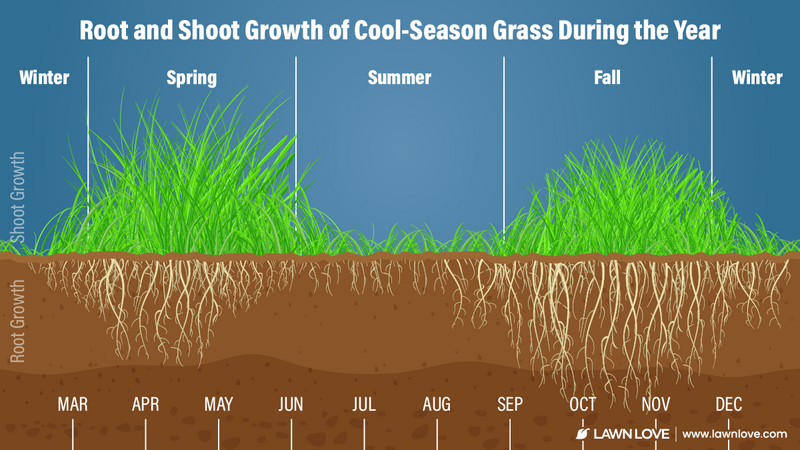
If you live in the Northern states, you probably have cool-season grass. Cool-season grasses grow best in the mild weather of spring and fall. Cool-season grasses include:
Annual ryegrass
Bentgrass
Fine fescue
Kentucky bluegrass
Perennial ryegrass
Tall fescue
Cool-season grasses can go dormant during hot, dry summers and again in cold winters.
Not sure which type you have? Take a sample to a local garden center or your county’s cooperative extension office.
Read more:
Basic lawn care tools for beginners
A beginner needs only a handful of basic tools: something to cut the grass, something to water it, and something to spread fertilizer or seed. Start with these essentials:
Lawn mower: cuts grass to an even height, and a sharp blade gives a cleaner cut.
String trimmer: trims grass along fences, beds, and other spots the mower can’t reach.
Garden hose with sprinkler: delivers deep, even watering when rain falls short.
Broadcast spreader: spreads fertilizer, seed, and other granular products evenly across the lawn.
Leaf rake: clears fallen leaves and light debris that can smother grass.
Gloves and safety gear: protect your hands, eyes, and ears when mowing, trimming, or handling lawn products.
Soil test kit: shows your soil’s pH and nutrient levels before you buy fertilizer.
Core aerator (optional): loosens compacted soil, and renting one makes more sense than buying since you’ll use it occasionally.
Read more:
Essential lawn care tasks
Four tasks keep a lawn healthy week to week: watering, mowing, fertilizing, and controlling weeds. Get these right, and most other lawn problems become easier to prevent.
Water your lawn

Most lawns need about 1 inch of water per week, including rain, applied deeply and infrequently. Follow these tips to get the most out of your watering routine:
Location: The amount of water a lawn needs depends on where you live and the time of year. If you live in an area with a lot of rain and mild weather, you won’t need to irrigate as much as someone living in a desert or somewhere with scorching summers.
Amount: Hot weather and sandy soil call for more water, while cool or rainy weeks need less.
Time of day: Water in the early morning, before 10 a.m., so less water evaporates. Avoid watering at night, which keeps grass wet and invites disease.
How to water: Water deeply and less often, such as about ½ inch every 3 to 4 days, instead of a little every day. Set an empty tuna can on the lawn to see how long your sprinkler takes to fill it.
Demkovich says the tuna can test is a good way to accurately measure if your grass is getting enough water without buying expensive irrigation sensors.
“You can easily track how much water your lawn’s actually getting by scattering empty tuna cans across the grass before you turn on the sprinklers. Just time how long it takes to collect an inch of water,” he says.
“To see if that water’s soaking in deep enough, grab a long screwdriver and poke it into the dirt. It should slide in pretty easily about 6 inches down.”
Watering efficiently matters. WaterSense statistics from the U.S. Environmental Protection Agency (EPA) show that as much as 50% of outdoor water is lost to wind, evaporation, and runoff from inefficient irrigation.
Pro tip: A sprinkler with a timer saves time, and a rain sensor shuts it off during storms so your lawn doesn’t get oversaturated.
Mow at the right height
Mow often enough that you never remove more than one-third of the grass blade at once, and keep the mower at the right height for your grass type. Cutting too low is the fastest way to damage your grass when mowing your lawn.
When your grass is too tall, it becomes an ideal environment for pests and fungi to multiply. In addition, if you let your grass grow too much, the long clippings won’t decompose and may damage your lawn, preventing it from absorbing enough water and nutrients.
When it’s too short, it won’t be able to photosynthesize properly, which can hinder root growth and make it vulnerable to pests and disease.
Pro tip: Clemson Cooperative Extension backs this mowing rule-of-thumb. Sharpen your mower blades at least once a year to reduce tearing.
Mowing your grass too low is known as scalping, and while it may be a good idea in certain instances, in general, you should avoid scalping your lawn, as it stresses and weakens your turfgrass.
“You scalp it, it can’t soak up sunlight anymore and the roots basically starve,” Demkovich says. “Your lawn needs those grass blades to feed itself. When you chop them down to the dirt, the plant goes into survival mode and uses up all its stored energy trying to grow new leaves, and the roots end up drying out. “
Here are the recommended mowing heights for each grass type:
| Grass type | Optimal mowing height |
| Bahiagrass | 2 to 4 inches |
| Bermudagrass | 0.5 to 2 inches |
| Centipedegrass | 1.5 to 2 inches |
| Fine fescue | 2.5 to 3 inches (summer) |
| Kentucky bluegrass | 1.5 to 2.5 inches |
| Perennial ryegrass | 1 to 2.5 inches |
| St. Augustinegrass | 2.5 to 4 inches |
| Tall fescue | 3 to 3.5 inches (summer) |
| Zoysiagrass | 1 to 2 inches |
Source: Clemson Cooperative Extension mowing heights table and NC State Extension (Kentucky bluegrass and bahiagrass).
Remember that grass grows at different rates depending on the season and the species. Warm-season grasses need to be mowed more frequently during the summer while cool-season grasses require more upkeep during the spring and fall.
Fertilize your lawn
If you want the grass to be greener on your side, feed it the nutrients your soil test says it lacks. Turfgrass needs 3 primary nutrients:
Nitrogen (N) supports leafy growth and vibrant green color.
Phosphorus (P) aids in root development.
Potassium (K) contributes to disease resistance and overall stress tolerance.
There are 2 common types of fertilizer:
| Fertilizer type | Pros | Cons |
| Liquid (applied with a sprayer or hose-end bottle) | Easy to apply and quickly absorbed | Costs more and needs more frequent applications |
| Granular (applied with a spreader) | Cheaper and feeds the lawn longer | Harder to spread evenly and slower to act |
Timing is everything when it comes to fertilizing your yard, and the best time differs by grass type:
Cool-season grasses: Fertilize mainly in fall, with a lighter feeding in spring.
Warm-season grasses: Fertilize from late spring through summer, while the grass is actively growing.
Warning: Excess fertilizer can burn your lawn and wash into nearby waterways. Read the label and apply only the amount listed for your lawn’s square footage.
“If you apply too much fertilizer, it will ‘burn’ the plants,” says James A. Murphy, director of the Rutgers Center for Turfgrass Science in New Brunswick, New Jersey.
Demkovich says the biggest mistake beginners make is applying too much nitrogen on a struggling lawn to make their grass grow.
“Don’t make the mistake of dumping a bunch of high-nitrogen fertilizer on a sad-looking lawn and thinking it’ll fix everything,” he says. “Pushing all that top growth on weak roots is just gonna mess it up.”
Pro tip: When you are searching for a good fertilizer, look for an N-P-K ratio that suits your lawn’s needs. As an example, a fertilizer that is labeled as 25-10-15 has a ratio of 25% nitrogen, 10% phosphorus, and 15% potassium.
Control weeds

Weeds are the bane of any homeowner’s existence. They grow anywhere and everywhere, and they’ll ruin your lawn by competing with your grass for nutrients and space if you don’t take care of them.
Lawns usually contain 3 types of weeds:
Broadleaf weeds have wide, veiny leaves that are flat. Examples include dandelions, clover, and chickweed.
Grassy weeds have long, narrow leaves with parallel veins, such as crabgrass or foxtail.
Grass-like weeds look a lot like grasses due to their long and thin leaves, but they usually grow faster and have different colorations. Examples include sedges and wild onions.
Hand-pulling is an effective but tedious option for weed control, and digging weeds up by hand won’t be feasible if the weed infestation is too large, so you will have to turn to alternative solutions instead.
If you are tired of pulling weeds by hand, herbicides are an effective way to kill weeds:
Pre-emergent herbicides prevent weed seeds from germinating.
Post-emergent herbicides target weeds that are already growing.
However, some homeowners don’t want to use chemical weed killers, so there are some natural remedies for getting rid of weeds that you can try, such as a homemade vinegar spray or pouring boiling water on weeds.
You can also prevent weeds without synthetic chemicals by following these tips:
Leave grass clippings to create a mulch layer that blocks weed seeds from the sun.
Spread corn gluten meal in your yard, which can work as a pre-emergent herbicide.
Water deeply so your grass roots grow deeper, and there’s less space for weed roots.
Pro tip: It’s important to check if the herbicide you’re buying targets the lawn weed you’re trying to get rid of and if it is selective or nonselective.
Seasonal lawn care tasks
Beyond weekly upkeep, a few chores happen once or twice a year: raking leaves, dethatching, aerating, and overseeding or laying sod. Timing matters more than effort with these jobs, so match each one to your grass type and the season.
Rake leaves
Raking leaves is probably the most tedious part of lawn care, but it’s essential. There are few things worse than a thick mat of moldy leaves on your lawn. It can invite pests and diseases and make grass struggle to photosynthesize.
Luckily, there are ways to make raking easier. Here are some tips for removing leaves from your yard:
Divide your property into sections and rake one area at a time.
Rake with the wind to have gravity on your side.
Get a leaf blower or a leaf blower vacuum (you’ll thank us later).
Rake the leaves onto a tarp, so you don’t have to bend over every few minutes.
Can’t finish in one day? Stomp on the piles so they don’t blow away and pick up where you left off tomorrow. LawnLove’s leaf removal service can also save you time and possible back pain.
Dethatch your lawn

Over time, dead grass and other organic matter, called thatch, gets trapped at the base of grass blades. Dethatching your yard removes that thick layer of organic matter. Removing thatch allows water and nutrients to reach deeper into your soil, encouraging healthier growth.
Dethatching helps keep disease and pests from taking hold in your grass, which means less time spent on maintenance.
A layer of thatch less than ½ inch is beneficial and acts as an organic mulch. Once it gets thicker, it becomes a problem.
Dethatch only when the layer is thick, at the right time for your grass:
For cool-season grasses, dethatch your lawn in the early spring or early fall.
For warm-season grasses, dethatch in the late spring or early summer.
Some grass species are more prone to thatch, such as Kentucky bluegrass and Bermudagrass. Still, tall fescues and perennial ryegrasses usually don’t have thatch problems.
Pro tip: Cut out a small plug of turf and measure the spongy layer above the soil. If it’s thicker than half an inch, the threshold in the University of Kentucky (UK) dethatching guide, rent a dethatcher and get to work.
Aerate your soil
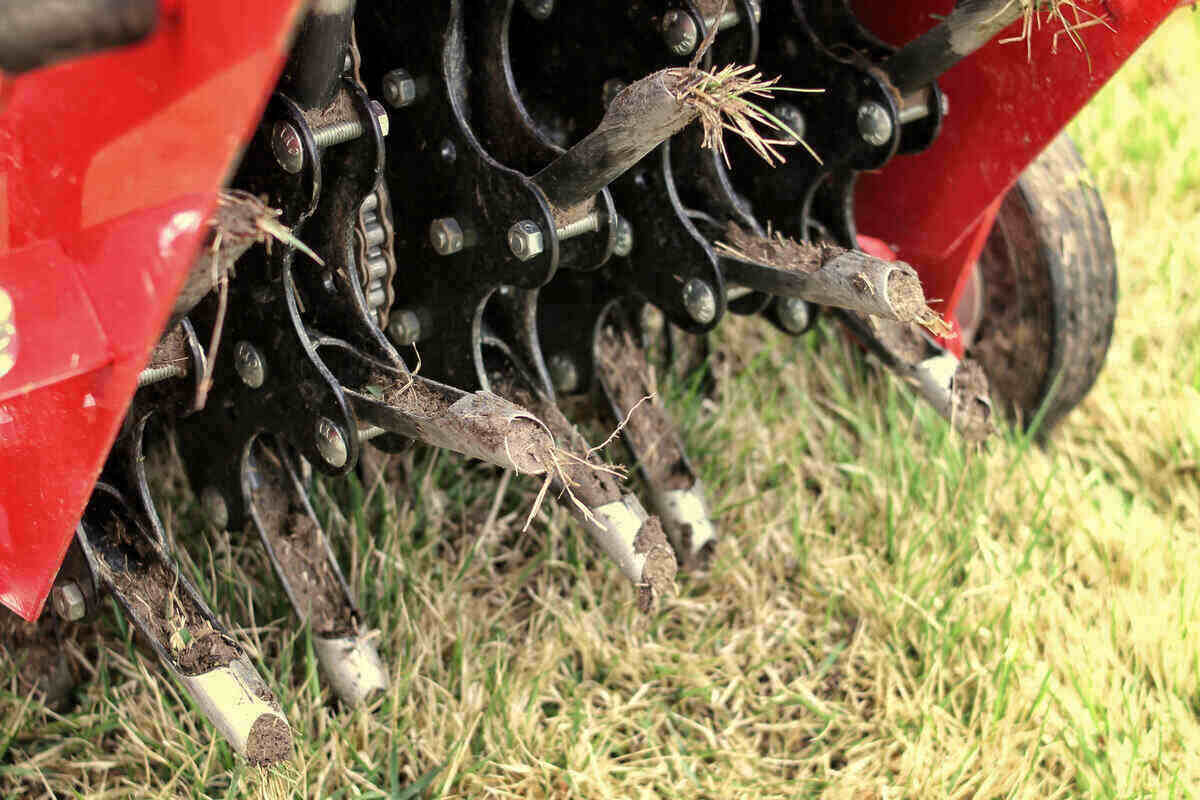
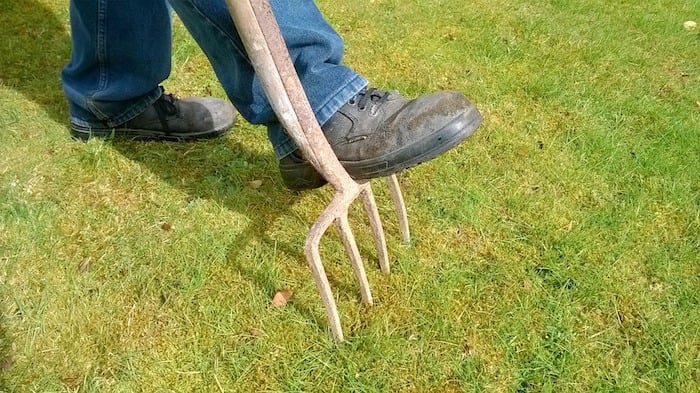
Aeration is the process of removing small plugs of soil from your lawn so the soil is less compacted and oxygen, water, and nutrients can flow into it. It might look like you’re ruining your lawn at first, but aeration is incredibly beneficial for its health.
The national average lawn aeration cost is $104 to $195, depending on your yard size and the aeration method. The best time to aerate depends on your grass type:
Cool-season grasses: Aerate in early fall or early spring.
Warm-season grasses: Aerate in late spring or early summer.
Pro tip: You can test if your soil needs aeration by doing the screwdriver test:
Take a screwdriver and push it into your lawn.
If the screwdriver penetrates the soil with ease, your soil isn’t compacted and doesn’t need aeration.
If it’s hard to push the screwdriver about 6 inches into moist soil, your soil is probably compacted and needs aeration.
Cover bare spots
Tired of bald patches? Overseeding creates thick turf and prevents bare spots. It is the process of adding new grass seed to an existing lawn.
Overseeding is a great way to get your grass back up and running after a bad year or fix patchy lawn spots that are just not growing well. Even after bald patches have developed, overseeding helps treat them.
Overseed after mowing, dethatching, or aerating so the seeds reach the soil. Spread seed with a seed spreader, and keep the seeded area moist until the new grass is established.
The best time of year to overseed depends on your grass:
Overseed warm-season lawns in the late spring or early summer.
Overseed cool-season lawns in late summer to early fall, or in early spring if you missed fall.
Sod is the alternative to overseeding, giving you an instant lawn without the wait. It can go down any time the ground isn’t frozen, but the best times to install sod depend on your turfgrass:
Install warm-season grass sod in the mid or late spring.
Install cool-season grass sod in the early fall or spring.
New sod needs a couple of weeks and plenty of water to root into your soil. Stay off it for at least 2 weeks after installation.
The downsides of sod installation are that it’s more expensive than grass seed and it’s a labor-intensive DIY project. Spreading new grass seed around your yard is an easier task for a beginner than installing sod.
Read more:
Lawn care schedule by season
Your lawn care schedule depends on whether you grow cool-season or warm-season grass. Cool-season grasses include tall fescue and Kentucky bluegrass, while warm-season grasses include Bermudagrass and Zoysiagrass. Use this table as a starting point:
| Season | Cool-season lawns | Warm-season lawns |
| Spring | Fertilize lightly; aerate in early spring if you skipped fall | Start fertilizing, aerating, and overseeding in late spring |
| Summer | Water deeply; overseed in late summer | Keep fertilizing; aerate or overseed in early summer |
| Fall | Main fertilizing; aerate and overseed in early fall | Stop fertilizing; mow and water as needed |
| Winter | No scheduled fertilizing, aerating, or overseeding | No scheduled fertilizing, aerating, or overseeding |
How to handle lawn pests and diseases
Handle lawn pests and diseases by identifying the problem before you treat it. Most lawn diseases are caused by fungi, and not all insects are pests. A correct diagnosis keeps you from spraying products your lawn doesn’t need.
Control pests
Not all bugs in your lawn are pests, and many are beneficial. Before you spray anything, make sure you aren’t looking at ladybugs, honeybees, butterflies, or other helpful insects.
Watch for these signs of common lawn pests:
Wilted grass blades
Discoloration
“Skeletonized” leaves
Burrows
Signs of digging
Larger bird presence
If you don’t want to deal with the creepy crawlies yourself and you’d rather let a pro handle all the pesticide applications, you can hire a professional pest control service.
Contain lawn diseases

Lawn diseases are a common problem for many homeowners, and they can be frustrating to deal with. Most lawn diseases are caused by fungi. Here’s how to identify a fungal problem:
Yellowing grass blades
Brown patches
Dry areas that don’t recover after watering
Discolored patches of grass that are surrounded by healthy-looking grass
The best way to combat a lawn disease is to practice good lawn care. In most cases, mowing the lawn, aerating the soil, and removing plant debris help contain lawn diseases.
But if a lawn disease returns year after year despite good lawn care practices, chemical fungicides may prove helpful as a last resort.
Common lawn care mistakes beginners make
The most common beginner mistakes involve cutting grass too short, watering too often, and fertilizing without a plan. Each one is easy to fix once you know what to look for:
Mowing too short: Scalping stresses grass and invites weeds. Never remove more than one-third of the blade in one mowing.
Watering a little every day: Shallow daily watering grows shallow roots. Water deeply and infrequently, about 1 inch per week including rain, ideally in early morning.
Fertilizing without a soil test: Guessing can waste product or add nutrients your lawn already has. Test first, then choose a fertilizer that fills the gaps.
Mowing with dull blades: Dull blades tear grass and leave ragged, brown tips. Sharpen your mower blade regularly for a clean cut.
Bagging every clipping: Leaving clippings on the lawn, called grasscycling, returns nutrients to the soil. Bag clippings only when they form heavy clumps.
Seeding at the wrong time: Seed sown out of season struggles to establish. Overseed cool-season lawns in late summer to early fall and warm-season lawns in late spring to early summer.
FAQs
Yes, sowing seed too heavily crowds the seedlings, so they compete for water, light, and nutrients and many end up weak. Follow the seeding rate listed on the bag for your grass type, and use a spreader to apply seed evenly.
Germination time varies by grass species and soil temperature, and some grass seed sprouts much sooner than others. Keep the top layer of soil consistently moist while you wait for grass seeds to grow.
It depends on your lawn’s condition, and many pros apply a starter fertilizer at the same time they seed. Skip heavy, quick-release fertilizer on a thin lawn you’re overseeding, because it feeds the weeds already growing there.
Let a pro handle your lawn care
Mowing, watering, fertilizing, aerating, and overseeding add up to a lot of weekends, and the timing shifts every season. Keeping up takes more time than many new homeowners expect.
Rather enjoy your yard than work on it? Let one of LawnLove’s local lawn care pros handle the mowing, fertilizing, and seasonal chores. Get a free estimate online today.
Related Posts:



.jpg)
